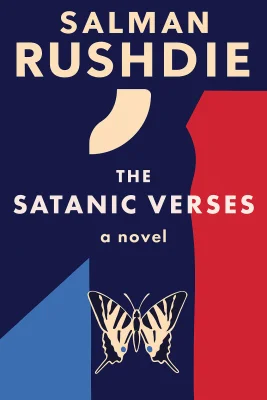
The Satanic Verses
Categories
Fiction, Religion, Classics, Fantasy, Literature, India, Contemporary, Magical Realism, Novels, Banned Books
Content Type
Book
Binding
Paperback
Year
1996
Publisher
Picador
Language
English
ASIN
0312270828
ISBN
0312270828
ISBN13
9780312270827
File Download
PDF | EPUB
The Satanic Verses Plot Summary
Introduction
# The Satanic Verses: Angels, Devils, and the Fall from Grace At thirty thousand feet above the English Channel, Flight AI-420 becomes a fireball against the winter sky. From the wreckage, two men fall through darkness, their bodies locked together like lovers or enemies. Gibreel Farishta, Bollywood's greatest star who played gods on screen, spreads his arms like wings. Saladin Chamcha, the voice actor with his perfect English accent, tumbles beside him in his business suit. They should die. Physics demands it. Instead, they hit the frozen earth of Sussex and rise, brushing snow from their clothes, staring at each other with the bewilderment of men who have witnessed their own impossible survival. But miracles come with prices. As they recover in an old woman's crumbling mansion, their bodies begin to change. Saladin's reflection shows horns pushing through his skull, his legs bending backward into hooves. Gibreel glows with inner light, haunted by visions of himself as the Archangel Gabriel. One becomes the devil England expects him to be, while the other descends into divine madness. Their transformation will test the boundaries between good and evil, between the human and the divine, in a world where falling from grace is only the beginning.
Chapter 1: The Miraculous Fall: Survival and First Transformations
The hijacking unfolds like a fever dream aboard Flight AI-420. Tavleen, the beautiful terrorist with her Canadian accent, moves through the cabin with deadly purpose while her three male companions pose like movie stars. For one hundred and eleven days, the aircraft sits on a desert runway while diplomats negotiate and passengers slowly lose their minds to heat and desperation. Gibreel Farishta travels incognito, fleeing Bombay after a mysterious illness cost him his faith. Beside him sits Saladin Chamcha, returning to London from a visit to his dying father, carrying decades of carefully constructed Englishness like armor. Both men run from their pasts, but the desert siege strips away pretense. Gibreel fights sleep, terrified of dreams where he becomes the Archangel Gabriel witnessing the birth of Islam. When exhaustion finally claims him, the visions feel more real than the burning aircraft around him. Tavleen ends the standoff by revealing grenades strapped beneath her robes. The explosion tears through the fuselage at cruising altitude, scattering bodies across the night sky. Yet Gibreel and Saladin find themselves conscious, falling together through clouds that taste of ice and death. Gibreel sings old film songs while some inexplicable force compels Saladin to command him to fly. They descend like leaves on an impossible wind. Rosa Diamond discovers them at dawn on her pebbled beach, two half-drowned men who remind her of lovers from her colonial past. She takes them to her decaying mansion where memory and reality have long since merged. In her care, they begin to heal, but healing brings its own horrors. Saladin wakes to find his reflection subtly altered, his features shifting toward something monstrous. Gibreel sleeps for days, speaking in languages he's never learned, his body beginning to glow with an inner light that makes Rosa weep with recognition.
Chapter 2: Divergent Paths: Devil in Detention, Angel in Dreams
The police arrive in force, fifty-seven officers responding to reports of illegal immigrants. They find Saladin transformed into something from a medieval manuscript, horns curling from his skull, hooves where his feet should be, his breath reeking of sulfur. The officers beat him methodically, forcing him to eat his own excrement while treating his metamorphosis as routine. His British citizenship means nothing to men who see only the devil they expect. Meanwhile, Gibreel remains untouched. When questioned, a golden light emanates from behind his head, and the officers find themselves compelled to believe his every word. They release him without charge, leaving him in Rosa's care while Saladin disappears into the immigration system's machinery of humiliation. At the detention center, Saladin discovers he's not alone in his transformation. The medical ward houses other immigrants twisted into monstrous forms, a man with a tiger's head, a woman whose skin has turned to glass. Hyacinth Phillips, the physiotherapist who tends his pneumonia, whispers of escape while her face shifts in the dim light. The inmates organize a mass breakout, and Saladin flees into London's sleeping suburbs, his hooves clicking on wet pavement. Gibreel remains trapped in Rosa's mansion of memories, listening to her stories of Argentine gauchos and forbidden love. Her tales become vivid hallucinations that surround them both, transforming him into her long-dead lover Martín de la Cruz. But these waking dreams pale beside the visions that assault him in sleep. He becomes the Archangel Gabriel, wrestling with the Prophet Mahound in caves above the desert city of Jahilia, watching as divine revelations flow through reluctant human lips. The boundary between Gibreel the actor and Gabriel the archangel dissolves like sugar in rain.
Chapter 3: Sacred and Profane Visions: Revelations and Blasphemies
In Gibreel's dreams, the city of Jahilia rises from sand, its merchants growing rich from pilgrims who worship three hundred and sixty stone idols. The Prophet Mahound climbs Mount Cone seeking divine guidance about a compromise offered by the city's rulers. They will accept his monotheistic message if he acknowledges three goddesses as angels worthy of intercession. In the cave, Gibreel wrestles with the Prophet, their struggle both physical and spiritual, until words pour from the angel's mouth proclaiming the goddesses as exalted birds whose intercession is desired. The compromise seems to succeed, but later Mahound returns to the mountain, claiming the Devil had spoken through Gabriel. The verses are repudiated, the goddesses rejected, and the faithful must flee Jahilia for the oasis city of Yathrib. Gibreel watches these scenes with the helpless clarity of a dreamer, seeing how faith is constructed from human need and divine silence, how prophets must navigate between heaven's demands and earth's politics. The dreams shift to another story, another test of faith. In the village of Titlipur, a young woman named Ayesha receives visions from the Archangel Gabriel. She convinces the entire population to abandon their homes and walk to the Arabian Sea, promising that the waters will part like they did for Moses. Gibreel, trapped in the role of the angel, watches helplessly as the pilgrims march toward their doom, their faith unshakeable even as their bodies fail them. These visions torment Gibreel because they suggest that revelation itself might be nothing more than human invention, that the word of God might be indistinguishable from the words of men. The weight of these blasphemous possibilities drives him deeper into madness. He finally escapes Rosa's house as the old woman lies dying, her stories exhausted, and takes a train to London pursued by hallucinations of Rekha Merchant, a former lover who committed suicide after he abandoned her.
Chapter 4: London Labyrinth: Identity Crisis in an Alien Land
Saladin finds refuge in the Shaandaar Café in Brickhall, where Muhammad Sufyan takes pity on the horned creature despite his frightening appearance. The café owner's daughters, Mishal and Anahita, see Saladin not as a monster but as a symbol of resistance against a world that has always seen them as foreign. They treat his horns like a crown, his transformation like a badge of honor, but Saladin cannot accept their reverence. He knows what he has become. His metamorphosis continues, his body growing larger and more grotesque with each passing day. The local community begins to dream of him, their sleeping minds conjuring visions of a great devil walking through London's streets. His image appears on t-shirts and posters, a horned figure with fist raised in defiance. Meanwhile, his old life crumbles. His wife Pamela refuses to acknowledge his survival, preferring the clean grief of widowhood to the messy reality of his transformation. Gibreel seeks out Alleluia Cone, the mountain climber whose pale beauty had captivated him during their brief encounter before his supposed death. She takes him in, this man who claims to have fallen from heaven, and for a time they find something like love in each other's arms. But Gibreel's madness grows stronger each day, fed by visions that demand he transform London itself, that he bring the heat of the desert to these cold, gray streets. His jealousy becomes paranoid and violent, his love a cage that threatens to crush her. He has her followed by private detectives, turns every conversation into an interrogation. The angel of love becomes a demon of possession, and Alleluia realizes she is living with someone who might be capable of anything. When she finally asks him to leave, he goes without argument, walking out into the night to begin his work as an avenging angel.
Chapter 5: Voices of Vengeance: The Campaign of Cruel Deception
Saladin discovers that evil is not born but chosen, one small compromise at a time. His transformation back to human form comes slowly, painfully, as if his body is reluctant to abandon the honesty of its monstrous shape. He returns to find his life in ruins, his career destroyed, his wife pregnant with another man's child. But in his bitterness, he finds a terrible clarity of purpose. He remembers Gibreel's silence during his arrest, the way his former companion watched from Rosa Diamond's window as the police dragged him away. That betrayal burns in his chest like swallowed acid, and from it grows a plan of exquisite cruelty. Saladin knows voices, understands their power to seduce and destroy. He will use this knowledge to tear apart the one thing Gibreel values above his own sanity. The phone calls begin as whispers in the night. Saladin, master of a thousand voices, becomes a chorus of anonymous lovers describing intimate knowledge of Alleluia's body. To Gibreel, he sends different voices, aristocratic seducers boasting of conquest, working-class cynics offering friendly warnings, and most devastating of all, a poet who speaks only in childish rhymes that burrow into Gibreel's paranoid mind like worms. Each call is precisely calibrated to exploit Gibreel's jealousy and fragile mental state. The voices multiply and intensify, creating a symphony of suspicion that drowns out reason and love. The campaign reaches its crescendo with a final rhyme delivered in a child's sing-song voice. Gibreel's jealousy explodes into violence. He destroys Alleluia's apartment, smashing her collection of mountain memorabilia. When she returns to find her life in ruins, she finally understands that love can be as destructive as any natural disaster.
Chapter 6: Fire and Redemption: Sacrifice in the Burning City
London burns under an unseasonable heatwave that seems to mock the city's famous reserve. In the immigrant neighborhoods of Brickhall, the death of Dr. Uhuru Simba in police custody becomes the spark that ignites riots across the borough. Gibreel walks through the burning streets with a golden trumpet pressed to his lips, convinced he is the angel of judgment come to cleanse the world with flame. His madness has reached its final stage, and he sees the riots as divine punishment for humanity's sins. In the Shaandaar Café, the Sufyan family lies trapped by advancing flames. Haji Sufyan and his wife Hind, the elderly couple who once showed Saladin kindness, lie unconscious from smoke inhalation while fire consumes their life's work. Saladin arrives at the burning building driven by guilt and a desperate need for redemption. He has spent months nurturing hatred and planning revenge, but faced with innocent lives in danger, his humanity reasserts itself. He plunges into the smoke-filled building, calling out names, searching for survivors. The heat is unbearable, the smoke blinding, but he pushes forward through rooms that seem to shift and change like something from a fever dream. A falling beam pins him to the floor, breaking both his arms and crushing his chest. His heart, already damaged by the stress of his transformations, begins to fail. Gibreel appears in the doorway like an avenging angel, his trumpet gleaming in the firelight. For a moment, the two men stare at each other across the burning room, and Saladin sees recognition flicker in his former friend's eyes. The madness clears just enough for Gibreel to understand what he has become. He drops the trumpet and lifts Saladin from beneath the beam, carrying him through flames that part like curtains before his breath. In saving his life, Gibreel proves that love can triumph over hatred, that even the deepest madness cannot completely extinguish the human capacity for sacrifice.
Chapter 7: Final Metamorphosis: Choosing Between Madness and Humanity
The telegram summons Saladin back to Bombay like a voice from the past. His father Changez lies dying of cancer in the house where Saladin was born, his body consumed by disease but his spirit somehow gentler than memory suggests. The tyrannical father has been replaced by a mischievous old man who greets his prodigal son with forgiveness instead of recrimination. The walnut tree in the garden, symbol of their ancient conflict, stands as a weathered stump, its power to wound finally exhausted. Saladin tends to his father with the devotion of a penitent, rediscovers the name Salahuddin on his tongue like a half-remembered song. When the final crisis comes, he carries his father to the hospital, holds his hand as the machines fail to restart his heart. The last word Changez speaks is "No," but his mouth curves in a smile that suggests he has found something unexpected in the darkness. Meanwhile, Gibreel's madness reaches its inevitable conclusion. The newspapers scream of murder, of Alleluia Cone falling from a rooftop, of the film producer Sisodia found dead with a bullet through his heart. Gibreel appears at Scandal Point like a ghost seeking absolution, his eyes empty of everything except the need to confess. He tells his story in fragments, his voice drifting between sanity and madness like smoke in a shifting wind. The police surround the house as Gibreel reaches into Changez's brass lamp and withdraws the revolver hidden inside. The magic vessel that once promised infinite possibilities now contains only the most final choice of all. He places the gun barrel in his mouth with the calm precision of a man completing a long-delayed task. The shot echoes through the house like thunder, and then there is only silence. Saladin stands at the window of his childhood bedroom, looking out at moonlit water that stretches toward horizons he will never see. Zeenat Vakil's voice calls him back from the edge of despair, offering him another chance at life and love. He turns away from the window and the ghosts that haunt it, choosing the solid reality of human connection over the seductive pull of myth and memory.
Summary
In this tale of transformation and redemption, two men discover that falling from the sky is only the beginning of their journey toward understanding themselves. Saladin Chamcha and Gibreel Farishta, bound together by their impossible survival, learn that identity is not fixed but fluid, shaped by the forces that act upon us and the choices we make in response. One becomes a devil through the careful cultivation of hatred, while the other descends into angelic madness, convinced of his divine mission to judge the world. Yet in the ashes of their mutual destruction, something new can grow. Saladin's final transformation comes not through supernatural intervention but through the simple human acts of forgiveness and love. He learns that home is not a place but a choice, that redemption is possible even for the most fallen of angels. In a world where miracles and blasphemies walk hand in hand through London's immigrant neighborhoods, the most miraculous transformation of all may be the decision to remain human, to choose love over hatred, forgiveness over revenge, and hope over the seductive certainty of despair.
Best Quote
“Language is courage: the ability to conceive a thought, to speak it, and by doing so to make it true.” ― Salman Rushdie, The Satanic Verses
Review Summary
Strengths: The review acknowledges the book's imaginative nature and its importance in challenging the status quo and promoting artistic freedom. It is considered one of Rushdie's best works by the reviewer, despite a preference for his other novels. Weaknesses: The review criticizes Rushdie's excessive use of language, which is seen as overwriting that hinders narrative flow. The reviewer finds the metaphors forced and distracting, and the prose is described as ingratiating and lacking confidence. The use of kitschy conversational prose and ineffective figurative language is also noted. Overall: The reader expresses a mixed sentiment, appreciating the book's imaginative qualities and thematic importance but criticizing its writing style. The recommendation is cautious, suggesting reading it to support artistic freedom despite its stylistic flaws.
About Author

Salman Rushdie
Rushdie probes the intricate dance between Eastern and Western cultures through the lens of magic realism and historical fiction, constructing narratives that are rich in thematic depth. His work often grapples with the complexities of identity and the quest for freedom, blending the personal with the political. For instance, "Midnight's Children" not only secured the Booker Prize in 1981 but also set a new standard for modern literature by capturing the essence of India's journey through independence. Rushdie's method of intertwining magical realism with historical context allows readers to explore the multifaceted layers of cultural intersection and migration, themes that are particularly relevant in today's globalized world.\n\nBy engaging with such profound themes, Rushdie offers a narrative canvas where readers can question and reflect on the power of storytelling. For those interested in the intersections of history, culture, and identity, Rushdie's books provide a unique vantage point. His narrative style, characterized by lyrical prose and deep thematic exploration, invites readers into a world where the lines between reality and fiction blur, offering insights into human resilience and fortitude. "Knife: Meditations After an Attempted Murder" serves as a testament to his personal strength, providing an introspective look at the violence that has shadowed his life, thereby reinforcing his status as a fearless advocate for artistic freedom.\n\nRecognized with numerous accolades, including a knighthood for his services to literature, Rushdie's contribution extends beyond his written work. As a fellow of the Royal Society of Literature and an educator at prestigious institutions, he has influenced both the literary world and academic discourse. This short bio of the author highlights the enduring impact of his storytelling, which continues to challenge and inspire readers, making his work indispensable to those who seek to understand the complexities of our interconnected world.
Read moreDownload PDF & EPUB
To save this Black List summary for later, download the free PDF and EPUB. You can print it out, or read offline at your convenience.
The Satanic Verses
by Salman Rushdie
