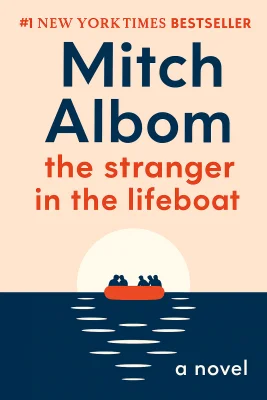
The Stranger in the Lifeboat
Categories
Fiction, Christian, Religion, Spirituality, Audiobook, Mystery, Faith, Book Club, Inspirational, Christian Fiction
Content Type
Book
Binding
Hardcover
Year
2021
Publisher
Harper
Language
English
ASIN
006288834X
ISBN
006288834X
ISBN13
9780062888341
File Download
PDF | EPUB
The Stranger in the Lifeboat Plot Summary
Introduction
The man floated in the Atlantic like a discarded offering, unmarked by the sea that had claimed forty-three souls just days before. When the survivors hauled him aboard their crowded lifeboat, they expected gratitude, perhaps tears of relief. Instead, he looked at their blistered faces and salt-crusted hair with pale blue eyes and whispered three words that would haunt their remaining days: "I am the Lord." What followed was a test of faith unlike any recorded in maritime history. Ten desperate souls, cast adrift after the luxury yacht Galaxy exploded in a ball of fire, found themselves sharing their meager rations with a man who claimed dominion over the very waters threatening to swallow them whole. As the days stretched into weeks, and death began picking them off one by one, the survivors faced an impossible question: Had God himself climbed into their boat, or had the ocean's cruelty finally driven them all insane?
Chapter 1: The Stranger from the Sea: Claiming Divinity in Disaster
The orange lifeboat cut through the gray Atlantic swells like a plastic prayer, carrying nine survivors of the Galaxy's destruction. Benji Kierney, an Irish deckhand with haunted eyes, gripped his waterlogged notebook as the others scanned the horizon for rescue planes that never came. They had pulled Jason Lambert, the yacht's corpulent owner, from the wreckage. Geri, an Olympic swimmer turned businesswoman, rationed their dwindling supplies with military precision. Mrs. Laghari, an elegant Indian cosmetics mogul, comforted little Alice, a silent child they'd found clinging to a deck chair in the chaos. The Haitian couple, Jean Philippe and Bernadette, huddled together as she drifted in and out of consciousness from her head wound. Nevin, the tall British media executive, nursed his infected leg while Yannis, the young Greek ambassador, tried to keep spirits up with stories. Nina, the Ethiopian hairstylist, offered what comfort she could. They were a floating United Nations of desperation, bound together by the most primal human need: survival. Then they spotted him, bobbing in the waves without a life jacket, his dark hair matted against an unmarked face. When they hauled him aboard, his first words shattered their fragile hope. "I am the Lord," he said simply, as if announcing the weather. Lambert laughed bitterly. Mrs. Laghari scoffed. But something in the stranger's calm certainty made the others pause, even as their rational minds recoiled. The man's appetite for their meager crackers seemed decidedly ungodly. Yet when Bernadette slipped deeper into her coma, he placed his hands on her forehead. Her eyes fluttered open, and she smiled at her weeping husband. "Cherie?" she whispered. The miracle lasted exactly one day before she died anyway, slipping away in the night like smoke from a extinguished candle.
Chapter 2: A Notebook's Journey: From Survivor to Inspector
Inspector Jarty LeFleur crushed another cigarette beneath his boot as he stared at the discovery that would consume his life. The orange raft lay deflated on Marguerita Bay's rocky shore, delivered by currents that had carried it thousands of miles from the Galaxy's grave. Rom, the drifter who'd reported it, watched with peculiar detachment as LeFleur examined the vessel's torn edges and salt-stained interior. Hidden in a sealed pouch, LeFleur found his obsession: a waterlogged notebook filled with desperate handwriting. The opening lines made his hands tremble. "When we pulled him from the water, he didn't have a scratch on him." The pages chronicled impossible events, divine encounters, and the slow dissolution of hope on the open ocean. It was addressed to someone named Annabelle, written by a man who signed himself "Benji" and confessed to sins that could have destroyed them all. LeFleur should have reported the find immediately. Instead, he smuggled the notebook home to his yellow house, where his wife Patrice still grieved their daughter Lilly's drowning four years earlier. Each night, after Patrice retreated to their cold bed, he would descend to his study and lose himself in Benji's account of floating prayers and maritime miracles. The notebook became LeFleur's secret addiction, its pages offering something his whiskey couldn't: meaning in the face of senseless loss. While reporters swarmed the island seeking the "man who found the raft," Rom had vanished like morning mist. But LeFleur barely noticed, consumed by the growing certainty that this waterlogged journal held answers to questions he'd been afraid to ask since the day his child disappeared beneath the waves.
Chapter 3: Confessions of the Drowned: Benji's Guilt and Redemption
Benji's pen trembled as he confessed his darkest secret to the notebook's pages. The Galaxy's destruction wasn't random maritime disaster—it was revenge, conceived in the bitter heart of a man who'd lost everything. He'd smuggled a limpet mine aboard the yacht, hidden in a drum case among the rock band's equipment, planning to murder Jason Lambert and his wealthy guests in a spectacular act of class warfare. His cousin Dobby had provided the weapon and the justification. Lambert represented everything they'd been denied: privilege, power, the casual cruelty of the rich toward those who served them. Benji had watched the billionaire stuff his face while staff members lowered their eyes, forbidden even to make contact with their betters. When his beloved wife Annabelle died of a rare blood disease, unable to afford proper treatment, Benji's grief curdled into murderous rage. But standing on the Galaxy's rain-soaked deck that final night, Benji couldn't pull the trigger. The mine remained hidden, his revolution stillborn. Instead, consumed by self-loathing and the weight of his failures, he made a different choice. He climbed over the rail and jumped into the dark Atlantic, choosing suicide over murder. The irony carved itself into his soul as he floated in the icy water: the Galaxy exploded anyway, claimed not by his bomb but by massive whales disturbed by the yacht's thunderous music. He'd planned mass murder and settled for suicide, yet achieved neither. Instead, the ocean's own giants had delivered the destruction he'd been too cowardly to commit, leaving him alive to witness the consequences of his darkest intentions.
Chapter 4: The Diminishing Raft: Faith Tested by Death
Death stalked the orange raft like a patient predator, taking the survivors one by one as their faith in the mysterious stranger wavered. Mrs. Laghari was the first to go, knocked overboard during a shark attack, her scream cut short by a spray of red water and thrashing fins. The elegant businesswoman who'd built an empire from Calcutta slums disappeared in seconds, her final act an attempt to save their precious binoculars. The sharks had been circling since the Galaxy went down, drawn by the fish feeding on the raft's barnacle-encrusted bottom. Geri tried to patch the holes torn in the vessel's skin, but each repair was temporary, each dive beneath the boat a dance with death. The creatures were patient, intelligent, waiting for weakness or desperation to drive their prey into the water. Nina and Yannis found brief comfort in each other's arms as the days stretched into weeks, their romance blooming like a fragile flower in hell's garden. When a massive storm tore across their position, Nina was swept overboard. Yannis dove after her without hesitation, and the churning sea swallowed them both. Their bodies vanished in the chaos of wind and wave, leaving only the echo of Nina's final scream. Nevin's infected leg wound festered in the salt air, turning black with sepsis. The tall British executive who'd built a media empire died whimpering for his children, begging Benji to write messages he'd never live to send. Jean Philippe caught a fish with his bare hands, providing a final meal for the survivors before slipping over the side in the night, choosing to join his beloved Bernadette rather than endure another dawn without her.
Chapter 5: Alice Speaks: The Child Who Was God
Lambert's madness bloomed like a poisonous flower in the raft's cramped confines. Dehydration from drinking seawater had scrambled his thoughts, transforming the billionaire into a raving beast who saw enemies in his fellow survivors. He woke one morning with a knife in his hand and murder in his heart, slashing at the canopy that provided their only shade from the merciless sun. "Get off my boat!" he screamed at the patient stranger, the blade inches from the man's throat. In his delirium, Lambert still believed he commanded the universe, that his wealth could buy him salvation even from the middle of the Atlantic. The knife bit deep, and blood poured from the stranger's neck as he toppled backward into the sea, his gentle eyes never losing their compassion. Lambert's rage consumed everything in its path. He hurled little Alice overboard like discarded cargo, then turned on Benji with foam on his lips. But desperation gave the deckhand strength, and Lambert stumbled over his crouched body, crashing into the waves that welcomed him with cold finality. Benji dove in to save him, but the billionaire's madness had burned out his will to live. Alone in the raft with Alice, Benji prepared for death. But as he held the silent child, she finally spoke with a voice clear as mountain water. "I am the Lord," she said, her mismatched eyes—one blue, one brown—reflecting depths beyond human understanding. "And I will never leave you." The revelation struck him like lightning: not the bearded stranger, but this innocent child had been their divine passenger all along, watching, waiting, testing their capacity for love in the face of annihilation.
Chapter 6: Grief's Echo: Inspector LeFleur's Healing Voyage
LeFleur's world tilted when Dobby arrived at his yellow house like a ghost from the notebook's pages. The man matched Benji's descriptions perfectly: long stringy hair, lined face marked by hard living, the restless energy of someone running from more than just poverty. But Dobby's story shattered LeFleur's assumptions like glass on stone. "I was never on that yacht," Dobby insisted, even with LeFleur's gun pointed at his chest in the ruins of Plymouth's volcanic cathedral. The exclusion zone's ashen landscape provided a fitting backdrop for their confrontation, two men grappling with the weight of impossible truths. Dobby claimed he'd only driven Benji to the docks, worried about his cousin's fragile mental state after Annabelle's death. The confession that emerged was more devastating than any crime. Benji had believed Jason Lambert was his father, the wealthy American who'd abandoned his Irish mother after a brief encounter at a golf tournament. Dobby had inadvertently fed this delusion by sharing a deathbed secret from his own mother, giving Benji a target for his bottomless rage against the world's injustices. But Lambert wasn't Benji's father. The entire bloody saga—the smuggled mine, the planned revenge, the survivor's guilt—had been built on a foundation of lies and misunderstanding. Dobby's revelation hit LeFleur like a physical blow: sometimes the stories we tell ourselves to explain our pain become more dangerous than the truth we're trying to escape. As the volcanic ash swirled around them, LeFleur saw his own grief reflected in Dobby's haunted eyes, recognizing the particular weight carried by those who've lost someone they couldn't save.
Chapter 7: The Final Truth: Whales, Not Vengeance
The ocean's final revelation came in the form of ancient giants breaching the surface around Benji's solitary raft. Three massive whales emerged from the depths like living islands, their immense bodies blocking out the sky before crashing back into the sea with thunderous impact. Alice smiled as she balanced on the raft's edge, her small form silhouetted against the spray. "They did," she said simply when Benji asked who had destroyed the Galaxy. The whales had been drawn by the yacht's thunderous music, their sensitive sonar overwhelmed by the rock band's amplified noise. In their agitation, they'd rammed the vessel's fiberglass hull, creating the three massive holes that investigators would later discover on the ocean floor. No limpet mine, no terrorist plot, no human malice—just nature reclaiming dominion over its territory. The revelation lifted a crushing weight from Benji's soul. He hadn't murdered forty-three people through cowardice or incompetence. The Galaxy's destruction was an accident, a collision between human arrogance and the sea's unpredictable power. His planned revenge had been as unnecessary as it was impossible, his guilt as misplaced as his rage. Alice prepared to leave him with words that echoed his dead wife's wisdom: "We all need to hold on to something, Benji. Hold on to me." She fell from the raft without a splash, vanishing into the blue depths that had become her domain. But her promise remained: she would never leave him. Alone with the whales and the endless sky, Benji understood that survival wasn't about conquering the ocean—it was about accepting its mysteries with grace.
Summary
Years later, when LeFleur found the bearded man calling himself Rom sitting on Marguerita Bay's shore, the circle finally closed. The name was Hebrew for "God lifted my head," a clue hidden in plain sight. Benji had survived his impossible journey, crossing thousands of miles of open ocean with only faith and the memory of a child's promise to sustain him. His notebook had found its way to exactly the person who needed its message most—a grieving father learning to forgive an indifferent universe for taking his daughter too soon. The Galaxy's wreckage would remain on the ocean floor, a monument to the fragility of human ambition in the face of nature's power. But its survivors—both those who died and the one who lived—had discovered something more valuable than rescue. In their floating purgatory, surrounded by infinite blue, they'd encountered the divine in its most unexpected form: not as the bearded patriarch of ancient texts, but as a silent child who understood that love, not judgment, was the only miracle worth believing in. The stranger in the lifeboat had many faces, but only one message: even in our darkest hours, we are never truly alone.
Best Quote
“When someone passes, Benjamin, people always ask, ‘Why did God take them?’ A better question would be ‘Why did God give them to us?’ What did we do to deserve their love, their joy, the sweet moments we shared? Didn’t you have such moments with Annabelle?” “Every day,” I rasped. “Those moments are a gift. But their end is not a punishment. I am never cruel, Benjamin. I know you before you are born. I know you after you die. My plans for you are not defined by this world. “Beginnings and endings are earthly ideas. I go on. And because I go on, you go on with me. Feeling loss is part of why you are on Earth. Through it, you appreciate the brief gift of human existence, and you learn to cherish the world I created for you. But the human form is not permanent. It was never meant to be. That gift belongs to the soul. “I know the tears you shed, Benjamin. When people leave this Earth, their loved ones always weep.” She smiled. “But I promise you, those who leave do not.” ― Mitch Albom, The Stranger in the Lifeboat
Review Summary
Strengths: The review highlights Mitch Albom's consistent exploration of faith in his literary works, suggesting that his books provoke discussion and adaptation into other media. The character of Benji Keaney is described as complex and relatable, with a focus on his internal struggles and moral compass, which adds depth to the narrative. Weaknesses: The review implies a critique of humanity's repetitive cycles of greed and conflict, which may overshadow the book's themes. There is also an underlying skepticism about the role of faith versus logic, which could detract from the book's intended message. Overall: The review presents a mixed sentiment, appreciating the character development and thematic exploration of faith, while also critiquing broader societal issues. The recommendation level is not explicitly stated, but the analysis suggests a thought-provoking read for those interested in philosophical and moral questions.
About Author

Mitch Albom
Albom reframes the nuances of human connection and mortality through his storytelling, aiming to evoke deep reflection in readers. In his seminal work, "Tuesdays with Morrie," Albom delves into life lessons imparted by his former professor, Morrie Schwartz, using a blend of memoir and philosophical dialogue that encourages readers to confront their own life choices. Meanwhile, his narrative technique in "Finding Chika" explores themes of love and loss, focusing on the transformative impact of a Haitian orphan on his life. For readers, these works offer a mirror to evaluate personal relationships and the fragility of life, fostering a sense of empathy and introspection.\n\nAlbom's method intertwines emotional depth with accessible prose, making complex themes relatable. His books often address spirituality and redemption, as seen in "The Five People You Meet in Heaven," where he probes the afterlife to reflect on earthly actions. This approach, characterized by simplicity yet profound insight, not only captivates but also challenges readers to consider their values and the meaning of existence. Therefore, those who engage with his work find themselves prompted to reassess personal priorities and connections with others.\n\nReaders who are drawn to Albom's bio and works, particularly those grappling with existential questions, benefit from his ability to make abstract concepts tangible. His writing, which transcends the conventional boundaries of storytelling, serves as a catalyst for personal growth and philosophical inquiry. As an author whose influence extends beyond literature, Albom's contributions also underscore his commitment to philanthropy, thereby solidifying his role as a significant cultural figure whose impact is felt both on and off the page.
Read moreDownload PDF & EPUB
To save this Black List summary for later, download the free PDF and EPUB. You can print it out, or read offline at your convenience.
The Stranger in the Lifeboat
by Mitch Albom
