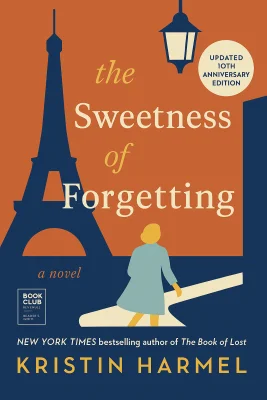
The Sweetness of Forgetting
Categories
Fiction, Historical Fiction, Romance, Book Club, Historical, Contemporary, Holocaust, France, World War II, Chick Lit
Content Type
Book
Binding
Paperback
Year
2022
Publisher
Gallery Books
Language
English
ISBN13
9781982198435
File Download
PDF | EPUB
The Sweetness of Forgetting Plot Summary
Introduction
# Star Pies and Forgotten Skies: A Journey Through Memory's Veil The North Star Bakery stands silent in the pre-dawn darkness of Cape Cod, its windows glowing like amber against the September morning. Hope McKenna-Smith moves through the familiar ritual of baking, her hands shaping star-crusted pies that carry secrets she's never known. The recipe came from her grandmother Rose, a woman who speaks in fragments now, her memories scattered like flour on a cutting board. When Rose suddenly hands Hope a list of seven names and a thousand-dollar check, demanding she travel to Paris to discover what happened to her family, Hope's carefully ordered world begins to crack. These aren't names from the Catholic French family she thought she knew. These are Jewish names, deportation records, ghosts from a war that supposedly never touched her grandmother's life. As Hope reluctantly boards a plane to Paris, she carries more than her grandmother's desperate request. She carries the weight of a family history that was buried so deep, even love couldn't resurrect it.
Chapter 1: The Bakery of Hidden Memories
Hope's hands shake as she stares at the list her grandmother pressed into her palm at sunset on Paines Creek Beach. Seven names written in Rose's trembling handwriting, each one a stranger. Albert Picard, born 1897. Cecile Picard, born 1901. The names continue down the page, ending with Danielle Picard, born 1937. Rose had thrown pieces of her beloved Star Pie into the ocean, whispering prayers in a language Hope didn't recognize. "They all died," Rose had said, her gray eyes suddenly clear as winter sky. "The world fell down." Now, back in the bakery's fluorescent glare, Hope tries to make sense of what happened. Her twelve-year-old daughter Annie bounces between fury and fascination, demanding to know why her great-grandmother keeps calling her Leona, why she's never heard these names before. Hope has no answers. Rose McKenna was supposed to be Rose Durand from France, a Catholic woman who married Ted McKenna and opened a bakery on Cape Cod in 1952. The morning customers drift in and out, their familiar faces offering no comfort. Matt Hines arrives early, his banker's smile hiding bad news about foreclosure proceedings. Hope's ex-husband Rob has poisoned Annie against her, and now even her own daughter seems like a stranger. The only constant is the smell of rising dough and the weight of questions that have no answers. When Gavin Keyes mentions that Rose's strange ritual with the pie crumbs matches a Jewish ceremony called tashlich, Hope's world tilts further off its axis. His grandmother survived Bergen-Belsen. He knows about false papers, hidden identities, the ways people reinvent themselves to escape the past. The possibility that Rose might be Jewish, that her entire family history might be a lie, settles in Hope's chest like a stone.
Chapter 2: A List of Names and a Journey to Paris
The decision to go to Paris feels like stepping off a cliff. Hope's bakery is failing, her relationship with Annie grows more strained each day, and she's never been further from home than Boston. But Rose's lucid moments are becoming rarer, and something in her grandmother's eyes suggests this might be her last chance to uncover the truth. Gavin offers to run the bakery while she's gone, an act of kindness that makes Hope uncomfortable. She's not used to people helping without expecting something in return. Annie is thrilled that her mother is finally taking action, though she begs to come along. The night before Hope leaves, she finds herself at Rose's bedside in the memory care facility, searching her grandmother's face for answers. Rose drifts in and out of recognition, sometimes calling Hope by her mother's name, sometimes staring at her like a stranger. But when Hope mentions Paris, something flickers in those gray eyes. "You must go," Rose whispers. "I am very tired now, and it is nearly time for me to sleep." The flight to Paris feels surreal. Hope has spent her entire life within a fifty-mile radius of Cape Cod, and now she's crossing an ocean to chase ghosts. She carries Rose's list in her purse like a talisman, the names growing more familiar with each reading. In her hotel room that first night, she spreads out maps of Paris and wonders if her grandmother ever walked these same streets, if she ever stood at a window looking out at the Eiffel Tower and dreamed of home. The city feels both foreign and familiar, as if her blood carries memories of cobblestones and café au lait. Hope finds herself drawn to the narrow streets of the Marais, where Jewish bakeries display pastries that look exactly like the ones she makes every morning. The coincidence feels too strong to ignore.
Chapter 3: Uncovering the Truth in the City of Light
The Mémorial de la Shoah rises from the Paris streets like a monument to silence. Hope's hands tremble as she enters the names from Rose's list into the database. One by one, they appear on the screen with dates and places that make her stomach clench. Deported to Auschwitz, 1942. Died autumn 1942. The youngest, Danielle, was only five years old. Carole Didot, the researcher, explains the mechanics of genocide with clinical precision. Seventy-six thousand French Jews deported. Only two thousand returned. The numbers are so vast they lose meaning, but the individual stories cut like glass. Hope stares at the screen showing Cecile Picard, born 1901, died 1942. If this woman was Rose's mother, then Hope's great-grandmother died in a concentration camp. The official records can only tell her so much. For the full story, Carole sends her to Olivier Berr, a ninety-three-year-old survivor who has spent his life documenting the lost. His apartment on rue Visconti is lined with handwritten volumes, thousands of names and stories rescued from oblivion. When Hope gives him Rose's list, his eyes light up with recognition. "The Picard family," he says, running his finger down a page of faded ink. "Dix, rue du Général Camou. Your grandmother is listed as presumed dead, July fifteenth, 1942. She went out that night and never returned. The next day, her family was taken." Hope's world shifts again. Rose didn't just lose her family to the Holocaust. She escaped it. But the most shocking revelation comes when Olivier mentions Alain Picard, Rose's youngest brother, who survived the war and was living in Paris as recently as 2005. Hope stares at the address he gives her, her heart pounding. After seventy years, she might be about to reunite her grandmother with family she thought was lost forever.
Chapter 4: The Brother Who Survived and the Love Who Was Lost
The apartment building on rue du Foin looks like something from a postcard, all wrought iron and weathered stone. When Hope presses the buzzer marked "Picard, A," she holds her breath. The voice that crackles through the intercom is elderly but strong, speaking French she can't understand. She tries again in English, and suddenly the door buzzes open. Alain Picard stands in his doorway like a ghost made flesh. He's eighty years old, stooped with age, but his eyes are unmistakably Rose's eyes, the same gray-green that Hope sees in her own mirror. When she tells him she's Rose's granddaughter, the color drains from his face. For seventy years, he's believed his sister died in the streets of Paris the night before the great roundup. The story he tells breaks Hope's heart and rebuilds it simultaneously. Rose had tried desperately to convince their parents to flee, but their father was too proud, too trusting in the goodness of his fellow Frenchmen. When the resistance came for Rose, she begged Alain to come with her, but he chose to stay with his family. The next morning, the police came. Alain escaped through a back window and spent the war years hiding in the shadows of Paris, a child surviving on scraps and the kindness of strangers. But the most devastating revelation is yet to come. Rose hadn't fled Paris alone or for herself. She was pregnant, carrying the child of Jacob Levy, a young man who was part of the resistance movement. Jacob had arranged her escape, promising to save her family and then find her when the war ended. Neither promise was kept. Rose's family died at Auschwitz, and Jacob disappeared into the machinery of genocide. Alain's voice breaks as he describes the hotel where survivors gathered after liberation, posting names of the lost and found. He had searched for Rose, but witnesses swore they had seen her shot in the street. Jacob's name was always on the survivor lists, hoping against hope that Rose had somehow lived. Neither knew the other had survived. For seventy years, they had mourned each other while living separate lives in the same world.
Chapter 5: A Return Home to Uncertainty
The phone call from Annie shatters Hope's fragile sense of discovery. Rose has had a stroke. She's in the hospital, unconscious, her condition critical. Hope and Alain race to catch the next flight to Boston, their reunion cut short by the cruel timing of medical emergency. During the long flight home, Alain stares out the window and speaks of the sister he thought he'd lost forever, now slipping away again just as he's found her. At Cape Cod Hospital, Rose looks impossibly small in the mechanical embrace of life support. Her burgundy lipstick is gone, her carefully applied makeup washed away, leaving behind the face of a frightened seventeen-year-old girl who once threw herself on the mercy of strangers to save her unborn child. Annie clings to Hope's hand, her usual teenage defiance replaced by raw fear. Alain kneels beside his sister's bed and whispers in French, telling her stories of their childhood, of the bakery their grandparents owned near the Seine, of the brother who never stopped loving her. Hope watches this reunion of the living and the dying, wondering if Rose can hear him, if somewhere in the darkness of her damaged mind she recognizes the voice of the little boy she left behind. The days blur together in a rhythm of hospital visits and unanswered questions. Hope reopens the bakery with Alain's help, his hands remembering the motions of bread-making from a childhood spent in his grandparents' shop. Annie throws herself into a desperate search for Jacob Levy, convinced that finding Rose's lost love might somehow wake her from her coma. Hope wants to protect her daughter from disappointment, but she's learned that some hopes are too powerful to discourage. The mystery of Rose's missing child haunts Hope's thoughts. What happened to the baby she was carrying when she fled Paris? The timeline doesn't match Hope's mother's birth, and Rose never spoke of losing a child. Another secret buried so deep that even family couldn't find it.
Chapter 6: Searching for Lost Love Across Generations
Annie's determination to find Jacob Levy becomes an obsession that both inspires and worries Hope. Her daughter has printed out hundreds of names from phone directories across America, methodically calling every Jacob Levy and J. Levy she can find. Most calls end in polite confusion, but Annie persists with the single-minded focus of someone who believes love can conquer death itself. Hope watches her daughter's faith and remembers when she too believed in fairy tale endings. Rose's bedtime stories had been full of princes who crossed bridges of love to find their princesses, who promised to love them as long as there were stars in the sky. Now Hope understands that those weren't just stories. They were Rose's memories of Jacob, transformed into fairy tales to keep their love alive in a world that had tried to destroy it. The bakery becomes a refuge where three generations work side by side, each carrying their own wounds. Alain teaches Annie the proper way to fold dough, his weathered hands guiding her young ones in motions that connect them to ancestors they never knew. Hope finds herself baking with new understanding, realizing that every Star Pie she makes is a tribute to a love story that was supposed to end in tragedy but somehow survived in sugar and flour. Gavin continues to appear each morning, his presence both comforting and unsettling. Hope isn't used to kindness without strings attached, and his steady support makes her question her own assumptions about men and relationships. When he mentions that his grandmother was also a Holocaust survivor, Hope begins to understand that trauma echoes through generations in ways both seen and hidden. The breakthrough comes when Annie discovers that Jacob Levy had been living in a retirement community in Florida until his death three years earlier. The activities director remembers him well, a man who spoke often of a lost love named Rose, who had searched for her until the day he died. He had a son, David, who lives in Boston and carries his father's letters, love poems written to a woman Jacob never stopped believing might return to him.
Chapter 7: The Bridge Between Past and Present
David Levy arrives at Cape Cod Hospital carrying a worn leather satchel filled with his father's memories. He's a cardiologist in his sixties, with Rose's delicate features and Jacob's determined chin. His father had told him stories about Rose his entire life, describing her laugh, her courage, the way she made him believe he could survive anything as long as she existed somewhere in the world. The letters David reads aloud span decades. Jacob had written to Rose every year on her birthday, on the anniversary of their last kiss, on the Jewish holidays they had planned to celebrate together. He wrote about his life in America, about the son he named David after Rose's lost brother, about the bakery he almost opened but couldn't bear to, because the smell of fresh bread reminded him too much of what he'd lost. As David's voice fills the hospital room with words of love that waited seventy years to be spoken, something miraculous happens. Rose's eyelids flutter. Her fingers move slightly in Alain's grasp. The machines monitoring her vital signs begin to beep more rapidly, as if her heart recognizes the voice of its other half calling across the decades. Hope holds her breath as Rose's eyes open slowly, focusing with difficulty on the faces surrounding her bed. She looks at Alain first, her brother aged beyond recognition but still unmistakably the boy she left behind. Then her gaze moves to David, and something in her expression shifts. She sees Jacob in his son's features, recognizes the love that created this man who carries his father's devotion like a sacred trust. "He waited for me," Rose whispers, her voice barely audible above the hospital machinery. David nods, tears streaming down his face as he places his father's final letter in her hands. It's dated just weeks before Jacob's death, still hoping, still believing that love could transcend time and distance and the cruel mathematics of mortality. Rose reads the letter with trembling fingers, and for the first time in seventy years, she smiles without sadness. Jacob had forgiven her for the life she built without him, had understood that survival sometimes requires betraying the past to protect the future. He had loved her daughter Josephine from afar, had been grateful that Rose found safety and happiness, even if it meant letting go of their shared dreams.
Summary
Rose McKenna dies three days later, peacefully, with Alain holding one hand and David holding the other. She passes knowing that Jacob never stopped loving her, that their story didn't end in the chaos of war but continued in the lives they built from the ashes of their shared loss. Hope watches her grandmother's face in those final moments and sees not the confused old woman she'd been caring for, but the young girl who chose love over safety, who carried hope across an ocean and baked it into every pie crust for seventy years. The inheritance Jacob left through his son is enough to save the bakery and secure Annie's future, but more importantly, it comes with the understanding that love takes many forms. Sometimes it's the courage to let go, sometimes it's the faith to hold on, and sometimes it's the wisdom to recognize that the greatest love stories aren't always the ones that end with the lovers reunited, but the ones that transform everyone they touch. Hope learns to open her heart to Gavin, to trust that not all love ends in loss, while Annie discovers that fairy tales are real, just not always in the ways we expect them to be. The North Star Bakery continues to fill each morning with the scent of Star Pies, each one a testament to the enduring power of love to survive war, time, and the cruel accidents of history that separate hearts but cannot break the bonds that truly matter.
Best Quote
“Life doesn't work out the way we plan, but maybe it works out the way it's supposed to after all.” ― Kristin Harmel, The Sweetness of Forgetting
Review Summary
Strengths: The book presents a deeply emotional narrative centered around family history, particularly highlighting the impact of World War II on Jewish families. The intertwining stories of Hope, her grandmother Rose, and daughter Annie are well-received, with the historical context providing depth. The novel's exploration of lesser-known historical aspects, such as Muslim aid during the war, adds a unique perspective. Weaknesses: Criticisms include immature language and dialogue, with characters perceived as lacking depth and maturity. The narration, especially in the audio version, is described as whiny and unconvincing, detracting from the overall experience. The portrayal of characters, particularly Hope and her daughter, is seen as stereotypical and lacking nuance. Overall: The book is emotionally impactful and historically informative but suffers from weak dialogue and character development. It is recommended for those interested in family sagas with historical backgrounds, though the execution may not meet all readers' expectations.
About Author

Kristin Harmel
Harmel investigates the profound narratives of resilience and identity through historical fiction, often set against the backdrop of World War II. Her books, such as "The Book of Lost Names" and "The Forest of Vanishing Stars," draw on true stories and meticulous research, highlighting the experiences of Jewish refugees and the challenges they faced. Harmel’s commitment to depicting human connection during adversity allows readers to explore themes of survival and hope. This approach not only deepens the emotional impact of her work but also provides a lens through which historical events are humanized and understood in new ways.\n\nWhile Harmel's transition from journalism to fiction writing began during a break from her work at PEOPLE magazine, it was her early career as a sportswriter that laid the foundation for her storytelling skills. Her professional journey includes contributions to various publications, illustrating her versatility as a writer. The evolution of her career from sports reporting to acclaimed novelist underscores a dedication to capturing the stories of ordinary individuals facing extraordinary circumstances. As an author, Harmel has achieved significant recognition, with her novels being translated into over 30 languages, appealing to a global audience that values narratives of perseverance.\n\nThe reader benefits from Harmel's ability to weave historical facts with engaging storytelling, providing both educational and emotional experiences. Her books serve as a testament to the impact of well-researched fiction in illuminating lesser-known historical narratives. Moreover, her work as a co-host of the podcast Friends & Fiction showcases her commitment to fostering literary communities. Through her novels, readers gain insight into the complexities of history and the enduring strength of the human spirit, making her bio a compelling exploration of both her literary and personal journeys.
Read moreDownload PDF & EPUB
To save this Black List summary for later, download the free PDF and EPUB. You can print it out, or read offline at your convenience.
The Sweetness of Forgetting
by Kristin Harmel
