
The Sweetness of Water
Categories
Fiction, Audiobook, Historical Fiction, Book Club, Historical, African American, Race, LGBT, Literary Fiction, Civil War
Content Type
Book
Binding
Hardcover
Year
2021
Publisher
Little, Brown and Company
Language
English
ASIN
031646127X
ISBN
031646127X
ISBN13
9780316461276
File Download
PDF | EPUB
The Sweetness of Water Plot Summary
Introduction
# The Sweetness of Water: A Reckoning of Freedom and Blood In the dying days of the Civil War, deep in the Georgia woods, George Walker stumbles upon two freed slaves who will change his life forever. Prentiss and Landry, brothers fleeing their former master's plantation, seek nothing more than solitude and safety in the forest shadows. But George, a reclusive landowner haunted by his son's supposed death in battle, sees in them something he desperately needs: purpose, companionship, and a chance to cultivate meaning from his inherited acres. What begins as an unlikely partnership between three outcasts soon becomes a powder keg in the hostile town of Old Ox. As George pays the brothers fair wages to help establish a peanut farm, the community's rage builds like storm clouds. The freed slaves living openly on his property, earning real money, sleeping in his barn—it's an affront to everything the defeated South believes it still controls. When George's son Caleb returns from the war alive but broken, carrying secrets that could destroy them all, the fragile peace shatters. In a world where freedom is a four-letter word and justice wears a Confederate face, some sins demand blood payment.
Chapter 1: Seeds in Bitter Ground: An Unlikely Alliance Forms
The beast had eluded George Walker since childhood, a shadow creature his father claimed roamed their two hundred acres of Georgia woodland. Now, in the spring of 1865, George found himself deeper in the forest than ever before, chasing phantoms while his wife Isabelle waited at home with worry etched in her face. His hip ached with each step, a reminder that sixty-year-old bones weren't meant for such adventures. Darkness crept through the canopy as George realized he was hopelessly lost. He settled on a rotting log to wait for stars, but movement in the shadows froze his blood. Two figures materialized from the gloom—black men in tattered clothes, still as statues until one spoke with nervous deference. They were young, perhaps his son Caleb's age, with the hollow-eyed look of men who'd walked too far on too little food. The smaller one, Prentiss, did the talking while his massive brother Landry stood silent, jaw hanging open in a way that suggested damage beyond the physical. They'd come from Ted Morton's plantation, Prentiss explained, freed by Union soldiers a week prior but making it no farther than George's woods. George found himself oddly comforted by their presence. In Landry's gentle silence and Prentiss's careful words, he recognized fellow travelers on the margins of a world that had little use for any of them. When Prentiss mentioned they'd set snares for rabbits, George felt the first stirring of an idea that would change everything. The next morning brought purpose to George's empty days. His land lay fallow while he had money in the bank and no heir to inherit it. Why not plant peanuts? Why not pay fair wages to men who knew farming better than he ever would? Prentiss was skeptical—they'd just escaped one master and had no interest in finding another. But George insisted this was different, a partnership between equals, with lodging in his barn and wages that could fund their journey north when the harvest ended. The work began immediately. George threw himself into clearing trees with an enthusiasm that surprised everyone, especially himself. His soft hands blistered, his back screamed, but for the first time in years he felt truly alive. Prentiss and Landry worked with the efficiency of men born to the soil, while George learned that purpose, however painful, was better than the comfortable emptiness that had defined his life.
Chapter 2: The Weight of Secrets: Caleb's Return and Rising Tensions
Isabelle's scream shattered the morning air, a sound of such raw joy and disbelief that George dropped his axe and ran. There in their front yard stood a ghost—Caleb, alive but transformed. His face bore fresh scars, his nose sat crooked, and his eyes held the hollow stare of a man who'd seen too much death. The reunion was awkward, stilted by months of grief and the shock of resurrection. Caleb explained his survival in fragments: captured, exchanged, paroled. The desertion went unmentioned, a secret George chose to keep buried. But the boy who'd left for war had returned as something else entirely—jumpy, distant, carrying invisible wounds that no amount of his mother's fussing could heal. George introduced his son to the brothers, explaining the farm project with pride. Caleb's reaction was cool, almost hostile. He saw the arrangement as another of his father's eccentric hobbies, destined to fail like the moonshine still and the cabinet-making phase. The casual dismissal stung, but George pressed on, inviting Caleb to join their work. Old Ox seethed with resentment at the sight of freed slaves earning wages while white veterans begged for work. George felt the hostility in every interaction—storekeepers who suddenly had no goods to sell him, neighbors who turned away when he passed, whispers that followed him like smoke. The social isolation deepened when Isabelle attended a party and defended her husband against the town's gossips, storming out with borrowed china in hand. Meanwhile, Caleb struggled with his own demons. His friendship with August Webler, the golden son of Old Ox's most prominent family, had soured, poisoned by shame and secrets neither could voice. When he tried to visit the Webler home, August's mother turned him away with icy politeness. The message was clear: the Walker family had crossed a line, and there would be consequences. Prentiss and Landry worked the fields with quiet determination, but they felt the town's hatred like a physical weight. Prentiss was spat upon while buying supplies, paint splashed on his new clothes by church painters. Landry retreated further into silence, spending his free time wandering the woods alone, seeking solace in nature's indifference to human cruelty.
Chapter 3: Blood in Sacred Waters: The Pond's Violent Revelation
Deep in the woods lay a secret pond, hidden among cattails and water lilies. For Landry, it had become a sanctuary, a place where silence felt like prayer and solitude brought peace. He would strip naked and float in the cool water, imagining a world where such beauty could be his forever. But the pond held other secrets. Caleb and August met there in desperate passion, their forbidden love consuming them in moments of violent tenderness. August took what he wanted with the casual cruelty of someone who'd never been denied, while Caleb surrendered with the desperate hunger of the unloved. Their coupling was raw, primal, a collision of need and shame that left them both broken and desperate for more. On this particular Sunday, Landry arrived at his sanctuary to find it occupied. Hidden among the reeds, he watched in fascination and horror as the two young men writhed together in the grass. He'd never seen such intimacy, such vulnerability, and something in the scene transfixed him. This was love, he realized, but love twisted into something dangerous and desperate. When August spotted him, the spell shattered. The golden boy who'd never faced consequences for anything saw his reputation crumbling in the eyes of a freed slave. Panic transformed into rage, and rage demanded blood. Landry ran, but his twisted ankle sent him sprawling in the mud. August followed with murder in his eyes and a tree branch in his hands. Caleb's pleas fell on deaf ears. When Landry tried to speak, to promise his silence, August saw only another threat to be eliminated. The first blow split Landry's skull. The second silenced his cries forever. By the time August finished, the gentle giant who'd found peace in woodland solitude was nothing but meat and bone, his blood seeping into the earth that had been his only sanctuary. The screams that tore through the forest weren't human—they were the sound of a soul being ripped apart. Prentiss found his brother's body in a clearing, the massive frame twisted and broken, the face beaten beyond recognition. Blood pooled in the eye sockets where August's branch had done its work, and flies already circled the carnage like tiny vultures.
Chapter 4: Justice Denied: Corruption and the Failure of Law
George arrived to find Prentiss cradling the corpse, begging Landry to wake up, to get back to work, to stop playing dead. The sight broke something fundamental in the older man. This gentle giant who'd never hurt a soul, who'd found joy in simple things like clean socks and cool water, had been butchered like an animal. Caleb sat nearby in shock, covered in mud and terror but notably free of blood. His story came in fragments—he'd heard the attack, arrived too late, seen nothing useful. But his eyes kept drifting toward the Webler property, and George understood without words who was responsible. Sheriff Hackstedde arrived with all the authority of a man playing dress-up. The real sheriff had been shot by his own wife in a fit of justified rage over his philandering. His replacement was a former slave patroller with the intelligence of a fence post and the moral flexibility of a weather vane. The investigation was a farce from the start. Hackstedde took one look at Landry's mutilated corpse and declared it an accident—a bad fall, perhaps a bear attack, certainly nothing that required actual work. The message was clear: dead slaves didn't merit justice, especially when pursuing it might upset important people. George tried to protest, but Hackstedde's mind was already made up. Government inspectors were coming to evaluate the county's peacekeeping efforts, and a racial murder would reflect poorly on everyone involved. Better to let sleeping dogs lie and maintain the fiction of post-war harmony. The charade might have held if Caleb hadn't chosen that moment to find his conscience. Bursting from the house in his nightclothes, he confessed everything—August's crime, his own cowardice, the cover-up that had already begun. The words poured out like poison from an infected wound, each revelation making the situation worse. Hackstedde listened with growing alarm. This wasn't some random violence he could ignore—this was the son of Old Ox's most prominent family committing murder over a homosexual affair. The political implications were staggering, the potential for chaos immense. Within hours, he was meeting with Wade Webler to discuss damage control, leaving justice to die in a back room filled with cigars and whiskey.
Chapter 5: The Price of Truth: Sacrifice and Flight
Dawn brought horsemen to the Walker farm, a posse of angry men with rope and righteousness in equal measure. Hackstedde led them, flanked by Ted Morton and others who'd found their courage in numbers. They'd come for Prentiss, ostensibly to arrest him for Landry's murder, but everyone understood the real purpose. The frame-up was elegant in its simplicity. Prentiss had killed his brother in a fit of rage, probably over money or some other typical slave dispute. The evidence was circumstantial but sufficient for a town that wanted to believe. A quick trial, a quicker hanging, and the whole ugly business would be buried with the perpetrator. George tried to reason with them, but reason had no place in this equation. These were men who'd lost a war, lost their slaves, lost their certainty about the world's natural order. Prentiss represented everything they feared about the new reality—a black man who'd tasted freedom and found it sweet. The confrontation escalated quickly. Prentiss emerged from the barn with quiet dignity, understanding his fate but refusing to run. He'd buried his brother the night before in a clearing marked with blue socks, a memorial to gentleness in a world gone mad. Now he faced his own ending with the same stoic grace that had carried him through slavery and into whatever came next. But Caleb couldn't bear another innocent death on his conscience. That night, he stole one of Wade Webler's horses and rode hard for the jail where they'd taken Prentiss. The rescue was almost anticlimactic—the deputy, broken by war, collapsed in terror when Caleb burst through the door with his grandfather's pistol. Together, Caleb and Prentiss rode into the night, leaving behind everything they had ever known. George insisted on guiding them to safety through the backwoods he knew better than anyone. For three days, they traveled through swamps and forests, staying ahead of their pursuers through the old man's intimate knowledge of the terrain. He pushed himself beyond his limits, his body failing but his spirit unbroken, finally finding his courage in the simple act of doing what was right.
Chapter 6: Fire and Reckoning: Old Ox Burns, New Paths Emerge
The end came at a muddy crossroads deep in the wilderness. Hackstedde and Wade Webler had finally caught up with them, their posse armed and ready for violence. George faced them with a pistol in his trembling hands, offering himself in exchange for the boys' freedom. Hackstedde's shot shattered George's leg, sending him crashing to the ground in a pool of blood. But the sacrifice was not in vain—in the chaos that followed, Caleb and Prentiss escaped into the deep woods, carrying with them George's final gift of freedom. The fire came like divine judgment, sweeping across Old Ox in the dead of night. It started in George's ruined peanut fields—set deliberately by Wade Webler's men as punishment for the Walker family's defiance—but the flames had their own agenda. Fed by drought and driven by fierce winds, the inferno consumed everything in its path. Wade Webler's mansion burned first, the flames licking at its grand columns like hungry tongues. His son August's new bride perished in the blaze while August himself stood paralyzed in the yard, calling her name but lacking the courage to attempt a rescue. The Morton plantation followed, its slave quarters and main house alike reduced to ash and memory. By dawn, half the town lay in ruins. The fire had been an equalizer, consuming rich and poor alike, leaving survivors to pick through the wreckage of their former lives. In the aftermath, federal agents arrived to restore order, their presence bringing new rules and new possibilities to a community that had resisted change. George returned barely alive, his leg so badly infected that the army doctor was forced to amputate. He lingered for days in their cabin, burning with fever and calling out for the boys he had helped save. His death was both an ending and a beginning—the man who had dared to treat freed slaves as equals was gone, but his vision lived on.
Chapter 7: Sweet Water Rising: Legacy and the Long Road to Freedom
Hundreds of miles north, in the bustling town of Convent, Caleb and Prentiss found the anonymity they desperately needed. They worked in a sugar mill, their days consumed by the brutal rhythm of boiling syrup and filling barrels. The labor was backbreaking, but it was honest work that asked no questions about their past. Prentiss threw himself into the work with an intensity that worried Caleb, seeming determined to burn away his grief through sheer physical effort. At night, he would sit by their window, staring into the darkness as if searching for ghosts that would never come. Slowly, painfully, they began to heal. Prentiss learned to read and write at a local church, his hunger for knowledge as fierce as his grief. They were free, but freedom came with its own burdens. Every letter Caleb wrote to his mother remained unsent, his shame too great to bridge the distance between them. Every night Prentiss dreamed of his brother, waking with tears on his face and apologies on his lips. Meanwhile, in Old Ox, Isabelle Walker was building something unprecedented. She divided her husband's land among freed slaves, offering them plots to farm and homes to build. Her neighbors called her mad, but she persisted, creating a small oasis of equality in a desert of prejudice. The fountain she built in Landry's memory became the heart of her small community, water flowing constantly from its simple stone basin. Years passed like seasons, each bringing its own challenges and small victories. Letters finally began to arrive from the North—brief, cautious messages from Caleb describing his new life in careful, coded language. He and Prentiss had found steady work and modest prosperity. Prentiss had married a woman with a young daughter who reminded him of the family he had lost, learning to read with the fierce determination of a man making up for lost time. The South was changing, slowly and often violently, but changing nonetheless. Federal troops maintained an uneasy peace while former slaves struggled to claim their promised freedom. Some, like those on Isabelle's land, found sanctuary and opportunity. Others faced continued oppression, their hopes deferred but not destroyed.
Summary
In the end, the sweetness of water proved more enduring than the bitterness of hatred. Isabelle Walker's small experiment in radical equality outlasted the night riders and the politicians, the fire and the fury of a world reluctant to change. Her fountain still flows, its waters carrying the memory of those who died for the simple right to be treated as human beings. The price of freedom had been paid in blood and tears, in broken families and shattered dreams. Landry's murder went unpunished in any earthly court, but his memory lived on in the lives he had touched and the community that grew around his grave. George Walker's sacrifice was not in vain—his vision of a better world took root in the fertile soil of his widow's determination. Somewhere in the North, two men who had once been strangers continued their unlikely journey together, carrying their scars like badges of honor, proof that they had survived the worst that humanity could offer and emerged with their dignity intact. The sweetness they had found was hard-won and precious, a reminder that even in the darkest times, hope endures like water flowing from a spring—constant, life-giving, and pure.
Best Quote
“...perhaps that was the great ill of the world, that those prone to evil were left untouched by guilt to a degree so vast that they might sleep through a storm, while better men, conscience-stained men, lay awake as though that very storm persisted unyieldingly in the furthest reaches of their soul.” ― Nathan Harris, The Sweetness of Water
Review Summary
Strengths: The review highlights the novel's richly drawn characters and the author's ability to create tension and evoke emotions. The themes of equality, prejudice, and courage are well-explored, and the book is praised for its profound narrative and beautiful writing. The debut is noted for its depth and the hope it offers despite the sorrowful themes. Weaknesses: The review initially expresses skepticism about the focus on white characters over the freedmen, Prentiss and Landry, though this concern diminishes as the story progresses. Overall: The reviewer holds a highly positive sentiment towards "The Sweetness of Water," recommending it for its rich language and character development. It is suggested for fans of similar thematic works, with a strong endorsement as a five-star read.
About Author

Nathan Harris
Harris considers the post-Civil War American landscape through a lens of historical fiction that emphasizes themes of freedom, redemption, and the intricate human experiences tied to these tumultuous times. By weaving together narratives set during and after the Emancipation Proclamation, Harris sheds light on under-explored aspects of history, such as Confederate relocation to Mexico and the journeys of Black Seminoles. His work, therefore, provides readers with a deeper understanding of the complexities of freedom and the long shadows cast by historical events.\n\nThrough his evocative prose, Harris crafts stories that are both accessible and profound. His debut novel, "The Sweetness of Water", follows the intertwined lives of three men in rural Georgia as they navigate the newfound reality of emancipation. This book not only became a New York Times bestseller but was also recognized by Oprah's Book Club and President Barack Obama's Summer Reading List, showcasing its broad impact. Meanwhile, his upcoming novel, "Amity", continues to explore the theme of survival and freedom by tracing the journey of formerly enslaved siblings in the deserts of Mexico.\n\nHarris's works are celebrated for their vivid imagery and compelling narrative structures, earning him prestigious awards such as the Ernest J. Gaines Award for Literary Excellence and a place among the National Book Foundation's "5 Under 35" honorees. His ability to delve into complex themes with clarity and empathy makes his writing valuable not only to lovers of historical fiction but also to anyone seeking to understand the deeper narratives of American history. As his career progresses, Harris continues to enrich the literary landscape with his insightful explorations of the past.
Read moreDownload PDF & EPUB
To save this Black List summary for later, download the free PDF and EPUB. You can print it out, or read offline at your convenience.
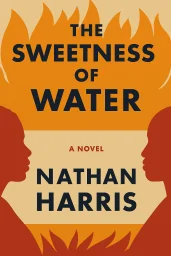
The Sweetness of Water
by Nathan Harris
