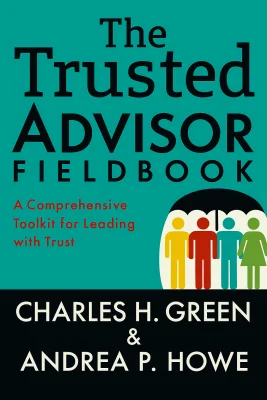
The Trusted Advisor Fieldbook
A Comprehensive Toolkit for Leading with Trust
Categories
Business, Nonfiction, Leadership
Content Type
Book
Binding
Paperback
Year
2011
Publisher
Wiley
Language
English
ISBN13
9781118085646
File Download
PDF | EPUB
The Trusted Advisor Fieldbook Plot Summary
Introduction
In today's hypercompetitive business landscape, technical expertise and innovative products are no longer enough to differentiate yourself. What truly sets exceptional professionals apart is their ability to build deep, meaningful relationships founded on trust. When clients and colleagues trust you implicitly, they share information more freely, collaborate more effectively, and forgive occasional mistakes more readily. Yet despite its critical importance, trust remains one of the most misunderstood and underutilized assets in professional interactions. The principles and practices explored in these pages offer a comprehensive framework for transforming how you approach business relationships. Rather than viewing trust as an intangible quality that either exists or doesn't, you'll discover specific, actionable techniques for systematically building trustworthiness in every interaction. From mastering the art of empathetic listening to navigating difficult conversations with candor, these approaches have been tested and refined across industries and cultures. By implementing them consistently, you'll not only enhance your professional effectiveness but also experience the profound satisfaction that comes from conducting business with integrity and purpose.
Chapter 1: Build Credibility Through Consistent Truth-Telling
Truth-telling is the cornerstone of credibility in business relationships. When you consistently speak the truth, even when it's uncomfortable, you establish yourself as someone worthy of trust. This isn't about brutal honesty that disregards others' feelings; rather, it's about communicating with integrity and transparency in a way that respects all parties involved. A powerful example of this principle comes from Sriram, a consultant based in India working for a global consulting firm. During a meeting with the Business Unit Director of a large pharmaceutical organization, he faced a direct question: "How many people do you have in India who have actually worked on improving revenue growth for companies in our niche area?" Sriram knew the honest answer was zero, as most of their experts were abroad. Though tempted to spin the response, he recognized that any evasion would damage his credibility. So he simply answered truthfully: "No one." Rather than ending the conversation as Sriram expected, the client responded with something surprising: "Congratulations. You're the first person I've met who has actually answered that question honestly." This moment of candor became the foundation for winning significant work and developing a trust-based relationship that lasted for years. The client appreciated Sriram's willingness to acknowledge a deficiency and was impressed by his team's thoughtfulness about how they would fill the gaps while adding value in other areas. The path to building credibility through truth-telling involves several practical steps. First, commit to speaking honestly in all business interactions, even when it feels risky. Second, practice saying "I don't know" when you genuinely lack information rather than bluffing. Third, when you make a mistake, acknowledge it quickly and completely. Fourth, deliver difficult news promptly rather than delaying it. Finally, back up your words with consistent actions that demonstrate reliability. Remember that credibility isn't built in grand gestures but in the accumulation of small moments of truth-telling. Each time you choose honesty over convenience, you strengthen your reputation as someone who can be trusted. This doesn't mean you won't occasionally face negative consequences for your honesty, but over time, the benefits far outweigh the costs. The most successful business relationships are built on a foundation of credibility. By making truth-telling your default approach, you distinguish yourself in a business world where spin and exaggeration are common. Your commitment to honesty becomes a competitive advantage that attracts clients and partners who value integrity above all else.
Chapter 2: Listen First to Establish Deeper Connections
Listening is perhaps the most powerful yet underutilized tool for building trust in business relationships. When you truly listen to others, you demonstrate that you value their perspectives and experiences. This isn't merely about staying silent while someone else speaks; it's about being fully present and engaged in understanding what they're communicating, both verbally and non-verbally. Thomas Friedman, in a commencement address at Grinnell College, shared a story that perfectly illustrates the power of listening. He recounted how his mother, who never graduated from high school, was nonetheless considered the smartest person in their neighborhood. When asked how she knew so much without formal education, she replied, "I didn't go to college, but I know how to listen." Friedman observed that his mother "listened her way to wisdom," demonstrating that attentive listening can be more valuable than formal knowledge in building connections and understanding. This approach transformed how Friedman himself operated in his career as a journalist. Rather than approaching interviews with a rigid agenda, he learned to ask open-ended questions and then truly listen to the responses, allowing conversations to unfold naturally. This technique enabled him to discover insights and stories he would have missed had he been focused solely on his predetermined questions. His success came not from speaking brilliantly but from listening intently. To implement this listening-first approach in your own business relationships, start by eliminating distractions during conversations. Put away your phone, close your laptop, and focus completely on the person speaking. Practice what's called "three-level listening" - first, listen for data and facts; second, put what you hear in context; and third, acknowledge what you've heard through empathetic responses like "That makes sense" or "I can appreciate how challenging that must be." Another key practice is to resist the urge to formulate your response while the other person is still speaking. Instead, allow yourself to be fully present with their words, and trust that your response will come naturally after you've truly understood their perspective. Ask clarifying questions to ensure you've grasped their meaning correctly before moving forward. Remember that listening builds trust because it demonstrates respect and creates space for authentic connection. When people feel truly heard, they're more likely to open up, share valuable information, and engage in collaborative problem-solving. As counterintuitive as it may seem in a business culture that often rewards assertiveness and quick answers, sometimes the most influential thing you can do is simply listen.
Chapter 3: Tackle Difficult Conversations with Candor
Difficult conversations are inevitable in business relationships, but how you approach them can either strengthen or damage trust. Candor—direct, honest communication delivered with care—is the key to navigating these challenging interactions successfully. When you address issues openly rather than avoiding them, you demonstrate both courage and respect for the relationship. Jane Malin, a Principal with SRA International, experienced this firsthand when working on a project for a challenging customer. Her team included four formerly high-ranking military officers who were accustomed to taking initiative without supervision. These team members would often act independently, sometimes going over the client's head up the chain of command to facilitate action. While well-intentioned, their approach caused difficulties with the client sponsor, who needed time to process information and work through his own internal channels. Initially, Jane framed the problem as one of control: "I don't know how to get these guys under control; they aren't doing what I need them to do." As a self-described control freak with an engineering background, this seemed like the obvious issue. But then she had a realization that transformed her approach. "What if it wasn't about my finding ways to control them?" she wondered. "What if I looked at the situation through their eyes? What if I cared about their challenges?" With this new perspective, Jane consciously changed her approach at the next team meeting—adjusting her tone, words, questions, and requests. The results were remarkable. The formerly "rogue" team members became collaborative, starting to ask for her opinion: "How do you think we should do this, Jane?" She went from being perceived as an obstacle to someone they wanted to involve. They realized she had their best interests, and the project's best interests, at heart. The team began pulling together in the same direction, with Jane helping to coordinate activities rather than trying to control them. To apply this approach to your own difficult conversations, start by reframing the problem. Instead of focusing on blame or control, look for the underlying issues and shared interests. Use what's called the "Name It and Claim It" technique—acknowledge the uncomfortable situation directly but with care. For example, "I've noticed something in our working relationship that I'd like to discuss. It might be a bit uncomfortable, but I think addressing it will help us work together more effectively." When delivering difficult messages, use caveats to soften the impact without diluting the content: "At the risk of creating some momentary awkwardness..." or "Since bad news doesn't get better with age..." These phrases signal your awareness of the potential discomfort while still moving forward with necessary candor. Remember that candor builds trust when it's delivered with genuine care for the relationship. The goal isn't to "win" the conversation or prove yourself right, but to address issues in a way that strengthens mutual understanding and respect. When you approach difficult conversations with both honesty and empathy, you create the conditions for deeper trust and more effective collaboration.
Chapter 4: Demonstrate Reliability in Small Promises
Reliability forms the bedrock of trust in business relationships, yet it's often overlooked in favor of more dramatic trust-building gestures. The truth is that trust is built incrementally through consistent delivery on promises—especially small ones. When you reliably do what you say you'll do, you create a pattern that allows others to depend on you with confidence. Andrea Howe shares a story about Old Faithful, the famous geyser in Yellowstone National Park, that perfectly illustrates the power of reliability. Tourists gather by the thousands to watch this natural phenomenon because they know, with near certainty, that it will erupt approximately every 90 minutes. The park rangers don't need to convince visitors of Old Faithful's reliability—its consistent performance over time has established an unshakable reputation. Similarly, your reliability in business isn't established through claims or intentions, but through consistent performance that others can count on. This principle transformed one consultant's relationship with a challenging client. The client, a CFO with a reputation for being hard on consultants, had developed a strong working relationship with the consultant's colleague Ingrid. When Ingrid left the firm, the consultant was tasked with taking over the multimillion-dollar account. Rather than trying to impress the CFO with grand promises, the consultant focused on being meticulously reliable in every interaction—responding promptly to emails, delivering on small commitments ahead of schedule, and being transparent about timelines and expectations. Over time, this consistent reliability built a foundation of trust that allowed the relationship to flourish. The CFO began to include the consultant in strategic discussions and eventually expanded the scope of work beyond what had been entrusted to Ingrid. What started as a potentially precarious transition became a stronger, more profitable relationship—all through the power of demonstrated reliability. To apply this principle in your own business relationships, start by making reliability a conscious priority. Be intentional about the promises you make, ensuring they're specific and achievable. Then create systems to track and fulfill these commitments, whether through detailed calendar reminders, project management tools, or regular check-ins with stakeholders. Pay special attention to what might seem like minor commitments—returning calls promptly, arriving at meetings on time, delivering documents when promised. These small moments of reliability accumulate to create a powerful impression of trustworthiness that extends to larger issues. When you inevitably face challenges in meeting a commitment, communicate proactively rather than waiting for the other party to notice the delay. Remember that reliability isn't about perfection; it's about consistency and transparency. Everyone occasionally falls short of their commitments due to unforeseen circumstances. What distinguishes highly trusted professionals is how they handle these situations—with prompt acknowledgment, clear communication, and renewed commitment to reliability going forward.
Chapter 5: Prioritize Relationships Over Transactions
In business, there's a fundamental choice between viewing interactions as mere transactions or as relationships with long-term potential. When you prioritize relationships over transactions, you shift from a mindset of maximizing immediate gain to one of cultivating mutual benefit over time. This approach not only builds deeper trust but often leads to greater business success in the long run. Jim McCurry, who took over as CEO of Pediatric Services of America (PSA) Healthcare in 2009, demonstrated this principle powerfully. When he arrived, the company was declining in revenue, market share, and profitability despite its noble mission of providing home health care for medically fragile children. The previous management had operated with a classic top-down, measure-by-the-numbers approach. Each month, bottom-performing offices were required to "justify" themselves to top management on conference calls. The style was management by fear, intimidation, and numbers—clearly transaction-focused. McCurry transformed the company by shifting to a relationship-focused approach. He told the staff: "From now on, this company is run for the customer. The area office managers work for the customer, and the rest of leadership works for them. Make your own decisions, and we'll help you make them. Don't wait for us to tell you what to do, you figure out what to do and do it—we trust you." He established a new mission with three parts: Action-oriented, Care-giving, and Trust-based—or ACT. The results were remarkable. By the end of McCurry's first year—during a recession—the company had increased profitability, more than doubled total profits, and turned market share decline into market share gain. Staff morale improved dramatically, and expenses decreased. By prioritizing relationships with both customers and employees, McCurry engineered a complete turnaround. To implement this relationship-first approach in your own business context, start by extending your time horizon. Instead of evaluating each interaction based on immediate return, consider how it contributes to building a valuable long-term relationship. Invest time in understanding your clients' or colleagues' broader goals and challenges, not just those directly related to the current transaction. Practice generosity without immediate expectation of return. This might mean sharing ideas freely, connecting people in your network who could benefit from knowing each other, or occasionally providing value beyond what's strictly required by your agreement. These acts of relationship investment often yield returns far greater than their cost, though not always in predictable ways or timeframes. When faced with decisions that pit short-term gain against relationship health, consciously choose the latter. For example, you might recommend a competitor's solution when it truly better serves your client's needs, or decline work that you're not ideally positioned to deliver. While these choices may reduce immediate revenue, they build the kind of trust that leads to stronger, more profitable relationships over time. Remember that relationship-focused business isn't soft or sentimental—it's strategically sound. The trust you build through this approach creates competitive advantages that cannot be easily replicated: deeper client insights, greater access to opportunities, and the benefit of the doubt during inevitable challenges or mistakes.
Chapter 6: Reduce Self-Orientation to Boost Trust
Self-orientation—focusing primarily on your own interests, concerns, and outcomes—is perhaps the greatest obstacle to building trust in business relationships. When others sense that your primary motivation is self-serving, they naturally become guarded and skeptical. Conversely, when you demonstrate genuine concern for their needs and interests, trust flourishes naturally. Bill Green, then-Chairman and CEO of Accenture, provided a powerful example of low self-orientation during a leadership meeting. When asked about a recently announced organizational shift and whether incentives were properly aligned with new global roles, Green's response was immediate and passionate. He stood up, visibly tense, and said: "Let me... well... Okay, I guess I'm glad you asked that question. Because I want to tell you—I don't want to hear that question again." He continued, "When there's a conflict between the incentives and the right thing: you do the right thing, and then fix the incentives later. Understand? This is critical. We must be a values-driven organization before we are an incentives-driven organization. You design incentives to reinforce and reward behavior—you don't design them to drive behavior. Values are what we need to drive behavior. If there's a mismatch, you fix the incentives. After you do the right thing." Green concluded by emphasizing, "And just to be clear: the right thing is almost always defined in terms of the client—not in terms of our internal P&L." This moment demonstrated Green's commitment to putting client interests ahead of self-interest, even when it might temporarily conflict with internal metrics or compensation structures. To reduce your own self-orientation and build greater trust, start by becoming more aware of where your focus naturally gravitates during business interactions. Do you find yourself primarily concerned with how you're being perceived, what you'll gain, or how to advance your agenda? This awareness is the first step toward shifting your orientation. Practice asking more questions driven by genuine curiosity rather than strategic advantage. When someone raises a concern or objection, resist the urge to immediately counter or defend. Instead, explore their perspective more deeply with questions like "Tell me more about that concern" or "What would an ideal solution look like from your perspective?" When presenting ideas or proposals, explicitly connect them to the other party's stated goals and challenges. This demonstrates that you've been listening and that your recommendations are designed to serve their interests, not just your own. Be willing to acknowledge limitations or potential drawbacks in your own proposals, showing that you prioritize their success over making the sale. Perhaps most importantly, be willing to walk away from opportunities that don't truly serve the other party's interests, even when they might benefit you in the short term. This kind of principled self-restraint sends a powerful message about your trustworthiness and often leads to stronger relationships and better opportunities in the long run. Remember that reducing self-orientation doesn't mean neglecting your own legitimate interests. Rather, it means approaching business with a genuine win-win mindset, where you seek solutions that authentically serve both parties. When others consistently experience you as someone who considers their interests alongside your own, trust develops naturally and enduringly.
Summary
Trust transforms business relationships from transactional exchanges into powerful partnerships capable of creating extraordinary value. Throughout this exploration of trust-building principles, we've seen how consistent truth-telling builds credibility even when honesty feels risky, how attentive listening creates connections deeper than any sales pitch could achieve, and how tackling difficult conversations with candor resolves issues before they undermine relationships. We've discovered that reliability in small promises accumulates into unshakable confidence, that prioritizing relationships over transactions yields greater long-term success, and that reducing self-orientation allows others to trust our motives and recommendations. As Bill Green of Accenture powerfully stated, "When there's a conflict between the incentives and the right thing: you do the right thing, and then fix the incentives later." This principle captures the essence of trust-based business—a commitment to doing what's right for others even when it might temporarily conflict with self-interest. Your journey toward becoming more trustworthy begins with a single step: choose one relationship that matters to your professional success, identify which trust principle could most strengthen that relationship, and take a specific action this week to apply that principle. The business landscape belongs to those who can build and maintain trust, and with deliberate practice, you can join their ranks.
Best Quote
Review Summary
Strengths: The book's first half is highly praised, described as "great and worth five stars." The trust formula introduced by Greene is considered valuable, and the book is noted for its practical application of this formula in various settings. The review appreciates the inclusion of scripts and tools, which make the book practical rather than purely theoretical. The book is also commended for its comprehensive and concise coverage of establishing and maintaining trusted relationships.\nWeaknesses: The second half of the book is criticized for being repetitive and less valuable, causing the reviewer to engage less with the content as it progresses.\nOverall Sentiment: Mixed\nKey Takeaway: The book is a practical guide on building and maintaining trust in relationships, with a strong first half that introduces a valuable trust formula. However, the second half may not maintain the same level of engagement or value.
About Author

Charles H. Green
Green extends his expertise to interrogate the intricacies of trust within professional relationships, blending philosophical insights with practical business strategies. His work emphasizes the importance of honesty, authenticity, and client focus in building long-term value. Through his business strategy consultancy, Trusted Advisor Associates, founded in 1995, Green crafts frameworks that encourage professionals to nurture trust-based relationships, thus enhancing their client-development and advisory skills.\n\nA hallmark of Green's writing is its philosophical depth combined with actionable advice, a style evident in books like "The Trusted Advisor" and "Trust-Based Selling: Using Customer Focus and Collaboration to Build Long-Term Relationships." While his early books focused on strategic financial advice, his later works delve deeper into the dynamics of trust in business. By teaching executive education courses at renowned institutions such as Columbia Business School and Northwestern University's Kellogg School of Management, Green demonstrates the practical application of his theories in complex business environments.\n\nReaders and professionals in the consulting sector benefit significantly from Green's insights, as his bio reveals an author deeply committed to fostering trust and cooperation in business. His contributions, featured in notable management journals, are designed to help practitioners cultivate more meaningful and effective client interactions, ultimately leading to sustained business success.
Read moreDownload PDF & EPUB
To save this Black List summary for later, download the free PDF and EPUB. You can print it out, or read offline at your convenience.
The Trusted Advisor Fieldbook
by Charles H. Green
