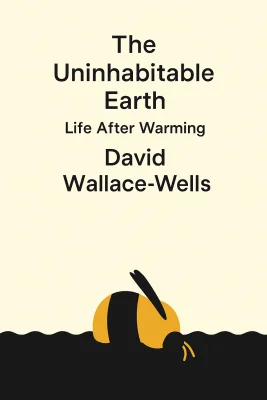
The Uninhabitable Earth
Life After Warming
Categories
Nonfiction, Science, History, Politics, Nature, Audiobook, Sustainability, Environment, Ecology, Climate Change
Content Type
Book
Binding
Hardcover
Year
2019
Publisher
Tim Duggan Books
Language
English
ASIN
0525576703
ISBN
0525576703
ISBN13
9780525576709
File Download
PDF | EPUB
The Uninhabitable Earth Plot Summary
Introduction
# Fire and Flood: Human Stories from a Warming Planet In the summer of 2018, a kindergartner in Santa Barbara was found nearly two miles from his home, carried there by a river of mud that had cascaded down from the mountains after wildfires stripped the hillsides bare. His small body, discovered in a gulley near train tracks close to the waterfront, told a story that millions of families around the world are beginning to understand: climate change is not a distant threat, but a present reality reshaping lives in the most intimate and devastating ways. This tragedy represents just one thread in the vast tapestry of human experience that unfolds when our planet's climate systems begin to unravel. This exploration reveals that behind every statistic about rising temperatures and melting ice lies a deeply personal story of adaptation, loss, resilience, and hope. Through the voices of farmers watching their ancestral lands turn to desert, families fleeing unprecedented floods, and communities grappling with heat that makes outdoor work impossible, we discover that climate change is fundamentally a human story. These accounts illuminate not only our vulnerability in the face of planetary transformation, but also our remarkable capacity for innovation, compassion, and collective action when confronted with the greatest challenge our species has ever faced.
Chapter 1: The Uninhabitable Earth: When Normal Weather Becomes Deadly
When temperatures in Iraq broke 100 degrees Fahrenheit in May, then 110 in June, and finally 120 in July, with nights barely dipping below 100, residents didn't need scientists to explain heat stress. They felt it in their bodies, saw it in the overwhelmed hospitals, witnessed it in the daily struggle to simply exist. A Shiite cleric in Najaf proclaimed the heat was the result of an electromagnetic attack by American forces, and some state meteorologists agreed—such was the desperate search for explanation when the familiar world becomes uninhabitable. This is what cascading climate catastrophe looks like up close. It's not a single disaster but a series of interconnected breakdowns that amplify each other's effects. The same drought that makes farmland vulnerable to wildfire also creates the conditions for massive mudslides when the rains finally come. The heat that kills crops also overwhelms power grids just when air conditioning is needed most. Each system failure creates new vulnerabilities, like dominoes falling in patterns too complex to predict but too devastating to ignore. What makes these cascades particularly cruel is how they expose and exploit existing inequalities. The wealthy can afford backup generators and private firefighting services, while the poor face each crisis with fewer resources and less resilience. Yet as these stories multiply—from Houston's petrochemical plants flooding during Hurricane Harvey to California's wine country burning while millionaires play golf yards from the flames—it becomes clear that no amount of wealth can fully insulate anyone from a destabilized climate. The most unsettling realization is that we're still in the early stages of this transformation. The disasters that seem unprecedented today will likely seem routine to our children, as each new baseline of "normal" gives way to something more extreme. Understanding this trajectory isn't about surrendering to despair, but about grasping the true scale of adaptation required—not just in our infrastructure and policies, but in how we understand our relationship with the planet that sustains us.
Chapter 2: Displaced Lives: Personal Stories of Climate Migration
Maria Santos had never seen her grandfather cry until the day he stood in what used to be his coffee plantation in Guatemala. Three generations of his family had tended these hills, but rising temperatures had pushed the viable growing zone higher up the mountain, beyond his land. The coffee plants that had sustained his family for decades were dying, their leaves yellowing in heat they were never meant to endure. "The mountain is sick," he told Maria, tears mixing with sweat in the oppressive humidity. Within two years, he would be dead, and Maria would be walking north with thousands of other climate migrants, carrying nothing but the memory of green hills that no longer existed. Stories like Maria's are multiplying across the globe, each one a thread in the vast tapestry of human displacement and adaptation that climate change is weaving. In Bangladesh, Rashida Begum watches the Bay of Bengal creep closer to her village each year, swallowing the land where her children played. In Phoenix, construction worker Carlos Mendez starts his shifts at 4 AM to avoid the heat that now regularly exceeds 120 degrees, but even dawn offers little relief. In Mumbai, software engineer Priya Sharma has learned to read the monsoon patterns that increasingly swing between devastating floods and punishing droughts, planning her family's life around weather that no longer follows the rhythms her grandparents knew. These personal stories reveal something that statistics cannot: climate change is fundamentally altering the most basic assumptions about how and where humans can live. The farmer who can no longer grow the crops his ancestors cultivated, the fisherman whose catch has moved hundreds of miles north, the mother who must choose between staying in a place becoming uninhabitable and leaving everything she's ever known—these are the human faces of a planetary transformation. Yet within these stories of loss and displacement, we also find remarkable resilience and innovation. Communities are developing new ways of sharing resources during extreme weather, farmers are experimenting with drought-resistant crops, and families are creating support networks that span continents. The crisis is real and growing, but so is our capacity to adapt, to care for one another, and to find hope even in the most challenging circumstances.
Chapter 3: Nature's Breaking Point: Ecosystems Under Extreme Stress
Dr. James Hansen first testified before Congress about global warming in 1988, on a sweltering June day when the air conditioning in the hearing room had mysteriously failed. The symbolism was almost too perfect: America's top climate scientist warning about rising temperatures while senators sweated through their suits. Hansen's message was clear and urgent—human activities were warming the planet, and the consequences would be severe. What he couldn't have predicted was how his scientific certainty would be met not with action, but with decades of organized doubt and delay. Marine biologist Dr. Sarah Chen descended into the waters of the Great Barrier Reef expecting to document coral recovery. Instead, she found herself swimming through an underwater graveyard. The corals, once vibrant with color and teeming with fish, had turned ghostly white—bleached by water temperatures that had risen beyond their tolerance. In some areas, the skeletal remains of entire reef systems stretched as far as she could see. The fish that had called these reefs home for millions of years were gone, leaving behind an eerie silence in what had once been one of Earth's most biodiverse ecosystems. On land, similar devastation was unfolding in forests around the world. In California, entire mountainsides of pine trees stood dead, killed by bark beetles that thrived in the warmer temperatures. These beetle-killed forests became tinderboxes, fueling wildfires of unprecedented intensity. In the Amazon, sections of rainforest that had never burned in recorded history were going up in flames, releasing stored carbon and accelerating the very warming that made them vulnerable in the first place. The collapse of these natural systems represents more than environmental loss—it signals the breakdown of the life support systems that sustain human civilization. Coral reefs protect coastlines from storm surge while providing protein for billions of people. Forests regulate water cycles and store carbon that would otherwise heat the atmosphere. As these systems fail, we lose not just their beauty but their essential services, leaving us more vulnerable to the storms ahead.
Chapter 4: The Politics of Delay: Why Action Remains Elusive
The Paris Climate Agreement was signed with great fanfare in 2015, hailed as a historic moment when the world finally came together to address the climate crisis. World leaders posed for photos, diplomats celebrated late into the night, and environmental groups cautiously declared victory. Yet even as the champagne was being poured, the mathematics were stark: the commitments made in Paris would still lead to catastrophic warming, and most countries weren't even on track to meet those inadequate targets. This gap between rhetoric and reality reveals the fundamental challenge of climate politics. The problem is global, but politics remains stubbornly local. The benefits of burning fossil fuels are immediate and concentrated, while the costs are delayed and diffuse. The industries that profit from the status quo have names, addresses, and lobbying budgets, while future generations have no political voice. Democratic systems, designed to respond to the immediate needs of current voters, struggle to address threats that unfold over decades. The result has been a parade of summit meetings, policy papers, and ambitious announcements that consistently fail to match the scale of the challenge. Politicians speak passionately about leaving a better world for their children while approving new oil drilling permits. Environmental groups celebrate small victories while emissions continue to rise. Citizens express concern about climate change in polls while voting for candidates who promise cheaper gasoline. Perhaps most tragically, this political paralysis has persisted even as the evidence of climate impacts has become undeniable. Hurricane after hurricane, wildfire after wildfire, heat wave after heat wave—each disaster prompts calls for action that fade as quickly as the news cycle moves on. The very system that should be our greatest tool for collective action has become the primary obstacle to addressing the greatest collective challenge in human history.
Chapter 5: Technology's Double Edge: Solutions and False Promises
Elon Musk has become the patron saint of technological optimism, promising that innovation will solve climate change while simultaneously preparing to abandon Earth for Mars. His companies produce electric cars and solar panels, but also rockets designed to carry the wealthy to other planets when this one becomes uninhabitable. It's a perfect encapsulation of Silicon Valley's approach to climate change: faith that technology will save us, combined with escape plans for when it doesn't. In Iceland, Climeworks engineer Johanna Svensson watched as massive fans pulled carbon dioxide directly from the air, concentrating it for permanent storage underground. The direct air capture facility represented humanity's attempt to undo decades of atmospheric damage through technological innovation. Yet the scale required was staggering—to make a meaningful dent in global emissions would require tens of thousands of such facilities, each consuming enormous amounts of energy. This technological solutionism pervades discussions about climate change, offering seductive alternatives to the difficult work of actually reducing emissions. Geoengineering schemes promise to cool the planet by reflecting sunlight back to space, but they would turn our blue skies red and create acid rain. Carbon capture technologies could theoretically suck CO2 from the atmosphere, but scaling them up would require building 100 million devices at a cost of $30 trillion. Nuclear fusion remains perpetually thirty years away, while artificial intelligence consumes ever more energy even as it's touted as the solution to our energy problems. The cruel irony is that we already have the technologies needed to address climate change—solar panels, wind turbines, batteries, and electric vehicles have all become dramatically cheaper and more efficient in recent years. The problem isn't innovation but deployment. We're not adding clean energy fast enough to replace dirty energy, and in many cases we're simply adding it on top of continued fossil fuel use. No amount of innovation can solve climate change if we continue to organize our economy around endless growth on a finite planet.
Chapter 6: Climate Justice: Who Pays for a Warming World
In the Marshall Islands, President Hilda Heine stood before the United Nations and declared that her nation was facing "cultural genocide." The rising seas that threatened to submerge her country weren't just destroying land—they were erasing a way of life that had persisted for thousands of years. The Marshallese people faced an impossible choice: abandon their ancestral home or watch their culture disappear beneath the waves. Their plight raised profound questions about justice and responsibility in an interconnected world. The cruelest mathematics of climate change are moral ones. The countries that contributed least to the problem will suffer most from its consequences, while those most responsible have the greatest capacity to adapt. Bangladesh, which has contributed virtually nothing to global emissions, faces the prospect of losing much of its territory to sea level rise. Meanwhile, the United States, which has pumped more carbon into the atmosphere than any other nation, sits at a latitude and elevation that will make it one of the more habitable places in a warmed world. This global injustice is replicated at every scale. Within countries, it's the poor who live in flood zones and lack air conditioning, while the wealthy retreat to higher ground and climate-controlled environments. Within communities, it's the elderly and sick who die in heat waves while the healthy survive. Even within families, it's often women and children who bear the greatest burden of climate impacts, from gathering water during droughts to caring for the sick during disasters. These inequities raise profound questions about responsibility and response. Do the wealthy nations that built their prosperity on fossil fuels owe reparations to those suffering from climate impacts? Should carbon-intensive lifestyles be seen as a form of violence against future generations? Yet within these ethical dilemmas, we also find sources of hope and guidance. The same communities that are most vulnerable to climate impacts often have the deepest knowledge of how to live sustainably, offering wisdom that could guide us all toward a more just and resilient future.
Summary
The stories woven throughout this exploration reveal a truth both terrifying and liberating: we are living through the most consequential transformation in human history, and we are the ones writing its outcome. From the kindergartner swept away by climate-fueled mudslides to the grandfather weeping over his dying coffee plants, from the scientists finally speaking with appropriate urgency to the communities developing new forms of resilience, these human stories show us that climate change is not an abstract future threat but a present reality reshaping lives and possibilities across the globe. Yet these same stories also demonstrate our remarkable capacity for adaptation, innovation, and care. In the face of unprecedented challenges, people are finding new ways to support each other, protect their communities, and build hope for the future. The window for preventing all climate impacts has closed, but the window for preventing the worst impacts remains open—if we act with the urgency and scale that the science demands. The choice is ours, and the time is now. Every story we tell from this point forward will either be one of rising to meet this challenge or failing to grasp the magnitude of what's at stake. The ending has not yet been written, and that may be the most important story of all.
Best Quote
“It is worse, much worse, than you think. The slowness of climate change is a fairy tale, perhaps as pernicious as the one that says it isn’t happening at all, and comes to us bundled with several others in an anthology of comforting delusions: that global warming is an Arctic saga, unfolding remotely; that it is strictly a matter of sea level and coastlines, not an enveloping crisis sparing no place and leaving no life undeformed; that it is a crisis of the “natural” world, not the human one; that those two are distinct, and that we live today somehow outside or beyond or at the very least defended against nature, not inescapably within and literally overwhelmed by it; that wealth can be a shield against the ravages of warming; that the burning of fossil fuels is the price of continued economic growth; that growth, and the technology it produces, will allow us to engineer our way out of environmental disaster; that there is any analogue to the scale or scope of this threat, in the long span of human history, that might give us confidence in staring it down. None of this is true. But let’s begin with the speed of change. The earth has experienced five mass extinctions before the one we are living through now, each so complete a wiping of the fossil record that it functioned as an evolutionary reset, the planet’s phylogenetic tree first expanding, then collapsing, at intervals, like a lung: 86 percent of all species dead, 450 million years ago; 70 million years later, 75 percent; 125 million years later, 96 percent; 50 million years later, 80 percent; 135 million years after that, 75 percent again. Unless you are a teenager, you probably read in your high school textbooks that these extinctions were the result of asteroids. In fact, all but the one that killed the dinosaurs involved climate change produced by greenhouse gas. The most notorious was 250 million years ago; it began when carbon dioxide warmed the planet by five degrees Celsius, accelerated when that warming triggered the release of methane, another greenhouse gas, and ended with all but a sliver of life on Earth dead. We are currently adding carbon to the atmosphere at a considerably faster rate; by most estimates, at least ten times faster. The rate is one hundred times faster than at any point in human history before the beginning of industrialization. And there is already, right now, fully a third more carbon in the atmosphere than at any point in the last 800,000 years—perhaps in as long as 15 million years. There were no humans then. The oceans were more than a hundred feet higher.” ― David Wallace-Wells, The Uninhabitable Earth: Life After Warming
Review Summary
Strengths: The review highlights the book's straightforward and honest approach to discussing climate change, providing a detailed analysis of its varied impacts across different regions. It effectively conveys the urgency and severity of the situation, offering insights into geopolitical implications and strategic responses by countries like Russia, the US, and the UK. Overall: The reader finds the book to be an eye-opening account that deepens their understanding of climate change's global effects. The review suggests a high level of engagement with the book's content, indicating a strong recommendation for those interested in the geopolitical dimensions of climate change.
About Author
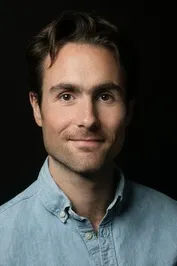
David Wallace-Wells
Wallace-Wells probes the dire realities of climate change through a lens of urgency and clear-eyed realism, drawing attention to the existential threats posed by global warming. His influential writings, particularly "The Uninhabitable Earth: Life After Warming," navigate themes of biodiversity loss, extreme weather events, and economic upheavals, serving as a clarion call for awareness and action. His bio reveals a background steeped in historical understanding, which he leverages to articulate complex environmental issues with cinematic storytelling that captivates a wide readership.\n\nBeyond merely presenting the problems, Wallace-Wells's method involves intertwining scientific data with evocative narratives, creating a vivid picture of potential futures shaped by climate change. This approach challenges traditional narratives by eschewing optimism in favor of realism, thereby galvanizing readers to engage more deeply with the ecological crises at hand. As an author, he has shaped public discourse, encouraging individuals and policymakers alike to confront uncomfortable truths and take proactive steps toward mitigating climate impacts. His work is essential reading for those seeking a profound understanding of the climate crisis and its broader implications on society and the planet.
Read moreDownload PDF & EPUB
To save this Black List summary for later, download the free PDF and EPUB. You can print it out, or read offline at your convenience.
The Uninhabitable Earth
by David Wallace-Wells
