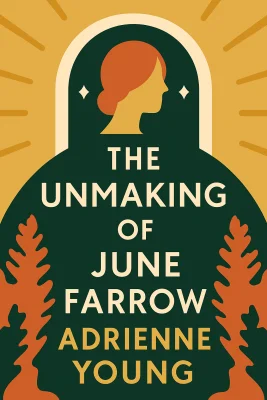
The Unmaking of June Farrow
Categories
Fiction, Audiobook, Mystery, Historical Fiction, Romance, Fantasy, Adult, Book Club, Magical Realism, Time Travel
Content Type
Book
Binding
Hardcover
Year
2023
Publisher
Delacorte Press
Language
English
ASIN
0593598679
ISBN
0593598679
ISBN13
9780593598672
File Download
PDF | EPUB
The Unmaking of June Farrow Plot Summary
Introduction
# The Unmaking of June Farrow: A Journey Through Time's Fractured Door June Farrow stands in the cemetery rain, clutching a photograph that shouldn't exist. Her grandmother Margaret lies six feet under fresh earth, taking with her the last of the Farrow bloodline—or so June believed until this morning. The photograph shows her mother Susanna, who vanished when June was seven months old, standing beside a man in 1950s clothing. But Susanna disappeared in 1989. The image burns in June's hands like a live coal, impossible yet undeniably real. The Farrow women have always been cursed with episodes—moments when reality fractures and they glimpse other times, other lives. June's grandmother warned her it was madness, a hereditary curse that claimed every woman in their line. But as June stares at the photograph, she realizes the episodes aren't hallucinations. They're memories bleeding through from fractured timelines, echoes of lives unlived. When a crimson door materializes in the woods behind her house, its chipped paint gleaming like fresh blood against the dark trees, June faces an impossible choice. Step through and discover the truth about her mother's disappearance, or remain safe in ignorance while the curse slowly devours her mind.
Chapter 1: The Inheritance of Secrets: Margaret's Final Gift
The envelope arrives two days after the funeral, postmarked just before Margaret's death. Inside, June finds more than just the photograph. There's a letter in her grandmother's careful script, words that make her blood run cold. The man in the picture is Nathaniel Rutherford, the minister whose murder in 1950 still haunts Jasper, North Carolina. But it's the woman beside him that stops June's heart. She looks exactly like Susanna, down to the distinctive scar on her left hand. June's childhood friend Mason finds her in the farmhouse kitchen, surrounded by scattered photographs and newspaper clippings. His weathered face creases with concern as she shows him the evidence. "June, your mother disappeared thirty-four years ago," he says gently. "This picture is from 1950. It's not possible." But June knows what she's seeing. The woman in the photograph wears the same locket watch that June inherited, the one that never keeps proper time. Birdie arrives that evening, her ancient hands trembling as she produces another envelope. Margaret's oldest friend has kept secrets for decades, bound by promises that transcended death itself. "Your grandmother made me swear to give you this only after she passed," Birdie whispers. Inside is a brass key and a single sheet of paper with coordinates written in Margaret's hand. The location leads to a clearing in the woods where June played as a child, a place that always felt different, charged with possibility and danger. The key fits a lock June has never seen before, hidden beneath a fallen log. Inside the hollow space, she finds journals spanning generations of Farrow women. Each tells the same impossible story. The red door appears to each generation, calling them to step through and live in two places at once. But their minds aren't meant to hold multiple timelines. Eventually, they all go mad from the weight of memories that don't belong to them.
Chapter 2: Through the Red Door: Crossing Time's Threshold
The door appears at midnight, materializing between two oak trees like a wound in the fabric of reality. Its surface ripples like water, and June can hear something calling from the other side—not a voice, but a pull deeper than sound. The locket watch around her neck grows warm against her skin as she approaches, its hands spinning wildly before stopping at 1951. June's hand finds the brass handle without conscious thought. The metal burns cold against her palm, and for a moment she hesitates. Mason's words echo in her mind: "Some doors are meant to stay closed." But the photograph in her pocket weighs heavier than fear. Her mother's face stares back at her from an impossible time, and June knows she'll never find peace until she understands how Susanna came to be standing beside a dead minister in 1950. The threshold between worlds beckons. June takes a breath that tastes like rain and copper, then steps through. The world tilts and reshapes itself around her. Gone are the familiar mountains of 2023, replaced by rolling tobacco fields that stretch toward unfamiliar horizons. Her modern clothes have vanished, replaced by a simple cotton dress and worn leather boots. The air itself feels different here, thicker with the weight of a time that isn't hers. A truck rumbles down the dirt road, kicking up clouds of red dust. The driver stops and stares at June with recognition that chills her blood. The woman behind the wheel has silver-streaked hair and eyes the same shade of green as June's own. "You're early," she says, as if June's arrival was expected. "I'm Esther Farrow. Your great-great-grandmother." The name hits June like a physical blow. Esther died decades before June was born, yet here she stands, alive and solid, offering her a ride to a yellow farmhouse that looks exactly like the one in Margaret's old photographs.
Chapter 3: Echoes of a Life Unlived: Meeting the Stranger-Husband
The farmhouse sits in a valley June recognizes from childhood dreams, surrounded by fields of tobacco and wildflowers. Smoke rises from the chimney, and chickens scratch in the yard. It's a scene of domestic tranquility that makes June's chest ache with inexplicable longing. But when a man emerges from the barn, his face darkens with an emotion she can't name. Eamon Stone moves with the fluid grace of someone who works with his hands, his dark hair catching the afternoon light. But it's his eyes that stop June cold—they hold recognition, intimacy, and something that might be fury. "You can't be here," he says, his Irish accent thick with emotion. "You promised me you'd never come back." June stares at him in confusion until the truth crashes over her like a cold wave. She's not the first June to cross through the red door. The evidence surrounds her in the small farmhouse. Women's clothes hang in the wardrobe, sized to fit her perfectly. A wedding ring sits abandoned on the dressing table, its gold band worn smooth by years of wear. Most shocking of all, a small bed tucked into an alcove holds a sleeping child—a four-year-old girl with honey-colored hair and June's own eyes. Annie. Her daughter. A child she's never seen before but somehow recognizes in her bones. Eamon's voice breaks as he explains. "The June who lived here was my wife. She bore my child, worked this farm beside me for four years. Then one night, she vanished without a word, leaving Annie alone in her bed." His hands clench into fists. "That little girl cried for her mother for months. She still wakes screaming in the night." The weight of another woman's choices—another version of herself—settles on June's shoulders like a lead blanket. She studies Annie's sleeping face and feels something crack open in her chest, a fierce protectiveness she's never experienced. This child is hers and not hers, a daughter from a life she never lived but somehow remembers in fragments that surface like bubbles in dark water.
Chapter 4: The Awakening of Borrowed Memories
The memories come in fragments, sharp and disorienting. June sees flashes of herself in this house, this life—kneading bread at the kitchen counter, hanging laundry in the morning sun, dancing with Eamon under string lights at the town fair. But they feel like someone else's dreams, vivid but unreal. Each recovered memory brings both wonder and torment. She had been happy here, truly happy in ways she'd never allowed herself to imagine. Esther explains the curse that binds the Farrow women over cups of bitter coffee in the farmhouse kitchen. "We exist in multiple timelines simultaneously," she says, her weathered hands steady despite her age. "The door appears when time fractures, allowing us to slip between the cracks. But our minds aren't meant to hold multiple lives. Eventually, we go mad from the weight of memories that don't belong to us." The old woman's eyes hold depths of sorrow that speak to generations of loss. The story of Susanna emerges piece by piece, each revelation more devastating than the last. June's mother didn't simply disappear—she fell in love with Nathaniel Rutherford in 1950, drawn back through time by forces she couldn't control. But Nathaniel was a man twisted by religious fervor and guilt. He saw Susanna's otherworldly nature as demonic, a test of his faith. When Susanna became pregnant with June, Nathaniel's obsession with cleansing her of sin turned deadly. June learns that she was born in 1950, not 1989. Susanna brought her infant daughter through the red door to escape Nathaniel's growing madness, leaving her with Margaret to raise in safety. But love drew Susanna back to the past, back to a man who would ultimately destroy her. The circular nature of it makes June's head spin. She's been living in the wrong time her entire life, raised by a woman who was actually her great-niece, carrying memories of a life that belonged to another version of herself.
Chapter 5: Shadows of the Past: The Minister's Murder Mystery
The peaceful facade of 1951 Jasper cracks when Sheriff Caleb Rutherford comes calling. His surname isn't coincidence—he's Nathaniel's son, and he believes June knows something about the murder that happened just before her disappearance. His eyes hold the same fanatical gleam as his father's, tempered by the cold calculation of a lawman who's never met a case he couldn't solve. Hidden beneath the bedroom mattress, June finds newspaper clippings about Nathaniel's death and a list of years in her own handwriting. The other June had been investigating something dangerous, following a trail that led to her own destruction. The headlines paint a picture of a town in turmoil—a beloved minister found dead by the river, his skull crushed by repeated blows from a rock. The investigation had focused on outsiders, particularly the strange Farrow family with their mysterious connections to the supernatural. Caleb's questions cut like knives during the courthouse interrogation. He knows details about June's movements, her relationships, her secrets that make her skin crawl with dread. The missing year had created a void in the town's memory, and now that she had returned, everyone wanted answers she couldn't provide. "You were seen running through Mimi Granger's field that night," Caleb says, his smile never reaching his eyes. "Covered in blood, carrying your daughter. Care to explain that?" The memory surfaces like a body rising from deep water, complete and terrible in its clarity. June sees herself—the other June—walking home from the Midsummer Faire with Annie in her arms. Nathaniel emerges from the shadows by the river, his eyes wild with religious fervor and whiskey. "I know who you are," he whispers. "You're the demon child, come back to torment me for my sins." The confrontation turns violent when he tries to baptize her in the river, forcing her head beneath the surface until her lungs fill with dark water. In desperation, June's hand finds a river rock, and she brings it up with all her remaining strength, again and again, until Nathaniel's body goes limp and slides into the shallows.
Chapter 6: The Weight of Two Existences
June's mind becomes a battlefield between two sets of memories. She remembers her life in 2023—caring for Margaret, working the flower farm with Mason, living in careful isolation to hide her episodes. But she also remembers this life, this love, with increasing clarity. The weight of existing in two timelines simultaneously begins to fray the edges of her sanity, just as Esther warned it would. She sees herself meeting Eamon for the first time when his horse wandered onto Esther's property. The shy smile he gave her, the way her heart skipped when he said her name with his lilting accent. She remembers their wedding under the willow tree, the weight of his hands as he slipped the ring onto her finger. Most painfully, she remembers Annie's birth—the overwhelming love that crashed over her the moment she held her daughter for the first time. But as these memories surface, others begin to fade. June writes frantically in a notebook, trying to preserve the life she's losing. Mason's laugh becomes a distant echo. Margaret's gentle hands braiding her hair slip away like smoke. The flower farm where she grew up dissolves into fragments that she can't quite piece together. She's trading one life for another, and the exchange rate is written in madness and loss. Eamon watches her struggle with a mixture of hope and fear. He sees his wife returning in fragments, but he knows this June isn't the same woman who left him. "Sometimes it feels like you're back," he tells her as they work side by side in the tobacco fields. "But then I remember you're not, and it makes me feel like I can't breathe." The attraction between them is undeniable, a magnetic pull that transcends memory and time. But it's built on the foundation of another woman's choices, another woman's love, another woman's betrayal.
Chapter 7: Blood and Truth: Confronting the Curse
The investigation closes in like a noose around June's throat. Caleb has found the blue shoes she claimed never to own, the ones Mimi Granger discovered in her field months after the murder. He has witness testimony that contradicts her alibi, evidence that places her at the scene of the crime. Most damning of all, he has the truth about his father's death, and he wants revenge for the man he believes was a saint. June realizes that Caleb is more than just Nathaniel's son—he's her half-brother, raised by the monster who killed their mother. The revelation comes through Esther's careful questioning, pieces of a puzzle that paint a picture of a family destroyed by one man's religious madness. Susanna didn't jump from Longview Falls as the official records claim. Nathaniel drowned her in the river, then buried her body beneath an oak tree, telling the town she'd committed suicide rather than face the shame of her sins. The confrontation with Caleb comes to a head on a deserted country road. Drunk on whiskey and grief, he forces June from the police car at gunpoint, demanding answers about his father's death. June tells him the truth—all of it. She reveals that she's his half-sister, the daughter Nathaniel thought he'd killed as an infant. She describes how their father tried to drown her in the river, how she killed him in self-defense while Annie watched from the bank. Most devastating of all, she tells Caleb where to find their mother's body. "He buried her under the oak tree beside the falls," June says, watching her brother's face crumble as the lies he's lived with his entire life finally shatter. Nathaniel wasn't the saint the town believed him to be—he was a murderer who killed his own wife and tried to kill his daughter. Caleb's gun wavers in his shaking hands before he throws down the keys to her handcuffs and drives away, leaving her standing alone on the dusty road with the weight of truth between them.
Chapter 8: The Unraveling of Time's Design
The red door appears one final time in Esther's flower fields, shimmering like a mirage in the afternoon heat. June stands before it with the weight of an impossible choice pressing down on her shoulders. She could return to 2023, to Mason and the life she understood, carrying the burden of memories that aren't quite hers. Or she could stay in 1951, trying to rebuild what her other self had broken, knowing that the madness would eventually claim her as it had claimed all the Farrow women before her. But as June reaches for the handle, she realizes the choice was made long ago by another version of herself. The other June had discovered the truth about the Farrow curse—it wasn't just about crossing between timelines, it was about existing in multiple timelines simultaneously, their minds fraying under the weight of parallel lives. The solution was to collapse the timelines into one, to force a choice between lives rather than living them all at once. The plan had required enormous sacrifice. The other June had to send herself to a point where she already existed, creating a paradox that would resolve itself by erasing one timeline completely. She had calculated everything precisely, sending the photograph and letter through Margaret to her past self in 2022, creating the chain of events that would lead June to discover the red door. She had set the locket watch to 1951, ensuring June would arrive at the right moment in time. June understands now that her presence here isn't accidental—it's part of a larger design, one that the other June set in motion before she disappeared. The curse that bound the Farrow women for generations could only be broken by someone willing to sacrifice everything, to choose one life over all the others and accept the consequences. As the door begins to fade, June makes her choice. She turns away from the threshold and walks back toward the farmhouse where Eamon and Annie wait, choosing love over safety, hope over certainty, this life over all the others she might have lived.
Summary
June Farrow's journey through time becomes a meditation on the paths not taken and the weight of choices that echo across generations. In trying to escape the curse of her bloodline, she discovered that some fates cannot be outrun, only transformed. The red door offered not freedom but responsibility, not escape but the chance to choose which version of herself she would become. By staying in 1951, she didn't just save herself—she saved every Farrow woman who would come after, breaking a cycle of madness that stretched back through time itself. The sacrifice was enormous. June lost everyone she'd ever known in her original timeline, erasing herself from their lives as completely as if she'd never existed. But in return, she gained something precious beyond measure—a love that spans decades, a daughter who will live free from the curse that claimed her ancestors, and the knowledge that sometimes the greatest act of courage is choosing to stay rather than run. The red door stands as a symbol of the choices that define us, the thresholds we must cross to become who we're meant to be. For June, it represented both prison and key, curse and blessing, the end of one story and the beginning of another written in love, sacrifice, and the unbreakable bonds that transcend time itself.
Best Quote
“You may have ruined my life, June. But first, you gave me one.” ― Adrienne Young, The Unmaking of June Farrow
Review Summary
Strengths: The review highlights the book's complexity, unpredictability, and engaging twists, likening it to the intricacy of 'Dark' and the thrill of 'Black Mirror' episodes. It praises the novel's mind-bending time travel narrative, its compelling murder mystery, and its powerful feminist themes. The emotional depth of the love story and the portrayal of familial sacrifices are also noted as strong points. Overall: The reviewer expresses immense enthusiasm for 'Unmaking of June Farrow,' describing it as a captivating and intellectually stimulating read. The book is highly recommended for its unexpected twists and intricate storytelling, appealing to fans of complex narratives and strong female-driven plots.
About Author

Adrienne Young
Young maps the intricate terrain of self-discovery and identity through narratives steeped in honor and emotional depth. Her works often serve as a mirror to the reader’s own journey, reflecting the universal quest for understanding and belonging. By integrating immersive world-building with emotional insight, Young creates stories that resonate with readers who seek more than escapism—offering instead a passage to introspection. Her novels, such as "Sky in the Deep" from the "Sky and Sea" duology and "Fable" from the "World of the Narrows" series, exemplify this blend of fantasy and personal exploration, positioning them as poignant reflections on the human condition.\n\nYoung’s literary method thrives on the intersection of fantasy and emotional realism, employing rich thematic elements like honor and emotional memory to evoke a deep sense of connection. Influenced by the evocative power of poetry and music, her style is characterized by a rhythmic narrative voice that draws readers into the hearts of her characters. This approach not only enhances the immersive quality of her books but also anchors them in the readers’ own experiences, thus fostering a profound engagement with her storytelling.\n\nFor readers who prioritize the emotional and psychological depth in their literary pursuits, Young’s body of work offers both an escape and a return to self. Her success as a bestselling author underlines the impact of her narratives, which engage audiences in a meaningful dialogue about identity and memory. This short bio encapsulates the essence of an author who continues to expand the boundaries of genre fiction, with her forthcoming book, "A Sea of Unspoken Things", promising to extend her legacy of insightful storytelling.
Read moreDownload PDF & EPUB
To save this Black List summary for later, download the free PDF and EPUB. You can print it out, or read offline at your convenience.
The Unmaking of June Farrow
by Adrienne Young
