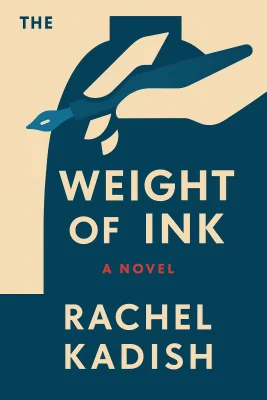
The Weight of Ink
Categories
Fiction, Audiobook, Historical Fiction, Book Club, Historical, British Literature, Books About Books, Judaism, Jewish, Literary Fiction
Content Type
Book
Binding
Kindle Edition
Year
2017
Publisher
Mariner Books
Language
English
ASIN
B01I4FPLUG
File Download
PDF | EPUB
The Weight of Ink Plot Summary
Introduction
# The Weight of Ink: Voices Preserved Across Centuries The electrician's hammer strikes hollow wood beneath the Richmond staircase, and three centuries of silence crack open like an eggshell. Inside the hidden compartment, wrapped in oiled cloth, lie documents that should not exist—philosophical treatises penned in a woman's hand during plague-ravaged London, when such thoughts could earn their author a date with the executioner's axe. The elegant script flows across yellowed pages with dangerous urgency, signed only with a single Hebrew letter: aleph. Helen Watt arrives at the discovery with trembling hands and a scholar's hunger, her cane tapping against stones worn smooth by time. At seventy-three, the Cambridge professor recognizes what others cannot—these are not mere historical curiosities but the preserved voice of a woman who dared to think forbidden thoughts in an age that offered her no such right. As Helen lifts the first page, she glimpses a story that mirrors her own: two brilliant women separated by centuries, both sacrificing conventional happiness for the dangerous freedom of intellectual rebellion. The weight of ink, she will discover, is nothing less than the weight of truth itself, heavy enough to bear across the centuries yet light enough to survive in darkness until the right moment arrives to bring it into light.
Chapter 1: Hidden Beneath the Stairs: The Richmond Discovery
The renovation crew expects dust and cobwebs when they pry open the panel beneath Prospect House's grand staircase. Instead, their flashlight beam illuminates bundles of papers wrapped like burial shrouds, their ink still dark after three hundred years of waiting. The handwriting flows with practiced elegance across pages that pulse with dangerous ideas—challenges to God and king that could have cost their author everything in 1665 London. Helen Watt follows the beam of light into history, her trained eye catching what others miss. The secretary hand, that distinctive seventeenth-century script, carries an urgency that makes her pulse quicken. These are not household accounts or love letters but philosophical arguments that slice through religious orthodoxy like a blade through silk. Aaron Levy, her American research assistant, crouches beside the hidden compartment with the reverence of an archaeologist. At twenty-six, he carries himself with casual confidence, his stalled dissertation forgotten in the face of potential treasure. The papers speak of God as nature, of the universe as a vast mechanism without divine intervention. In plague-torn London, such ideas earned their authors exile or death. Yet here they survive, preserved in darkness, waiting for scholars who can finally appreciate their revolutionary power. Helen's hands shake as she turns each page, not from age but from recognition. She has spent her life studying this period, and she knows these thoughts should not exist in any woman's handwriting. The Eastons hover nearby, their renovation plans forgotten. Ian watches with the expression of a man who has stumbled into someone else's dream, while his wife Bridgette already sees pound signs dancing above the ancient papers. But Helen sees something more precious than money—she sees a voice that refused to be silenced, a mind that would not accept the limitations history tried to impose upon it.
Chapter 2: The Rabbi's Secret Scribe: Ester's Dangerous Education
In the narrow streets of 1657 London, where the Thames reeks of ambition and sewage, Ester Velasquez walks with the careful steps of someone who knows she does not belong. At twenty, she carries herself like a blade hidden in silk—beautiful enough to turn heads, intelligent enough to know that beauty is both weapon and weakness in a world that offers women few choices beyond marriage and motherhood. The Portuguese Jewish community exists in shadows, refugees from the Inquisition who have learned that survival depends on invisibility. Ester serves as scribe to Rabbi HaCoen Mendes, a blind scholar whose learning rivals any in Europe. In his study, surrounded by books that smell of leather and wisdom, she finds the only place where her mind can breathe freely. The rabbi dictates letters to scholars across the continent, his voice carrying the weight of centuries of Jewish learning. But serving as the rabbi's eyes and hands awakens hungers Ester never knew she possessed. As she transcribes his correspondence, she begins to see flaws in his arguments, places where logic bends to accommodate faith. The rabbi speaks of God's will as if it were as certain as sunrise, but Ester sees only questions where others find answers. The temptation begins small—a word changed here, a phrase refined there—until her pen writes thoughts that spring from her own rebellious heart. The rabbi senses something amiss but cannot name it. His finest student is slipping away from faith, just as Baruch de Spinoza had years before in Amsterdam. The parallel haunts him, this brilliant young mind he fears he is failing to save from heresy. But Ester has already crossed the line between faith and reason, between acceptance and rebellion. In the margins of household accounts, she practices a different signature—Thomas Farrow, a name borrowed from a failed actor she once glimpsed in the street.
Chapter 3: Borrowed Names and Forbidden Correspondence
Under the stolen identity of Thomas Farrow, Ester begins her own correspondence with Europe's greatest philosophers. She writes to Franciscus van den Enden, Spinoza's former teacher, challenging conventional notions of divine providence. Her letters are blunt, unadorned by the flowery deference expected in scholarly correspondence. This directness, so inappropriate in a woman, serves her well as a man. The responses come slowly, cautiously. These are dangerous times for freethinkers, when the Inquisition's reach extends far beyond Spain and even tolerant Amsterdam offers no sanctuary for heretical ideas. But Ester's persistence and obvious intelligence gradually win her correspondents' attention. Van den Enden warns her about the perils of atheism. Thomas Hobbes engages her questions about the nature of divine substance. Most remarkably, she begins corresponding with Spinoza himself—the excommunicated philosopher whose ideas about God and nature will reshape European thought. Their exchange is tentative, each testing the other's commitment to dangerous truths. Ester writes with the passion of someone who has nothing to lose, for in a sense, she does not exist at all. The correspondence becomes electric—two brilliant minds grappling with questions that could destroy them both. Spinoza shares fragments of the work that will become his Ethics, testing ideas on this unknown correspondent who seems to grasp their implications better than most scholars. If God is indeed identical with nature, as Spinoza suggests, then what room remains for divine intervention. What meaning can prayer have in a world governed by natural law. Ester pushes him toward bolder statements, her questions sharpening his arguments like steel on stone.
Chapter 4: Plague, Fire, and the Price of Survival
The summer of 1665 arrives like a fever dream, bringing the Great Plague that will devour London whole. Church bells toll constantly, marking the passage of souls from this world to whatever lies beyond. The streets empty as those who can afford to flee abandon the city to the poor, the stubborn, and the doomed. Ester remains in the rabbi's house on Creechurch Lane, tending to the old man as his body fails and his faith wavers. Rabbi HaCoen Mendes, who once debated theology with absolute certainty, now whispers doubts in the darkness. He speaks of his mother, tortured by the Inquisition while he watched helplessly. He confesses that he has spent his life trying to find God in a world that seems abandoned by divine mercy. The plague creeps through London like spilled ink spreading across parchment, staining everything it touches. When the rabbi dies, Ester finds herself alone with Rivka, the household's sturdy servant, in a city that has become a charnel house. They join Mary da Costa Mendes, a wealthy merchant's daughter whose beauty has become a curse in a world where survival trumps all other considerations. Mary is pregnant, abandoned by her lover—the real Thomas Farrow, whose name Ester has been using in her correspondence. The three women barricade themselves in Mary's grand house, marked with the white cross that warns away the living. Outside, London burns and dies and is reborn in ash. Inside, they wait for death or deliverance, never knowing which will come first. Mary's pregnancy becomes a countdown to catastrophe—new life struggling to enter a world that seems determined to end. The Great Fire follows the plague, as if the city must be purged by flame as well as disease.
Chapter 5: Marriage of Minds: Love and Intellectual Compromise
The plague passes like a fever breaking, leaving London scarred but breathing. Ester emerges from quarantine to find her world transformed. The rabbi is dead, her livelihood gone, her future as uncertain as smoke. In this wasteland of possibility, an unexpected offer arrives from Richmond, where the Thames winds through green meadows far from the city's stench and sorrow. Benjamin HaLevy, a wealthy merchant, has built himself a mansion that proclaims Jewish success in England. His son Alvaro has returned from naval service, sun-weathered and changed by years at sea. When his father proposes a marriage of convenience to Ester, Alvaro sees not duty but possibility. He recognizes in her the same hunger for something beyond the prescribed roles that society offers. Their wedding takes place under a sky dark with smoke from the Great Fire, as if the world itself burns to mark this unlikely union. Ester circles Alvaro seven times under the wedding canopy, each step taking her further from the woman she was toward someone she has yet to become. The marriage contract bears the name Manuel HaLevy—the father's attempt to resurrect his dead son through legal fiction. But Alvaro and Ester understand each other in ways that transcend law or custom. He has his own secrets, his own reasons for accepting a marriage without passion. She has her philosophical correspondence, her dangerous ideas that could destroy them both if discovered. They become partners in deception, each protecting the other's hidden truth while building something that resembles happiness on the foundation of mutual respect. In the quiet of her Richmond study, with the Thames flowing past like liquid time, Ester continues her secret work.
Chapter 6: Parallel Voices: Helen's Quest and Ester's Legacy
Back in the present, Helen Watt sits in her sparse Cambridge flat, surrounded by photocopies and transcriptions that represent a lifetime's work. The Parkinson's disease that ravages her body has begun to claim her hands, making each word she writes a victory against entropy. But her mind remains clear, sharp enough to see the connections that others miss. Aaron Levy has become more than a research assistant—he is the heir to her intellectual legacy, the young scholar who will carry these discoveries into the future. Together, they have traced Ester's correspondence across Europe, following paper trails that lead to some of the greatest minds of the seventeenth century. The woman who hid behind men's names has finally found her voice. But Helen carries her own secrets, her own reasons for pursuing Ester's story with such desperate intensity. In her desk drawer lies a faded photograph of Dror, a young Israeli soldier she loved and left decades ago. He died in a car bombing in 1978, taking with him all the possibilities Helen had been too frightened to embrace. She has spent her life in libraries and lecture halls, building walls of scholarship around the heart she was too afraid to risk. Helen sees in Ester's story a mirror of her own choices, the paths taken and abandoned. Both women sacrificed love for learning, chose the life of the mind over the messier demands of the heart. But where Helen retreated into academic safety, Ester pushed forward into dangerous territory, risking everything for the chance to think freely. As Helen's strength fails, she makes her final choice—the documents will go to Aaron, along with the responsibility to tell Ester's story to the world.
Chapter 7: The Eternal Weight of Preserved Truth
The final documents reveal Ester's last secret—her confession written in a hand weakened by approaching death but still determined to set the record straight. The confession reveals the full scope of her deception, how she used her position as the rabbi's scribe to engage with the greatest philosophical questions of her age, how she created false identities to correspond with thinkers who would never have acknowledged a woman's right to participate in their debates. Alvaro HaLevy emerges as the true hero of the story—a man who loved his wife enough to protect her secrets, who understood that her mind was a treasure worth preserving even at the cost of his own reputation. His final poem, hidden with Ester's papers, reveals a love that transcended the conventional boundaries of marriage, a partnership built on mutual respect and shared commitment to truth. Aaron stands in Helen's empty office after her death, surrounded by the accumulated weight of decades spent in pursuit of truth. The documents rest on her desk like a gift from the past, Ester's voice finally ready to be heard after three centuries of silence. Her letters to Spinoza and other great thinkers reveal a mind that could match any of her male contemporaries, constrained only by the accident of her birth into a world that had no place for women's intellectual ambitions. The discovery will revolutionize scholars' understanding of seventeenth-century intellectual history, proving that women participated in the great philosophical debates of the age even when they were officially excluded from them. But more than that, the documents tell a human story of courage and compromise, of the price paid by those who dare to think beyond the boundaries of their time. As Aaron prepares to share Ester's story with the world, he understands that he holds proof that the human desire for truth and freedom cannot be suppressed.
Summary
Ester Velasquez achieved a kind of immortality she never sought, her hidden writings surviving when countless important documents perished. She was not just a scribe or secret philosopher but a bridge between worlds, a woman who refused to accept the limitations that history tried to impose on her. Her correspondence with Spinoza and other great thinkers reveals a mind constrained only by the accident of birth into an age that offered women no intellectual freedom. The weight of ink proves heavier than the weight of silence, more enduring than the weight of conformity. In finding Ester's voice, Helen found her own echo across time—proof that some rebellions succeed not through victory but through persistence, not through recognition but through the simple act of refusing to disappear. Aaron inherits more than historical documents; he holds evidence that dangerous ideas will find a way to survive even in the darkest times, preserved against time's current until the right moment arrives to bring them into light.
Best Quote
“Never underestimate the passion of a lonely mind.” ― Rachel Kadish, The Weight of Ink
Review Summary
Strengths: The review highlights the book's intriguing historical discovery of manuscripts over 300 years old and the compelling character of Helen Watt, a dedicated historian with a passion for Jewish studies. The narrative's urgency and competitive elements add to the story's appeal. Weaknesses: The review notes a humorous yet critical observation about Brigette's character, suggesting she embodies traits perceived as annoying in modern women. This may detract from her likability as a character. Overall: The reader finds the book engaging, particularly due to the historical elements and character dynamics. The review suggests a positive reception, with a recommendation for those interested in history and character-driven narratives.
About Author

Rachel Kadish
Kadish interrogates the complexities of Jewish identity and the female experience through a blend of historical and contemporary narratives. Her work often dives into the intellectual and emotional journeys of her characters, using their stories to explore themes of marginalization and identity. This approach is evident in her acclaimed book "The Weight of Ink", where she intertwines the lives of a 17th-century Jewish refugee and a modern-day historian. By focusing on women who defy societal expectations, Kadish extends a dialogue on the enduring struggle for intellectual freedom and agency.\n\nHer literary style is marked by psychological depth and a poetic sensibility, which provides readers with a rich and detailed exploration of her subjects. Through novels such as "From a Sealed Room" and "Tolstoy Lied: A Love Story", she offers a nuanced examination of how personal histories intersect with broader societal issues. Kadish's method of weaving together time periods allows readers to reflect on the continuous nature of these struggles, enriching the narrative with historical context and emotional insight.\n\nKadish's contribution to literature has been recognized through several awards, underscoring the impact of her storytelling. Her works not only offer an engaging reading experience but also invite a deeper understanding of cultural and personal identity. This unique blend of historical inquiry and contemporary relevance makes her an important voice for readers interested in stories that challenge the status quo and illuminate the complexities of the human experience.
Read moreDownload PDF & EPUB
To save this Black List summary for later, download the free PDF and EPUB. You can print it out, or read offline at your convenience.
The Weight of Ink
by Rachel Kadish
