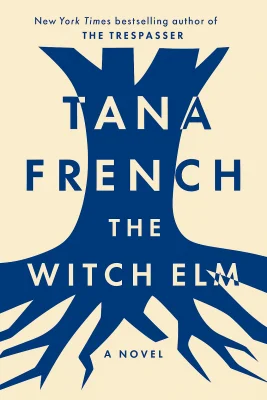
Categories
Fiction, Audiobook, Mystery, Thriller, Adult, Book Club, Ireland, Suspense, Crime, Mystery Thriller
Content Type
Book
Binding
ebook
Year
2018
Publisher
Viking
Language
English
ASIN
0735224633
ISBN
0735224633
ISBN13
9780735224636
File Download
PDF | EPUB
The Witch Elm Plot Summary
Introduction
# The Wych Elm: Where Memory and Murder Take Root The skull grinned up from the damp earth like a death's head joke, its hollow sockets packed with decades of dirt and decay. Six-year-old Zach stumbled backward from the ancient wych elm, his small hands still trembling from what he'd pulled from the tree's hollow heart. The Ivy House garden, sanctuary of golden childhood summers, had just surrendered its darkest secret to the autumn light. Toby Hennessy stood among the gathering police officers, his damaged mind struggling to process the impossible. The photographs they showed him revealed Dominic Ganly—cocky schoolmate, rugby star, the boy who had vanished ten years ago in an apparent suicide leap from Howth Head. But here was proof that Dominic had never reached those distant cliffs. He had died here, in this very garden where Toby had spent countless holidays with his cousins, under the gentle watch of Uncle Hugo. As Detective Rafferty's predatory eyes fixed on him with growing interest, Toby felt the cold touch of a truth that would unravel everything he believed about his family, his past, and the fragments of memory his broken brain still possessed.
Chapter 1: The Golden Boy Falls: Attack and Recovery at Ivy House
The beating came without warning on an ordinary Dublin night. Toby Hennessy, twenty-eight and blessed with the kind of easy charm that opened doors and hearts, had been walking home from drinks with friends when two men materialized from the shadows of his apartment building. They weren't common burglars—they moved with professional precision, their violence methodical and personal. The larger man smiled as Toby stumbled through his violated doorway. What followed shattered more than furniture and bones. Fists and boots worked with craftsmanlike efficiency, each blow calculated to destroy rather than merely hurt. When Toby's skull finally cracked against the coffee table, the sound echoed through his consciousness like a gunshot. The last thing he heard was breath against his ear: "Next time, mind your own fucking business." Three days later, he woke in a hospital bed to discover that pieces of his mind had simply vanished. The traumatic brain injury had stolen his easy confidence along with chunks of memory, leaving him with slurred speech, a trembling hand, and gaps in his past that yawned like chasms. The golden boy who had glided through life was gone, replaced by someone who jumped at shadows and forgot conversations mid-sentence. Months of painful recovery followed. Simple tasks became monumental challenges. His girlfriend Melissa watched him with careful eyes, her love unwavering but tinged with exhaustion. When Uncle Hugo's brain cancer diagnosis arrived like another blow, the offer to move to the Ivy House felt like salvation for them both. Hugo Hennessy was a genealogist, a gentle giant who had never married, dedicating his life to tracing family histories in the rambling Georgian mansion where he'd grown up. The house wrapped around Toby like a protective spell, its ivy-covered walls holding back the chaos of the outside world. For the first time since the attack, he could almost believe he might heal.
Chapter 2: Bones in the Ancient Wood: Discovery and Investigation
The discovery shattered their fragile peace like a stone through glass. Young Zach had been exploring the garden while the adults lingered over Sunday lunch, defying his mother's warnings to climb the massive wych elm that had sheltered generations of playing children. His screams brought them running to find him staring at the skull that had tumbled from the tree's hollow heart. Within hours, the garden swarmed with police. Crime scene tape fluttered in the wind as figures in white coveralls moved like ghosts between the flower beds. Detective Mike Rafferty arrived with the easy authority of a predator who knew his territory, his sharp eyes cataloging every detail of the family's shock and confusion. The ancient elm had to die. Two hundred years of growth fell to the tree surgeon's chainsaw as investigators worked with archaeological precision, each cut revealing more of what lay hidden in the hollow trunk. The skeleton was remarkably preserved, protected by the tree's embrace from the worst of time and weather. A young man, tall and strong, who had died sometime in the past fifteen years. The victim's identity came back quickly through dental records. Dominic Ganly, eighteen when he vanished a decade earlier after sending a cryptic text message to everyone in his phone. His disappearance had been ruled probable suicide, his body supposedly lost to the sea from Howth Head's treacherous cliffs. But here was proof that Dominic had never made that final journey. Rafferty's questions began gently, almost conversationally, but Toby caught the calculation behind those pale eyes. The detective was building something, piece by careful piece, and the family's nervous answers only seemed to feed his growing certainty. When he asked about keys to the garden door, it wasn't because he needed extras. He wanted to know who else might have had access to this sanctuary that had become a tomb.
Chapter 3: Dominic's Ghost: Uncovering the Victim's Dark Truth
The photograph on Rafferty's phone brought back fragments of memory like shards of broken glass. Dominic Ganly had been part of their school's social constellation—rugby player, popular, the kind of golden boy who moved through adolescence with unshakeable confidence. Toby remembered him vaguely, the way you remember someone who was always around but never quite a friend. But as the investigation deepened, a darker picture emerged. Sean and Dec, Toby's oldest friends, painted Dominic as something more sinister when they visited the Ivy House. Behind the charming facade had been a systematic bully who targeted the vulnerable with calculated cruelty. He had made Leon's school years a living hell, orchestrating humiliations and spreading vicious rumors with the skill of a master manipulator. The summer Dominic died, he had been spiraling toward desperation. His Leaving Cert results were a disaster, his university dreams crushed by his own arrogance and lack of preparation. The golden boy who had never faced real consequences suddenly confronted a future that wouldn't bend to his will. His behavior had grown increasingly erratic, his cruelty more focused and vicious. Toby struggled to reconcile these revelations with his damaged memory, but his broken mind offered only tantalizing fragments. Had he known about Leon's suffering? Had he tried to intervene? The gaps in his recollection felt like missing pieces of a crucial puzzle, elements that might explain how they had all ended up here, with Dominic's bones scattered in their family garden. Rafferty's visits became more frequent, his questions more pointed. He spoke of forensic analysis and witness statements, of timelines and opportunities. The casual friendliness never left his voice, but his eyes held the patience of a hunter who knew his prey was already trapped. Each conversation felt like another thread in a web that was slowly tightening around them all.
Chapter 4: The Garrote's Secret: Evidence Points to Family
The breakthrough came when Rafferty found Toby's old red hoodie buried in a closet, its drawstring conspicuously missing. The detective's smile held no warmth as he explained that the cord had been fashioned into a garrote—the murder weapon that had ended Dominic's life. DNA analysis confirmed what the visual match had already suggested, and suddenly Toby wasn't just a witness to the investigation. The evidence accumulated with inexorable weight. The knots were tied with sailing precision, the kind Toby had learned during countless summer holidays on family boats. The timeline placed Dominic's death on a September night when the family was supposedly asleep, but Susanna revealed she had gone to Toby's room that night and found his bed empty. He had been gone for hours, returning only near dawn with no explanation his damaged memory could provide. Rafferty painted a picture of teenage justice gone tragically wrong. Perhaps Toby had finally learned the full extent of Dominic's systematic torture of Leon. Perhaps he had confronted the bully in the garden, meaning only to scare him, to make him understand the fear he had inflicted on others. Just a few seconds too long, a grip held too tight, and suddenly there was a body to dispose of and a lifetime of secrets to keep. The detective offered a more palatable version of events, speaking of manslaughter charges and understanding prosecutors. He portrayed Toby as a protective cousin whose intervention had escalated beyond control—not a cold-blooded killer, but a young man who had acted from love, however misguided. All he had to do was tell the truth, and the system would show mercy. But Toby's memory remained stubbornly blank about that crucial night. His brain injury made it impossible to distinguish between genuine recollection and the false memories that trauma sometimes creates. Fragments surfaced like debris from a shipwreck—the taste of something bitter, the weight of rope in his hands, the sound of his own breathing loud in the darkness. Were these memories or nightmares? The damage to his mind made certainty impossible.
Chapter 5: Blood and Loyalty: The Cousins' Deadly Truth
The confession came on a night when grief and alcohol loosened tongues that had stayed carefully guarded for a decade. Hugo was dying in the hospital, his condition deteriorating rapidly, and the three cousins found themselves alone in the house that had shaped their childhood. What began as a wake for their beloved uncle became something far more dangerous—a revelation that would shatter everything Toby thought he knew about his family. Susanna spoke first, her voice steady despite the wine and the crushing weight of what she was revealing. Dominic hadn't been the charming golden boy everyone remembered. Behind his popular facade, he had been a predator, systematically tormenting anyone he perceived as weak or different. Leon had endured years of humiliation and abuse, but it was Susanna who had finally drawn Dominic's focused, sexual attention. What started as unwanted advances had escalated into stalking, assault, and explicit threats of rape. The police had been worse than useless—a teenage girl's word against a popular rugby star from a respectable family. Susanna's complaints were dismissed as hysteria, her evidence deemed insufficient. When Dominic made it clear he would follow her to university, that geography wouldn't save her, she realized she had only one option left. Leon had been her willing accomplice, driven by his own years of torment and his fierce loyalty to his cousin. Together, they had researched methods and practiced techniques, waiting for the perfect opportunity. It came during that final summer when Dominic's desperation over his failed results made him vulnerable to manipulation. Susanna had lured him to the garden with false promises, while Leon waited in the shadows with a garrote fashioned from Toby's hoodie cord. The killing itself had been quick and efficient—a moment of violence that ended years of fear and abuse. But disposing of the body required more elaborate planning. Using ropes and pulleys, they had hauled Dominic's corpse up into the hollow of the ancient wych elm, where it would remain hidden for a decade. Then Leon had driven to Howth Head with Dominic's phone, sending a suicide text before throwing the device into the sea. Toby listened to this confession with growing horror, not at what his cousins had done, but at his own role in the tragedy. He hadn't been the killer—his damaged memory had hidden no dark secrets. Instead, he had been something worse: the oblivious bystander who could have prevented it all if he had only paid attention, only cared enough to see the suffering happening right in front of him.
Chapter 6: Hugo's Last Gift: A Dying Man's Noble Lie
Hugo's final act was one of breathtaking selflessness, though it took time for Toby to fully grasp its implications. As his uncle lay dying in the hospital, machines monitoring his failing body, he made a choice that would redefine how the world remembered him. Rather than let the investigation destroy his family, Hugo decided to shoulder the blame himself. The confession came as no surprise to Detective Rafferty, who had suspected the old man from the beginning. Hugo's story was convincing in its details—how he had discovered Dominic's abuse of his beloved niece, how he had lured the young man to the garden and strangled him in a moment of protective rage. The physical evidence supported his claims, and his gentle demeanor made the crime seem like a desperate act of love rather than cold-blooded murder. But Toby could see the truth in Hugo's eyes during those final hospital visits. His uncle was dying anyway—the brain tumor would claim him within weeks regardless of any legal proceedings. By confessing to Dominic's murder, he was trading his reputation for his family's freedom, using his remaining time to craft one final genealogy—a false history that would protect the people he loved most. The media attention was brutal but mercifully brief. Hugo Hennessy, the mild-mannered genealogist turned killer, made compelling headlines for a few days before other scandals claimed the public's fickle attention. The family endured the scrutiny with grim determination, playing their assigned roles in Hugo's final fiction. They were the shocked relatives, struggling to understand how their gentle patriarch could have committed such a terrible crime. Hugo died peacefully in his sleep three days after his confession, the official cause listed as complications from his brain tumor. But Toby suspected it was something simpler—the relief of a man who had finally set down a burden too heavy to carry. His last words had been characteristically understated: "Look after yourself, and look after each other." It was both blessing and command, a final gift wrapped in gentle authority. The funeral was well-attended despite the circumstances. Colleagues spoke of Hugo's kindness and scholarly dedication. His brothers remembered the gentle boy who had become an even gentler man. But Toby knew the real eulogy was unspoken—the lives Hugo had saved with his sacrifice, the futures he had preserved with his noble lie.
Chapter 7: Detective's End: Final Confrontation in the Garden
Detective Rafferty arrived at the Ivy House on a gray afternoon when winter light was already failing and the garden lay dormant under a blanket of fallen leaves. Toby had been living alone in the decaying mansion for weeks, rattling around its empty rooms like a ghost haunting his own past. Hugo's death should have closed the investigation, but Rafferty's presence suggested unfinished business. They sat on the terrace where children had once played, sharing cigarettes and watching a stray cat hunt among the bare flower beds. The detective's manner was different now—less predatory, more philosophical. He spoke of the case with the detached interest of a craftsman discussing his work, explaining how he had known from the beginning that Hugo wasn't the real killer. Rafferty had done his homework thoroughly. He knew about Toby's work creating fake social media personas for gallery exhibitions, the elaborate fictional characters designed to generate buzz around art shows. It was a small step from there to the anonymous emails that had been sent to Dominic during that final summer—messages from a supposed secret admirer that had encouraged the dead boy's increasingly obsessive pursuit of Susanna. The revelation hit Toby like a physical blow. In trying to play what he thought was a harmless prank, to get petty revenge for some long-forgotten slight, he had inadvertently set the murder in motion. His emails had fed Dominic's delusions, convinced him that Susanna was playing hard to get rather than genuinely rejecting his advances. Without that digital encouragement, the harassment might have ended differently. Rafferty's final insight was the cruelest of all. He explained why he had focused his investigation on Toby rather than the more obvious suspects—not because he believed Toby was guilty, but because he knew a jury would. The brain damage, the memory loss, the obvious vulnerability would have made him the perfect scapegoat. Hugo had understood this too, had seen how easily his damaged nephew could be sacrificed to protect the real killers. The fight that followed erupted from years of accumulated guilt and rage. Two men grappled in the gathering darkness, their violence echoing the brutality that had started it all. But Toby's damaged body was no match for trained reflexes, and when Rafferty's skull cracked against the garden stone, when his blood began to pool in the winter earth, there was no triumph—only the crushing weight of another life destroyed by proximity to the Hennessy family curse.
Chapter 8: Fractured Lives: Justice, Guilt, and Survival
The trial became a media spectacle, but one that ultimately vindicated the defense strategy of portraying Toby as a damaged victim rather than a calculating killer. His lawyers painted a picture of a man so broken by trauma that he could no longer distinguish between reality and nightmare. When Detective Rafferty had appeared in his garden that night, Toby had seen not a colleague seeking truth but an intruder threatening his fragile peace. Expert witnesses testified about traumatic brain injury and post-traumatic stress disorder, their clinical language creating a medical framework for what felt like moral chaos. Toby's obvious disabilities—the drooping eyelid, the slurred speech, the trembling hands—made him a sympathetic figure rather than a menacing one. His family's testimony about his gentle nature, combined with character witnesses from his former life, created a portrait of tragedy rather than malice. The verdict of manslaughter by reason of diminished responsibility came as a relief to everyone except perhaps Toby himself. The judge, acknowledging his mental state and the circumstances of Rafferty's death, sentenced him to treatment rather than punishment. Two years in the Central Mental Hospital—a strange liminal space between justice and mercy, between past and future. The hospital became Toby's world, a place where damaged minds worked slowly toward something resembling wholeness. He underwent therapy for his PTSD, rebuilt cognitive skills with patient specialists, and gradually assembled a new understanding of who he was and who he might become. The other patients became his community, fellow travelers on the difficult road back from the brink of complete dissolution. His release felt like both liberation and exile. The Ivy House had been sold to pay legal fees, his old job was gone, and his relationship with Melissa had become another casualty of the violence that seemed to follow him everywhere. He found work under an assumed name, doing simple tasks that wouldn't strain his rebuilt but still fragile mental architecture. The years that followed blurred together in a haze of cheap apartments and temporary connections. Toby moved frequently, driven by paranoia he couldn't quite shake, always sensing that some unnamed threat was closing in. He had survived the investigation, the trial, and the treatment, but he had lost something essential—the easy confidence that had once defined him, the unshakeable belief that the world was fundamentally safe and comprehensible.
Summary
In the end, Toby Hennessy's story became a meditation on the fragility of identity and the weight of unintended consequences. The golden boy who had once glided through life on charm and privilege found himself transformed into something unrecognizable—neither victim nor villain, but something more complex and troubling. His damaged memory had hidden no dark secrets, but his thoughtless actions had set in motion a chain of destruction that consumed multiple lives, including his own. The truth about Dominic Ganly's murder remained buried with Hugo Hennessy, a secret shared only by the cousins who had committed the crime and the man who had died to protect them. Susanna returned to her suburban life, her capacity for violence hidden beneath the mask of devoted motherhood. Leon continued his restless wandering across Europe, carrying his ghosts from city to city. And Toby drifted through a half-life of his own making, forever changed by the discovery that luck, once lost, can never truly be recovered. The wych elm was gone, reduced to sawdust and evidence, but its secrets lived on in the fractured lives of those who learned too late that some truths are too terrible to bear, and some families too damaged to survive the weight of their own history.
Best Quote
“The thing is, I suppose,” he said, “that one gets into the habit of being oneself. It takes some great upheaval to crack that shell and force us to discover what else might be underneath.” ― Tana French, The Witch Elm
About Author

Tana French
French investigates the intricate layers of human psychology and interpersonal dynamics within the framework of crime fiction. Her books are renowned for their blend of psychological depth and procedural elements, with each story unraveling through the rich inner lives of empathetic yet flawed characters. This method allows readers to deeply engage with the narrative, encouraging them to explore the complexities of motivation and morality. Her background as a theatrical actress enriches her writing style, as she draws on her experience to craft multidimensional characters that operate from their unique perspectives, much like an actor immersing in a role.\n\nA hallmark of French's literary success lies in her ability to balance compelling narratives with expressive prose. Her debut novel, "In the Woods", set the stage for a career marked by both critical and commercial success, earning her prestigious accolades such as the Edgar Award. As a New York Times bestselling author, she continues to captivate readers with titles like "The Likeness" and "Broken Harbour", which offer standalone yet interconnected experiences in the Dublin Murder Squad series. Her works, including standalone novels like "The Witch Elm", appeal to readers who appreciate intricate storytelling woven with the fabric of Irish settings, thereby forging a strong connection to the cultural and psychological landscape of her stories.\n\nThe impact of French's writing extends beyond the immediate allure of mystery and suspense. Readers who delve into her novels benefit from a nuanced exploration of human nature and societal influences, gaining insights into the darker, more complex aspects of identity and relationships. Her contribution to the genre has not only earned her a dedicated following but also a place among the most esteemed crime novelists of her time, making her work a valuable addition to the contemporary crime fiction canon.
Read moreDownload PDF & EPUB
To save this Black List summary for later, download the free PDF and EPUB. You can print it out, or read offline at your convenience.

The Witch Elm
by Tana French
