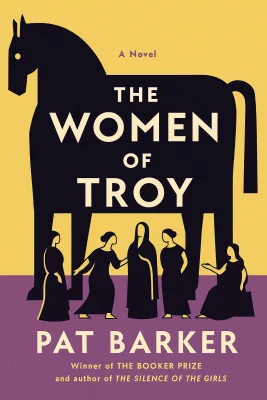
The Women of Troy
Categories
Fiction, Audiobook, Feminism, Historical Fiction, Fantasy, Mythology, Adult, Historical, Greek Mythology, Retellings
Content Type
Book
Binding
Hardcover
Year
2021
Publisher
Doubleday
Language
English
ASIN
0385546696
ISBN
0385546696
ISBN13
9780385546690
File Download
PDF | EPUB
The Women of Troy Plot Summary
Introduction
# Unburied Kings: Divine Justice in Troy's Aftermath The wind had been howling for three months, trapping the victorious Greek fleet on Troy's blood-soaked shore like prisoners in their own triumph. Ten thousand warriors who had conquered the greatest city in the world now huddled in makeshift camps, watching their ships rot on the beach while divine fury kept them from home. The gods, it seemed, had one final judgment to render. In the women's quarters, Briseis felt Achilles' child stir in her belly as she watched young Pyrrhus drag King Priam's corpse through the dust behind his chariot. The son of the greatest warrior who ever lived had inherited his father's strength but not his wisdom, denying Troy's fallen king even the dignity of burial. Some insults demanded an answer. Some silences could not be endured. And in the shadows of the camp, a Trojan girl named Amina was preparing to risk everything for an act of defiance that would test the bonds between honor and survival, between the living and the dead.
Chapter 1: Trapped by Divine Winds: The Cursed Victory
The assembly horn cut through the morning air like a blade. Pyrrhus sat in his father's carved chair, red hair catching torchlight, pale eyes scanning the restless crowd of warriors who had once followed Achilles to glory. Now they followed his eighteen-year-old son into an exile that stretched longer with each passing day. "The ships are ready," Agamemnon announced, his voice hoarse from shouting orders. "But the wind refuses to change. We're trapped here like rats in a maze." Murmurs rippled through the packed assembly ground. Three months since Troy's towers fell, and still they remained prisoners on this cursed shore. The victory wine had turned sour. The spoils of war felt heavy as chains. Men who had dreamed of home now fought over scraps and sleeping space. Calchas the priest stepped forward, white paint cracking on his gaunt face. For ten years he had read omens in bird flight and sacrificial smoke. Now his eyes held something darker than prophecy. "Look around you," he said, gesturing to the circle of divine statues that ringed the assembly ground. Paint peeled from wooden faces. Several figures tilted at dangerous angles. Artemis had toppled completely in the previous night's gale. "We have neglected the gods. But that is not our greatest sin." His gaze fixed on Pyrrhus like a spear finding its target. "When great Achilles walked among us, King Priam came to him by night. Achilles received him as a guest, shared bread and wine, saw him safely to the gates. The bond of guest-friendship was forged between them." The words fell like stones into still water. Guest-friendship. The most sacred tie known to Greeks and Trojans alike. A bond that passed from father to son, that made the killing of one by the other not just murder, but sacrilege. Pyrrhus went rigid in his chair. Around him, the Myrmidons shifted uneasily as understanding dawned. Their young lord had killed his father's guest-friend on the altar of Zeus himself. Could there be any greater insult to the king of gods? "Zeus keeps us imprisoned here," Calchas pressed on. "The wind will not change until justice is done. Priam must be buried with full honors." The silence that followed was deafening. Then Pyrrhus exploded to his feet, hand flying to his sword. "You lying piece of filth! I'll see you in hell first!" But Agamemnon's guards were already moving, forming a protective circle around the priest. The young prince struggled against his own men as they wrestled him back, his face twisted with rage that would have made Achilles proud. In that moment, he looked exactly like his father in the grip of legendary fury. The wind howled across the assembly ground, scattering dust and debris like fragments of a shattered world. Divine judgment had been pronounced. Now all that remained was to see whether pride or wisdom would prevail.
Chapter 2: Sacred Defiance: Burial Rites in Darkness
Amina moved through the women's quarters like a hunting cat, her dark eyes burning with purpose that made the other girls step aside. She was young, barely twenty, with the kind of fierce beauty that came from uncompromising will rather than soft features. Unlike the others, she never flinched when Greek soldiers passed, never lowered her gaze in submission. Briseis caught her arm as she prepared to slip into the night. "You can't. Pyrrhus has guards posted. They'll kill you." Amina shook her off with surprising strength. "My king lies unburied. Every night I hear him calling from the darkness, begging for the rites that will free his spirit." Her voice carried the fervor of absolute conviction. "I won't let him wander the earth forever because some Greek boy thinks himself above the laws of gods and men." The night was moonless, thick with clouds that promised rain. Amina crept through the camp avoiding the main paths where sentries might spot her. She knew where they had thrown Priam's body, in a shallow depression near the horse pastures, far enough from the living quarters that the stench wouldn't disturb anyone's sleep. She found him by smell first, then by the pale gleam of bone in the darkness. Weeks of exposure had stripped away most of the flesh, leaving a skeleton wrapped in the tattered remains of royal robes. But she recognized the noble skull, the long bones that had once carried a king's dignity. With her bare hands, she began to dig. The work was harder than she had imagined. The ground was packed hard by drought, and she had only a stolen kitchen knife to break through the crust. Her fingernails split and bled. Her back ached from bending over the makeshift grave. But she kept digging, driven by fury that burned brighter than exhaustion. As she worked, she whispered prayers for the dead, words her grandmother had taught her, older than Troy itself. "Light perpetual, rest eternal. May your journey be swift and your arrival peaceful." She was nearly finished when footsteps approached. Not the heavy tread of guards, but something lighter, more hesitant. Briseis emerged from the shadows, her face pale with fear and determination. "I couldn't let you do this alone," she said simply. Together they covered the last of Priam's bones with earth and stones. Together they poured wine and scattered bread crumbs for his spirit's journey. And together they were caught by Pyrrhus's guards as the first light of dawn touched the eastern sky. The wind howled its approval as they were dragged away, their act of defiance complete despite the consequences that awaited them.
Chapter 3: The Price of Resistance: Captured in Dawn's Light
The hall fell silent as the guards dragged them in. Pyrrhus sat in his father's chair, the carved lions' heads snarling beneath his hands, his red hair catching torchlight like flame. He was young, barely eighteen, but there was something cold and terrible in his pale eyes that spoke of violence barely held in check. "So," he said, his voice deceptively calm. "The women think they know better than their masters." Amina stood straight despite the bruises already darkening her arms where the guards had seized her. She met Pyrrhus's gaze without flinching, her chin raised in defiance that would have been magnificent if it weren't so clearly suicidal. "I buried my king," she said. "I don't have to explain that to anyone." The slap echoed through the hall like a whip crack. Amina's head snapped to the side, blood trickling from her split lip, but she didn't cry out. She simply turned back to face him, her eyes blazing with undiminished hatred. "You knew I forbade it," Pyrrhus said. "You knew the penalty." "Your laws don't override the gods' laws. No man's do, no matter how powerful he thinks he is." Briseis watched in horror as Pyrrhus's face darkened. She had seen that look before, in the moments before Achilles exploded into one of his legendary rages. The son had inherited more than his father's beauty and strength. He had inherited the terrible fury that made him so deadly in battle and so dangerous to cross. "She didn't help," Amina said quickly, glancing at Briseis. "She was trying to stop me. I acted alone." But Briseis held up her hands, showing the dirt still caked under her fingernails. "That's not true. I helped bury him." The admission hung in the air like a death sentence. Pyrrhus looked from one woman to the other, his jaw working as he struggled with some internal calculation. Briseis was married to Alcimus, one of his most trusted lieutenants. She carried Achilles' child in her belly. Killing her would create complications he might not be ready to face. But Amina was just a slave girl, nameless and powerless. Her death would send a message to anyone else who might be tempted to defy him. Around the hall, his Myrmidons watched with the hungry attention of wolves scenting blood. These were men who had followed Achilles through ten years of war, who understood only strength and the will to use it. They expected their young lord to demonstrate the same ruthless authority his father had wielded. "Lock them up," Pyrrhus said finally. "I'll decide what to do with them later." They were separated. Briseis to a storage hut filled with the armor of dead heroes. Amina to the old laundry where corpses had once been prepared for burial. As the door slammed shut behind her, Briseis heard Amina calling out one last time: "I regret nothing! Do you hear me? Nothing!" The words echoed in the darkness long after the footsteps had faded away.
Chapter 4: Hidden Lives: Protecting the Innocent
In the depths of night, while the camp slept fitfully around cooking fires that guttered in the wind, Maire's labor began. She was a heavy woman, silent and unremarkable, the kind of slave who moved through the world like a shadow. But now, in the darkness of the women's quarters, she became the center of a desperate conspiracy. Briseis had been released from her prison after Alcimus intervened, her pregnancy buying her a reprieve that Amina would never receive. Now she knelt beside Maire's bed, her hands slick with blood and birth-water, helping to bring new life into a world that had little patience for it. "Push," Andromache whispered urgently. Hector's widow had seen her own son murdered by Pyrrhus on the altar steps of Troy. She knew what fate awaited male children born to Trojan mothers. "One more time, and it's over." The baby slipped into the world with a wet rush, his cries thin and reedy in the close air of the hut. A boy. Unmistakably, dangerously male. Around them, the other women held their breath, understanding without words what this meant. Pyrrhus had decreed that all Trojan boys must die. The future held no place for sons who might grow up to seek revenge for their fathers' deaths. This child, innocent as he was, represented a threat that could not be allowed to survive. But Maire snatched him from Andromache's hands before anyone could act, pressing him to her breast with fierce maternal instinct. The moment his lips found her nipple, the decision was made. By ancient laws that governed even this brutal camp, a child who had been fed could not be killed without bringing down the gods' curse. "We have to hide what he is," Briseis said, her mind racing. "Swaddle him tightly, keep him covered. As long as no one looks too closely..." Helle, the dancer who had become their unofficial leader, nodded grimly. "He's a girl," she announced to the room. "Anyone who says different will answer to me." The conspiracy was born in that moment. A dozen women bound together by shared determination to protect one small life. They wrapped the baby in tight swaddling bands that concealed his sex, coached each other on the lies they would tell, and settled into the exhausting routine of deception that would be their daily burden. For weeks, the charade held. Maire kept to the women's quarters, the baby always hidden in the folds of her shawl. When Greek soldiers asked about the child, they were told it was a girl, sickly and weak, hardly worth noticing. The men, with their minds on departure and home, paid little attention to one more slave woman with one more unwanted mouth to feed. But secrets have a way of revealing themselves at the worst possible moments. The baby thrived despite everything, growing stronger and more active with each passing day. His cries grew louder, his movements more vigorous. And in the depths of Maire's eyes, anyone who looked closely could see the fierce love that would make her fight like a lioness to protect her cub. Time was running out. The wind was beginning to shift, and soon the ships would be ready to sail. When that day came, every person in the camp would be catalogued and assigned their place in the new order. There would be no hiding then, no shadows to shelter in.
Chapter 5: Prophecy and Power: The Priest's Challenge
The funeral pyre rose like a wooden mountain against the grey sky, its logs soaked in oil and wine, ready to carry Priam's spirit to the afterlife. The entire Greek army had gathered on the headland to witness this moment, the burial of their greatest enemy, the man whose death had ended the longest war in memory. Calchas raised his staff, the scarlet ribbons snapping in the wind like drops of blood. "The gods demand justice," he declared, his painted face terrible in the firelight. "Priam must be buried with full honors. And before the pyre is lit, Lord Pyrrhus must sacrifice his black stallion, the horse he rode to victory in the chariot race." The words hit Pyrrhus like physical blows. Ebony was more than just a horse to him. The stallion was his closest companion, perhaps the only creature in the world he truly loved. The demand was calculated to cause maximum pain, to strip away the last thing that brought joy to his increasingly isolated existence. "NO!" Pyrrhus roared, his voice carrying across the silent crowd. "Never! I'll kill you first, you painted whore!" He lunged across the arena, sword drawn, murder in his eyes. Only the intervention of his own men prevented bloodshed, but the damage was done. The young prince had shown himself willing to kill a priest in front of the entire army rather than submit to the gods' will. Beside him, Ebony danced and pranced, excited by the crowds and ceremony, unaware that he had been garlanded for sacrifice. The stallion's coat gleamed like polished obsidian, his mane flowing like black silk in the wind. Pyrrhus reached out to stroke the animal's neck, his face a mask of barely controlled anguish. Briseis watched from the crowd, her heart aching for both horse and master. She had seen Pyrrhus with Ebony in quieter moments, had witnessed the gentle way he spoke to the animal, the trust that flowed between them. To demand this sacrifice was to tear out the young man's heart and offer it to the gods. The assembled kings and warriors waited in tense silence. Agamemnon's hand rested on his sword hilt. Menelaus whispered urgently to his captains. The Myrmidons formed a protective circle around their lord, ready to fight the entire army if necessary. But Pyrrhus had stopped struggling. He stood frozen at the base of the pyre, staring at the weapon in his hand as if seeing it for the first time. The wind howled around them, carrying the scent of oil and wine and the promise of divine judgment. When he finally moved, it was with the slow deliberation of a man who had made an impossible choice. He sheathed his sword and turned to face the crowd, his young face aged by the weight of command and the burden of his father's legacy. "Yesterday, Calchas told you that I must sacrifice my horse to appease the gods," he said, his voice carrying across the silent assembly. "I've thought long and hard about this, and I don't believe it's what they require." A gasp ran through the crowd. To defy a priest's pronouncement was to court divine wrath, to risk bringing down curses on the entire army.
Chapter 6: Blood Sacrifice: Pyrrhus Chooses His Path
Pyrrhus reached behind his head and grasped his thick red braid, the pride of any Greek warrior, the symbol of his strength and nobility. The hair fell past his shoulders like a cascade of flame, marking him as Achilles' son as surely as his pale eyes and terrible temper. "So I offer a different sacrifice," he said, his voice steady despite the magnitude of what he was about to do. With one swift stroke, he severed the braid at the base of his skull. The crowd watched in stunned silence as he threw the severed hair onto the pyre and seized a torch from one of the guards. The kindling caught instantly, flames racing up through the oil-soaked logs with a roar like thunder. Within moments, the entire structure was ablaze, sending a column of black smoke spiraling into the sky. The heat was tremendous, forcing the spectators to step back as sparks showered down like burning snow. In the heart of the fire, Priam's bones began their final journey to ash and memory. "Look!" Pyrrhus shouted, pointing upward with his torch. "Zeus accepts the sacrifice!" Two sea eagles chose that moment to soar over the pyre, their wings catching the updraft from the flames. It was the kind of omen that could be read a dozen different ways, but the Myrmidons cheered as if the gods themselves had spoken approval. Their young lord had outmaneuvered the priest, turning the moment of his greatest vulnerability into a display of cunning that would have made Odysseus proud. Calchas stood speechless, his carefully laid plans crumbling like ash in the wind. He had expected submission or defiance, not this clever substitution that gave the appearance of obedience while preserving what Pyrrhus valued most. The painted priest's face twisted with frustration as he realized he had been beaten at his own game. But the wind continued to blow, unchanged by the ceremony. Whatever held them to this shore, it would take more than burning hair and royal bones to break the curse. As the pyre burned down to glowing coals, Amina was dragged from her prison cell and forced to kneel before the assembled army. Her face was bruised, her clothes torn, but her eyes still blazed with undiminished defiance. She had buried her king twice now, completing the sacred rites that would ensure his passage to the underworld. Pyrrhus stood over her with his sword drawn, the blade reflecting the dying flames. The crowd held its breath, waiting to see if the young prince would complete his transformation from hero to tyrant. One stroke would end the rebellion, would demonstrate the price of defying his authority. But something in Amina's face gave him pause. She looked up at him without fear, without pleading, with only the calm acceptance of someone who had already achieved her purpose. She had won, and they both knew it. Priam was buried. The gods had been honored. Her death would change nothing. The sword trembled in his hand as competing impulses warred within him. Mercy or justice. Wisdom or wrath. The choice that would define him as surely as his father's rage had defined Achilles.
Chapter 7: When Winds Change: Exile and Uncertain Futures
Dawn came with an impossible gift. Silence. For the first time in months, the wind had died completely, leaving the camp wrapped in an eerie calm that felt almost sacred. Men stumbled from their huts like sleepwalkers, afraid to believe what their senses told them, afraid that any sudden movement might shatter this fragile peace. Then someone shouted, and the spell was broken. Warriors poured from every corner of the camp, racing toward the ships with wild joy, their voices raised in songs of triumph and homecoming. The beach became chaos as captains barked orders and crews scrambled to make their vessels ready for the sea. Pyrrhus had spared Amina's life, though exile awaited her on foreign shores. She stood now among the other Trojan women, her head held high despite the chains that bound her wrists. She had achieved something greater than survival. She had honored her king and defied the conquerors, proving that some victories could not be taken by force of arms. Briseis watched the frantic preparations with mixed feelings. This was what they had all prayed for, release from their wind-cursed prison, the chance to return to the lives they had left behind. But for the women of Troy, departure meant only a different kind of captivity, exile from everything they had ever known. She found Andromache sitting alone in the women's quarters, staring at nothing with empty eyes. Hector's widow had lost everything: husband, child, city, hope. Now she faced the prospect of sailing to a foreign land where she would live and die as Pyrrhus's prize, a living trophy of his victory. Maire clutched her baby close, the boy still disguised as a girl, still hidden beneath layers of swaddling and deception. The conspiracy of women had held, protecting one small life from the machinery of war and vengeance. It was a tiny victory, but perhaps that made it more precious than all the gold and glory that filled the ships' holds. One by one, the vessels pushed off from the beach, their sails filling with the first favorable wind in months. The great harbor that had sheltered the Greek fleet for ten years emptied like a bathtub, leaving only scattered debris and the ghosts of departed dreams. Briseis felt the child kick in her belly as Pyrrhus's ship cleared the headland. Achilles' son, conceived in the shadow of war's end, would be born in some distant land she had never seen. What kind of world would she bring him into? What kind of future could a Trojan mother offer a Greek prince's child? Behind them, the towers of Troy stood like broken teeth against the sky, their stones blackened by fire, their glory reduced to memory. The wind that had held them captive for so long now filled their sails and drove them toward uncertain destinies, carrying the survivors of the world's greatest war into an exile that might last forever. The sea stretched endlessly ahead, grey and cold and indifferent to human suffering. But somewhere in that vast expanse lay the promise of new beginnings, of lives rebuilt from the ashes of the old. The wind had finally changed, and with it, the fate of all who sailed upon its breath.
Summary
The ships disappeared into the morning mist, carrying their human cargo toward fates as varied as the winds that drove them. Pyrrhus would find his throne in Epirus, ruling with the same mixture of strength and cruelty that had marked his father, never quite escaping the shadow of Achilles' legend. Amina would disappear into slavery, her name forgotten by history but her defiance echoing through the ages like a whisper of resistance in the dust of fallen kingdoms. For the women of Troy, exile became a different kind of survival, a daily negotiation between memory and hope, between the world they had lost and the uncertain future that awaited their children. They carried with them the seeds of stories that would outlive empires, tales of courage in the face of absolute defeat, of the quiet rebellions that preserve dignity when all else has been stripped away. In the end, perhaps that was victory enough: to endure, to remember, to ensure that the voices of the conquered would not be lost in the songs of the conquerors. The wind had finally changed, but the echoes of their resistance would blow across the centuries, a testament to the unbreakable human spirit that no sword could sever, no chain could bind.
Best Quote
“Achilles’ story never ends: wherever men fight and die, you’ll find Achilles.” ― Pat Barker, The Women of Troy
Review Summary
Strengths: The review highlights the author's ability to create unique character interpretations while remaining true to the original myths, particularly with Pyrrhus. The writing style is praised for its beauty, and the book is noted for its quiet, non-melodramatic approach to storytelling. The narrative focuses on a less-explored period of Greek mythology, offering fresh perspectives. Weaknesses: The review suggests that some readers might find the book's content boring due to its focus on post-war logistics and a lack of significant plot developments during the time frame covered. Overall: The reader appreciates the book as a valuable addition to Greek mythology retellings, especially for those interested in the Trojan War's aftermath. It is recommended for fans of the genre, with a rating of four stars.
About Author

Pat Barker
Barker interrogates the deep-seated effects of memory and trauma through a body of work that melds fiction with historical reflection. Known for her incisive portrayals of survival, her books often explore the psychological landscapes shaped by war and hardship. This approach is notably encapsulated in the Regeneration Trilogy, where she delves into World War I's lingering scars on the human psyche, using a blend of historical figures and fictional narratives to highlight the era's evolving understanding of mental health.\n\nIn tackling these complex themes, Barker employs a direct and unsentimental style, which critics have lauded for its emotional depth without falling into sensationalism. This approach benefits readers by providing an unflinching look at difficult subjects, thereby fostering a greater understanding of human resilience. Her early work, such as the debut book "Union Street," captures the harsh realities faced by working-class women, while later novels like "The Silence of the Girls" shift focus to ancient myths, recast through the eyes of their often-overlooked female participants. \n\nHer bio reveals an illustrious career marked by numerous accolades, including the Booker Prize for "The Ghost Road," underscoring her significant impact on contemporary literature. As an author, Barker offers a profound narrative journey, inviting readers to engage with history through a lens of empathy and insight.
Read moreDownload PDF & EPUB
To save this Black List summary for later, download the free PDF and EPUB. You can print it out, or read offline at your convenience.
The Women of Troy
by Pat Barker
