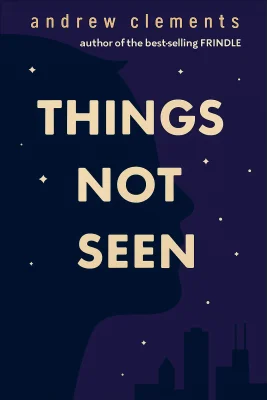
Things Not Seen
Categories
Fiction, Science Fiction, Mystery, Romance, Young Adult, Fantasy, Realistic Fiction, Childrens, Middle Grade, Teen
Content Type
Book
Binding
Paperback
Year
2004
Publisher
Puffin Books
Language
English
ASIN
0142400769
ISBN
0142400769
ISBN13
9780142400760
File Download
PDF | EPUB
Things Not Seen Plot Summary
Introduction
The bathroom mirror reflected nothing. Not darkness, not shadow, not even the suggestion of a form. Bobby Phillips stood there, water droplets from his shower falling to the floor, watching his towel wave through empty air where his hands should be. The mirror showed only the bathroom behind him, as if he had never existed at all. It was a Tuesday morning in February, and fifteen-year-old Bobby had just discovered something that would shatter everything he thought he knew about reality. His body was there—he could feel it, touch it, move it—but no one could see it. Not his parents, not the world, not even himself. In the space of one night, Bobby Phillips had become invisible, thrust into a nightmare that would test every relationship he had and force him to confront who he really was when stripped of everything that made him visible to the world. What began as an impossible morning would become a journey through isolation, discovery, and the strange gift of being truly seen by someone who could never see him at all. In a world where being noticed means everything, Bobby would learn that sometimes the most profound connections happen in the spaces between the visible and the unseen.
Chapter 1: The Invisible Awakening
Bobby stumbled down the hallway, his invisible feet learning to navigate a world that no longer acknowledged his presence. The stair banister felt solid beneath his palm, but when he looked down, there was nothing—no hand, no arm, just the sensation of grip without form. Each step was a lesson in faith, trusting his body to exist even when his eyes insisted otherwise. His parents sat at the breakfast table, Dad scrambling eggs while Mom read the morning paper. Their Tuesday routine, unchanged and unsuspecting. Bobby took a breath that felt like swallowing broken glass. "Guys, I can't see myself." They glanced toward the dining room door, their expressions mild with parental patience. Dad continued stirring. "Well, come on in here and let's see what's the matter." "But that's what's the matter—I am in here. I can't see myself. You can't see me. I'm invisible." The word hung in the air like smoke. Bobby watched his mother's smile freeze, watched his father's wooden spoon slow its mechanical stirring. Then Bobby reached for his orange juice, the glass rising from the table by unseen fingers, tilting as invisible lips drained it dry. The empty glass returned to the table with a solid clink. Professor Mom, who had answers for everything, stared at the floating glass. Dad, the physicist who lived in a world of precise measurements and predictable outcomes, stopped scrambling eggs entirely. The kitchen filled with a silence that tasted of fear and wonder and the terrible weight of impossible things made manifest. Dad finally found his voice, his scientific training kicking in like a reflex. "This is a phenomenon. An event." But Bobby could see the tremor in his father's hands, could hear the barely controlled panic beneath the clinical words. His parents' world had just tilted off its axis, and Bobby was the earthquake that moved it.
Chapter 2: Finding Connection in Darkness
The blind girl appeared like a revelation in a world where Bobby had become a ghost. She stood at the library entrance, her white cane sweeping in practiced arcs, completely unaware that she was about to collide with an invisible boy carrying the weight of three weeks' isolation. When Bobby crashed into her, sending her cassettes scattering across the floor, his scarf fell away, exposing his face to the February air. She looked directly at him and smiled. Not through him, not around him, but at him. For a moment, Bobby forgot to breathe, waiting for the scream that would surely come when she saw the impossible—a floating scarf attached to nothing. But Alicia Van Dorn was blind, and in her darkness, Bobby found the first person who could truly see him. "I've dropped something else," she said, pointing to her white cane lying on the ground. As Bobby handed it to her, he realized he had found something extraordinary—someone for whom his invisibility meant nothing, someone who would know him by his voice, his kindness, his presence rather than his appearance. Their first real conversation happened in a soundproof listening room, where Alicia sat surrounded by audiobooks and laptop computers, creating her own world from fragments of sound and memory. When Bobby told her the truth about his condition, she didn't recoil or doubt. Instead, she understood what it meant to disappear from the world's sight, to become invisible in ways that had nothing to do with light or reflection. In that small room lined with acoustic panels, two teenagers who had been made invisible by different tragedies began to build something neither had expected to find—a friendship that existed in the spaces between the seen and the unseen, where truth mattered more than appearance, and where being truly known was worth more than being visible.
Chapter 3: A World of Shadows and Secrets
Bobby's world became a maze of careful movements and whispered conversations. At home, he was a floating voice, a presence his parents acknowledged with desperate love and growing fear. They spoke to empty chairs, handed food to invisible hands, and slowly learned to parent a child they could no longer see. The house filled with new sounds—footsteps without feet, doors opening by themselves, the constant rustle of clothes moving through space without a body to give them shape. His mother, Professor Emily Phillips, transformed into a fierce guardian, lying smoothly to school officials and anyone who asked too many questions about Bobby's extended absence. His father, physicist David Phillips, approached the problem like a research project, filling notebooks with theories about light refraction and electromagnetic fields, desperately seeking a scientific explanation for the scientifically impossible. Meanwhile, Bobby discovered the dark freedom of invisibility. He could walk through the city unobserved, slip into buildings, stand in crowded rooms and listen to conversations never meant for his ears. But this freedom came with a price that grew heavier each day. He was becoming untethered from human connection, floating through a world that couldn't acknowledge his existence. The isolation was eating him alive. Food had no taste when consumed by invisible teeth. Sleep brought no peace when he couldn't see himself lying in bed. Even his own reflection was gone, that daily confirmation of self that every human takes for granted. Bobby was disappearing in more ways than one, becoming less real even to himself. The only anchor in this drifting existence was Alicia, whose phone calls and instant messages became lifelines thrown into the void. She reminded him that he was still human, still real, still worth caring about—even when the mirror insisted otherwise.
Chapter 4: The Science of Disappearance
The electric blanket lay folded in a cardboard box, its controller dissected like a specimen under Dr. Van Dorn's intense scrutiny. The astronomy professor had joined forces with Bobby's father, their combined expertise focused on the mundane appliance that had somehow triggered an impossible transformation. Wires snaked across the dining room table, connecting to oscilloscopes and measurement devices that hummed with scientific purpose. Dr. Van Dorn's wild Einstein hair seemed to crackle with excitement as he cross-referenced Bobby's data with cosmic events recorded by satellites millions of miles from Earth. The ACE spacecraft had detected massive solar wind bursts on two specific dates—the night Bobby disappeared and a similar event three years earlier in Denver, Colorado. High-energy particles had bombarded Earth's atmosphere, creating electromagnetic disturbances that should have affected nothing more than satellite communications. But combined with the faulty resistor in Bobby's electric blanket, those cosmic forces had somehow rewritten the laws of physics in a teenager's bedroom. The blanket had created its own electromagnetic field, and when the solar particles struck at precisely the right angle, at precisely the right moment, they had rendered Bobby's body unable to reflect light. The science was elegant and terrifying. It suggested that invisibility wasn't magic but rather an accident of cosmic timing and electrical failure. More disturbing was the realization that it could happen again—to anyone with the right equipment sleeping under the wrong circumstances when the sun decided to hurl its fury at Earth. As the two scientists scribbled equations and debated quantum possibilities, Bobby realized they were discussing more than his condition. They were uncovering something that could change the world—or destroy it—depending on who learned their secrets first.
Chapter 5: Hunted and Hidden
The knock on the door came at dawn, harsh and official. Ms. Pagett from the Department of Children and Family Services stood on the porch with three police officers, armed with a search warrant and growing suspicions about the Phillips family. Bobby pressed himself against the wall as boots thundered through his house, searching for a missing boy they would never find. The officials moved through each room with practiced efficiency, opening closets, checking under beds, examining every space large enough to hide a fifteen-year-old. They found Bobby's room exactly as his mother had prepared it—empty of recent use, clothes put away, no signs of current habitation. The bed was cold, the toothbrush absent from the bathroom. To all appearances, Bobby Phillips had vanished without a trace. Ms. Pagett's suspicions had been building for weeks. A boy reported sick for too long, parents who gave evasive answers, neighbors who claimed to have seen strange lights in windows at odd hours. The state had protocols for situations like this, procedures designed to protect children from harm. But how do you protect someone who doesn't officially exist? Bobby stood frozen in his own bedroom as a police officer looked directly at him and saw nothing. The absurdity was almost crushing—he was the missing person they were searching for, standing three feet away from the detective assigned to find him. The investigation continued around him and through him, treating him as absent even as he listened to every word of their plans to locate him. When the search team finally left, their warrant executed and their suspicions temporarily satisfied, Bobby realized the hunt would continue. The state had resources, patience, and legal authority. His parents faced the growing possibility of arrest for a crime they hadn't committed—hiding a child who was hiding in plain sight.
Chapter 6: The Reflection in Others' Eyes
Alicia's fingers traced the outline of Bobby's face with the delicate precision of a sculptor working in darkness. Her touch mapped the geography of his features—the ridge of his nose, the curve of his jaw, the texture of his hair—creating a portrait no camera could capture. In her fingertips lay the power to see him as no one else could, to know him through touch rather than sight. "I have to do this," she whispered, her hands moving across his forehead with scientific curiosity and tender care. Bobby closed his eyes and submitted to her examination, feeling more visible under her touch than he had in weeks of mirrors. She was reading him like Braille, translating his physical presence into understanding through the language of her fingers. When she finally lowered her hands, Bobby saw himself reflected in her expression. Not the panic or confusion his parents showed, not the clinical fascination of the scientists, but recognition. Acceptance. In Alicia's face, he found the mirror he had been missing—one that showed him not as a phenomenon to be studied but as a person to be known. Their relationship existed in a space beyond the visual, built on conversation and shared understanding rather than appearance. Alicia knew Bobby's voice in crowded rooms, could sense his mood from the rhythm of his breathing, understood his thoughts before he finished expressing them. She had learned to see with more than her eyes long before he learned to exist without being seen. But the connection came with complications. How do you kiss someone you cannot see when they cannot see you either? How do you build intimacy when touch is the only shared language, when every gesture must be carefully negotiated in the space between the visible and the invisible? Their relationship became a dance of careful movements and whispered words, two people learning to love across the divide that separated the seen from the unseen, finding ways to be real to each other when the world insisted they barely existed at all.
Chapter 7: Choosing to Be Seen
The electric blanket hummed with familiar warmth as Bobby pulled it around his shoulders one final time. Outside, cosmic particles bombarded Earth in another solar storm, the same celestial fury that had stolen his reflection weeks earlier. Dr. Van Dorn's calculations suggested that lightning might strike twice—that the same forces which had rendered him invisible might reverse the process under the right conditions. Bobby lay in his bed, surrounded by the electromagnetic field of the faulty blanket, waiting for the universe to decide his fate. The solar wind data scrolled across his computer screen, showing particle densities that would have terrified power grid operators and satellite technicians. For Bobby, those numbers represented either salvation or the confirmation of permanent exile from the visible world. As he drifted toward sleep, he thought about Sheila Borden, the woman in Miami who had chosen invisibility as a way of life. She had rejected his offer of information about reversal, preferring the safety of disappearance to the risks of being seen. Her choice haunted him—was visibility worth the vulnerability it required? Was being seen worth the possibility of being rejected, judged, or hurt? When the police officer burst into his room at 4:30 AM, Bobby was still naked and disoriented, but gloriously, impossibly visible. The cop looked directly into his eyes and saw him—really saw him—for the first time in over a month. Bobby grabbed a sweatshirt to cover himself, grinning with the pure joy of embarrassment, of being awkward and human and present in the world again. The reversal was complete and inexplicable, as mysterious as the original transformation. Bobby Phillips had returned from the country of the invisible, carrying with him the knowledge of what it meant to exist without being seen, to be real without being acknowledged, to find love and friendship in the spaces between visibility and void.
Summary
Bobby's return to the visible world brought not an ending but a transformation. He had learned that true sight had nothing to do with light or reflection, that the most profound connections happen when we see beyond the surface into the heart of who someone really is. Alicia had taught him this lesson by loving him when he was nothing but a voice in the darkness, by touching his face with fingers that could read his soul. The experience left Bobby changed in ways that extended far beyond his temporary invisibility. He had discovered that being seen was a choice—not just the cosmic accident of reflecting light, but the daily decision to be present, authentic, and vulnerable with other people. The mirror would always show him his reflection now, but Alicia's hands had taught him the difference between being visible and being truly seen. In the end, perhaps that was the real magic—not the science of disappearing, but the art of allowing ourselves to be found by those who matter most, even when we feel most invisible to the world around us.
Best Quote
“Two wrongs don't make a right, but don't three lefts make a right? Two wrongs don't make a right, but don't two negatives make a positive?” ― Andrew Clements, Things Not Seen
Review Summary
Strengths: The book is praised for its honest portrayal of emotions and realistic character reactions, particularly in how Bobby, a thirteen-year-old, handles his invisibility. The narrative explores deeper themes of invisibility and societal neglect, offering a perspective on real-world issues like being ignored or ostracized. The relationship between Bobby and Alicia is highlighted positively, with their connection providing a meaningful exploration of visibility and understanding. Weaknesses: Some readers found the concept of the invisible teenager being naked in public unsettling and strange. The idea of invisibility, particularly the detail about invisible waste, was considered odd by some. Overall: The book is generally well-received, with readers appreciating its creative approach and thematic depth. It is recommended for its engaging story and the exploration of complex themes, despite some discomfort with certain plot elements.
About Author

Andrew Clements
Clements investigates the intricate link between early experiences and the cultivation of a writing career. Raised in a family of avid readers, he spent his formative years surrounded by books, which laid the groundwork for his literary journey. Although he initially pursued careers in teaching and music, the passion for writing became a central focus after his move into publishing. This evolution illustrates a key theme in Clements's work: the transformative power of creativity and language, prominently featured in his breakthrough book, "Frindle." This novel underscores his ability to connect young readers with relatable school-life experiences.\n\nHis approach often combines engaging narratives with insightful themes such as creativity, friendship, and the power of words, providing young readers with both entertainment and reflection. For instance, "The Report Card" and "No Talking" delve into school dynamics, while the "Things Not Seen" series expands on personal growth and discovery. Clements’s ability to weave accessible narratives with these rich themes benefits readers by encouraging a deeper appreciation for the nuances of everyday life and learning.\n\nReaders benefit from Clements’s work through the compelling storytelling that resonates with their own experiences in educational settings. His books, therefore, serve as both a mirror and a window for young audiences, reflecting their own lives while offering a broader perspective on growth and learning. This bio captures how his literature, through its engaging style and thematic focus, continues to impact young readers worldwide, fostering a love for reading and critical thinking.
Read moreDownload PDF & EPUB
To save this Black List summary for later, download the free PDF and EPUB. You can print it out, or read offline at your convenience.
Things Not Seen
by Andrew Clements
