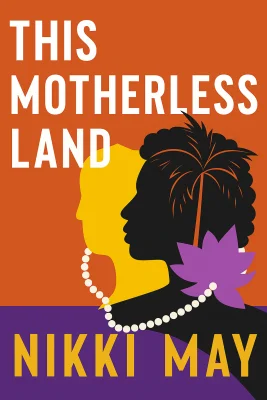
This Motherless Land
Categories
Fiction, Audiobook, Historical Fiction, Africa, Family, Book Club, Contemporary, Nigeria, Literary Fiction, Retellings
Content Type
Book
Binding
Hardcover
Year
2024
Publisher
Mariner Books
Language
English
ASIN
0063084295
ISBN
0063084295
ISBN13
9780063084292
File Download
PDF | EPUB
This Motherless Land Plot Summary
Introduction
# Between Two Worlds: The Shattered Bond of Fractured Identities The bottle tops scattered across the Lagos road like fallen stars, each one catching the headlights of the oil tanker that had just torn nine-year-old Funke's world in half. Her mother's Toyota Corolla lay twisted and broken, half of it crushed beneath the massive truck, taking with it the woman who had been her anchor and the little brother who had been her joy. Funke sat in the remaining half, untouched by death but marked forever by its proximity, clutching a single cream-colored Guinness cap that would become her talisman of survival. This is the story of two girls bound by blood but divided by betrayal, of family bonds that can both save and destroy, of the cruel mathematics that determine who lives and who is cast aside. From the humid chaos of Lagos to the cold grandeur of an English country estate, from the privileged halls of boarding school to the unforgiving streets of exile, Funke and her cousin Liv would discover that love and jealousy often wear the same face, that the greatest betrayals come from those we trust most, and that sometimes the only way to find home is to lose everything first.
Chapter 1: Roots Torn: From Lagos Tragedy to English Exile
The accident changed everything in ways that nine-year-old Funke couldn't yet comprehend. Her father, Professor Babatunde Oyenuga, had been a man of laughter and warmth before that night. After it, he became a stranger who couldn't bear to look at the daughter who had survived when his beloved wife and son had not. His mother, Iya Nla, arrived from the village like a harbinger of judgment, her eyes filled with suspicion as she whispered about red witches and cursed children. "Omo aje pupa," she hissed when she thought Funke couldn't hear. The child of a red witch. How else could a girl emerge unscratched from wreckage that had claimed the goddess wife and golden boy? The house that had once echoed with her mother's art students and her brother's laughter fell silent. Servants whispered in corners. Neighbors stared with mixture of pity and fear. Even Funke began to wonder if she truly was cursed, if her survival had somehow demanded their deaths as payment. Aunty Chloé, her mother's closest friend, made the decision that would reshape Funke's destiny. She found the child sitting in her mother's studio, surrounded by half-finished paintings and scattered bottle tops, clutching the cream-colored cap like a lifeline. "You can't stay here, my dear," Chloé said gently, her voice thick with unshed tears. "Your father needs time to heal, and you need a place where you can be a child again." The telegram was sent to England, to the family her mother had left behind when she chose love over comfort. Within weeks, Funke found herself on a plane to Heathrow, carrying nothing but a small suitcase and her mother's pearl necklace, carefully hidden in her math set where her father wouldn't think to look. At the airport, a sharp-faced woman with rigid helmet hair waited beside the arrivals gate. Margot Stone wore the same double strand of pearls that Funke's mother had treasured, but everything else about her was the opposite of warm, vibrant Lizzie. Where Funke's mother had been sunshine and spontaneous laughter, Margot was winter frost and calculated propriety. "You must be Katherine," she said, using Funke's middle name with crisp authority that brooked no argument. "I'm your aunt Margot. We'll have you sorted in no time." The drive through Somerset revealed a landscape drained of color, all gray skies and drizzling rain that seemed to leach the warmth from everything it touched. The Ring, which her mother had described in letters as a magical palace from fairy tales, appeared as a crumbling manor house wrapped in creeping ivy and faded grandeur. But waiting on the front steps, bouncing with barely contained excitement despite the rain, was a girl with wild chocolate-brown hair and sparkling green eyes that seemed to hold all the light missing from the gray English sky. "You're here!" Liv cried, throwing her arms around the bewildered newcomer without hesitation. "I knew we'd be best friends the moment Mummy told me you were coming. I'm Olivia, but everyone calls me Liv, and you're going to love it here, I promise." She had prepared everything for this moment. A banner reading "Welcome to The Ring Cousin Kate" hung across the entrance hall. Fresh flowers filled the attic bedroom that would become Kate's sanctuary. There was even a Kate Bush poster on the wall, chosen because "Kate" was in the name and Liv thought it was terribly clever. For the first time since the accident, Funke felt something that might, eventually, become hope.
Chapter 2: The Ring of Belonging: Cousins United in a Foreign Land
The transformation from Funke to Kate happened gradually, like learning to breathe underwater. The family insisted on calling her Katherine, then Kate, claiming her Nigerian name was too difficult for English tongues to manage properly. Her grandfather, Lord Douglas Stone, was kind but distant, a gray man in gray suits who smelled of pipe tobacco and old disappointments. Her grandmother Dorothy was warmer, always ready with tea and biscuits, but preoccupied with needlework and the constant worry of maintaining a grand house on a shrinking income. Dominic, Liv's older brother, was cruel in the casual way of privileged boys who had never been denied anything. He called Kate "Zebra" and delighted in reminding everyone at dinner parties that she didn't really belong, that she was there on sufferance. But Liv more than compensated for his cruelty with fierce loyalty and boundless enthusiasm for their newfound sisterhood. The differences between Kate's two worlds were stark and sometimes painful. At Crown School in Lagos, she had been "omo Misses Lissie," the beloved art teacher's daughter, privileged and protected by her mother's reputation. At Downsview Comprehensive, she was the only Black student, fighting daily battles against ignorance and casually cruel expectations. Teachers assumed she would struggle academically. Classmates mocked her accent, her clothes, her very existence. While Liv attended the prestigious Woodleigh Abbey with its Latin motto and blazered traditions, Kate navigated the rougher waters of state education, proving herself through sheer academic excellence that could not be dismissed or explained away. She discovered she was faster in the swimming pool than anyone expected, that her mind was sharper than her circumstances suggested, that she could excel despite every disadvantage placed in her path. Most importantly, she learned that Liv's love was unconditional and transformative. Her cousin appointed herself Kate's protector and guide, teaching her the unspoken rules of English society, defending her against Caroline's casual racism, sharing her bedroom without complaint. The pivotal moment came on Kate's tenth birthday, when a tropical storm of homesickness threatened to drown her completely. Liv had planned a perfect party with sausage rolls and birthday cake, but rain ruined the food and Dominic was violently sick in the pool after stealing gin from their grandfather's study. Just when Kate thought the day was completely ruined, Jojo arrived with his radio, and "Brown Girl In The Ring" by Boney M began to play. Liv grabbed Kate's hands, spinning her in a wild circle as they danced and sang along. "You're the brown girl," Liv laughed, her face bright with joy, "and this is The Ring! It's perfect, don't you see?" In that moment, surrounded by music and unconditional love, Kate made a decision that would shape the next eight years of her life. She would survive. She would make this strange family work. She would become a Stone they could be proud of, transform herself into someone worthy of the love she had found in this crumbling house and this irrepressible girl who had claimed her as sister.
Chapter 3: Growing Apart: Secrets and Jealousies in Coming of Age
By eighteen, Kate had blossomed into everything the Stones could want in a granddaughter. She was academically brilliant, having earned four A-levels with top grades. She was quietly beautiful, with the kind of understated elegance that drew respectful attention without causing scandal. She was perfectly assimilated, speaking with the crisp accent of her expensive education, moving through English society with the confidence of someone who belonged. Most importantly, she had earned a place at Bristol University to study medicine. The future stretched ahead bright with promise, a testament to her determination to transform tragedy into purpose. She would heal others because she had been unable to save her mother and brother. She would prove that survival meant something more than mere existence. But beneath the surface of their seemingly perfect relationship, old resentments and new jealousies were festering like untreated wounds. Liv had fled to London after school, seeking the stardom that had always seemed like her birthright. She was beautiful enough, confident enough, desperate enough to believe that modeling would be her ticket to the glamorous life she craved. Instead, she found only disappointment and exploitation. The photographers who promised her fame delivered only humiliation. The agencies that claimed to see potential saw only another pretty girl willing to compromise her dignity for a chance at success. She worked at Benetton folding jumpers, lived in a bedsit that smelled of damp and broken dreams, watched her savings dwindle as her hopes crumbled. When Clinton Bonner approached her outside a Chelsea cinema, his smile was smooth as silk and twice as dangerous. He was everything the other photographers weren't: professional, expensive, connected to the right people. He promised her a portfolio that would open doors, a chance to work with the kind of clients who could make careers overnight. The photo shoot began professionally enough, but descended into something darker after too much champagne and too many lies. Liv found herself posing topless, her judgment clouded by alcohol and desperation, her boundaries eroded by a man who understood exactly how to exploit young women's dreams. The blackmail demand came swift and brutal: three thousand pounds or the photographs would be sold to the tabloids. Liv's world collapsed in an instant. She couldn't tell her mother without facing a lifetime of recrimination and shame. She couldn't earn that kind of money folding clothes and serving coffee. In desperation, she turned to the one person she trusted completely, begging Kate for her university grant money and promising to pay it back within weeks. Kate's refusal was gentle but firm, delivered with the kind of practical logic that made perfect sense and felt like betrayal nonetheless. She couldn't risk her entire future, couldn't give away the money she needed to survive at university. She had no safety net, no family wealth to fall back on if things went wrong. Her place at Bristol was everything she had worked for, everything she was. But her practical concerns felt like selfishness to Liv, who saw only the cousin she had loved and protected choosing money over family. The girl who had once shared everything with her was now holding back the one thing that could save her from ruin. The rejection cut deeper than any photographer's exploitation, deeper than any mother's disappointment.
Chapter 4: The Night Everything Shattered: Betrayal and False Accusations
The Hunt Ball was meant to be a celebration, a glamorous farewell to their school years and a bridge to their adult lives. Kate wore her mother's pearl necklace for the first time in public, the silver clasp catching the light as she moved through the crowded ballroom. The necklace was identical to her grandmother's except for that clasp, a detail so small that only someone looking closely would notice the difference. Liv stunned in a black dress that clung to every curve, her beauty drawing admiring glances from every corner of the room. But beneath the surface glamour, her desperation was growing by the hour. The blackmail deadline was approaching, and she still had no solution to her problem. Watching Kate dance with Ishir, seeing the respect and admiration in his eyes, Liv felt something dark and poisonous unfurl in her chest. Her cousin had everything: academic success, a bright future, the kind of quiet confidence that came from never doubting your place in the world. Even the boys treated Kate differently, with genuine respect rather than the predatory interest that Liv had learned to expect. It wasn't fair. It had never been fair. The pills came from a sleazy barman who promised they would make everything feel better. Ecstasy, he called them, little white tablets that would wash away her problems for a few hours. Liv bought them with money she couldn't afford to spend, telling herself she just needed to escape for one night. But as she watched Kate laugh at something Ishir whispered in her ear, jealousy and resentment curdled into something much darker. She wanted her perfect cousin to stumble, to fall, to be human and flawed and vulnerable for once. She wanted Kate to understand what it felt like to lose control, to make mistakes that couldn't be undone. The decision was made in a moment of pure malice. Liv slipped the pills into Kate's drink while her cousin was dancing, telling herself it was just a prank, just a way to level the playing field. She never intended for Kate to get behind the wheel of a car. She never imagined the consequences that would follow. The drugs hit Kate hard and fast, turning the ballroom into a kaleidoscope of spinning lights and distorted sounds. She became dizzy and nauseous, barely able to stand. When Dominic, drunk himself and showing off for his friends, insisted on driving them home in their grandfather's prized Jaguar, Kate was too impaired to resist or even understand what was happening. The crash was inevitable: Dominic swerving to avoid an oil tanker on the dark country road, losing control, the car slamming into an ancient oak tree with devastating force. Kate woke in a police cell, accused of crimes she didn't remember committing, her world shattered as completely as it had been that night in Lagos when her mother died.
Chapter 5: Parallel Lives: Survival and Guilt Across Continents
The evidence against Kate was overwhelming and damning. Drugs in her system, the car keys in her handbag, Dominic's lies about who had been driving, all painted a picture of guilt that no one wanted to question. Chief Superintendent Johnson, a family friend who owed Margot favors, offered her a choice that was no choice at all: accept deportation to Nigeria or face years in prison for drug possession, dangerous driving, and theft of her grandmother's pearls. The pearl necklace was the cruelest twist in a night full of cruelties. Kate had worn her mother's necklace to the ball, the one precious link to her past and her true identity. But Margot claimed the pearls were hers, stolen from her jewelry box by an ungrateful girl who had bitten the hand that fed her. The silver clasp that proved the necklace's true ownership was dismissed as irrelevant detail, the word of a drug-addled Black girl worthless against that of a grieving white mother. Within hours, Kate found herself on a plane to Lagos, carrying nothing but a green passport and the bitter knowledge that she had been abandoned again. The England she had called home for eight years had rejected her as completely as her father had after her mother's death. She was stateless, belonging neither here nor there, a citizen of nowhere with no one to claim her. Nigeria in 1986 was not the country she remembered from childhood. The oil boom that had funded her family's comfortable life had collapsed into poverty and corruption. Her father had remarried and started a new family, replacing the children he had lost with fresh versions bearing the same names. The house was cramped and chaotic, filled with the sounds of generators and the smell of kerosene, no room for a daughter who reminded him of everything he had tried to forget. Meanwhile, Liv lay in a hospital bed, her leg shattered but her secrets intact. The family rallied around her with unprecedented warmth, treating her as the victim rather than the architect of the tragedy. Her mother, usually so critical and cold, became tender and protective. Dominic, freed from consequences by Kate's convenient exile, played the role of concerned brother with Oscar-worthy conviction. The lie became truth through repetition and willful blindness. Kate had been the driver, Kate had taken the drugs, Kate had stolen the pearls. Even when Liv tried to confess, her family refused to listen. They preferred their version of events, where they were the innocent victims of Kate's betrayal rather than the architects of an innocent girl's destruction. The guilt was eating Liv alive, but she was too weak to fight the comfortable narrative that absolved everyone except the girl who was no longer there to defend herself. She watched her family rewrite history with practiced ease, erasing Kate's eight years of love and loyalty with casual cruelty that took her breath away.
Chapter 6: Ghosts Made Flesh: Unexpected Reunion in Lagos
Twelve years passed like a fever dream of transformation and survival. In Lagos, Kate slowly rebuilt herself as Funke, the process painful and necessary like learning to walk again after a devastating injury. She enrolled at medical school, made new friends who knew nothing of her English exile, discovered strengths she never knew she possessed. The city that had once seemed alien gradually revealed itself as home, filled with people who remembered her mother with love and gratitude. Morenike and Blessing, her roommates at university, taught her the art of survival in a world where nothing could be taken for granted. They shared food when money was scarce, clothes when occasions demanded, dreams when hope seemed impossible. Funke learned to braid her hair in elaborate patterns, to dance until dawn at floating nightclubs, to argue with professors in languages that mixed English and Yoruba with fluid grace. She graduated with honors, becoming Dr. Funke Oyenuga with a stethoscope around her neck and her mother's pride burning bright in her chest. She worked in Lagos hospitals where life and death decisions came hourly, where her skills meant the difference between families celebrating and families mourning. The responsibility grounded her, gave her purpose beyond mere survival. In London, Liv was drowning in guilt and self-destruction. Kate's death from malaria, reported in a terse telegram from her father, shattered what remained of Liv's sanity. She had killed her cousin as surely as if she had held a gun to her head, and the knowledge ate at her like acid, driving her to increasingly desperate attempts at oblivion. She drank until she blacked out, snorted cocaine until her nose bled, slept with strangers whose names she never learned. Each morning brought fresh shame and deeper despair. She lost jobs, friends, apartments, hope. The scar on her leg from the accident became a constant reminder of her crimes, throbbing with phantom pain that no doctor could treat. But fate had other plans for both women. When Liv finally found stability with Kunle, a widowed father whose daughter attended the nursery where she worked, she saw an opportunity to confront her past. His business trip to Lagos seemed like providence, a chance to visit Kate's grave and finally make peace with her crimes. She never expected to find Kate alive. At Tarkwa Bay, a pristine beach outside Lagos, she saw a familiar figure emerging from the crystal-clear water. The same gap-toothed smile, the same intelligent eyes, the same graceful movements. But this wasn't the broken girl who had left England in disgrace. This was Dr. Funke Oyenuga, confident and successful, surrounded by friends who clearly adored her. The reunion was explosive, twelve years of pain and betrayal erupting in a single moment of recognition that changed everything once again.
Chapter 7: Unraveling the Web: The Truth Behind Twelve Years of Deception
Funke's first reaction was pure rage, white-hot and justified. The cousin she had loved and trusted had drugged her, destroyed her life, stolen her future, and then allowed her to be exiled in disgrace. But as Liv broke down completely, sobbing out the truth she had carried for twelve years, a more complex picture began to emerge. Liv had never meant for Kate to drive that night. She had been consumed by jealousy and desperation, making a terrible decision in a moment of weakness, but she had never intended the consequences that followed. More importantly, she had tried to confess, tried to take responsibility, only to be silenced by a family that preferred their comfortable lies to inconvenient truths. The real villain, they discovered, was Margot. Kate's aunt had orchestrated the entire cover-up, not out of racism or family honor, but out of pure greed. Derek Windham, the family solicitor, revealed the truth that had been hidden for over a decade: Kate was entitled to half of her grandfather's estate as her mother's heir, a fortune worth hundreds of thousands of pounds. Margot had known this all along. Her decision to exile Kate hadn't been about protecting the family's reputation or punishing a wayward girl. It had been about money, pure and simple. By having Kate declared dead after the malaria telegram, she could claim the entire inheritance for herself and her children. The stolen necklace, the false accusations, the convenient deportation, all of it had been calculated to remove an inconvenient heir. The depth of the deception was breathtaking. Margot had forged documents, bribed officials, manipulated her own family to maintain the lie. She had stolen not just money but identity, future, belonging itself. Kate's eight years of love and loyalty had meant nothing compared to the arithmetic of inheritance. But perhaps most cruelly, Margot had intercepted every letter Kate's father had sent during her final illness, every desperate plea for help, every attempt at reconciliation. The family had never known Kate was dying, never been given the chance to respond. They had believed her healthy and thriving in Nigeria while she lay in a Lagos hospital calling for "Leeve," the cousin who had never received word of her need. The revelation broke something fundamental in both women. They had lost twelve years to lies and manipulation, twelve years that could never be recovered. But they had also found each other again, scarred but alive, changed but still connected by bonds that even betrayal couldn't completely sever.
Chapter 8: Reclaiming What Was Lost: Inheritance, Identity, and Forgiveness
The legal process of restoring Kate's rights was surprisingly straightforward once the truth was revealed. Her presumption of death was revoked, her inheritance restored with interest, her place in the family officially recognized. But the emotional journey was far more complex and painful. Kate had to decide what home meant to her now. Was it The Ring, where she had known both profound love and devastating betrayal? Or was it Lagos, where she had rebuilt herself from nothing into someone she could respect? In the end, she chose both, refusing to be limited by the either-or thinking that had defined her childhood. She would return to Lagos to continue her medical career, but The Ring would always be part of her story. The estate itself needed both cousins to survive: Kate's inheritance would provide the funds for restoration, while Liv's presence would ensure continuity. They were bound together not just by blood and shared history, but by mutual responsibility to preserve what their grandfather had built. The reconciliation wasn't easy or immediate. Trust, once shattered, is difficult to repair. But they were no longer the naive girls who had shared a bedroom and whispered secrets in the dark. They were women who had survived trauma and emerged stronger, who understood the true value of the bond they shared. Kate's forgiveness came slowly, earned through Liv's patient demonstration of change and growth. Her cousin had spent twelve years destroying herself with guilt, had finally found the strength to build a life worth living. The woman who had drugged her drink was gone, replaced by someone who understood the weight of consequences and the price of redemption. Liv, meanwhile, found in Kate's survival a kind of grace she had never dared hope for. The cousin she had mourned was alive and thriving, the guilt that had nearly destroyed her finally lifting. She could never undo the harm she had caused, but she could ensure it never happened again. The pearl necklace that had started it all was returned to its rightful owner, but its significance had changed completely. It was no longer just jewelry, but a symbol of heritage reclaimed and identity restored. Kate wore it as she walked through the gardens of The Ring one last time before returning to Lagos, feeling the weight of history and possibility in equal measure.
Summary
The story of Kate and Liv proves that family is not just about blood or shared history, but about the choices we make and the love we choose to give. They had been torn apart by the sins of their elders, manipulated by greed and prejudice, forced to carry burdens that were never theirs to bear. Yet they found their way back to each other through their own strength and determination, their bond scarred but ultimately unbroken. The Ring would endure, as would their relationship, testament to the power of truth and the possibility of redemption even in the darkest circumstances. They had learned that home is not a place but a choice, that identity cannot be stolen only surrendered, that love strong enough to survive betrayal is love worth fighting for. In the end, they were both daughters of two worlds, citizens of everywhere and nowhere, bound together by the unbreakable threads that make us human in all our flawed and beautiful complexity.
Best Quote
“Her mother was being kind. Something was terribly wrong. Maybe I’m dying.” ― Nikki May, This Motherless Land
Review Summary
Strengths: The review highlights the book's engaging character development, particularly of Funke and Liv, and its exploration of complex mother-daughter and sibling relationships. It effectively addresses themes of identity, race, and cultural challenges, providing a realistic portrayal of being mixed-race in both the UK and Nigeria. The narrative is praised for its rich depiction of Nigerian culture and societal issues, alongside its independent value from the original 'Mansfield Park'. Overall: The review conveys a positive sentiment, recommending the book for its compelling narrative and thematic depth, suggesting it stands well as an independent novel without requiring familiarity with Jane Austen’s work.
About Author

Nikki May
May reflects on the intricate dynamics of identity and culture through her novels, drawing heavily on her Anglo-Nigerian heritage. Her writing reflects a fusion of English and Nigerian cultures, exploring themes of friendship, social dynamics, and identity with a comedic touch. Her debut book, "Wahala," focuses on the lives of three Anglo-Nigerian women and their intertwined friendships, illustrating how cultural backgrounds shape personal relationships. This work's unique blend of humor and cultural observation led to its recognition with the Comedy Women in Print New Voice Prize and its adaptation into a BBC drama series.\n\nMay's second book, "This Motherless Land," showcases her literary versatility by intertwining classic literary inspiration with contemporary themes. Loosely based on Jane Austen's "Mansfield Park," it highlights her ability to adapt classical influences into modern narratives. The novel’s success is marked by its shortlisting for the Edward Stanford Fiction with a Sense of Place Prize, underscoring her skill in creating richly textured settings. Her transition from a successful advertising career to a full-time novelist underscores her ability to navigate different creative fields, offering readers engaging narratives that resonate with a blend of cultures and eras.
Read moreDownload PDF & EPUB
To save this Black List summary for later, download the free PDF and EPUB. You can print it out, or read offline at your convenience.
This Motherless Land
by Nikki May
