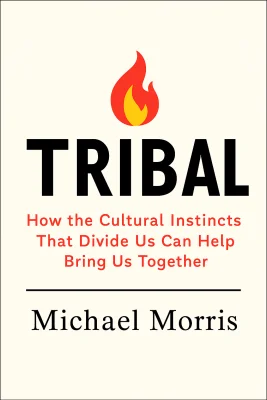
Tribal
How the Cultural Instincts That Divide Us Can Help Bring Us Together
Categories
Business, Nonfiction, Self Help, Psychology, Leadership, Audiobook, Management, Sociology, Society, Cultural
Content Type
Book
Binding
Kindle Edition
Year
2024
Publisher
Thesis
Language
English
ASIN
B07TZZN2X6
ISBN
0735218110
ISBN13
9780735218116
File Download
PDF | EPUB
Tribal Plot Summary
Introduction
Humans are fundamentally tribal creatures whose behavior is profoundly shaped by cultural signals in ways that often escape conscious awareness. While we typically view our actions as products of individual choice and rational deliberation, compelling evidence suggests that our decisions are heavily influenced by subtle environmental cues that trigger deep-seated psychological mechanisms. These cultural signals—ranging from peer behavior to prestigious role models to traditional ceremonies—activate specific mental frameworks that guide our perceptions, judgments, and behaviors without our explicit consent or recognition. This perspective challenges conventional wisdom about human psychology in several important ways. Rather than seeing tribalism as a primitive impulse to overcome, we can recognize it as the foundation of our unique capacity for cooperation and cultural learning. By understanding the three tribal instincts—peer, hero, and ancestor—and how they respond to different types of cultural signals, we gain insight into phenomena ranging from political polarization to organizational change to environmental conservation. This framework not only explains why humans behave as they do but offers practical strategies for channeling these powerful psychological forces toward more constructive ends.
Chapter 1: The Three Tribal Instincts: Peer, Hero, and Ancestor
Humans possess three distinct psychological systems that evolved to help our ancestors navigate group living. These "tribal instincts" operate largely beneath conscious awareness yet profoundly shape our behavior across diverse contexts from politics to business to everyday social interactions. The peer instinct drives us to synchronize with those around us, automatically detecting and conforming to group norms. This adaptation emerged in our earliest human ancestors, enabling unprecedented coordination in hunting, gathering, and defense. The peer instinct explains why we unconsciously mimic others' accents, adopt the food preferences of our social circles, and follow fashion trends despite our claims of individuality. It operates through mental representations called "peer codes" that encode what most people in our group typically do. These codes activate automatically in response to environmental cues, allowing us to seamlessly adapt to different social contexts without conscious deliberation. The hero instinct motivates contributions to group welfare by linking status to prosocial behavior. Unlike other primates who gain dominance primarily through aggression, humans achieve influence by demonstrating valued skills and qualities that benefit others. This psychological system registers what earns respect and admiration in a particular community, creating internal rewards (pride) for actions that enhance reputation and punishments (shame) for those that diminish it. The hero instinct explains why humans routinely share resources with non-relatives, volunteer for dangerous missions, and make sacrifices for abstract causes—behaviors rarely observed in other species. The ancestor instinct connects us to group traditions and compels us to maintain cultural continuity across generations. This uniquely human adaptation enables the accumulation of knowledge and practices over time, allowing each generation to build upon rather than reinvent cultural solutions. The ancestor instinct manifests in our fascination with origin stories, our comfort in familiar rituals, and our tendency to defend traditional practices when threatened. It intensifies during periods of uncertainty or external threat, explaining why societies often become more traditionalist during crises. These three instincts don't operate in isolation but form an integrated system that enables human groups to coordinate behavior, motivate contributions to collective welfare, and maintain cultural continuity. Together, they create the psychological foundation for human culture—our species' most powerful adaptation. When all three instincts align toward common goals, they produce extraordinary levels of cooperation and cohesion. National ceremonies that combine synchronized movement (peer), symbolic displays (hero), and historical references (ancestor) can generate profound experiences of unity precisely because they engage all three tribal instincts simultaneously. Understanding these instincts offers a new perspective on human psychology—one that recognizes our fundamentally social nature without reducing us to mere products of cultural programming. The tribal instincts framework explains seemingly irrational behaviors that defy purely individualistic models while also accounting for the remarkable flexibility and creativity of human culture.
Chapter 2: Cultural Triggers: How Environmental Cues Activate Tribal Codes
Cultural codes don't operate continuously in our minds but activate in response to specific environmental cues. These "triggers" function like switches that turn on different aspects of our tribal psychology, often without our conscious awareness or consent. Signs serve as triggers for peer codes, activating mental representations of what others typically do in a particular context. When Lee Kuan Yew sought to transform Singapore's corrupt port culture in the 1960s, he strategically deployed British colonial signs—white uniforms, English language, and even a statue of the city's British founder. These cues activated dormant British cultural codes in Singaporean officials, helping establish a culture of transparency and rule-following. Similarly, when immigrants enter new countries, environmental signs like architecture, language, and food aromas automatically trigger cultural frame-switching, enabling them to navigate between different behavioral patterns appropriate to different contexts. Symbols function as triggers for hero codes, activating mental representations of what earns respect and admiration in a community. When Martin Luther King Jr. delivered his "I Have a Dream" speech, he surrounded his audience with powerful American symbols like the Lincoln Memorial and references to founding documents. These symbols activated shared ideals of equality and justice, inspiring people to contribute to the civil rights cause despite personal risks. In corporate settings, logos and brand imagery serve as symbols that activate professional ideals and standards. When Bank of America acquired Merrill Lynch during the 2008 financial crisis, they initially removed the iconic Merrill bull logo, triggering an exodus of top talent who felt their professional identity threatened. Ceremonies operate as triggers for ancestor codes, activating mental representations of group traditions and historical continuity. When Joan of Arc led French soldiers through Catholic sacraments before battle, she activated their sense of religious tradition and duty. The synchronized movements and historical references created a mindset where soldiers saw themselves as defenders of a sacred French Catholic tradition rather than mere pawns in a royal dispute. Modern organizations similarly use ceremonies like orientation rituals, annual meetings, and retirement celebrations to activate institutional memory and reinforce cultural continuity. The effectiveness of these triggers depends partly on individual differences in psychological needs. People with a high "need for closure"—a trait characterized by discomfort with ambiguity and preference for clear answers—tend to respond more strongly to cultural triggers, especially during periods of uncertainty or stress. This explains why cultural conformity often increases during crises and why authoritarian movements gain traction during periods of social upheaval. Understanding these triggering mechanisms reveals how situations shape behavior independently of individual personality or conscious intention. The same person can act differently depending on which cultural codes are activated by their environment. This perspective challenges simplistic notions of human behavior as purely rational or individually determined, highlighting instead how our social nature fundamentally shapes who we are and what we do.
Chapter 3: Cultural Signals: How Information Reshapes Group Behavior
While cultural triggers activate existing mental codes, cultural signals actually reshape these codes over time. These signals provide information that updates our understanding of what's normal, admirable, or traditional within our communities, gradually transforming cultural patterns. Prevalence signals reshape peer codes by conveying information about what group members typically do or think. The rise and fall of Prohibition in America demonstrates how these signals operate. Temperance activists initially created an impression of widespread abstinence through public pledge events, parades, and media campaigns featuring prominent citizens renouncing alcohol. These activities updated Americans' peer codes, making drinking seem increasingly deviant. However, when the Literary Digest began publishing polls showing that most Americans actually opposed Prohibition, these new prevalence signals triggered a rapid shift in public opinion. Similarly, energy conservation programs have reduced household electricity usage by showing consumers how their consumption compares to their neighbors, activating conformity mechanisms without changing attitudes or values. Prestige signals update hero codes by demonstrating what behaviors earn respect and admiration in a community. When Satya Nadella took over Microsoft, he modeled curiosity and humility by going on listening tours and publicly acknowledging his mistakes. This signaled a shift in the company's ideal from technical expertise and competitive aggression to customer focus and collaborative innovation. Brazilian telenovelas unintentionally transformed family planning practices by featuring successful female characters with small families or no children. As viewers admired these fictional characters, they unconsciously updated their mental models of what constitutes an admirable female life, contributing to a dramatic decline in Brazil's birth rate from six children per family to less than two within a generation. Precedent signals modify ancestor codes by connecting present activities to the group's past, creating impressions of historical continuity even where none may exist. When Abraham Lincoln established Thanksgiving as a national holiday during the Civil War, he framed it as a continuation of both Washington's proclamation and the Pilgrims' harvest feast, creating an impression of historical continuity that helped unify a divided nation. Nelson Mandela similarly leveraged precedent signals when establishing South Africa's Truth and Reconciliation Commission, presenting it as consistent with traditional African concepts like ubuntu rather than as a novel Western import. This framing made the commission more acceptable to communities that might otherwise have demanded retribution. The effectiveness of these signals depends on various factors. Prevalence signals work best when they come from credible sources and avoid triggering suspicion about manipulation. Prestige signals are most influential when they come from individuals perceived as authentic members of the relevant community rather than outsiders. Precedent signals are most compelling when they establish both antiquity (connection to the distant past) and consistency (tight analogy to the present situation). Understanding these signaling mechanisms reveals how cultural change happens. Whether reducing energy consumption through neighborhood comparisons, decreasing smoking rates by changing media portrayals, or building support for a new corporate strategy by connecting it to company traditions, effective change often involves sending the right signals through the right channels at the right time.
Chapter 4: When Tribalism Turns Toxic: Understanding Cultural Division
Tribal psychology can produce harmful outcomes when it activates divisive or destructive behaviors. Political polarization in democracies exemplifies how tribal instincts can undermine collective functioning when channeled in particular ways. As partisan identity increasingly aligns with other social identities (religion, geography, education), citizens sort themselves into distinct cultural bubbles with different information sources, social networks, and even consumer preferences. This alignment transforms political disagreements from policy disputes into tribal conflicts, where factual beliefs become markers of group loyalty rather than products of evidence-based reasoning. Epistemic tribalism—the tendency to evaluate information based on its alignment with group identity rather than its accuracy—poses a particular threat to democratic deliberation. Studies show that politically sophisticated individuals are often more susceptible to this bias, using their cognitive skills to rationalize beliefs that conform to their group's position. When researchers presented identical policy proposals with different partisan labels, participants evaluated them based primarily on the perceived source rather than content. This tribalism extends beyond politics to factual questions about climate change, economic statistics, and public health, creating parallel information universes that make consensus-building nearly impossible. Ethnic tribalism manifests in hiring and promotion practices that perpetuate inequality without explicit prejudice. Research reveals that most people secure jobs through personal connections and referrals, a process that naturally reproduces existing demographic patterns when social networks are homogeneous. This "opportunity hoarding" occurs through in-group favoritism rather than out-group hostility—people helping friends and family members who tend to share their ethnic background. The persistence of such patterns despite declining explicit prejudice explains why diversity initiatives focused solely on reducing bias often fail to create meaningful change. Existential tribalism emerges when groups perceive threats to their cultural continuity, often leading to violence. Historical narratives that frame demographic changes as existential threats to cultural identity gain power during periods of economic uncertainty or rapid social change, when the ancestor instinct intensifies people's attachment to traditional identities. These narratives can be manipulated by political entrepreneurs who use ceremonies and symbols to activate defensive tribal responses. In the former Yugoslavia, Slobodan Milošević manipulated historical narratives about the 1389 Battle of Kosovo to activate Serbian fears about Muslim domination, contributing to genocidal violence. The tribal psychology framework suggests that these toxic manifestations stem not from tribalism itself but from specific patterns of activation. The same psychological mechanisms that drive division can also foster cooperation when properly engaged. Rather than attempting to eliminate tribal psychology—an impossible task given its deep evolutionary roots—effective interventions typically create new, more inclusive identities or establish cooperation across existing groups. For example, orchestras have increased diversity not by eliminating auditions but by conducting them behind screens, removing visual cues that trigger bias. Similarly, post-conflict reconciliation programs succeed not by asking people to abandon group identities but by creating shared experiences that build trust across tribal boundaries. Understanding the specific mechanisms through which tribalism becomes toxic provides insight into potential remedies. By recognizing how cultural signals shape behavior, we can design interventions that work with rather than against our tribal nature, channeling these powerful psychological forces toward more constructive ends.
Chapter 5: Harnessing Tribal Psychology for Positive Social Change
Tribal psychology can be harnessed for constructive purposes when we understand its underlying mechanisms. The most successful change initiatives work with rather than against these deep-seated instincts, channeling them toward positive outcomes rather than attempting to override them with rational arguments or moral appeals. Climate action presents a contemporary challenge that requires effective tribal signal management. Traditional approaches emphasizing scientific facts or apocalyptic warnings have largely failed to motivate significant behavior change. More effective strategies leverage peer instincts by providing neighborhood comparisons of energy usage, hero instincts by celebrating local climate champions, and ancestor instincts by framing sustainable practices as consistent with traditional values of thrift and stewardship. The OPOWER program, which reduced household energy consumption by showing consumers how their usage compared to neighbors, demonstrates how tribal psychology can be harnessed for environmental benefit without changing underlying attitudes or values. Public health challenges similarly respond to tribal approaches. Conventional health education often fails because it treats decision-making as purely rational rather than socially embedded. More effective interventions recognize the tribal nature of health behaviors. Programs that reduce teenage smoking by changing how it's portrayed in media, decrease binge drinking by correcting misperceptions about peer norms, or increase vaccination rates by making immunization visible through "I Got My Shot" stickers all work by engaging tribal psychology rather than trying to override it with information alone. Workplace challenges can also be addressed through tribal mechanisms. When organizations struggle with diversity and inclusion, traditional compliance training often backfires by activating defensive reactions. More effective approaches include creating visible peer norms through transparent diversity metrics, establishing hero codes by recognizing and celebrating inclusive leaders, and developing precedent signals that connect inclusion to the organization's heritage and identity. Microsoft's cultural transformation under Satya Nadella succeeded largely because it engaged these tribal mechanisms rather than relying on mandates or abstract principles. Even political polarization can be mitigated through tribal approaches. Programs that bring together Americans across political divides succeed not by asking participants to abandon their tribal identities but by activating superordinate identities that encompass both sides. When people are reminded of shared national traditions or common local concerns, their tribal psychology can become a force for connection rather than division. Similarly, cross-cutting exposures to diverse viewpoints work best when they occur in contexts where political identity is not salient, allowing people to engage with different perspectives without triggering defensive tribal reactions. The most promising approaches to complex social problems recognize that tribal psychology is a fundamental aspect of human nature that cannot be eliminated but can be redirected. Rather than attempting to suppress tribal instincts in the name of rationality or individualism, effective change strategies channel these powerful motivational forces toward inclusive, cooperative ends. This might involve creating new traditions that bridge divides, elevating heroes who embody cooperation across differences, or making prosocial behaviors more visible to activate peer conformity. By understanding the science of tribal triggers, we gain not just insight into human behavior but practical tools for positive social change. The same psychological mechanisms that can drive conflict and division can also foster cooperation, sustainability, and inclusion when properly engaged.
Chapter 6: Beyond Individual Choice: The Social Nature of Human Behavior
The tribal psychology framework challenges fundamental assumptions about human behavior that pervade modern thought. Western intellectual traditions have long emphasized individual rationality and personal choice as the primary determinants of human action. This individualistic model underlies economic theories that treat people as autonomous utility-maximizers, legal systems that focus on personal responsibility, and self-help philosophies that promise transformation through individual mindset changes. Yet mounting evidence from diverse fields suggests this model fundamentally mischaracterizes how humans actually function. Our behavior emerges not primarily from conscious deliberation but from automatic responses to cultural signals in our environment. When we enter a restaurant and unconsciously lower our voices, when we feel compelled to stand during a national anthem, or when we find ourselves mimicking the accent of someone we're speaking with, we're experiencing the power of tribal instincts that operate largely outside conscious awareness. These responses aren't flaws in an otherwise rational system but the very foundation of human sociality—the psychological adaptations that enable our unprecedented capacity for cooperation and cultural learning. This perspective helps explain why purely information-based or incentive-based approaches to behavior change often fail. Anti-smoking campaigns that focus on health risks, climate initiatives that emphasize scientific facts, and diversity programs that stress moral arguments all assume that providing information or appealing to values will change behavior. Yet decades of research show these approaches have limited impact because they target conscious reasoning while ignoring the cultural signals that actually drive behavior. More effective interventions work with tribal psychology rather than against it—changing peer environments, elevating different heroes, or connecting desired behaviors to valued traditions. The tribal framework also offers insight into why technological solutions alone cannot address our deepest social challenges. Digital platforms have disrupted traditional tribal structures, creating new forms of community that lack the balancing mechanisms of face-to-face interaction. Understanding tribal psychology can help us design digital environments that foster healthier forms of belonging and identity. Rather than amplifying outrage for engagement, platforms could be designed to highlight constructive contributions and facilitate meaningful connection across difference. Perhaps most importantly, tribal psychology reminds us that humans are fundamentally social creatures whose wellbeing depends on belonging and meaning. The epidemic of loneliness in modern societies stems partly from the erosion of traditional tribal structures without adequate replacements. Building new forms of community that satisfy our tribal instincts in healthy ways may be essential for psychological and social flourishing in the twenty-first century. This perspective doesn't deny human agency or the value of rational deliberation. Rather, it suggests that our capacity for reason operates within a broader context of social influence that shapes what we perceive, value, and desire. By understanding these influences, we gain greater freedom to choose which cultural signals we expose ourselves to and which tribal affiliations we cultivate. The path to human flourishing lies not in transcending our tribal nature but in harnessing it—using our evolved psychology as a resource rather than seeing it as an obstacle to overcome.
Summary
The tribal psychology framework reveals that human behavior is fundamentally shaped by three evolved instincts—peer, hero, and ancestor—that respond to cultural signals in our environment. These instincts developed over evolutionary time to enable unprecedented levels of human cooperation, but they can also drive harmful behaviors when triggered in divisive ways. By understanding how signs activate our conformity reflexes, how symbols evoke our status-seeking tendencies, and how ceremonies engage our traditionalist impulses, we gain insight into phenomena ranging from political polarization to organizational change to environmental conservation. This perspective challenges both purely individualistic accounts of human behavior and simplistic cultural determinism. Instead, it reveals how our evolved psychology interacts with cultural contexts to produce patterns of behavior that often operate outside conscious awareness. The most valuable insight may be that tribal psychology itself is neither good nor bad—it simply reflects the social nature of human cognition. By working with rather than against these deep-seated instincts, we can design interventions that channel tribal psychology toward more inclusive, cooperative, and sustainable outcomes. This framework offers not just theoretical understanding but practical wisdom for anyone seeking to navigate or influence the complex social worlds we inhabit.
Best Quote
“Each tribal instinct can spin out of control under certain conditions due to chain reactions and feedback loops.” ― Michael Morris, Tribal: How the Cultural Instincts That Divide Us Can Help Bring Us Together
Review Summary
Strengths: The book is described as well-written and easily navigated, making it a valuable addition to a home library. It offers a fresh perspective on cultural formation and evolution, contributing to a better understanding of institutional change. The crossover between business and popular science is noted as refreshing, with engaging examples from around the world.\nWeaknesses: The reviewer disputes the centrality of tribalism in the author's approach, suggesting that storytelling may be a more central theme, with tribalism as a symptom rather than a cause.\nOverall Sentiment: Enthusiastic\nKey Takeaway: The book provides a novel and engaging exploration of cultural instincts, particularly tribalism, and their influence on societal interactions and institutional change, despite some disagreement with the author's emphasis on tribalism.
About Author

Michael Morris
Michael W. Morris, PhD, is a Professor of Psychology and Leadership at Columbia Business School. He is a renowned researcher in the field of cultural psychology and decision-making. Morris studies how culture shapes the way we think and how our "tribal" instincts influence our behavior in business and politics.\n\nHe is the author of Tribal: How the Cultural Instincts That Divide Us Can Help Us Unite. Morris argues that humans are hardwired to form peer groups ("tribes"). While this is often seen as a source of conflict, Morris contends that our tribal instincts are also the key to cooperation. He explores how leaders can harness these instincts to build stronger teams and bridge divides, rather than letting them tear organizations apart.
Read moreDownload PDF & EPUB
To save this Black List summary for later, download the free PDF and EPUB. You can print it out, or read offline at your convenience.
Tribal
by Michael Morris
