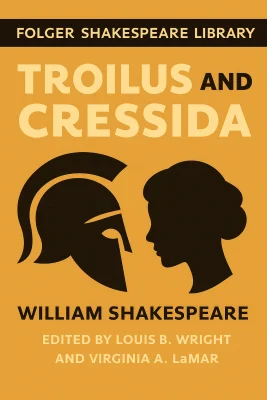
Troilus and Cressida
Categories
Fiction, Classics, Plays, Historical Fiction, Poetry, Literature, 17th Century, Drama, Theatre, Shakespeare
Content Type
Book
Binding
Mass Market Paperback
Year
1988
Publisher
Washington Square Pr
Language
English
ASIN
0671669168
ISBN
0671669168
ISBN13
9780671669164
File Download
PDF | EPUB
Troilus and Cressida Plot Summary
Introduction
# Shakespeare's Troilus and Cressida: Deconstructing Heroic Ideals and Romantic Conventions This dramatic work presents a systematic dismantling of the foundational myths that have long sustained Western culture's understanding of heroism, love, and honor. Through its unflinching examination of the Trojan War and its participants, the play reveals how supposedly noble ideals often mask brutal realities of political manipulation, sexual commodification, and moral corruption. The work challenges audiences to confront the uncomfortable truth that the values they have been taught to revere may themselves be elaborate constructions designed to perpetuate systems of power and control. The analytical approach employed here operates through deliberate irony and generic instability, refusing to provide the comfortable moral categories that audiences typically expect from dramatic literature. By systematically exposing the gap between heroic rhetoric and actual behavior, between romantic idealization and transactional reality, the work creates a space for critical examination of how societies construct meaning around conflict and desire. This methodology proves particularly valuable for contemporary readers seeking to understand how ideological frameworks shape perception and how the pursuit of supposedly transcendent values can become sources of suffering rather than fulfillment.
Chapter 1: The Systematic Dismantling of Classical Heroism and Chivalric Values
The traditional heroic ideal undergoes complete deconstruction as legendary figures reveal themselves to be petty, self-serving individuals driven by base motivations rather than noble purpose. Achilles, the archetypal warrior whose rage drives Homer's epic, appears as a sulking, self-indulgent figure more concerned with personal grievances than military duty. His withdrawal from battle stems not from principled stance but from wounded pride and romantic entanglements that compromise his loyalty. This transformation of the supreme hero into a brutal opportunist exposes how heroic reputation can become divorced from heroic reality. Agamemnon, supposedly the supreme commander of Greek forces, emerges as a pompous and ineffectual leader whose authority rests on ceremony rather than competence. His lengthy speeches about order and degree ring hollow when contrasted with the chaos and insubordination that characterize his camp. The gap between rhetorical grandeur and practical impotence demonstrates how leadership often depends more on performance than substance, revealing the theatrical nature of political authority. Even Hector, the most sympathetic warrior, falls victim to this demystifying vision. Despite his philosophical wisdom and moral sensitivity, he ultimately chooses to continue fighting for a cause he intellectually recognizes as unjust. His death results not from tragic fate but from his own greed and enemy treachery, stripping away any sense of noble sacrifice. This portrayal suggests that even the best individuals become corrupted when they participate in fundamentally corrupt systems. The treatment of Ajax demonstrates how heroic status can be manufactured through strategic propaganda. The Greek leaders deliberately inflate his modest abilities to provoke Achilles' jealousy, showing how reputation depends on external validation rather than intrinsic worth. Ajax's gullibility makes him an easy target for manipulation, revealing the extent to which heroic identity requires constant social reinforcement. The systematic exposure of heroic pretension serves a larger purpose in examining how societies create and maintain their founding myths. By revealing the savage impulses that lurk beneath civilized facades, the analysis invites consideration of what other cherished beliefs might similarly rest on unstable foundations. The collapse of heroism becomes a metaphor for the broader crisis of meaning that emerges when traditional value systems face rigorous scrutiny.
Chapter 2: Love as Economic Transaction: Commodification of Human Relationships
Romantic relationships operate according to economic principles that reduce human affection to matters of transaction and exchange, revealing how supposedly pure emotional bonds become contaminated by considerations of worth, profit, and market value. The language of love consistently employs commercial metaphors, with characters speaking of "purchasing" affection and calculating the "interest" expected on emotional investments. This linguistic pattern exposes how thoroughly commercial thinking has penetrated even the most intimate human connections. Cressida's situation exemplifies this commodification most clearly, as she exists as an object to be exchanged between men rather than as an autonomous individual with her own desires and preferences. First promised to Troilus through Pandarus's mediation, then traded to the Greeks as part of a prisoner exchange, her personal wishes become irrelevant in the face of political necessities that treat her as valuable property. Her adaptation to new circumstances reflects not fickleness but realistic understanding of her position within a system that offers no genuine choices. The concept of sexual and romantic "worth" functions as a central organizing principle, with individuals assessed according to their market value in the economy of desire. Beauty, youth, social status, and sexual availability all become forms of capital that can be accumulated, invested, or squandered. This framework transforms lovers into both consumers and commodities, simultaneously seeking valuable partners while marketing their own desirability. Helen's position as the ostensible cause of war provides another lens through which to examine love's relationship to value. The question of whether she is "worth" the cost in lives and resources exposes the absurdity of trying to calculate human relationships in purely economic terms. Yet both sides have done precisely this, treating Helen as a valuable prize whose possession justifies any expenditure, revealing how political decisions become framed in terms of investment and return rather than moral principle. The temporal aspect of romantic commerce introduces additional complications, as the value of romantic assets fluctuates over time. Cressida's awareness that "men prize the thing ungained more than it is" demonstrates sophisticated understanding of how desire operates according to market principles of scarcity and demand. Her strategic management of male attention reflects both intelligence and recognition that women must navigate a system treating them as commodities, though such knowledge ultimately cannot protect her from larger forces controlling her fate.
Chapter 3: The Illusion of Honor: Male Competition and Female Objectification
The male characters demonstrate pathological preoccupation with reputation and status that distorts their relationships with both women and each other, revealing honor as a fundamentally masculine construct dependent upon the control and exchange of women for its social meaning. Troilus embodies this dysfunction through his commodifying language about Cressida, describing her in terms of precious objects to be acquired rather than as a partner in genuine emotional connection. His romantic rhetoric masks an acquisitive approach that treats women as symbols of male achievement. The Trojan council's debate over returning Helen reveals how women function as tokens in masculine competitions for dominance, with arguments focusing entirely on male reputation and political advantage while showing no consideration for Helen's agency. This reduction of women to objects of exchange reflects broader patterns of patriarchal control that subordinate female autonomy to male ambition and pride, demonstrating how the honor code creates artificial conflicts serving no purpose beyond system perpetuation. Pandarus represents corruption of familial bonds through his willingness to exploit his niece for vicarious sexual gratification. His role as procurer transforms natural kinship into commercial transaction, while his voyeuristic interest reveals perverse dynamics that emerge when women are treated as commodities rather than family members deserving protection. This corruption extends to his function as both facilitator and observer of intimate encounters, making him complicit in the very exploitation he should prevent. The Greek officers' treatment of Cressida upon her arrival demonstrates collective male sexual aggression and how military culture normalizes female objectification. Their demand for kisses and crude commentary reduce her to a sexual object whose value lies entirely in providing masculine pleasure. This scene exposes how supposedly civilized men quickly revert to predatory behavior when social constraints are removed, revealing the thin veneer of courtesy that masks more basic impulses. The exploration of male psychology reveals how honor pursuit often masks deeper insecurities about masculine identity and worth. The constant need for external validation through combat, conquest, and competition suggests fundamental instability in male self-concept requiring continuous reinforcement through domination of others, particularly women. This psychological analysis exposes honor as performance rather than principle, dependent upon audience recognition for its very existence.
Chapter 4: Time, Reputation, and the Collapse of Stable Meaning
The meditation on time reveals it as a destructive force that undermines all human achievements and pretensions to lasting significance, challenging heroic assumptions about achieving immortality through fame and remembrance. Ulysses' extended metaphor of Time as a wallet-bearing figure who consumes good deeds as quickly as they are performed presents temporal existence as essentially erosive, denying the possibility of permanent meaning or value. This conception exposes the futility of seeking transcendence through heroic action. The obsession with reputation driving many characters reflects attempts to transcend time's destructive power through lasting fame, yet reputation itself proves as unstable and ephemeral as the deeds on which it supposedly rests. Achilles' discovery that his past glories have already begun to fade reveals how quickly reputations rise and fall, suggesting that fame provides no genuine escape from temporal limitation. The speed of these fluctuations indicates that even the most celebrated achievements cannot secure lasting significance. Characters find themselves trapped between present action demands and concerns about future memory, creating temporal double consciousness that paralyzes effective action. The desire to control posthumous reputation conflicts with practical survival requirements, revealing how excessive attachment to eternal verities can become psychologically destructive. This tension demonstrates the impossibility of living simultaneously in present and future, forcing choices that satisfy neither temporal nor eternal concerns. The treatment of prophecy adds another dimension to temporal concerns, as Cassandra's accurate predictions of Troy's doom are dismissed precisely because they threaten comfortable illusions enabling continued destructive behavior. The rejection of prophetic truth reveals how human beings protect themselves from temporal awareness through willful ignorance and self-deception, preferring pleasant falsehoods to uncomfortable realities about future consequences. The relationship between present experience and historical memory becomes increasingly problematic as characters discover that their most confident actions produce consequences entirely contrary to their intentions. This retrospective irony suggests that human agency may be far more limited than idealistic thinking assumes, as social and psychological complexity makes it nearly impossible to predict or control outcomes. The gap between intention and result undermines claims about heroic effectiveness while highlighting the tragic character of human temporal existence.
Chapter 5: Generic Ambiguity as Philosophical Method: Form Mirrors Content
The work's resistance to conventional genre classifications reflects its thematic investigation of how meaning depends upon contested interpretation rather than secure foundation, transforming apparent formal weakness into philosophical strength. The classification confusion that has puzzled scholars since initial publication mirrors characters' struggles to define concepts like honor, love, and truth, suggesting that categorical instability extends beyond dramatic structure to encompass fundamental questions about knowledge and value. The experimental nature of the dramatic form emerges during a period of intense theatrical innovation when playwrights were pushing against established boundaries and exploring new expressive possibilities. This historical context illuminates the work's skeptical treatment of traditional categories and its investigation of how authority depends upon contested claims rather than objective criteria. The generic confusion becomes structural element reinforcing philosophical skepticism about fixed meanings. The work's apparent lack of initial stage success, coupled with complex publication history, suggests it may have been too politically sensitive or artistically challenging for mainstream audiences. The publisher's claim that it was "never staled with the stage" indicates either limited performance or deliberate marketing strategy targeting educated readers rather than theatrical patrons, positioning the work at the intersection of popular entertainment and intellectual discourse. Contemporary editorial practice increasingly embraces textual multiplicity as source of meaning rather than obstacle to understanding, allowing readers to experience directly the interpretive challenges that have confronted critics throughout publication history. This approach transforms textual scholarship from recovery of stable authorial intention into exploration of how meaning emerges from interaction between textual possibility and interpretive choice. The generic ambiguity ultimately serves as methodological strategy that embodies central insights about instability of value and authority. Just as characters within the work struggle to establish reliable grounds for moral and political judgment, audiences must navigate competing interpretive frameworks without comfort of generic expectations. This formal innovation anticipates modern critical approaches while demonstrating how artistic experimentation can illuminate hidden assumptions structuring cultural understanding.
Chapter 6: Performance History Reveals Enduring Relevance to Political Crisis
The work's initial neglect and subsequent rediscovery reflect changing cultural attitudes toward authority, heroism, and moral certainty, with early audiences finding the cynical vision and generic ambiguity disturbing compared to conventional treatments reinforcing traditional values. The failure to achieve popular success during the playwright's lifetime suggests that radical critique of heroic ideals was ahead of its time, requiring historical circumstances that would make such skepticism more culturally acceptable. The twentieth century's embrace coincided with broader cultural shifts toward skepticism about traditional authority and increased awareness of warfare's psychological costs. Productions during and after World Wars found prescient analysis of how military conflict corrupts individuals and societies, with unflinching examination of gaps between heroic rhetoric and brutal reality resonating with audiences experiencing similar disillusionments in their own historical moment. Modern directors consistently emphasize contemporary relevance by setting productions in recognizable historical contexts, from World War trenches to corporate boardrooms. These interpretive choices highlight universal themes while demonstrating how critique of power and corruption transcends specific historical circumstances. The work's adaptability to different contexts reflects fundamental concern with enduring patterns of human behavior rather than merely local conditions. The revival in academic and theatrical circles has been accompanied by increased appreciation for formal innovations and psychological complexity. Critics recognize how experimental structure and genre-blending techniques anticipate later developments in dramatic literature, while exploration of identity and authenticity speaks to contemporary concerns about meaning construction in postmodern culture. Performance history reveals how initial marginality has become source of strength, allowing the work to serve as vehicle for exploring unconventional perspectives and challenging dominant narratives. Status as "problem play" enables directors and critics to use it as lens for examining contemporary problems and questioning established assumptions about literature, politics, and human nature, demonstrating how artistic difficulty can become interpretive opportunity.
Chapter 7: Textual Instability Embodies Thematic Concerns with Authority
The substantial differences between early published versions create editorial dilemmas that cannot be resolved through purely bibliographical analysis but require critical judgments about ultimate meaning and intended effect, transforming textual scholarship from recovery into creative collaboration with unstable authorial presence. The variants cluster around moments of moral and political judgment, indicating that ethical stance remained fluid throughout compositional history. Most significantly, textual uncertainty mirrors thematic investigation of how authority depends upon contested interpretation rather than secure foundation. Just as characters struggle to establish reliable grounds for judgment, editors must acknowledge that textual choices inevitably shape meaning in ways that cannot be justified through purely objective criteria. This parallel between textual and thematic instability makes editorial challenges part of the work's significance rather than obstacles to understanding. The famous crux of the ending exemplifies how textual uncertainty embodies thematic concerns, with different versions offering alternative relationships between stage and audience that implicate spectators differently in the corrupt world depicted. Neither version achieves stable closure, but their coexistence demonstrates how textual multiplicity can function as interpretive strategy rather than editorial problem. The publication history further complicates interpretive challenges, with contradictory claims about performance creating uncertainty about intended audience and generic classification. This instability reflects the work's position at intersection of popular entertainment and intellectual discourse, suggesting that meaning emerges from tension between competing cultural frameworks rather than resolution into single authoritative interpretation. Contemporary digital editions that preserve variant readings and alternative arrangements allow readers to experience directly the interpretive challenges that have confronted scholars throughout publication history. This technological approach transforms textual study from attempt to recover stable meaning into exploration of how significance emerges from interaction between possibility and choice, making editorial uncertainty productive rather than problematic.
Summary
The fundamental insight emerging from this analysis concerns the tragic gap between human aspiration and structural limitations that make such aspirations ultimately self-defeating, revealing how idealistic commitments can become sources of suffering rather than satisfaction. Through systematic destabilization of inherited cultural forms, the work demonstrates how literary tradition functions not as stable repository of meaning but as contested site where competing values struggle for interpretive dominance. The enduring capacity to frustrate definitive interpretation emerges not from authorial confusion but from deliberate artistic strategy that embodies central insights about instability of value and authority. This work rewards readers prepared to embrace interpretive uncertainty as philosophical opportunity, offering unique insights into how meaning emerges from conflict rather than consensus, and how artistic innovation can illuminate hidden assumptions that structure cultural understanding while anticipating modern critical approaches to textual authority and cultural transmission.
Best Quote
“For to be wise and love exceeds man's might.” ― William Shakespeare, Troilus and Cressida
Review Summary
Strengths: The review highlights the play's realism and compassion, appreciating its exploration of human nature's failures. It notes the intriguing genre ambiguity and modern sensibility, as well as its bold thematic elements, such as the linkage of passion and violence. Weaknesses: The review criticizes the play for its vitriolic tone and the generally unpleasant nature of its characters. It suggests that the play's cynicism may be excessive, making it difficult to find redeeming qualities in the characters or their actions. Overall: The reader finds "Troilus and Cressida" to be a complex and divisive work, appreciated for its depth and modern relevance but criticized for its harshness and lack of likable characters. The recommendation is cautious, appealing to those interested in Shakespeare's darker, more cynical explorations.
About Author
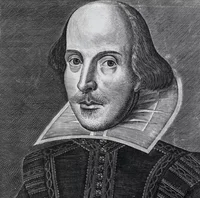
William Shakespeare
Shakespeare probes the vast spectrum of human emotion and societal dynamics through his timeless plays and sonnets. As a formidable author, his works such as "Macbeth" and "Romeo and Juliet" delve into the intricate themes of ambition and love, while his deft use of iambic pentameter and rich characterizations create a lasting impact on English literature. Beyond exploring these complex emotional landscapes, Shakespeare's narratives often highlight the tension between fate and free will, inviting readers to ponder existential questions. His ability to weave poetic imagery and explore moral dilemmas ensures that his stories resonate with audiences across different eras.\n\nShakespeare's literary genius is reflected in his capacity to craft narratives that transcend their historical context. His work captures the zeitgeist of the Elizabethan era while simultaneously offering timeless insights into human nature. In the book "The Tempest," for example, he uses themes of power and redemption to comment on human relationships and authority. By integrating psychological depth with his eloquent language, Shakespeare not only shaped the evolution of drama but also laid a foundation for future literary exploration. Readers and scholars continue to benefit from his profound insights into human behavior, ensuring his legacy as a central figure in the study of English literature.\n\nThe significance of Shakespeare's contributions to the arts is further underscored by the meticulous preservation of his plays in the First Folio of 1623. While details of his life remain partially elusive, this short bio highlights his enduring influence as the "Bard of Avon," whose works have been translated into numerous languages and performed more often than those of any other playwright. His literary legacy, marked by a seamless blend of poetic innovation and thematic exploration, continues to captivate and educate, reaffirming his position as a monumental figure in the annals of literary history.
Read moreDownload PDF & EPUB
To save this Black List summary for later, download the free PDF and EPUB. You can print it out, or read offline at your convenience.
Troilus and Cressida
by William Shakespeare
