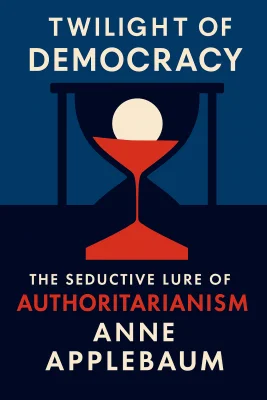
Twilight of Democracy
The Seductive Lure of Authoritarianism
Categories
Nonfiction, Philosophy, History, Politics, Audiobook, Sociology, Society, Political Science, Poland, Current Affairs
Content Type
Book
Binding
Hardcover
Year
2020
Publisher
Signal Books
Language
English
ASIN
0771005857
ISBN
0771005857
ISBN13
9780771005855
File Download
PDF | EPUB
Twilight of Democracy Plot Summary
Introduction
On New Year's Eve 1999, Anne Applebaum and her husband threw a magnificent party at their restored Polish manor house. The guests were an eclectic mix of journalists, diplomats, politicians, and intellectuals from across Europe and America, united by shared optimism about democracy's future. They celebrated not just the new millennium, but the triumph of freedom over tyranny, the promise of European integration, and faith in democratic institutions. The evening sparkled with hope, animated conversations in multiple languages, and the infectious belief that they were all on the same team, building a better world together. Twenty years later, Applebaum realizes with shock that half the people from that joyous celebration would no longer speak to the other half. Former friends have become bitter enemies, divided by an ideological chasm that seems impossible to bridge. Some have embraced authoritarian movements, others remain committed to democratic values, but the unity that once seemed so natural has shattered completely. This personal reckoning becomes the lens through which Applebaum examines a global phenomenon: how educated, successful people in established democracies are abandoning liberal values and embracing authoritarianism. Through intimate portraits of former friends turned political opponents, she reveals the human face of democracy's crisis and offers crucial insights into how we might find our way back to each other.
Chapter 1: New Year's Eve 1999: Friendship Before the Divide
The manor house at Chobielin had been a ruin when Anne Applebaum's family bought it for the price of bricks. By 1999, it was lovingly restored, its large salon perfect for hosting one hundred guests who came from across the world to celebrate the millennium. The atmosphere was magical—friends from London and Moscow, diplomats from Warsaw, journalists whose careers were just beginning, all united by what felt like an unstoppable wave of democratic progress. They made vats of beef stew together, endured the chaos of mismatched music from different countries, and set off dangerous Chinese fireworks in pure exuberance. When Boris Yeltsin resigned that evening, Applebaum wrote a quick column, then returned to the party for another glass of wine. The guests that night shared a common worldview that seemed unshakeable. They believed in democracy, rule of law, free markets, and Poland's integration with Europe and NATO. These weren't just political positions but expressions of deep optimism about human possibility. Whether they called themselves conservative or liberal mattered less than their faith in competitive institutions, fair elections, and the gradual expansion of freedom. They saw themselves as inheritors and builders of something precious—a world where merit mattered more than connections, where borders were opening rather than closing, where young democracies could join the community of free nations. But seeds of future division were already present, invisible beneath the surface harmony. Some guests harbored deep resentments about their own lack of advancement in the new democratic order. Others nursed conspiracy theories about hidden enemies and stolen opportunities. A few were beginning to question whether the compromises of democratic transition had gone too far, whether too many former communists had been allowed to prosper, whether the pace of change was too fast or the direction too cosmopolitan. As Applebaum would later discover, the most dangerous divisions weren't between left and right, but between those who maintained faith in democratic institutions despite their imperfections, and those who grew convinced that the system was rigged beyond reform. The party's warm fellowship masked a gathering storm that would eventually tear apart not just friendships, but entire societies across the democratic world.
Chapter 2: The Anatomy of Modern Authoritarianism
Jacek Kurski and his brother Jarosław grew up in the same Polish household, shaped by the same anti-communist struggle, inspired by the same dreams of freedom. Both worked on underground newspapers, both risked imprisonment under martial law, both should have been natural allies in building Polish democracy. Yet by 2015, they represented opposite poles of their country's political divide. Jarosław became editor of Poland's most important liberal newspaper, while Jacek became director of state television under the authoritarian Law and Justice party, transforming it into a propaganda machine that spread hatred and lies. The difference between the brothers reveals something crucial about modern authoritarianism. Jacek's transformation wasn't driven by ideology but by resentment and frustrated ambition. Despite his heroic past as a teenage dissident, he never achieved the success he felt he deserved in democratic Poland. He watched his brother thrive while his own political career stagnated, leading him to embrace increasingly extreme positions and conspiracy theories. When Law and Justice offered him power over state television, he seized the opportunity for revenge against a system that had seemingly rejected him. Under Jacek's leadership, Polish state television became a weapon of political warfare. Respected journalists were fired and replaced with extremist bloggers. News broadcasts abandoned any pretense of objectivity, instead launching vicious campaigns against opposition politicians, independent judges, and civil society leaders. The propaganda was so relentless and hate-filled that it contributed to the assassination of Gdansk mayor Paweł Adamowicz, murdered by a man radicalized by state TV's constant attacks. This pattern—smart, educated people embracing authoritarianism not from conviction but from personal grievance—appears across the democratic world. Modern authoritarians don't need jackboots or gulags; they need clerks and intellectuals who will destroy democratic norms from within. They offer the disappointed and resentful a chance to tear down institutions that failed to reward them, replacing meritocracy with loyalty, competition with conspiracy. The tragedy isn't just political but deeply personal, destroying families and friendships while poisoning the information environment that democracy requires to survive.
Chapter 3: Nostalgia as Political Weapon: Brexit and National Identity
Boris Johnson embodied a particular type of English conservative nostalgia—playful, ironic, seemingly harmless. At Oxford, he joined the Bullingdon Club not out of genuine aristocratic pretension but as an elaborate joke about class privilege. As a Brussels correspondent, he wrote amusing half-truths about European Union regulations, stories he later admitted were like "chucking rocks over the garden wall" to create an "amazing crash" back in England. His journalism was entertaining precisely because it wasn't entirely serious, part of a broader culture of arch commentary that treated politics as performance art. But this nostalgic playfulness contained a dangerous core. Johnson and his circle weren't satisfied with Britain being just another middle-sized European power. They yearned for an England that made the rules rather than following them, that commanded rather than negotiated. Their nostalgia wasn't for empire exactly, but for a world where England was special, superior, naturally destined to lead. The European Union became the perfect enemy for this worldview—a symbol of everything that had supposedly emasculated British greatness and reduced proud England to just another voice in a multilateral chorus. When the Brexit referendum arrived, Johnson calculated that supporting Leave would lose but make him a hero among Eurosceptic Conservatives. He campaigned with the same sunny disregard for truth that characterized his journalism, promising impossible things and dismissing expert warnings as "Project Fear." The campaign used sophisticated data manipulation and targeted advertising to spread different lies to different audiences—Spanish bullfighters for animal lovers, grasping EU hands for tea drinkers. When Leave unexpectedly won, Johnson found himself accidentally in charge of implementing a revolution he never truly wanted. The Brexit story reveals how nostalgic conservatives, convinced their civilization was disappearing, became willing to destroy the very institutions they claimed to love. Rather than working within European structures to advance British interests, they chose to blow up arrangements that had brought unprecedented prosperity and influence. Their cultural despair became so intense that constitutional chaos seemed preferable to continued integration with continental neighbors. The irony is profound: people who claimed to love Britain so much that they were willing to break it apart, discovering too late that their romantic vision of independent greatness was largely fantasy.
Chapter 4: Digital Disinformation and the Medium-Size Lie
In a sunlit Spanish countryside, Santiago Abascal runs across wheat fields like a movie hero while inspirational music swells and a voice intones: "If you love your fatherland like you love your parents... then you are making Spain great again!" This cinematic advertisement launched Vox from complete obscurity to major political force in just three years. The party's success wasn't built on ideology but on sophisticated digital manipulation, using social media algorithms to create the illusion of massive grassroots support while spreading targeted disinformation to different audiences. Behind Vox's meteoric rise was Rafael Bardají, a former government adviser who had spent years in political exile after Spain's disastrous involvement in the Iraq War. When Trump's victory showed how digital techniques could mobilize anger and nostalgia, Bardají saw an opportunity to reenter Spanish politics. He helped create a party that packaged together previously marginal concerns—opposition to Catalan separatism, traditional gender roles, immigration fears—and marketed them like a pop band, using the same data analytics and targeted messaging that had proven successful elsewhere. The party's online operation was remarkable in its sophistication and cynicism. Thousands of fake social media accounts pumped out millions of messages, creating artificial trending topics and amplifying conspiracy theories. Professional websites that looked like local news sources mixed genuine stories with inflammatory partisan content, all designed to create emotional intensity rather than inform. When Notre Dame Cathedral burned, Vox immediately spread fake images claiming to show Muslims celebrating, part of a coordinated international campaign linking Spanish nationalists with alt-right movements across Europe and America. What made Vox dangerous wasn't any particular policy position but its willingness to abandon truth entirely in pursuit of power. Like authoritarian movements everywhere, it succeeded by offering simple answers to complex problems, unity instead of debate, tribal identity instead of civic engagement. The medium-size lies it spread—not quite as absurd as claiming the moon landing was fake, but disconnected enough from reality to create alternate information environments—allowed supporters to maintain their sense of being reasonable people while embracing increasingly extreme positions. This is the new face of political manipulation: professional, international, and utterly unconcerned with democratic norms or human decency.
Chapter 5: America's Vulnerability: Polarization and Moral Equivalence
Laura Ingraham once embodied the optimistic conservatism of the 1990s, part of a generation that believed America had won the Cold War and could now spread democracy worldwide. She clerked for Supreme Court Justice Clarence Thomas, worked at prestigious law firms, and socialized with other young conservatives who shared an almost boundless faith in American ideals. They gathered at Georgetown dinner parties, wrote for influential magazines, and seemed destined to shape the Republican Party's future around principles of limited government, free markets, and moral leadership in global affairs. But something fundamental shifted in Ingraham's worldview over the intervening decades. The post-Cold War optimism curdled into apocalyptic pessimism about America's future. Where she once saw a nation capable of inspiring the world, she now perceived a civilization in terminal decline, corrupted by immigration, political correctness, and cultural decadence. Her rhetoric became increasingly dark, warning that "the America we know and love doesn't exist anymore" due to "massive demographic changes" that nobody had voted for. She promoted guests who spoke of coming "total war" and encouraged listeners to buy guns in preparation for civil conflict. This transformation reflects a broader crisis within American conservatism, as the movement that once championed democratic values worldwide began questioning democracy itself. Ingraham's support for Trump required embracing moral equivalence—the idea that American institutions are no better than authoritarian alternatives. When she compared democratic governors implementing coronavirus restrictions to foreign dictators worth "liberating," she revealed how completely she had abandoned faith in American exceptionalism and democratic governance. The personal contradictions in Ingraham's story—adopting immigrant children while demonizing immigration, claiming Christian values while supporting a manifestly immoral president—suggest the psychological strain of maintaining extreme positions. Like others who've made similar journeys, she seems to shout louder and embrace more radical rhetoric as a way of convincing herself as much as her audience. The tragedy is that this descent into nihilism and despair has infected millions of Americans, turning patriotism into a weapon against the very democratic institutions that make American freedom possible.
Chapter 6: Intellectual Betrayal: How the Clercs Enable Autocracy
Mária Schmidt had been a respected historian and museum director, someone who helped document Communist crimes and build democratic memory in post-1989 Hungary. Her work on Stalinist terror was valuable scholarly contribution, and her Terror House Museum in Budapest initially served the important function of educating young Europeans about totalitarian history. She seemed like a natural ally for anyone committed to democratic values and historical truth. Yet by 2017, she had become one of Viktor Orbán's most important propaganda assets, using her intellectual credentials to legitimize Hungary's slide toward authoritarianism. Schmidt's transformation revealed how even serious intellectuals can become enablers of autocracy when personal ambition aligns with political opportunity. Despite knowing intimately what happened when independent institutions were destroyed in the past, she actively participated in their destruction in the present. She took over Figyelő magazine and turned it into a crude propaganda outlet, publishing lists of "Soros mercenaries" that put Hungarian civil society leaders at risk. She used her historical expertise not to warn against authoritarian dangers but to provide sophisticated justifications for Orbán's assault on democracy. When confronted about these contradictions, Schmidt deflected with whataboutism and false equivalencies learned from Putin's playbook. She compared Hungary's systematic media capture to ordinary partisan bias in American newspapers. She dismissed concerns about corruption and rights violations as "colonial" attitudes from Western critics who simply didn't understand Hungarian values. Most tellingly, she could offer no positive vision of what Orbán was building—only endless grievances about what Western liberalism had allegedly destroyed. The intellectual betrayal Schmidt represents is perhaps more dangerous than crude populist demagoguery because it comes wrapped in the language of scholarship and historical authority. When respected figures use their credentials to legitimize lies and justify oppression, they don't just damage their own reputations—they undermine the entire concept of expertise and truth-seeking that democratic discourse requires. This is why authoritarian movements always need their clercs, their intellectual enablers who can dress up power grabs in the language of higher purpose and historical necessity.
Summary
The stories in this book reveal a disturbing pattern across the democratic world: educated, successful people abandoning faith in democratic institutions and embracing authoritarian alternatives. Whether Polish television directors spreading hatred, Spanish political entrepreneurs manufacturing outrage, British conservatives destroying their own country's influence, or American media personalities promoting civil war rhetoric, the threat to democracy comes not from ignorant masses but from disappointed elites who feel the system has failed to reward them adequately. What makes this betrayal so dangerous is that it exploits real problems—economic anxiety, cultural change, institutional dysfunction—while offering false solutions that make everything worse. The clercs and intellectuals who enable authoritarianism don't create the underlying tensions in democratic societies, but they weaponize those tensions for personal and political gain. They take people's legitimate concerns about rapid change and channel them toward hatred of democratic norms, free press, independent courts, and political opponents. Yet this book also offers hope by showing that nothing about this crisis is inevitable. The same people who chose authoritarianism could have chosen differently, just as we can choose differently today. Democracy has always been fragile and has always required active defense by people willing to put democratic values above partisan advantage or personal grievance. The task now is to find each other across old divides, rebuild institutions worthy of trust, and remember that democracy's promise isn't perfection but the possibility of continuous improvement through peaceful means. We can still choose to be the kind of people who would have been welcome at that hopeful New Year's Eve party in 1999—if we have the courage to defend what makes such gatherings possible.
Best Quote
“Authoritarianism appeals, simply, to people who cannot tolerate complexity: there is nothing intrinsically “left-wing” or “right-wing” about this instinct at all. It is anti-pluralist. It is suspicious of people with different ideas. It is allergic to fierce debates. Whether those who have it ultimately derive their politics from Marxism or nationalism is irrelevant. It is a frame of mind, not a set of ideas.” ― Anne Applebaum, Twilight of Democracy: The Seductive Lure of Authoritarianism
Review Summary
Strengths: The review highlights Ann Applebaum's unique insider perspective on the rise of authoritarianism, offering personal insights into the political shifts of former acquaintances. Her analysis of the use of nostalgia and technology in promoting nationalist agendas is noted as insightful. Weaknesses: The review criticizes Applebaum for an overly nostalgic view of the Reagan/Thatcher era, failing to address significant controversies and negative impacts of their policies. The narrative is seen as carrying ideological bias and lacking in critical historical context. Overall: The review suggests that while Applebaum provides a compelling personal account of political polarization, her analysis may be skewed by nostalgia and ideological leanings, potentially limiting its objectivity and depth. Readers are advised to approach with caution regarding its historical interpretations.
About Author

Anne Applebaum
Applebaum interrogates the complexities of political power and societal change, providing a nuanced examination of authoritarianism and its global influence. Her work dissects the intricate machinations of Marxism–Leninism and analyzes the evolution of civil society in Central and Eastern Europe, revealing the persistent challenges these forces pose to democratic institutions. Through her book "Autocracy, Inc.: The Dictators Who Want to Run the World," Applebaum delivers a compelling exploration of modern autocrats and their aspirations, grounded in meticulous research and narrative prowess.\n\nIn her writing, Applebaum employs a blend of narrative and scholarly inquiry, allowing her to navigate the intricate interplay between authority and freedom. Her analytical rigor and eloquence illuminate the historical and contemporary dimensions of power, providing readers with profound insights into the ongoing dialogue about democracy and governance. This approach benefits readers interested in the dynamics of tyranny and liberty, enriching their understanding of both historical and current political landscapes.\n\nThrough her incisive commentary in esteemed publications such as The Economist, The Spectator, and The Washington Post, Applebaum shapes public discourse, contributing significantly to our comprehension of political systems. Her contributions are not only pivotal in chronicling the evolution of power but also in fostering a deeper appreciation of the challenges facing modern democracies. This concise bio highlights her role as a leading authority, whose works are essential for those seeking to grasp the complexities of governance and the preservation of democratic ideals.
Read moreDownload PDF & EPUB
To save this Black List summary for later, download the free PDF and EPUB. You can print it out, or read offline at your convenience.
Twilight of Democracy
by Anne Applebaum
