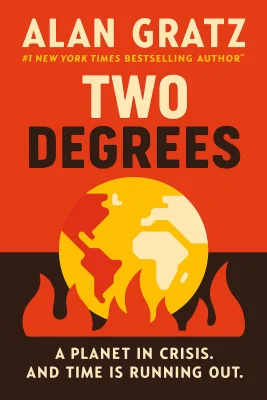
Two Degrees
Categories
Fiction, Audiobook, Historical Fiction, Young Adult, Contemporary, Realistic Fiction, Adventure, Middle Grade, Survival, Climate Change
Content Type
Book
Binding
Hardcover
Year
2022
Publisher
Scholastic Press
Language
English
ISBN13
9781338735673
File Download
PDF | EPUB
Two Degrees Plot Summary
Introduction
The morning air was crisp and cedar-scented as thirteen-year-old Akira Kristiansen rode her horse Dodger up the mountain trail toward the giant sequoias. It should have been perfect—her weekly escape from the chaos of school and family, her sanctuary among the ancient monarchs. But a thin wisp of smoke rising from the valley below made her horse's ears twitch with unease. Her father dismissed it as nothing, just nature taking care of itself. He was wrong. That same October morning, thousands of miles away in Churchill, Manitoba, Owen Mackenzie was guiding tourists through polar bear country when something went catastrophically wrong. And in Miami, Florida, Natalie Torres was boarding up windows as Hurricane Reuben bore down on the city, the storm that meteorologists were finally calling "the Big One." None of these young people knew the others existed, but they were about to discover that climate change connects everything—and everyone—in ways they never imagined.
Chapter 1: First Warning Signs: The Calm Before the Storm
The smoke was definitely getting thicker. Akira pulled Dodger to a stop on the mountain trail, watching the gray plume rise from the trees below. Her father, Lars, sat tall on his black Friesian horse Elwood, his beard and flannel shirt making him look like a modern Paul Bunyan. The National Weather Service had issued another red flag warning for the Sierra Nevada—warm temperatures, dry conditions, strong winds. Perfect wildfire weather. "Shouldn't we at least call Cal Fire?" Akira asked, unease creeping into her voice. Lars shrugged. "A little fire is good for a forest. Gets rid of all the dry stuff before it builds up and burns out of control." Akira bit back her response. Her father had this maddening ability to ignore what was right in front of him. The droughts were longer now, the fires bigger and more frequent. But mentioning climate change around her dad was like lighting a match near gasoline—it always ended in an argument she couldn't win. Meanwhile, in Churchill, Owen was in his element aboard the tundra buggy, entertaining tourists with polar bear facts. The massive white predator outside their window sniffed curiously at the vehicle while Owen explained how these bears could smell seals through two feet of ice. His best friend George rolled his eyes at Owen's showmanship, but the tourists ate it up. "Most male polar bears weigh around a thousand pounds," Owen announced with practiced enthusiasm. "To them, you look like a big hot dog with mustard and relish!" The crowd laughed, but Owen noticed something odd. More bears were wandering into town this year, and they were staying longer. His parents said it was good for business—longer tourist season meant more money. But why weren't the bears heading out to the ice like they usually did? Three thousand miles south, Natalie Torres stood in her Hialeah kitchen, watching Maria Martinez deliver the news every South Floridian dreaded. Hurricane Reuben had strengthened to Category Five and changed course. It was headed straight for Miami. "Our lucky streak is over," Maria announced grimly. "The Big One is here." Natalie felt her stomach drop. She'd survived Hurricane Irma when she was younger—watched it rip their roof clean off while she and her mother huddled in the bathroom. She'd become obsessed with weather ever since, tracking every storm, studying climate patterns. She knew exactly what a direct hit from a Category Five hurricane would mean for a city built on porous limestone, barely above sea level. Her elderly neighbor Tía Beatriz knocked on their door, her tiny Chihuahua Churro growling at everyone as usual. "Elena, my son is stuck in traffic trying to get here," she called to Natalie's mother. "Can I ride out the storm with you?" Of course they said yes. That's what neighbors did. But as Natalie helped board up the windows, she couldn't shake the feeling that this time would be different. The animals knew it too—snails were climbing the walls, frogs croaking frantically in the canal. Even Churro seemed more agitated than usual, if that was possible. The calm before the storm felt electric with danger.
Chapter 2: Nature Unleashed: When Climate Disasters Strike
The Morris Fire moved faster than Akira had ever seen a wildfire spread. What started as a wisp of smoke became a raging inferno in minutes, racing up the mountainside with impossible speed. She and her father had just met another family on the trail—Daniel and his thirteen-year-old daughter Sue from Fresno—when orange flames suddenly crowned the trees behind them. "We have to get back to the car now!" Daniel shouted, but Akira's father shook his head grimly. "You'll never make it on foot. Get on the horses." The drive through the fire was a nightmare of heat and smoke and falling debris. Sue's father plowed through burning branches while Akira clung to her horse's familiar presence for courage. They'd almost made it when another car slammed into them at full speed—refugees from some other part of the fire, desperate and panicking. In Churchill, Owen was having the adventure of his young life, but not the kind he'd planned. He and George had ridden their snowmobile out to an ice fishing cabin for the weekend when they encountered a massive polar bear with her cub. Owen froze like a tourist instead of following basic safety protocols, getting between the mother and baby. The attack was swift and brutal. Momma Bear's claws raked across George's scalp, sending him tumbling into the snow in a spray of blood. When she turned on Owen, her teeth found his leg, grinding against bone with sickening pressure. The pain was beyond description. But George saved them both, firing cracker shells into the air until the bears retreated. As Owen staunched his bleeding wounds, he realized how badly he'd screwed up. He was supposed to be the expert, the one who knew polar bear safety. Instead, his carelessness had nearly gotten them both killed. In Miami, Hurricane Reuben announced his arrival by punching through the back wall of Natalie's house like it was made of paper. The storm surge hit with the force of a liquid freight train, filling their living room in seconds. Natalie found herself swimming in her own home, clutching Churro while Tía Beatriz floated unconscious nearby. The water was rising too fast. Natalie squeezed through the only unboarded window—barely big enough for her small frame—and dropped into the storm outside. The wind tried to tear her apart while she struggled to break the front door open from outside, but it was hopeless. The house had become a death trap. "Go!" her mother screamed from inside, pushing Churro through the window. "Get out of the storm!" Those were the last words Natalie heard before Reuben swept her away down the flooded street, a thirteen-year-old girl and a terrified Chihuahua alone in the hurricane.
Chapter 3: Fighting to Survive: Against Fire, Ice, and Water
The crash had separated Akira and Sue from their fathers, with a burning tree now blocking their path back. Flames surrounded them on all sides as the girls stumbled through the smoke, Sue clutching a dislocated shoulder while Akira fought down panic. Every direction looked the same—orange fire and black smoke and the constant crackle of destruction. Then Sue smelled something that saved their lives: charcoal from a backyard grill. Following her nose through the chaos, they found an empty house with a pool. And in that pool, somehow, was Dodger. Akira's horse had run blindly through the forest and crashed through the pool's safety cover, trapping himself in the water. Getting him out required all of Akira's knowledge of horses and Sue's surprising bravery. Together, they freed Dodger and fled deeper into the burning mountains, the Morris Fire pursuing them like a living thing. In Manitoba, Owen and George faced their own desperate flight. The polar bear attack had left them both badly injured, but they still had to make it back to Churchill before dark. Owen's leg leaked blood into his boot while George drifted in and out of consciousness from his head wound. They nearly died twice more—first when Owen drove their snowmobile onto thin ice in his panic, then again when they took shelter in an abandoned cabin. The same polar bear tracked them there, circling patiently while they shivered on the collapsing roof. Every time they tried to escape, the massive predator appeared like an arctic ghost. "This is all my fault," Owen whispered through chattering teeth. The guilt was almost worse than the cold. His carelessness had started this whole nightmare. Natalie's battle with Hurricane Reuben took her through the flooded streets of Miami on a horrific tour of destruction. She clung to the roof of a car with a dead woman trapped inside, nearly got swept into an alligator-infested canal, and witnessed the storm's casual cruelty as it tossed aside homes and lives with equal indifference. When she finally found temporary shelter with the Evans family—strangers who became instant allies in survival—it lasted only minutes before Reuben tore their house from its foundation. She watched young Javari fall into the churning water as a flying pink flamingo statue smashed their escape boat to pieces. The storm surge carried Natalie through the night on a series of floating refuges, each one temporary, each one torn away by Reuben's relentless appetite for destruction. She began to understand that this wasn't just bad weather—this was nature itself, broken and raging.
Chapter 4: The Aftermath: Counting the Cost of Climate Change
Akira barely recognized her father when she found him again. The smoke had ravaged his throat and lungs, leaving him wheezing and weak. But he was alive, and so was their family. Their house, however, was not so fortunate. They watched from a lake island as Morris consumed everything they owned. Their cars burned in the driveway. The barn collapsed in flames. A lifetime of memories—photo albums, heirlooms, Akira's childhood drawings—all turned to ash in minutes. But the worst moment came when Akira looked up at the mountain peak and saw something impossible: the giant sequoias were burning. Trees that had survived for thousands of years, trees specifically evolved to withstand fire, were being consumed by flames so intense they reached two hundred and fifty feet into the sky. "I can't believe it," her father whispered, his voice hoarse with more than just smoke damage. Finally, Akira thought. Finally he sees it. Owen and George were rescued by helicopter after spending a night trapped in a polar bear cage, of all things. But their ordeal taught Owen something crucial about the connections he'd been missing. The bears weren't evil or unusually aggressive—they were starving. Climate change was shortening the sea ice season, forcing polar bears to fast longer and search for food in human territory. As Owen recovered in the hospital, he started researching everything he'd observed but never really thought about: the warming temperatures, the melting permafrost, the way Arctic changes affected weather patterns around the world. What happened in Churchill didn't stay in Churchill—it rippled outward, touching every corner of the planet. Natalie's reunion with her mother came with devastating news: Tía Beatriz hadn't survived. The elderly woman had drowned in the elementary school where they'd taken refuge, another casualty of a storm that never should have been so powerful, so destructive. The death toll from Hurricane Reuben would eventually reach hundreds. Entire neighborhoods were erased, their foundations scoured clean by the storm surge. The economic damage ran into the hundreds of billions, but those numbers felt meaningless compared to the human cost. Standing in the ruins of Liberty City with her new friend Patience, Natalie saw how climate change didn't affect everyone equally. The wealthy neighborhoods had their power restored first, their residents evacuated in advance. The poor communities were left to fend for themselves, as always. "Some people get to ride out the storm in yachts," Natalie would later say, "while the rest of us are clinging to whatever floats by."
Chapter 5: Finding Purpose: From Victims to Activists
Recovery was a long, painful process for all three young survivors. Akira struggled with PTSD, waking in the night gasping and crying out, dreaming of being surrounded by fire. But she also found clarity in her trauma. Her father's climate denial suddenly seemed not just wrong but dangerous—a willful blindness that put everyone at risk. She started speaking up, first to her family, then to her community. The Morris Fire hadn't been a natural disaster—it was a climate disaster, made worse by human activities. If the giant sequoias could burn, nothing was safe. Owen threw himself into understanding polar bear ecology and Arctic climate science. He and George started a YouTube channel called "What Happens in the Arctic," explaining how northern warming affected global weather patterns. Owen discovered he could use his natural showmanship for something more important than tourist entertainment. The polar bear that had nearly killed them was captured and relocated, giving Owen a chance to see the massive predator up close one more time. Looking into those intelligent eyes, he felt a connection to something larger than himself—a responsibility to speak for creatures that couldn't speak for themselves. Natalie found her voice on television, interviewed by the famous meteorologist Maria Martinez while Liberty City struggled without power or aid. Her passionate explanation of climate justice—how the poor suffered most from problems created largely by the wealthy—went viral within hours. "We have to do something about climate change right now," she declared to the camera. "The earth can't wait another minute." That interview planted the seed for something bigger: a massive youth climate rally that would bring together survivors from around the world to share their stories and demand action.
Chapter 6: Connected by Crisis: Discovering Shared Trauma
Nine months later, Natalie stood before half a million people on the National Mall in Washington, D.C., as the organizer of the Kids Against Climate Change rally. The blue butterflies on every banner and sign represented her childhood fantasy kingdom of Mariposa—a perfect world that could never exist, but could still inspire them to make this world better. Akira had come from California to speak about wildfire survival, still bearing physical and emotional scars from her ride through the Morris Fire. Her speech about the burning sequoias brought tears to the massive crowd. Owen and George flew in from Churchill to share their polar bear encounter and explain how Arctic warming affected global climate patterns. Their comedy-duo presentation mixed humor with hard science, making complex climate connections accessible to everyone. But the most amazing discovery was how these three young people were already connected before they met. Akira knew Sue, who had grown up in Churchill with Owen and George. Owen and George knew Maria Martinez, the meteorologist who had first interviewed Natalie. Natalie and Akira both knew Patience, who had worked as a babysitter in California before moving to Miami. "Six degrees of separation" became "two degrees of separation"—the same two degrees of temperature rise that scientists warned would trigger catastrophic climate change. The connections between people mirrored the connections in climate systems: everything affected everything else. Standing together on the Capitol steps, these young survivors realized they represented millions of other children whose lives had been upended by climate disasters. Their individual stories were part of a much larger narrative of a planet in crisis.
Chapter 7: Two Degrees of Separation: Uniting to Save the Planet
The rally's message was simple but powerful: climate change was already here, already devastating young lives around the world. The question wasn't whether to act, but how quickly they could mobilize. Natalie's closing speech challenged everyone to find their own way to fight climate change. Artists could paint murals, musicians could write songs, students could pressure their schools to teach climate science. Everyone had skills they could contribute to the movement. "Nobody has to do everything," she told the crowd, "but everybody has to do something." The three protagonists had found their calling in the aftermath of trauma. Akira would never again stay silent while adults ignored obvious dangers. Owen had learned to pay attention to the bigger picture, using his platform to educate others about Arctic changes. Natalie had discovered her voice as an organizer and advocate. Their stories showed how climate disasters were personal, immediate, and connected across vast distances. The wildfire in California, the hungry polar bear in Manitoba, and the hurricane in Florida were all symptoms of the same underlying crisis: a planet warming too fast for natural systems to adapt. But their stories also demonstrated something hopeful: young people's capacity to turn pain into purpose, to transform trauma into activism. They had survived the worst climate disasters of their young lives, and now they were determined to prevent others from experiencing the same devastation.
Summary
In the end, Two Degrees is about more than climate science or environmental activism—it's about the connections that bind us all together on our small, fragile planet. Akira, Owen, George, and Natalie discovered that their separate traumas were part of a global crisis, but also that their individual actions could contribute to global solutions. The two degrees in the title work on multiple levels: the temperature rise that scientists warn could trigger catastrophic climate change, and the social connections that link every person to every other person on Earth. Both kinds of connections remind us that isolation is an illusion—what happens in the Arctic doesn't stay in the Arctic, and what we do in our own communities ripples outward to affect the entire world. Their rally cry echoes beyond the final page: the earth can't wait another minute for us to act on climate change. The disasters they survived were just the beginning unless we choose a different path. But if young people who have already lost so much can still find hope and purpose in fighting for the planet's future, perhaps the rest of us can find the courage to join them. The connections are already there—we just have to choose to see them, and act on them, before it's too late.
Best Quote
“This is what it must feel like to be an ant among elephants, Akira thought. The giant sequoias made her feel small and insignificant, but in a good way. They reminded her that she wasn't at the center of the universe. That there were things that were far older and bigger than she was.” ― Alan Gratz, Two Degrees
Review Summary
Strengths: The novel is praised for its engaging storylines and action sequences, making it a good read for intermediate and junior high school students. It effectively delivers environmental messages appropriate for its theme on climate change. The book is recommended for school libraries and is noted for its thrilling nature adventures. Weaknesses: The writing is criticized for being heavy-handed with its environmental message, potentially overwhelming readers. Some dialogue and plot points are considered unrealistic and poorly written. The book contains graphic details that may be unsuitable for younger readers, despite its target audience. Overall: The book receives mixed reviews, with some readers appreciating its adventurous plot and environmental focus, while others find the writing lacking and the messaging too forceful. It is recommended for more mature readers within its intended age group.
About Author

Alan Gratz
Gratz interrogates historical events to create narratives that illuminate moral courage and resilience. His novels often tackle themes of survival and human rights, weaving together historical and contemporary perspectives to educate while entertaining young readers. Through works such as "Prisoner B-3087," which details a Holocaust survival story, and "Refugee," following the lives of young refugees across different periods, Gratz crafts compelling stories that resonate with middle-grade and young adult audiences. His approach combines adventure with significant historical contexts, aiming to provide readers with both insight and empathy towards challenging topics.\n\nThe author's diverse writing portfolio, which includes not only novels but also plays, magazine articles, and radio commercials, reflects his broad understanding of storytelling. This versatility enriches his method, allowing him to connect deeply with his audience. Young readers benefit from Gratz's ability to present difficult topics in a relatable and engaging manner, making historical events accessible and personal. His book "Ban This Book" further explores themes of censorship and intellectual freedom, encouraging readers to think critically about societal issues. Gratz's bio reveals his commitment to educating young minds, as demonstrated by the accolades his work has received, including the Sydney Taylor Book Award for "Refugee," solidifying his impact in the realm of children's literature.
Read moreDownload PDF & EPUB
To save this Black List summary for later, download the free PDF and EPUB. You can print it out, or read offline at your convenience.
Two Degrees
by Alan Gratz
