
Two Treatises on Civil Government
Categories
Nonfiction, Philosophy, History, Economics, Politics, Classics, Law, Political Science, School, Government
Content Type
Book
Binding
Hardcover
Year
2016
Publisher
Wentworth Press
Language
English
ISBN13
9781371020118
File Download
PDF | EPUB
Two Treatises on Civil Government Plot Summary
Introduction
# The Foundations of Legitimate Government: Natural Rights and Political Authority What distinguishes legitimate government from mere tyranny? When do citizens have the right to resist authority? These fundamental questions have shaped political discourse for centuries, yet they remain as pressing today as ever. In an era where democratic institutions face unprecedented challenges and individual rights clash with collective security, understanding the philosophical foundations of political authority becomes crucial for both citizens and leaders. This theoretical framework presents a systematic philosophy built on several interconnected pillars: the natural equality of all human beings, the origin of legitimate government through individual consent, the derivation of property rights through labor, and the crucial right of people to resist tyrannical authority. This comprehensive approach addresses core questions about the source of political legitimacy, the proper limits of governmental power, and the relationship between individual liberty and collective security. The theory provides timeless insights into how free societies can balance personal freedom with social order, offering principles that continue to guide modern democratic governance and human rights discourse across diverse cultural and historical contexts.
Chapter 1: Natural Equality and the State of Nature
The foundation of legitimate political authority rests on a revolutionary proposition that challenged centuries of hierarchical thinking: all human beings are born naturally free and equal. This principle forms the bedrock of the entire theoretical system, rejecting claims that some individuals possess inherent authority over others through birth, divine appointment, or natural superiority. Natural equality means that no person enters the world subject to the arbitrary will of another, and natural freedom means each individual possesses complete liberty to order their actions and dispose of their possessions as they see fit. This natural condition operates under what is termed the law of nature, discoverable through human reason. While individuals enjoy complete freedom in their natural state, they remain bound by moral constraints that prevent this freedom from degenerating into destructive chaos. The law of nature teaches that since all people are equally the workmanship of an omnipotent creator, no one should harm another in their life, health, liberty, or possessions except in cases of just punishment for wrongdoing. The state of nature includes an important executive power that belongs to every individual. Since no government exists to enforce natural law, each person has both the right and responsibility to punish violations of natural rights and seek reparation for injuries. This creates a system of natural justice where individuals can defend themselves and others against aggression. When someone steals your property or harms your person, you possess the natural right not only to reclaim what was taken but also to punish the offender appropriately to deter future violations. Consider how this applies to interactions between people from different societies who have no common political authority above them. A merchant from one nation and a trader from another can form binding agreements and seek redress for violations despite having no shared government, because they remain bound by the same natural law that governs all human relationships. This demonstrates how moral obligations and rights exist independently of political institutions. The practical implications of natural equality extend far beyond abstract philosophy. This principle undermines any claim to rule based solely on inheritance, conquest, or divine right, establishing that legitimate political authority must derive from some source other than natural hierarchy. Understanding natural equality helps explain why people have both the right and responsibility to evaluate their governments and, when necessary, to withdraw their support from rulers who violate the fundamental purposes for which political authority exists.
Chapter 2: Social Contract Theory and Governmental Consent
The transition from natural freedom to political society represents one of the most significant innovations in political philosophy, explaining how legitimate government emerges from the voluntary agreement of free individuals rather than through force or divine appointment. This social contract theory addresses the fundamental question of why rational people would surrender their natural liberty to submit to political authority, and under what conditions such submission becomes legitimate. The state of nature, while governed by moral law, suffers from practical inconveniences that drive reasonable people to seek better arrangements for protecting their rights and resolving disputes. Without established laws, known judges, and reliable enforcement mechanisms, individuals face uncertainty in securing their natural rights. Personal bias makes people poor judges in their own cases, and the lack of sufficient power to enforce valid judgments leaves even legitimate claims vulnerable to violation by stronger parties. The social contract emerges when individuals voluntarily agree to unite into a community, surrendering their natural executive power to a common authority while retaining their fundamental rights. This agreement must be genuinely consensual, as no one can be forced into political society against their will. The majority principle becomes operative because a community must be able to act as one body, and requiring unanimous consent for every decision would make collective action impossible. This contractual foundation establishes the crucial principle that governmental authority derives from the consent of the governed rather than from divine right, natural hierarchy, or mere force. The people retain ultimate authority to judge whether their government fulfills its proper function of protecting their rights and promoting their welfare. When citizens participate in elections, they engage in an ongoing process of consent that legitimizes governmental authority. When they engage in civil disobedience against unjust laws, they invoke the principle that consent can be withdrawn when government exceeds its proper bounds. The theory provides both the foundation for political obligation and the justification for resistance to tyranny. By making government accountable to those it governs, this framework creates a dynamic relationship between rulers and subjects that promotes responsive governance while protecting individual liberty. The social contract thus serves as both the source of governmental legitimacy and the standard by which governmental performance should be measured.
Chapter 3: Property Rights and the Labor Theory of Value
Property rights occupy a central position in this political philosophy, serving simultaneously as natural rights that precede government and as primary objects of governmental protection. The labor theory of property attempts to explain how private ownership can legitimately emerge from resources that nature initially provides in common to all humanity, while addressing concerns about fairness and social cooperation in the process of individual appropriation. The foundation of this theory rests on the principle that every person has property in their own person and, consequently, in the labor of their body and work of their hands. When someone removes something from its natural state through their effort, they join their labor to it and make it their property. The acorns gathered from the forest floor become the gatherer's property through the act of collection, the water drawn from a spring belongs to whoever drew it, and the land cultivated by a farmer becomes that farmer's property through the labor of cultivation. This appropriation process operates within important natural limits that prevent excessive accumulation and ensure sufficient resources remain for others. The spoilage limitation prohibits taking more than one can use before it perishes, preventing wasteful hoarding that serves no productive purpose. The sufficiency condition requires leaving "enough and as good" for others, ensuring that one person's appropriation doesn't disadvantage others in a world of abundant resources. These constraints reflect the underlying principle that property rights exist to serve human flourishing rather than to enable some to monopolize resources needed by all. The introduction of money fundamentally transforms property relations by enabling people to accumulate durable wealth without violating the spoilage limitation. By accepting gold, silver, or other lasting materials in exchange for perishable goods, individuals can effectively store the value of their labor indefinitely. This monetary system, based on tacit consent rather than explicit agreement, allows for the unequal accumulations of wealth that characterize developed societies while maintaining moral legitimacy through voluntary exchange. Consider how this applies to modern entrepreneurship. When someone builds a business, they create property through their labor, investment, and innovation, justifying their claim to profits while contributing to overall social productivity. When governments impose taxes, they must respect the principle that property cannot be taken without consent, typically expressed through representative institutions. The labor theory thus provides both a foundation for individual economic rights and constraints on governmental power over private wealth, demonstrating how theoretical principles translate into practical political and economic arrangements.
Chapter 4: Religious Toleration and Separation of Powers
The relationship between religious belief and political authority presents one of the most complex challenges in political philosophy, requiring careful analysis of the proper boundaries between civil and ecclesiastical power. This theoretical framework provides a groundbreaking solution through its principle of religious toleration, based on fundamental differences between the purposes, methods, and scope of religious and political institutions. Civil government exists to protect temporal interests including life, liberty, health, and property through the establishment and enforcement of laws backed by physical sanctions. Religious institutions, by contrast, concern themselves with salvation and spiritual welfare, requiring sincere inner conviction that cannot be produced through external coercion. Since true religious belief must be voluntary and authentic, governmental attempts to enforce religious conformity prove both ineffective and illegitimate, violating the fundamental purpose for which political authority exists. The argument for toleration proceeds through several logical stages. First, coercion cannot produce genuine religious belief, making persecution futile as well as wrong. A person may conform externally to avoid punishment while remaining unconvinced internally, serving neither true religion nor civil peace. Second, religious diversity poses no inherent threat to social order provided religious groups respect others' civil rights and obey laws designed to protect public safety. Third, persecution itself generates the social discord it claims to prevent, making toleration a practical necessity for governmental stability. Religious societies must be understood as voluntary associations that individuals join and leave freely based on their own convictions. These communities can establish their own rules for worship and discipline, but they cannot employ civil penalties or claim authority over temporal affairs. Their only legitimate sanctions are spiritual ones: instruction, admonition, and ultimately exclusion from communion for those who persistently violate the community's standards. The separation of powers principle extends beyond religious toleration to encompass the broader organization of governmental authority. Legislative, executive, and federative powers should remain distinct to prevent the concentration of authority that enables tyranny. The legislative power creates laws for the community, the executive power enforces those laws, and the federative power handles relations with foreign states. This separation ensures that no single institution can accumulate sufficient power to threaten individual liberty or governmental accountability. The practical benefits of both religious toleration and separation of powers extend far beyond abstract principle. Societies that embrace religious diversity often experience greater innovation, economic growth, and social stability than those that enforce uniformity. Similarly, governments that separate different functions create institutional safeguards against abuse while maintaining effective governance, demonstrating how theoretical principles translate into practical advantages for both individual liberty and collective welfare.
Chapter 5: Constitutional Limits and the Right to Revolution
The ultimate test of any political philosophy lies in its response to governmental failure and systematic oppression. While this theoretical framework emphasizes the importance of stable government and the general presumption of obedience to legitimate authority, it also provides clear principles for determining when resistance to government becomes not only permissible but morally necessary. The right of revolution represents the final safeguard for individual liberty and natural rights. Tyranny occurs when those in authority use their power for their own private advantage rather than the public good, or when they act beyond the authority granted to them by the social contract. This can manifest through arbitrary exercise of power, violation of established laws, corruption of electoral processes, or systematic oppression of particular groups. When government consistently acts contrary to its founding purpose of protecting rights and promoting general welfare, it breaks the trust upon which its authority depends and forfeits its claim to legitimacy. The right of resistance operates under important constraints that distinguish legitimate revolution from mere rebellion or factional violence. Resistance is justified only when abuses are systematic and severe, not for every minor grievance or policy disagreement. The people must have exhausted peaceful remedies and must face genuine threats to their fundamental rights. Individual resistance is rarely effective or justified; successful revolution typically requires broad popular support and clear evidence of governmental tyranny that reasonable people can recognize. The dissolution of government can occur through external conquest, internal breakdown, or systematic violation of constitutional limits. When the legislative power is altered without popular consent, when the executive prevents the legislature from meeting or acting freely, or when the people are subjected to foreign power, government effectively dissolves itself and authority reverts to the people. In such cases, the community may establish new institutions to protect their rights while maintaining the underlying social bonds that unite them. Consider how this principle applies to historical examples of both justified revolution and illegitimate rebellion. The resistance to systematic violations of established rights demonstrates legitimate use of revolutionary principles, while various failed uprisings throughout history illustrate the dangers of premature or poorly justified resistance. The framework provides criteria for distinguishing between these cases, offering guidance for citizens who must navigate the difficult terrain between obedience and resistance. The broader implications extend beyond immediate political contexts to questions about the relationship between authority and legitimacy generally. By making all political authority conditional on consent and performance of proper functions, this theory establishes that power must justify itself through service to those subject to it, creating a permanent resource for those who seek to build and maintain free societies while providing principled grounds for resistance when such societies are threatened by tyrannical government.
Summary
Legitimate political authority emerges exclusively from the voluntary consent of naturally free and equal individuals who agree to form civil society for their mutual protection and benefit, remaining always accountable to the people who created it and limited to the essential purpose of protecting natural rights to life, liberty, and property. This systematic framework demonstrates how individual freedom and collective governance can be reconciled through constitutional arrangements that derive authority from popular consent while constraining its exercise through institutional safeguards and the ultimate right of resistance. The enduring significance of this political theory lies in its integration of moral philosophy with practical governance, providing both principled foundations for legitimate authority and institutional mechanisms for maintaining accountability across diverse societies and historical contexts. By grounding political legitimacy in human equality and rational consent while establishing clear limits on governmental power, this framework continues to influence democratic institutions, human rights discourse, and constitutional design, offering permanent insights into the fundamental challenge of balancing individual liberty with collective security in an uncertain world.
Best Quote
“The end of law is not to abolish or restrain, but to preserve and enlarge freedom.” ― John Locke, Two Treatises of Government
Review Summary
Strengths: The review highlights the detailed historical context provided by Peter Laslett, including the timeline of the writing of the Treatises and the potential existence of a missing third part. It also emphasizes Locke's original philosophical contributions, particularly his views on natural rights, civil society, and the separation of powers. The biographical introduction of John Locke is noted as a valuable addition. Overall: The review conveys a positive sentiment towards the book, appreciating its historical insights and philosophical depth. It recommends the book as a worthwhile read, especially for those interested in liberalism and the foundational ideas of John Locke, known as the Father of Liberalism.
About Author
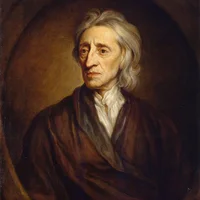
John Locke
Locke probes the foundations of human knowledge and political philosophy, making significant strides in shaping the Enlightenment era. His approach to understanding the human mind as a "tabula rasa" in "An Essay Concerning Human Understanding" highlights his belief in the primacy of experience over innate ideas. This method challenged established Cartesian views and reinforced the concept of empiricism, which asserts that knowledge is rooted in sensory experience. Meanwhile, his "Second Treatise of Government" redefined political discourse by advocating for natural rights and the social contract, thus laying the groundwork for modern liberal thought. Locke’s exploration of these themes provided a fresh perspective on both individual identity and governance, leading to a broader acceptance of these principles in Western thought.\n\nLocke’s philosophical endeavors are not merely abstract exercises; they present actionable insights for readers who seek to understand the development of modern democracy and individual rights. His clear and methodical writing style ensures that his complex ideas remain accessible, fostering a deeper engagement with his texts. The author's exploration of empiricism, particularly in his book on human understanding, serves as a foundational reference for those in the fields of epistemology and education. Furthermore, Locke’s political theories continue to resonate with policymakers and academics who draw on his vision of a just and equitable society based on reason and mutual consent. Therefore, this short bio highlights the enduring influence of Locke's ideas, which remain vital to ongoing discussions in philosophy, politics, and education.
Read moreDownload PDF & EPUB
To save this Black List summary for later, download the free PDF and EPUB. You can print it out, or read offline at your convenience.

Two Treatises on Civil Government
by John Locke
