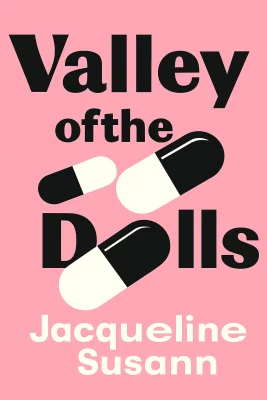
Valley of the Dolls
Categories
Fiction, Classics, Historical Fiction, Romance, Adult, Book Club, Contemporary, Novels, Chick Lit, New York
Content Type
Book
Binding
Paperback
Year
1997
Publisher
Grove Press
Language
English
ASIN
B00A2QBS1W
ISBN
0802135196
ISBN13
9780802135193
File Download
PDF | EPUB
Valley of the Dolls Plot Summary
Introduction
# Valley of the Dolls: Dreams, Addiction, and the Price of Fame The red capsules scattered across the marble floor like tiny promises of oblivion. Anne Welles knelt among them, her manicured fingers trembling as she gathered each pill with desperate precision. The year was 1967, and the girl who had once fled a suffocating New England town with nothing but dreams and determination now found herself trapped in a penthouse prison of her own making. Twenty-two years had passed since she first stepped off the train at Grand Central, her eyes bright with ambition and her heart full of hope. She had conquered New York, claimed fame and fortune, and lost everything that truly mattered along the way. This is the story of three women who arrived in the city of dreams during the golden age of Broadway and Hollywood. Anne Welles sought escape from predetermined destiny. Jennifer North carried nothing but devastating beauty and the desperate hope it might buy her love. Neely O'Hara brought raw talent and an unquenchable hunger for stardom that would ultimately consume her. They met in the glittering world of show business, three small-town girls united by ambition and innocence. What they discovered was a valley where success came at a price measured not in dollars, but in the little colored pills that promised everything and delivered destruction.
Chapter 1: Escape to Dreams: Three Women Arrive in New York
The autumn of 1945 brought Anne Welles to Manhattan with five thousand dollars and a suitcase full of carefully folded dreams. She had fled Lawrenceville, Massachusetts, where every path led to marriage within the same social circle and slow death by respectability. Her mother's cold disapproval followed her like winter fog, but Anne pressed forward, her jaw set with New England determination. The employment agency girl took one look at Anne's glacial beauty and suggested modeling, but Anne wanted something different. She wanted to work in an office, to be part of the real world that existed beyond her mother's suffocating propriety. When she walked into Bellamy and Bellows, theatrical attorneys, she had no idea she was taking her first step into a glittering trap. Henry Bellamy, the senior partner, was immediately struck by her reserve and intelligence. His office buzzed with the electricity of show business, contracts for Broadway productions scattered across mahogany desks like fallen leaves. It was here that Anne first encountered Helen Lawson, the brassy musical comedy legend whose voice could fill any theater and whose calculating eyes missed nothing. But it was the anticipation of Lyon Burke's return from the war that charged the air with real excitement. When he finally walked through those doors in October, Anne understood why everyone had been waiting. He towered over Henry's considerable height, his black hair and permanent tan making him look like he'd stepped off a movie screen. His eyes held intelligence and slight mockery, as if he found the whole world amusing but not quite worth his full attention. In the same building, seventeen-year-old Neely O'Neill performed as part of The Gaucheros, a third-rate vaudeville dance act. Small and fierce, with eyes that burned with frightening intensity, Neely possessed a voice that could make angels weep. She had clawed her way up from the Bronx, and now she stood on the threshold of something greater, her hunger for stardom radiating from her like heat from a furnace. Jennifer North arrived with nothing but her devastating beauty and a mother who saw dollar signs in her daughter's perfect face. At nineteen, Jennifer had already learned that being desired and being loved were entirely different things. Men looked at her and saw only flesh, while women viewed her as competition to be eliminated. Yet beneath her breathtaking exterior lay a surprisingly gentle soul, one that yearned for genuine connection in a world that offered only transactions. The three women's paths converged in the cramped dressing rooms and late-night diners of the theater district. They formed an unlikely trio, each offering something the others lacked. None of them realized they were standing at the edge of a precipice, about to tumble into a world where success would prove more dangerous than any failure they could imagine.
Chapter 2: The Ascent: First Taste of Success and Pills
The pills started as a kindness. Neely stood in the wings of the Shubert Theatre, her hands shaking as she prepared to replace the leading lady who had just been fired from "Hit the Sky." Helen Lawson, Broadway's reigning queen, pressed a small green capsule into Neely's palm with maternal concern. "Here, honey, this'll calm your nerves. All the pros use them." The Dexedrine hit Neely's system like liquid confidence, transforming terror into electric energy. When she walked onto that stage, she didn't just perform—she blazed with a light that made the audience forget to breathe. The reviews the next morning changed everything. "A star is born," proclaimed the Times. Within weeks, Neely was fielding offers from Hollywood, her salary jumping from chorus wages to star money overnight. The green pills that had saved her opening night became her daily companions, keeping her thin and energetic through eighteen-hour rehearsal days. Anne watched her friend's meteoric rise from her desk at Bellamy and Bellows, handling contracts while Lyon Burke shaped careers with an artist's touch. Their relationship was a dance of intellect and passion, two ambitious people circling each other like planets caught in gravitational pull. When Lyon needed an apartment, Anne discovered that Allen Cooper, the mild-mannered insurance salesman she'd been dating out of pity, was actually heir to one of New York's largest fortunes. Allen's proposal came wrapped in ten karats of diamond and newspaper headlines proclaiming Anne "Broadway's newest Cinderella." But her heart belonged to Lyon, and she could no longer pretend otherwise. The breaking point came during the New Haven tryout of Helen's show, when Anne finally surrendered to the passion that had been consuming her for months. In Lyon's hotel room, she discovered the intoxicating power of physical desire. She had been a virgin, something that shocked Lyon and nearly derailed their encounter. But Anne's determination matched her passion, and she gave herself to him with an abandon that surprised them both. For the first time in her life, she understood what all the poets had been writing about. Jennifer's ascent followed a different trajectory, built on the architecture of her perfect face and body. Her marriage to Tony Polar, a sweet-natured singer with boyish charm, seemed like salvation from the predatory world of show business. Tony was genuinely smitten with Jennifer's ethereal beauty, and for a brief moment, she believed she had found the love she'd always craved. But success in their world came with hidden costs. The pills that helped Neely maintain her energy began multiplying—red ones for sleep, yellow ones for the long days when exhaustion threatened to claim her. Jennifer discovered that Tony's childlike sweetness masked deeper troubles, episodes of confusion and rage that his domineering sister Miriam worked desperately to hide from the public.
Chapter 3: Peak Performance: Fame's Golden Cage
Hollywood came calling with contracts thick as novels and promises bright as klieg lights. Neely signed her name with trembling fingers, not understanding she was trading her soul for celluloid immortality. The studio system wrapped around her like a velvet straightjacket, controlling every aspect of her life from the food she ate to the men she dated. The pills multiplied like malevolent flowers. Green ones kept her thin for the cameras, red ones granted sleep between brutal shooting schedules, yellow ones provided energy when her body begged for rest. The studio doctor assured her they were perfectly safe—vitamins, really, nothing to worry about. All the stars used them. Anne's own success bloomed more quietly but no less completely. Her transformation from Henry's secretary to the Gillian Girl happened gradually, built on her natural elegance and the camera's love affair with her face. Kevin Gillmore, the cosmetics mogul who discovered her, offered something Lyon never had—stability, devotion, and a love that asked for nothing more than her presence. But even success felt hollow when built on the ruins of true love. Lyon had returned to England to write his novel, leaving behind only a letter explaining that he couldn't give himself completely to both his art and a woman. Anne kept his apartment, hoping against hope that he would return, but months stretched into years with only silence. Jennifer's fairy tale marriage began cracking under the weight of Tony's increasingly erratic behavior. His sister Miriam finally revealed the devastating truth—Tony wasn't just childish, he was mentally damaged, the victim of childhood convulsions that had left him with the emotional development of a ten-year-old. Any children they might have would likely inherit the same tragic legacy. The revelation shattered Jennifer's dreams of motherhood and normal love. She found herself trapped in a beautiful cage, married to a man who could never truly be her partner. When she discovered she was pregnant, the joy lasted only until the doctors confirmed her worst fears. The baby she carried might face the same cruel fate as its father. Neely's performances grew more brilliant even as her personal life disintegrated. The pills that had once been helpers became masters, demanding tribute in ever-increasing doses. She would disappear for days, then return wild-eyed and incoherent, only to pull herself together long enough to deliver a performance that reminded everyone why she was a star. The three women found themselves scattered across the country, each dealing with private hells in isolation. Success had given them everything they thought they wanted, but it had also stripped away the simple human connections that made life bearable. Fame was a jealous mistress that demanded total devotion while offering only the illusion of love in return.
Chapter 4: The Descent: When Success Becomes Prison
The first cracks appeared when Neely missed a recording session, found unconscious in her dressing room with an empty bottle of red pills scattered around her like fallen petals. The studio executives, their investments threatened, spoke in hushed tones about "exhaustion" and "overwork," but everyone knew the truth. The girl who had once conquered Broadway with pure talent was now a slave to the chemicals that had promised to enhance her gifts. Jennifer's marriage to Tony became a public charade and private nightmare. She played the devoted wife at premieres and parties while Tony's condition deteriorated behind closed doors. His episodes of confusion grew more frequent and violent, leaving Jennifer to cover bruises with makeup and explain away his increasingly bizarre behavior to a press corps hungry for scandal. The miscarriage that ended her pregnancy felt like divine punishment for wanting something she could never safely have. Jennifer lay in the hospital bed, staring at the ceiling while doctors explained that her body had rejected the damaged child she carried. The relief she felt was almost as devastating as the loss itself. Anne's relationship with Lyon reached its breaking point when he returned from England with his novel complete and his pride intact. Their reunion was a dance of memory and regret, two people who had loved each other deeply but had been destroyed by circumstances beyond their control. Lyon's marriage proposal came wrapped in the same conditions that had driven them apart—he wanted her to abandon her career and follow him into a smaller, safer life. This time Anne was older, wiser, and far more aware of what she would be sacrificing. She had built an empire of success around the hollow core where love should have been, and she couldn't bring herself to tear it all down for a man who demanded she become someone smaller than herself. The choice between love and ambition that had defined her youth was presenting itself again, but now the stakes were even higher. Neely's behavior became increasingly erratic and dangerous. She would show up to performances incoherent, lash out at directors and co-stars, then disappear for weeks only to surface in some distant city, barely recognizable. The industry that had once celebrated her now watched with morbid fascination as she destroyed herself in real time. The pills that had started as occasional helpers became permanent residents in Anne's life as well. She told herself she was different from Neely, that she was in control, that she only took them when absolutely necessary. But necessity had a way of expanding to fill every available space, and soon she found herself reaching for the red capsules whenever reality became too sharp to bear.
Chapter 5: Breakdown: Behind Sanitarium Walls
The sanitarium squatted among manicured lawns like a beautiful prison, its Tudor facade hiding the broken dreams within. Neely arrived in a haze of pills and denial, convinced she was checking in for a simple rest cure that would restore her voice and her sanity. Instead, she found herself trapped in a system designed to strip away every vestige of the star she had become. The withdrawal was brutal beyond anything her previous suffering had prepared her for. Without her chemical crutches, Neely's body rebelled in ways that made her wonder if death might be preferable. She screamed, she fought, she begged, but the walls of the clinic remained unmoved. The staff had seen it all before—they knew that behind the rage and desperation lay a frightened child who had never learned to cope with life without artificial assistance. Dr. Mitchell and his team worked with the patience of archaeologists, carefully excavating the real Neely from beneath layers of pills, fame, and self-destruction. Group therapy sessions revealed the depth of her pain, the childhood wounds that had never healed, the impossible pressure of being responsible for everyone's happiness while her own crumbled to dust. Anne visited faithfully, watching her friend cycle through the stages of recovery like a phoenix burning itself to ash before rising again. The bloated, incoherent woman who had entered the facility slowly gave way to someone recognizable, though forever changed. Neely's voice returned, stronger and more nuanced than before, as if her suffering had added new depths to her instrument. The other patients became Neely's unlikely family, fellow travelers on the road to recovery who understood the particular hell of addiction in ways the outside world never could. There was Mary, the socialite who had started taking pills to cope with her husband's affairs. There was Patricia, who had lost two children and found herself unable to function in a world that demanded constant strength. Together, they formed a community of the wounded, supporting each other through the long, difficult process of learning to live without chemical assistance. Neely discovered that her talent, far from being dependent on pills, had actually been diminished by them. Clean and sober, she could access emotions and vocal colors that had been buried under years of artificial enhancement. Months passed in a routine of therapy, medication, and slow healing. Neely learned to sleep without pills, to face her emotions without numbing them, to sing from a place of genuine feeling rather than manufactured euphoria. The process was agonizing, stripping away not just her addictions but the very mechanisms she had used to survive in a hostile world. Yet gradually, something authentic began to emerge from the wreckage. This new version of Neely was both more vulnerable and more genuinely powerful than the manufactured star had ever been. She had lost everything—career, money, reputation—but in the process, she had found something infinitely more valuable: herself.
Chapter 6: Hollow Victories: The Emptiness of Achievement
Jennifer's transformation into an international sensation felt like watching someone else's life unfold. Her move to Europe after Tony's institutionalization had been meant as escape, but it became instead a different kind of prison. European directors saw in her beauty something more sophisticated than Hollywood had recognized, casting her in films that were artistic rather than merely commercial. The money was extraordinary, the lifestyle intoxicating. Jennifer lived in a penthouse overlooking the Seine, wore couture gowns to premieres at Cannes, and was courted by princes and millionaires. But each role required her to bare more than her body—it stripped away pieces of her soul until she felt like nothing more than an expensive mannequin. The sleeping pills that helped her cope with the emptiness of her success became as essential as breathing. How else could she quiet the voice in her head that whispered she was nothing more than a beautiful object? The little red capsules offered blessed oblivion, eight hours of dreamless sleep that let her forget what she had become. Anne's marriage to Kevin Gillmore was a ceremony of resignation rather than celebration. She walked down the aisle in a designer gown, surrounded by flowers and well-wishers, but her heart remained locked away in a place that only Lyon Burke had ever touched. Kevin's love was genuine but suffocating, his devotion that of a collector admiring his finest piece. The television cameras loved Anne with mechanical devotion, transforming her into a symbol of sophisticated beauty that sold millions of dollars worth of cosmetics. Her face gazed out from magazine pages and screens, promising women they too could achieve such polished perfection. But behind the flawless makeup, Anne felt increasingly hollow, as if success had carved out her insides and left only a beautiful shell. The pills that helped her sleep through her honeymoon were just another form of anesthesia, numbing her to the reality of a life built on compromise rather than love. She told herself she was different from Neely and Jennifer, that she was in control, that she only took them when absolutely necessary. But necessity had a way of expanding to fill every available space. Neely's comeback was nothing short of miraculous. Clean and sober, she returned to small clubs and theaters with a voice that seemed to channel all her pain into pure artistry. Audiences wept at her performances, sensing the authentic emotion behind every note. Critics hailed her return as one of the great comebacks in show business history. Yet even as she basked in genuine artistic achievement, Neely felt the familiar restlessness stirring. The voice that whispered she needed something extra to maintain this level of perfection was always there, waiting for a moment of weakness. Success without chemical enhancement felt precarious, as if she were walking a tightrope without a net.
Chapter 7: Chemical Salvation: Finding Solace in the Dolls
The little red capsules had become Anne's most faithful companions, more reliable than lovers, more comforting than friends. They asked nothing of her except surrender, offering in return a blessed numbness that made the sharp edges of her life bearable. She had watched Neely's destruction with the horror of someone witnessing her own future, yet she couldn't stop herself from reaching for the same chemical salvation. Lyon's return to New York as a successful literary agent tore open wounds Anne thought had healed. He was more handsome than ever, his success having added a confidence that made him nearly irresistible. But Anne had learned to armor herself against such attractions, building walls around her heart that even Lyon's charm couldn't easily breach. Their reunion was a dance of memory and regret, two people who had loved each other deeply but had been destroyed by pride and circumstance. When Lyon needed financial backing for his own agency, Anne secretly provided it through intermediaries, buying him the independence he craved while concealing her role in the transaction. She told herself it was love, but it was really a desperate attempt to purchase what could never be bought. Jennifer's final act was one of devastating grace. The diagnosis she had been avoiding could no longer be ignored—the body that had been her fortune was betraying her in the cruelest possible way. Faced with a choice between disfiguring surgery and certain death, Jennifer chose a third option that would spare everyone, including herself, from watching her beauty fade into something unrecognizable. Her suicide note was brief and elegant, thanking those who had cared for her while sparing them the details of her suffering. She died as she had lived—protecting others from harsh realities that might disturb their carefully maintained illusions. The pills that took her life were the same ones that had promised peace for so many years, finally delivering on their ultimate promise. Neely's second fall was more spectacular than her first, a public implosion that played out across newspaper headlines and television screens. The pressures of her comeback, combined with the constant temptation of chemical assistance, proved too much for her fragile sobriety. She began missing performances, showing up incoherent, lashing out at anyone who tried to help. The discovery of Lyon's affair with Neely was the final betrayal for Anne, the ultimate proof that her carefully constructed life was built on sand. She had sacrificed everything for a love that was conditional, temporary, and ultimately hollow. The man she had moved mountains to possess was now in the arms of the friend she had tried to save. The pills multiplied in Anne's life like malevolent flowers, blooming in bathroom cabinets and bedside drawers. She had pills to wake up, pills to sleep, pills to face social obligations, pills to endure solitude. Each one promised relief from the particular pain of the moment, but collectively they were weaving a web that trapped her as surely as any spider's creation.
Chapter 8: Final Reckoning: The True Price of Dreams
The phone call came at dawn, shattering Anne's chemically induced sleep with news that would haunt her forever. Jennifer was dead, found in her Malibu beach house surrounded by empty pill bottles and the detritus of a life that had looked perfect from the outside. The suicide note was brief and heartbreaking, a final act of consideration from someone who had spent her entire life trying not to be a burden. Anne stood at Jennifer's graveside, watching Hollywood's elite pay their respects to a woman they had never truly known. The funeral was a spectacle, attended by every star who had ever worked with her and many who had simply wanted to be seen at the event of the season. But Anne remembered not the sex symbol but the frightened girl who had once shared her dreams in a cramped New York apartment. Neely's spiral accelerated with each passing month, her behavior becoming increasingly erratic and dangerous. The talent that had once seemed indestructible was being consumed by the very chemicals that had initially enhanced it. She would disappear for weeks, then surface in some distant city, incoherent and barely recognizable. The industry that had once celebrated her now spoke of her in past tense. The confrontation between Anne and Lyon over his affair with Neely was a masterpiece of mutual destruction. Years of resentment and disappointment poured out in accusations and counter-accusations, each trying to wound the other as deeply as they had been wounded. Lyon's revelation that he had known about Anne's financial manipulation all along was the final blow, destroying even the illusion that their love had been based on honesty. Anne found herself alone in her penthouse, surrounded by the trappings of success while her world crumbled around her. The pills that had once been occasional visitors became constant companions, the only reliable source of peace in a life that had become unbearable. She told herself she was different from her friends, more controlled, more sophisticated in her self-destruction. But the morning she woke up in a hospital bed, unable to remember the previous three days, Anne finally understood what had happened to Jennifer and Neely. The dolls had not been their refuge—they had been their executioner, killing them slowly and quietly while promising peace. The little colored capsules that had seemed so harmless were actually tiny suicide notes, written one pill at a time. The realization came with devastating clarity. She had achieved everything she had ever dreamed of—fame, fortune, beauty, success—yet happiness remained as elusive as ever. The pills that promised to fill the void in her life had only made it deeper, creating an artificial need that could never be satisfied. She was trapped in a cycle of chemical dependence that would either kill her or steal everything that made life worth living. Standing at her penthouse window, looking down at the city that had given her everything and taken away what mattered most, Anne faced the same choice that had defined her entire adult life. She could continue down the path that had destroyed her friends, or she could find the courage to step off the treadmill of artificial enhancement and face life without chemical assistance.
Summary
The three women who had once shared dreams in a cramped New York apartment had learned the cruelest lesson of all: that success without happiness is just another form of failure, and that the things we take to ease our pain often become the source of our greatest suffering. Jennifer North lay in her grave, her beauty finally at peace but her dreams buried with her. Neely O'Hara wandered through a haze of pills and broken promises, her magnificent voice reduced to a whisper of its former power. Anne Welles sat in her luxurious apartment, surrounded by the trappings of achievement while contemplating the same chemical escape that had claimed her friends. The valley of the dolls was not a place but a state of mind, a condition where artificial enhancement became more important than authentic living. The little colored capsules that had promised everything—energy, sleep, peace, confidence—had delivered only dependence and destruction. Each woman had gotten exactly what she thought she wanted, only to discover that the price was everything she actually needed. The city that had seemed so full of promise in 1945 had revealed its true nature as a beautiful predator that fed on dreams and left only bones behind. In the end, the only constant was the hunger itself—the desperate need for something more, something better, something that would finally fill the void that no amount of fame, fortune, or pharmaceutical assistance could touch.
Best Quote
“I've got a library copy of Gone with the Wind, a quart of milk and all these cookies. Wow! What an orgy!” ― Jacqueline Susann, Valley of the Dolls
Review Summary
Strengths: The review highlights the book's vast entertainment value and its ability to provide an immersive, almost surreal experience for the reader. It praises the book as an incredible work of American literature, suggesting it offers a unique glimpse into a glamorous, celebrity-like lifestyle. The narrative's engaging nature and unexpected appeal are also emphasized. Overall: The reader expresses a highly enthusiastic sentiment towards "Valley of the Dolls," strongly recommending it as a must-read. Despite acknowledging that the book may not appeal to everyone, the reviewer insists that it offers a captivating and entertaining experience, distinct from its film adaptation.
About Author

Jacqueline Susann
Susann interrogates the commercial dynamics of the publishing world through her groundbreaking approach to authorship. Emphasizing commercial success over critical acclaim, she crafted compelling narratives like "Valley of the Dolls", which sold over 40 million copies globally. Her strategy involved developing characters from thematic concepts and promoting these stories with unprecedented fervor. Susann’s husband, Irving Mansfield, a public relations expert, played a pivotal role in her success, helping her pioneer the modern book tour. Therefore, she was not merely an author but a brand, transforming the book market by demonstrating that a book’s reach could extend far beyond traditional literary circles.\n\nHer works like "The Love Machine" and "Once Is Not Enough" further illustrate her ability to captivate vast audiences. Susann was the first novelist to have three consecutive #1 books on The New York Times Best Seller list. These books were more than just entertainment; they were cultural touchstones that tapped into the zeitgeist of her era. Susann’s ability to synthesize popular themes with personal observations helped her stories resonate with readers. As a result, her bio serves as a testament to how an author can reshape industry norms, creating a legacy that continues to inspire both readers and aspiring writers.
Read moreDownload PDF & EPUB
To save this Black List summary for later, download the free PDF and EPUB. You can print it out, or read offline at your convenience.
Valley of the Dolls
by Jacqueline Susann
