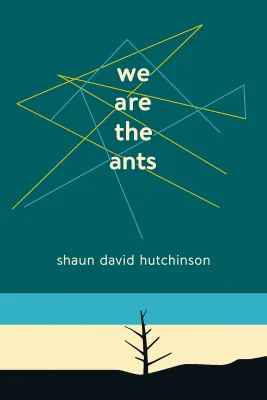
We Are the Ants
Categories
Fiction, Mental Health, Science Fiction, Audiobook, Romance, Young Adult, Fantasy, Contemporary, LGBT, Queer
Content Type
Book
Binding
Hardcover
Year
2016
Publisher
Simon Pulse
Language
English
ASIN
148144963X
ISBN
148144963X
ISBN13
9781481449632
File Download
PDF | EPUB
We Are the Ants Plot Summary
Introduction
Henry Denton has been abducted by aliens eleven times since he was thirteen. They call him Space Boy at school, but that's the least of his problems. His boyfriend Jesse hanged himself without explanation, his family is falling apart, and now the aliens—slug-like creatures he calls "sluggers"—have given him an impossible choice. They've shown him a red button and told him the world will end on January 29, 2016. He has the power to save humanity, but he's not sure it's worth saving. Standing naked on their ship, staring at a holographic Earth that explodes every time he refuses to press the button, Henry wrestles with a question that tears at his soul: If Jesse didn't want to live in this world, why should anyone else? The sluggers don't offer explanations, only euphoria when he makes the right choice and electric pain when he doesn't. But as the deadline approaches, Henry discovers that saving the world isn't about grand gestures—it's about finding reasons to keep breathing, one painful day at a time.
Chapter 1: The Button and the Burden: An Alien Proposition
The night everything changed, Henry Denton woke up paralyzed in his bed, shadows circling like vultures in his dark room. The familiar heaviness pressed against his bladder, that unmistakable sign the sluggers had come for him again. By now, their routine was burned into his memory: the helplessness, the inability to scream, then the void between breaths where they transported him to their ship. This time was different. Instead of the usual examination table, Henry found himself sitting in an obsidian chair while one of the aliens remained behind. The slugger's rough, algae-colored skin rippled with fractal patterns, its black spherical eyes mounted on wobbly stalks taking in everything. When Henry tried to move, electricity surged through his feet—a warning to stay put. A beam of light projected a three-dimensional image of Earth in front of him, rotating slowly, beautiful and fragile. Cities sparkled like scattered diamonds across the continents. Then a smooth pillar rose from the floor, topped with a bright red button that seemed to pulse with its own heartbeat. Henry reached for it instinctively, but the moment he stood, electricity shot through his body. He collapsed, twitching and gasping. When he opened his eyes, Earth exploded in a shower of sparks and light. The sluggers restored the image and waited. Again, Henry tried to approach the button. Again, the planet died in fire and void. Through trial and painful error, Henry learned their twisted game of communication. When he asked if something would destroy Earth, euphoria flooded his nervous system like liquid starlight. When he asked if he could stop it, angels seemed to ejaculate from every pore of his body. The apocalypse was set for January 29, 2016—one hundred and forty-four days away. He alone could prevent it by pressing that red button. But as the sluggers returned him to his bedroom, naked and questioning everything, Henry wondered why beings capable of crossing the universe would leave Earth's fate to a sixteen-year-old nobody. Maybe they didn't care either way. Maybe this was just another experiment, and he was the rat in their cosmic maze.
Chapter 2: Constellations of Grief: Living in Jesse's Absence
Henry trudged through the familiar hell of Calypso High School, where his nickname "Space Boy" followed him like a shadow. His brother Charlie had sealed his fate years ago by telling everyone about the abductions, turning Henry into the school's favorite punching bag. But the cruel laughter felt distant now, muffled by the weight of his impossible choice. In Ms. Faraci's chemistry class, Henry found his only refuge. She taught with jazz-hands enthusiasm about molecular bonds and chemical reactions, her mismatched shoes and passionate babbling about science making her the target of student mockery. But she saw something in Henry that others missed—a mind capable of understanding the intricate dance of atoms and elements. The real torture came from Marcus McCoy, golden boy with money and a car, who pulled Henry into bathroom stalls for desperate kisses before publicly humiliating him. Marcus was everything Jesse Franklin hadn't been—cruel where Jesse was kind, ashamed where Jesse was proud. But Marcus served a purpose: he made Henry feel something other than the crushing void Jesse had left behind. Jesse's death haunted every corner of Henry's existence. They'd been inseparable for over a year, two boys who found in each other a reason to believe the future might hold something beautiful. Jesse had a way of making everything brighter, his laughter infectious, his dreams big enough for both of them. When he stepped off his desk with a noose around his neck, he took Henry's faith in tomorrow with him. The worst part wasn't Jesse's death—it was his silence. No note, no explanation, just an empty bedroom and parents who looked at Henry like he was somehow responsible. Henry replayed every conversation, every kiss, every fight, searching for the moment he'd failed the boy he loved. The guilt ate at him like acid, whispering that maybe Jesse had been right to want out of this world. As Henry sat alone at lunch, watching his classmates live their small, meaningless lives, the sluggers' offer felt less like salvation and more like a test. Did humanity deserve saving if it had driven someone as perfect as Jesse Franklin to hang himself in his childhood bedroom?
Chapter 3: New Orbits: Diego's Arrival and Unexpected Gravity
The morning Diego Vega burst into Ms. Faraci's chemistry class asking if someone had called for a nude model, Henry felt the first crack in the ice around his heart. Diego was tall and dangerous, with spiky black hair and a fuck-you grin that suggested he found the whole world amusing. When Ms. Faraci asked Henry to show the new student to his class, something shifted in the careful emptiness Henry had built around himself. Diego was a chameleon who seemed to change personalities with his clothes. One day preppy, the next surfer, as if he couldn't decide who to be or was trying on different versions of himself. He ate lunch like he was starving, spoke about books with genuine passion, and had a way of looking at Henry that made him feel visible for the first time since Jesse's death. But Diego carried secrets in the spaces between his words. He deflected questions about his past, mentioned a sister who cooked terrible potato salad, and had scars that spoke of violence Henry couldn't imagine. When pressed about his family, shadows would cross Diego's face and he'd change the subject with the skill of someone who'd had practice hiding painful truths. Their friendship bloomed slowly, tentatively. Diego believed in beauty where Henry saw only decay. He spoke of painting and dreams and the possibility that tomorrow might be better than today, concepts that felt foreign to Henry's grief-hollowed world. When Diego suggested they skip school to go to the beach, Henry felt the dangerous stirring of something that might have been hope. They spent an evening under the stars, Diego fumbling with his sister's telescope while Henry tried to explain the vast emptiness of space. Diego listened to Henry read from his journals about the sluggers without judgment, treating the impossible as simply another part of Henry's reality. In return, he offered fragments of himself—stories about Colorado, hints about why he'd come to Calypso, the careful way he spoke about his father. When Diego kissed him for the first time, Henry tasted possibility. It was different from Marcus's desperate pawing, different from Jesse's gentle devotion. It was a kiss that asked questions instead of demanding answers, that offered partnership instead of ownership. For a moment, Henry forgot about buttons and apocalypses and the weight of the world's salvation.
Chapter 4: Collision Course: Violence, Truth, and Breaking Points
The attack came without warning on a Friday afternoon. Adrian Morse, still seething over his expulsion for vandalizing Henry's SnowFlake photos, caught him coming out of Ms. Faraci's classroom. The punch exploded across Henry's face like a meteorite impact, sending him sprawling into the wall with stars dancing behind his swollen eyelids. By the time Mr. Curtis appeared, Adrian was gone, leaving Henry bleeding and alone. Diego's rage was a living thing when he saw Henry's bruised face. His hands shook as he gripped the steering wheel, knuckles white with the effort of restraint. "I'll fucking kill him," he whispered, and Henry glimpsed the darkness Diego kept carefully locked away. It was then that Henry understood the truth about his gentle artist friend—that beneath the easy smiles and philosophical musings lived someone capable of terrible violence. The revelation came in pieces. Diego had spent nearly two years in juvenile detention for beating his father so severely he'd broken both his arms, his nose, and fractured his skull. The boy who painted delicate flowers and spoke of beauty had used his fists to protect his mother from a meth-addicted monster, and the system had punished him for it while his mother chose her abuser over her son. When Marcus tried to rape Henry at the winter carnival, Diego's careful control shattered completely. Henry barely escaped Marcus's groping hands, running through the crowd with his pants undone and blood in his hair. But Diego found Marcus first, and this time there was no holding back. He broke Marcus's nose and knocked out a tooth, his artistic hands becoming weapons once again. The aftermath was swift and brutal. Police arrested Diego for violating his probation, handcuffs cutting into wrists that had painted Henry's portrait with such tender precision. As they led him away, blood that wasn't his own staining his clothes, Diego met Henry's eyes across the chaos and offered no apologies. He had chosen love over freedom, protection over self-preservation. Henry watched the boy he was falling for disappear into the justice system that had failed them both, and knew he was responsible. His inability to press the sluggers' button had doomed more than just the world—it had destroyed the one person who made him want to live in it. The weight of his choices pressed down like the gravity of a collapsing star.
Chapter 5: The Space Between Stars: Healing and Finding Worth
Quiet Oaks Inpatient Treatment Facility smelled like disinfectant and broken dreams, but Dr. Janeway had kind eyes and infinite patience for Henry's resistance to healing. She helped him understand that his desire to let the world end was another form of suicide, that his guilt over Jesse's death had poisoned his ability to see beauty in existence. The other patients were a constellation of damage. Katy screamed about food rules, Matthew refused to eat in front of others, and Brandy had an unsettling foot fetish. But in their brokenness, Henry found something unexpected—the stubborn human refusal to surrender. They were all fighting battles against their own minds, and somehow that made them warriors. Diego sent no letters, made no calls. Henry learned through Audrey that he'd gone back to Colorado to face his probation hearing, that Marcus's parents were too embarrassed by their son's attempted rape to press charges. The distance between Florida and Colorado felt infinite, measured not in miles but in the choices that had led them to this separation. In group therapy, Henry spoke about Jesse for the first time without crying. He described the boy who made everything brighter, who sang constantly and dreamed of Broadway stages. Dr. Janeway helped him understand that Jesse's depression wasn't a judgment on their love but an illness that had consumed him from within, that some battles are lost not from lack of trying but from the sheer weight of darkness. When Henry visited Jesse's grave, he finally found words for the goodbye he'd never gotten to say. Standing under the Florida sun, he spoke to the headstone about love and loss and the terrible beauty of continuing to breathe. Jesse would always be gone, but the light he'd brought to Henry's life didn't have to die with him. The revelation came quietly, sitting in the hospital garden with cigarette butts poking out of the dirt like tiny grave markers. Henry realized he wanted to press the button—not because the world was perfect, but because it contained people worth saving. His broken family, Audrey's fierce loyalty, Ms. Faraci's passionate teaching. Even the other patients, fighting their daily battles against despair. They all deserved a chance at tomorrow.
Chapter 6: Choosing to Shine: Henry's Decision at the Edge of Everything
January 28th arrived with unseasonable cold, as if the world itself was holding its breath. Henry sat on the beach with Diego, who had returned from Colorado quieter but unbroken, and Audrey, whose friendship had survived every test. They watched the stars wheel overhead, naming constellations and pretending tomorrow was just another day. The sluggers never came for Henry again. No final abduction, no last chance to press the red button that haunted his dreams. As midnight approached and January 29th began, he wondered if they had been testing something else entirely—not his willingness to save the world, but his willingness to believe it was worth saving. Diego leaned against his shoulder, warm and solid and real. His probation hearing had gone better than expected; he was free to build a life in Florida, to paint murals in nurseries and love difficult boys who carried the weight of impossible choices. When he kissed Henry under the starlight, it tasted like promises neither of them was sure they could keep, but were brave enough to make anyway. The world did not end at 1:39 Universal Time. The sun rose on January 29th as it had for billions of years before, indifferent to humanity's small dramas and cosmic fears. Henry woke in his own bed, checked the news, and found no reports of apocalypse—just the usual catalog of human folly and wonder that had always defined their species. Maybe the sluggers had never existed outside his traumatized mind. Maybe the button was a metaphor his subconscious had created to process grief and guilt and the terrible responsibility of choosing to live. Or maybe they were real, and his decision had already been made in a thousand small moments of connection and hope. At breakfast, Henry's mother cooked eggs with the confidence of someone who had remembered her dreams. Charlie held his new wife close, already planning for the possibility of another child. Nana smiled from her nursing home bed, surrounded by photographs that reminded her who she had been. These ordinary miracles, Henry realized, were what made existence sacred.
Summary
Henry Denton never pressed the red button, but somewhere in the space between despair and hope, he found his answer. The world continued its ancient dance around the sun, carrying its cargo of broken and beautiful humans toward whatever future they would write together. His choice had never been about preventing apocalypse—it had been about choosing to believe in tomorrow despite yesterday's pain. In the end, we are all the ants, marching across an indifferent universe with our small purposes and enormous hearts. We build our colonies in the shadow of forces beyond our understanding, love fiercely despite knowing loss is inevitable, and find meaning in the very act of continuing. Henry learned that salvation isn't about pressing buttons or preventing endings—it's about the courage to begin again, one breath at a time, until breathing becomes its own form of revolution against the dark.
Best Quote
“We may not get to choose how we die, but we can choose how we live. The universe may forget us, but it doesn't matter. Because we are the ants, and we'll keep marching on.” ― Shaun David Hutchinson, We Are the Ants
Review Summary
Strengths: The review highlights the book's compelling narrative, particularly praising Henry Denton's character as smart, witty, and humorous. The story's tone is described as balanced, combining dark and comical elements with heartwarming moments. The well-developed, complex characters and intricate relationships are noted as significant strengths, contributing to the book's depth and insightfulness. Overall: The reviewer expresses a highly positive sentiment, awarding the book five stars and describing it as a unique and thought-provoking read. The narrative's ability to engage and leave a lasting impression is emphasized, with a strong recommendation for its insightful exploration of human relationships and existential themes.
About Author

Shaun David Hutchinson
Hutchinson investigates the intersections of speculative fiction and personal identity, crafting narratives that resonate with emotional depth and philosophical insight. Through books like "The Five Stages of Andrew Brawley" and "The Apocalypse of Elena Mendoza", he integrates science fiction elements with explorations of LGBTQ+ themes, creating stories that not only entertain but also provoke thought. His narratives often explore complex issues such as self-acceptance and belonging, which are made more poignant by their fantastical settings. This approach allows readers to engage with the material on both a literal and metaphorical level, encouraging a deeper understanding of the characters' struggles.\n\nHutchinson’s method of blending speculative fiction with real-world issues provides young adults with relatable and accessible stories that tackle significant social topics. This distinctive style, evident in his debut novel "The Deathday Letter" and later works like "We Are the Ants", demonstrates his commitment to diversity and representation in literature. By incorporating elements of magical realism and dystopian futures, Hutchinson is able to amplify emotional truths, creating a space where young readers can explore their own identities through the lens of the fantastical. Meanwhile, his engaging prose ensures that these stories remain accessible to a wide audience, offering both entertainment and introspection.\n\nReaders of Hutchinson's books gain more than just compelling narratives; they encounter a nuanced reflection on identity and mental health. His ability to address such themes with authenticity and empathy has garnered him critical acclaim and numerous awards, underscoring his impact as a leading voice in young adult literature. Whether delving into themes of masculinity in "Howl" or exploring historical magic in "Before We Disappear", Hutchinson's work continues to inspire and challenge young readers to reflect on their own lives and the world around them. This makes his authorial journey not just a personal endeavor but a valuable contribution to the field of contemporary YA fiction.
Read moreDownload PDF & EPUB
To save this Black List summary for later, download the free PDF and EPUB. You can print it out, or read offline at your convenience.
We Are the Ants
by Shaun David Hutchinson
