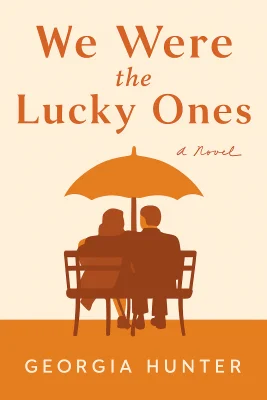
We Were the Lucky Ones
Categories
Fiction, Audiobook, Historical Fiction, Adult, Family, Book Club, Historical, Holocaust, World War II, War
Content Type
Book
Binding
Hardcover
Year
2017
Publisher
Viking
Language
English
ASIN
0399563083
ISBN
0399563083
ISBN13
9780399563089
File Download
PDF | EPUB
We Were the Lucky Ones Plot Summary
Introduction
# We Were the Lucky Ones: A Family Scattered by War, United by Hope The crystal chandelier cast dancing shadows across the Passover table at 14 Warszawska Street in Radom, Poland. Spring 1939 brought more than blooming flowers—it carried the weight of impending catastrophe. Sol Kurc lifted his silver kiddush cup while his wife Nechuma surveyed their gathered children: Genek with his medical degree and pregnant wife Herta, Jakob clutching his beloved Bella's hand, spirited Halina bouncing baby Felicia on her knee, and Mila watching with tired but grateful eyes. Only Addy's chair remained empty, their musician son trapped in France as German borders sealed like prison walls. Within months, this carefully constructed world would shatter like glass under the Wehrmacht's boots. The Kurc family—comfortable, educated, assimilated—would be scattered across three continents in a desperate fight for survival. Their story unfolds not as a tale of victims, but as a testament to the unbreakable threads that bind families together when everything else falls apart. In the darkness of humanity's worst chapter, they would discover that love could survive anything, even the systematic attempt to erase them from existence.
Chapter 1: The Last Supper: A Polish Family on the Eve of Destruction
September 1st, 1939. The screaming dive-bombers arrived with the dawn, their shadows racing across Radom's cobblestone streets like harbingers of apocalypse. Sol Kurc stood at his leather goods shop window, watching Wehrmacht tanks roll past the synagogue where his children had been bar mitzvahed. The careful life he'd built—the prosperous business, the spacious apartment, his children's education at elite academies—crumbled in a single morning. Genek paced their living room, his medical training making him acutely aware of what war brought. His wife Herta pressed her hand to her swelling belly, morning sickness mixing with a deeper nausea born of fear. They had planned a quiet life in Lvov where Genek could practice medicine. Now those dreams dissolved as reports flooded in of Jews being rounded up, their businesses seized, their rights stripped away like clothing from the condemned. The family made desperate calculations around their dining table. Halina clutched a telegram from Addy—he was safe in France but trapped, the borders sealed. Jakob and Bella whispered about fleeing east to Soviet territory. Mila held baby Felicia closer, her husband Selim already making preparations to disappear into the underground. They were still together, still whole, but the walls were closing in. By winter, the Radom ghetto rose around their home like a prison. German soldiers hammered boards across Jewish shop windows while families were herded into an increasingly cramped quarter of the city. Sol watched helplessly as his business was "Aryanized"—handed to a Polish collaborator for a fraction of its worth. The comfortable middle-class existence that had defined the Kurcs evaporated overnight, replaced by ration cards and yellow stars and the constant fear of midnight knocks.
Chapter 2: The Great Scattering: War Tears the Kurcs Apart
The knock came at dawn on February 10th, 1940. NKVD officers filled Genek and Herta's doorway in Lvov, their faces carved from Siberian ice. "You have twenty minutes," the stone-faced officer announced in Russian. Herta, now visibly pregnant, packed a single suitcase while Genek burned his medical certificates in the kitchen sink. They joined hundreds of other "undesirable elements" in cattle cars bound for the frozen hell of Stalin's labor camps. Forty-two days they traveled in darkness, pressed against strangers who smelled of fear and unwashed bodies. The train lurched and swayed while Herta's pregnancy progressed in the suffocating darkness. When prisoners died, their bodies were thrown from the cars like refuse, landing with sickening thuds beside the tracks. Genek held his wife as she shivered through contractions that weren't yet labor, whispering promises he wasn't sure he could keep. Meanwhile, Halina made the most dangerous choice of all. With her blonde hair and green eyes, she could pass for Polish. She obtained false papers identifying her as "Anna Brzoza," a Catholic secretary from Kraków. The transformation required memorizing prayers she'd never spoken and abandoning everything that marked her as Jewish. Her parents begged her to stay, but Halina knew someone must survive to search for the others. Jakob and Bella found themselves trapped in different ghettos as the Nazis systematically divided Jewish communities. Their wedding took place in a blacked-out apartment, witnessed by friends who risked their lives to attend. They exchanged rings made from melted coins, promising to find each other if separated. The ceremony was both defiant and heartbreaking—a declaration of love in the face of annihilation, spoken in whispers while jackboots echoed in the streets below.
Chapter 3: Masks and Identities: Surviving Under False Names
Halina's new identity as Anna Brzoza became her lifeline and her prison. She worked as a housekeeper for German officers, serving tea to men who would kill her if they discovered her true identity. Every morning she practiced Catholic prayers in the mirror, perfecting the sign of the cross until it felt natural. Her hands shook as she lit candles in churches, terrified someone would notice her unfamiliarity with the rituals. The work degraded her soul but kept her alive. Her wages allowed her to bribe guards and smuggle food into the ghetto where her parents remained. Sol and Nechuma had aged years in months, their faces gaunt from hunger and worry. They'd heard nothing from their other children—Genek and Herta vanished into Soviet territory, while Jakob and Bella disappeared during a ghetto liquidation. The silence grew heavier with each passing week. Mila faced perhaps the cruelest choice of all. To keep her job at a German household, she had to live separately from four-year-old Felicia. The little girl stayed hidden in a Catholic convent, her red hair dyed blonde, her name changed to Barbara. When Mila visited once weekly, Felicia barely recognized her. The war was stealing not just their lives but their relationships, turning mothers and daughters into strangers. During SS raids, Mila stuffed Felicia into a sack of fabric scraps, whispering "still as a statue" as jackboots thundered overhead. The three-year-old learned that survival sometimes meant becoming invisible, holding her breath while soldiers' boots came within inches of her hiding place. When warm wetness spread between her legs from fear, she bit her tongue to keep from crying, understanding with terrible clarity that discovery meant something worse than darkness.
Chapter 4: Across Frozen Wastes: Exile in Siberian Labor Camps
In the Altynay labor camp, Herta gave birth during the worst blizzard in decades. The barracks offered no heat, no medical supplies, only the warmth of other prisoners huddled together for survival. Genek delivered his own son using skills learned in medical school, cutting the umbilical cord with a smuggled razor blade. They named the boy Józef, after Herta's father, hoping he'd live to meet his grandfather. The baby's eyes froze shut each night from the cold. Every morning, Herta used drops of her own breast milk to gently thaw them open. Genek traded his wedding ring for extra rations, knowing that if Herta couldn't eat, she couldn't nurse, and if she couldn't nurse, their son would die. The mathematics of survival were brutal and simple in the gulag—everything had a price, and love was the only currency that mattered. Genek learned to swing an axe in temperatures that plummeted to forty below, his hands blistering and freezing in endless cycles. Propaganda speakers blared communist slogans through the night while wolves howled in the surrounding forest. When prisoners disappeared into the wilderness, their bones picked clean by scavengers, Genek wondered if his family would ever know what became of him. But Stalin's war with Hitler changed everything. In 1941, an amnesty freed Polish prisoners to join Anders's Army in exile. Genek and Herta, carrying baby Józef, joined the exodus across Central Asia—a biblical migration of survivors seeking redemption. They marched through Kazakhstan and Uzbekistan, through deserts where the sand burned their feet and over mountains where the air grew thin. The army became their salvation, not just from Soviet oppression but from despair itself.
Chapter 5: Letters Across Oceans: Maintaining Hope Through Silence
In Rio de Janeiro, Addy haunted the post office like a ghost seeking absolution. Every Monday he approached the counter with the same desperate question, and every Monday Gabriela shook her head with genuine sympathy. No letters from Poland. No word from his family. Nothing but silence stretching across the Atlantic like an accusation. He continued writing anyway, addressing letters to an apartment that might no longer exist, to parents who might no longer be alive. The tropical warmth of Brazil felt surreal after the frozen hell of Europe's war. Addy learned Portuguese, built furniture with his hands, and slowly constructed a new identity as a Brazilian resident. He played piano in Rio's cafes while his family starved in ghettos, the guilt eating at him like acid. Every morning he checked the refugee lists, hoping to find familiar names among the survivors, finding only strangers with stories as tragic as his own. Thousands of miles away, in a tent camp in Tehran, Genek was writing letters of his own. His son Józef, born in Siberian hell, now crawled across warm sand while Herta watched from their canvas shelter. They had survived Stalin's amnesty, survived the exodus across Central Asia, survived the disease and starvation that claimed so many others. But survival felt hollow when shared with strangers instead of family. The letters disappeared into the void of war, swallowed by censors and chaos. But they kept writing because the alternative—accepting that their family was gone—was unthinkable. Words became prayers, addresses became altars, and hope became the only religion that mattered. In the darkness of separation, they clung to the belief that somewhere, somehow, love would find a way to bridge the impossible distances between them.
Chapter 6: Against All Odds: First Contact After Years of Darkness
The medical tent in Tel Aviv smelled of antiseptic and desert heat. Genek stood half-naked in a hospital gown when he heard the voice that made his heart stop. It was impossible—a trick of memory, perhaps, or the desert playing games with his mind. But when he turned and saw the familiar figure in the white coat, the round glasses and serious expression he remembered from another lifetime, he knew miracles were still possible. "Selim!" The name exploded from his throat like a battle cry. Suddenly he was running across the tent in his flapping gown, ignoring the stares of other patients as he embraced his brother-in-law with desperate intensity. Selim—Mila's husband, the doctor who had disappeared from Lvov three years earlier, presumed dead or worse. They held each other like drowning men, and when they finally pulled apart, both had tears streaming down their faces. The reunion was accidental, miraculous. Selim had been examining Polish soldiers for tropical diseases when he recognized the name on a medical chart. Genek Kurc—it couldn't be, but it was. They compared notes like survivors of a shipwreck, each hoping the other might have news of the family they'd left behind. But Selim's letters to Poland had gone unanswered too, and his face went pale when Genek mentioned the ghettos. From that sterile tent in Palestine, they began the impossible task of finding their scattered family. Selim had connections in the medical corps, access to refugee lists and Red Cross files. Genek had survived the Soviet camps and knew how to navigate bureaucracy with patience and persistence. Together, they started weaving the first threads of a tapestry that had been torn apart by war, hoping against hope that somewhere in the chaos, the other Kurcs were still alive.
Chapter 7: The Long Journey Home: Finding Each Other in a Broken World
The first telegram arrived in Rio like lightning splitting the sky. Addy stood in the Polish consulate, hands trembling as he read the impossible words: "WITH SELIM IN ITALY. FIND US THROUGH POLISH II CORPS. GENEK KURC." His brother was alive. His family existed. The guilt and loneliness that had consumed him for six years suddenly lifted, replaced by frantic joy and desperate hope. In Poland, Halina emerged from four months in Kraków's notorious Montelupich prison, her face scarred but her spirit unbroken. She found her parents hidden in a farmhouse outside Warsaw, aged and frail but breathing. The farmer and his wife, the Górskis, had risked their lives for months to shelter Sol and Nechuma, asking for nothing but basic payment for food. The reunion was awkward and beautiful—strangers who were family, trying to bridge years of separation with tentative embraces. Jakob and Bella, now with baby Victor, made their way through the chaos of post-war Europe to a displaced persons camp in Germany. The irony of finding refuge in the country that tried to destroy them wasn't lost on Jakob, but pragmatism won over pride. They needed sponsors, visas, and hope for the future. Bella's uncle in Chicago provided all three, offering them a chance to start over in a land where their son could grow up free. The family began the dangerous journey to reunite in Italy. Halina led her parents and Mila's family over the Austrian Alps on foot, pregnant but determined. They walked for weeks, sleeping in meadows, bribing border guards with cigarettes and vodka. When they finally reached the Italian coast, they were exhausted but triumphant—the first step toward rebuilding their scattered lives, toward proving that love could survive even the systematic attempt to erase them from existence.
Chapter 8: Seeds Take Root: Rebuilding Family in Foreign Soil
The train platform in Bari, Italy, became the stage for a reunion that defied all odds. Mila spotted Genek first in the crowd, his face older but his dimpled smile unchanged. Behind him stood Selim, the husband she hadn't seen in six years, the father her daughter barely remembered. The meeting was awkward and beautiful—strangers who were family, trying to bridge years of separation with tentative embraces and careful words. Felicia met her father with the shyness of a child who had learned not to trust adults. Selim gave her a silver coin from Persia, telling her the lion on it carried a sword for protection. She accepted the gift solemnly, this seven-year-old who had survived ghettos and convents and bombing raids. Their relationship would take time to rebuild, but the foundation was there—love, patience, and the determination to heal what war had broken. Addy used his wife Caroline's war bonds to pay for his family's passage to Brazil. Caroline, an American embassy worker he'd met at a party in Rio, became the catalyst for the family's reunion. Her letters to Red Cross offices around the world finally connected the scattered Kurcs, proving that sometimes salvation came from the most unexpected sources. Love had found him in exile, and now love would bring his family home. By 1947, they were scattered across three continents but connected by letters, photographs, and the unbreakable bonds forged in their darkest hours. Sol and Nechuma celebrated Passover in Rio surrounded by children and grandchildren they never expected to see again. The empty chair left for Jakob, now in America, represented not loss but hope—the knowledge that their family had survived when millions didn't, that love had proven stronger than the machinery of death.
Summary
The Kurc family's survival wasn't just luck, though luck played its part. It was the result of countless small acts of courage: Halina's decision to live under false papers, Genek's determination to keep his family alive in Siberian hell, Jakob and Bella's refusal to surrender to despair, Mila's sacrifice to save her daughter, and Addy's relentless search from across an ocean. Each choice, each risk, each moment of hope in the face of annihilation contributed to their miraculous reunion. They were indeed the lucky ones, but they made their own luck through love, courage, and an unshakeable faith that somewhere, somehow, their family would find each other again. Their story echoes across generations, a testament to the unbreakable threads that bind families together no matter how far the winds of history may blow them apart. In the end, they proved that home was not a place but a feeling, that families could be broken but never truly destroyed, and that sometimes the greatest victory was simply the act of continuing to breathe, to hope, to remember those who could not.
Best Quote
“The exercise of deciding where to go next is difficult. Because next most likely means a new forever.” ― Georgia Hunter, We Were the Lucky Ones
Review Summary
Strengths: The book is based on a true story, which adds a layer of authenticity and intrigue. It is described as a mind-blowing story of survival during WWII, offering a unique perspective compared to other similar novels. The narrative evokes emotional responses, such as laughter and tears. Weaknesses: The novel's prose is criticized for lacking creativity and depth, often resorting to obvious descriptions. The multitude of characters and frequent location changes make it difficult to follow and connect with the story. The narrative lacks dramatic contrast, leading to predictable outcomes. The portrayal of the family's survival may inadvertently gloss over the broader, harsher realities of the Holocaust. Overall: The reader finds the book interesting but struggles with its execution and emotional connection. While it offers a compelling story, the lack of narrative depth and predictability detracts from its impact. The recommendation is mixed, with appreciation for the story but reservations about its delivery.
About Author

Georgia Hunter
Hunter explores the resilience of the human spirit through her focus on historical narratives set against the backdrop of World War II and the Holocaust. Her literary journey began with "We Were the Lucky Ones," a novel inspired by her family's extraordinary survival story. This book not only earned a spot on the New York Times bestseller list but also reached a global audience through its adaptation into a limited series by Hulu. Therefore, Hunter effectively merges meticulous historical research with compelling storytelling, allowing readers to connect deeply with the themes of family, love, and survival.\n\nHer method of intertwining personal family history with broader historical contexts is also evident in her forthcoming book, "One Good Thing," set to release in 2025. This novel shifts the focus to Holocaust-era Italy, presenting a narrative centered around friendship, motherhood, and inner strength in the face of adversity. Readers of historical fiction and those interested in poignant tales of endurance will find Hunter's work particularly impactful, as she consistently emphasizes the power of love and determination.\n\nGeorgia Hunter’s contributions to literature provide an essential platform for untold stories of resilience and hope. Her success, marked by the international recognition of her debut book, underscores her ability to illuminate the past in ways that resonate with contemporary audiences. Through her novels, Hunter not only honors the memories of those who lived through harrowing times but also inspires new generations to appreciate the complexities of history and the enduring strength of the human spirit.
Read moreDownload PDF & EPUB
To save this Black List summary for later, download the free PDF and EPUB. You can print it out, or read offline at your convenience.
We Were the Lucky Ones
by Georgia Hunter
