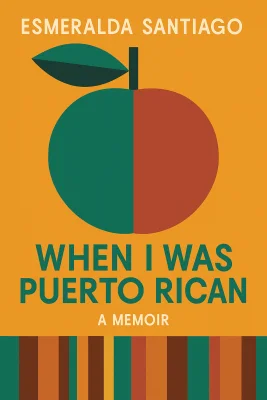
When I Was Puerto Rican
A Memoir
Categories
Nonfiction, Biography, Memoir, Autobiography, Biography Memoir, School, Book Club, Coming Of Age, Spanish Literature, Latinx
Content Type
Book
Binding
Paperback
Year
2006
Publisher
Grand Central Publishing
Language
English
ASIN
0306814528
ISBN
0306814528
ISBN13
9780306814525
File Download
PDF | EPUB
When I Was Puerto Rican Plot Summary
Introduction
In the humid nights of rural Puerto Rico, a young girl named Esmeralda Santiago dreamed of worlds beyond the zinc-roofed houses of Macún, where roosters announced each dawn and children learned life's lessons from the rhythms of tropical seasons. Born into a family where love and conflict danced as closely as couples at a village festival, she would grow up navigating between her mother's fierce ambitions and her father's poetic soul, between the familiar embrace of island life and the harsh promises of American opportunity. This remarkable journey from a barefoot jíbara to a scholarship student at Harvard University illuminates the complex dance of identity, family, and dreams that defines the immigrant experience. Through Santiago's eyes, we witness the delicate transformation of a spirited child who learned to read between languages, to translate not just words but entire worlds for those she loved. Her story reveals how growing up means learning to carry multiple selves within one heart, and how the deepest courage sometimes lies in leaving everything familiar behind while fighting to preserve what matters most about who we are.
Chapter 1: Childhood in Rural Puerto Rico: Growing Up in Macún
The Puerto Rico of Santiago's early childhood was a place where children understood the world through their senses rather than textbooks. In Macún, a rural barrio where houses perched on stilts above red earth, life moved to the ancient rhythms of rain and sun, planting and harvest, birth and death. Here, young Esmeralda learned to identify her neighbors by the sound of their footsteps on gravel paths, to predict weather by the way leaves turned their backs to the wind, and to measure time by the intensity of afternoon light filtering through mango leaves. Her world was bounded by concrete markers but infinite in its capacity for wonder. The family's rectangular metal house sat in the center of a small plot where chickens pecked for insects, where her mother's medicinal herbs grew in careful rows, and where a temperamental gardenia bush promised but never delivered its fragrant blooms. This was a landscape that taught patience and faith, where children learned that some things could not be hurried, no matter how desperately they were desired. The community of Macún operated on principles of mutual dependence and shared knowledge. Neighbors like Doña Lola, with her vast understanding of herbal remedies and her treasure trove of folk sayings, served as unofficial teachers and guardians. When Hurricane Santa Clara threatened the island, families naturally gravitated toward Doña Ana's sturdy concrete house, sharing food, stories, and shelter as they weathered the storm together. This was a world where individual survival was meaningless without collective support. Yet even in this seemingly idyllic setting, change was already stirring. American influences crept in through radio programs, government nutrition classes, and the promise of electricity and running water. Young Esmeralda began to sense that her small world existed within a much larger one, and that the security of tradition might not be enough to protect her family from the forces already reshaping their lives. The rural childhood that formed Santiago's earliest understanding of herself was both nurturing and limiting. It gave her deep roots in Puerto Rican culture, an appreciation for natural rhythms, and an understanding of community bonds that would sustain her through future challenges. But it also awakened a hunger for broader horizons that would eventually lead her far from everything she had known and loved.
Chapter 2: Family Dynamics: Between Mother's Strength and Father's Absence
The Santiago household pulsed with the complex rhythms of a love that could not quite sustain itself under the pressures of poverty, responsibility, and competing dreams. Monín, Santiago's mother, embodied the fierce resilience of Puerto Rican women who had learned to expect little from life but to fight relentlessly for their children's futures. She was both nurturer and disciplinarian, capable of tenderly nursing a sick child through the night and then delivering swift punishment for disobedience the next morning. Her love was practical, expressed through countless small acts of protection and provision rather than sentimental declarations. Pablo, her father, represented a different kind of strength—one rooted in dreams, poetry, and the romantic idealism that often proved inadequate against life's harsh realities. He was the parent who could transform mundane moments into magic, reciting verses while mixing cement or singing improvised ballads about the daily specials on his food truck. Yet his artistic soul often led him away from domestic responsibilities, chasing possibilities that seemed always to shimmer just beyond his grasp. His absences created a pattern of abandonment and return that taught young Esmeralda to love deeply while expecting disappointment. As the eldest daughter, Santiago found herself caught between these two powerful forces, serving as translator, mediator, and witness to their ongoing struggle. She absorbed her mother's determination while inheriting her father's love of language and storytelling. This position gave her unique insights into adult complexities but also burdened her with responsibilities that belonged to older, stronger shoulders. When her parents fought, she became the surrogate parent to her younger siblings, learning to comfort and protect while barely understanding her own fears. The family's economic struggles intensified these emotional dynamics. Santiago watched her mother make increasingly desperate choices to provide for seven children, from taking factory jobs to accepting welfare assistance to finally deciding to leave Puerto Rico entirely. She witnessed how poverty could strip away dignity, how the daily grind of survival could erode even the strongest relationships, and how children often paid the price for adult decisions they had no power to influence. Through it all, the bonds of family remained both the greatest source of strength and the heaviest burden in Santiago's young life. She learned that love could coexist with disappointment, that loyalty sometimes demanded sacrifice, and that growing up meant accepting the flawed humanity of those she most needed to trust. These early lessons in the complexity of human relationships would serve her well in navigating the challenges that lay ahead.
Chapter 3: Cultural Shock: Navigating Life in Brooklyn
The transition from Puerto Rico's tropical embrace to Brooklyn's harsh urban landscape represented more than a simple change of address—it was a complete dismantling and reconstruction of identity. Santiago's first glimpse of New York came through a taxi window on a rainy night, where the promised golden streets revealed themselves as dark corridors lined with fortress-like buildings, their windows barred against intruders, their stoops littered with the debris of urban survival. The city that was supposed to offer unlimited opportunity felt instead like a maze designed to confuse and exclude. The Brooklyn of the early 1960s was a patchwork of ethnic neighborhoods, each jealously guarding its territory and traditions. For a thirteen-year-old Puerto Rican girl, navigating this social geography required learning an entirely new set of survival skills. She had to decode the unspoken rules that determined which streets were safe to walk, which groups of teenagers to avoid, and how to make herself invisible when necessary. The casual violence that punctuated daily life—stories of children thrown from rooftops, of women raped in stairwells, of neighbors mugged for pocket change—created a constant undercurrent of fear that was utterly foreign to her island experience. School became both refuge and battlefield, where Santiago confronted the harsh realities of American social hierarchies. The Italian girls with their elaborate hairstyles and shortened skirts, the African American students with their own distinct style and protective solidarity, the recent immigrants huddled together in suspicious clusters—each group operated according to codes she had to learn through observation and painful trial and error. The democracy she had imagined in America revealed itself to be far more complex and exclusionary than she had expected. Perhaps most disorienting was the loss of community support that had been taken for granted in Puerto Rico. In Brooklyn, neighbors were strangers who might be dangerous rather than helpful. The extended network of aunts, cousins, and family friends who had provided emotional and practical support was replaced by the impersonal bureaucracy of welfare offices and social services. Santiago learned to translate not just languages but entire systems of meaning for her mother, becoming an intermediary between the family's needs and the indifferent machinery of urban institutions. Yet within this harsh environment, Santiago also discovered resources she hadn't known she possessed. The very challenges that threatened to overwhelm her also forced her to develop new strengths: the ability to read people and situations quickly, to adapt to changing circumstances, and to find pockets of safety and learning wherever they might exist. The Brooklyn Public Library became her sanctuary, a place where she could travel to other worlds while remaining safely anchored in her chair, building the vocabulary and cultural knowledge that would eventually become her passport to a different kind of life.
Chapter 4: Language and Identity: Finding Her Voice in English
The process of learning English became Santiago's most profound encounter with the malleable nature of identity itself. Language, she discovered, was far more than a communication tool—it was a lens that shaped perception, a key that unlocked or barred access to different worlds, and a marker that announced to everyone exactly where she belonged in America's complex social hierarchy. Each new word she mastered was simultaneously a victory and a small betrayal of the Spanish-speaking child she had been. In the beginning, English felt like an ill-fitting garment that bunched and bound in uncomfortable places. The sounds seemed harsh compared to Spanish's flowing rhythms, and the grammar followed logic that seemed designed to confuse rather than clarify. Santiago found herself trapped between languages, unable to express complex thoughts in English but gradually losing fluency in the Spanish that had once felt as natural as breathing. This linguistic limbo created a peculiar form of homelessness, where she belonged fully to neither world. The political dimensions of language learning became clear as Santiago observed how accent and vocabulary immediately classified speakers in American society. To speak English with a heavy Spanish accent was to be marked as foreign, uneducated, and probably poor. To speak perfect English, however, was to risk accusations from other Puerto Ricans of forgetting her roots and "acting white." The pressure to choose sides in this linguistic battle felt like being asked to amputate part of her soul. School became the primary arena for this language struggle, where Santiago's academic success depended on her ability to master not just vocabulary and grammar but also the cultural codes embedded in American English. She learned to distinguish between the formal language expected in academic writing and the casual slang that would help her fit in with classmates. She discovered that certain topics required English to be discussed properly, while others demanded Spanish to capture their full emotional weight. Reading became Santiago's secret weapon in this battle for linguistic competence. Through children's books, novels, and library materials, she absorbed not just words but ways of thinking, cultural references, and the subtle rhythms that distinguished native speakers from immigrants. Each book she conquered expanded her intellectual territory while simultaneously increasing her distance from family members who did not share this expanding world. The ultimate measure of Santiago's linguistic transformation came when she realized she had begun to think and dream in English. This represented both triumph and loss—triumph because it meant she had successfully crossed a crucial bridge to American success, but loss because it meant the spontaneous, unfiltered self that had existed in Spanish was being gradually replaced by someone who had to translate her deepest thoughts into acceptability. The girl who learned to speak English fluently was no longer quite the same person who had arrived from Puerto Rico, and there was no going back to that earlier, simpler version of herself.
Chapter 5: Educational Aspirations: The Path to Performing Arts
Education represented Santiago's most reliable pathway out of the limitations that surrounded her, but it required navigating systems that seemed designed to sort students into predetermined categories rather than nurture individual potential. Her first encounter with American educational bureaucracy came when school officials automatically placed her in seventh grade despite her eighth-grade academic record, assuming that non-English speakers needed to repeat coursework regardless of their actual abilities. This initial challenge taught her that academic success would require not just intellectual competence but also the courage to advocate for herself against institutional assumptions. The moment that changed everything came through the intervention of Mr. Barone, a guidance counselor who saw beyond Santiago's accent and economic circumstances to recognize genuine academic potential. His willingness to explore unconventional options led to the discovery of Performing Arts High School, a institution that represented possibilities Santiago had never imagined. Here was a place where creativity was valued alongside academic achievement, where students could pursue dreams that transcended the narrow vocational paths typically offered to immigrant children. The audition process became a crucible that tested everything Santiago had learned about adapting to American expectations while maintaining her essential self. Months of preparation with teachers who coached her in proper pronunciation, appropriate clothing, and "ladylike" behavior represented a crash course in cultural translation. She had to learn not just a monologue but an entire way of presenting herself that would be recognizable and acceptable to the sophisticated panel of judges. The actual audition revealed both the distance Santiago had traveled and the distance that remained. Her careful preparation crumbled under pressure, and she delivered her monologue at breakneck speed in heavily accented English that bore little resemblance to the refined performance she had practiced. Yet her willingness to stand before the panel and perform, despite her obvious terror and linguistic limitations, demonstrated exactly the kind of courage and determination the school was looking for in its students. The acceptance to Performing Arts represented more than admission to a prestigious high school—it was validation that her dreams were legitimate and achievable. It proved that excellence could transcend cultural boundaries and that institutions existed in America that would recognize and nurture talent regardless of its origins. For Santiago, walking through those doors each day meant entering a world where being different was an asset rather than a liability. This educational journey taught Santiago that true learning required more than absorbing information—it demanded the willingness to be transformed by knowledge. Each book she read, each performance she gave, each discussion she participated in was reshaping her understanding of herself and her possibilities. Education became not just a means of economic advancement but a fundamental restructuring of identity, creating new selves while preserving the essential core of who she had always been.
Chapter 6: Becoming a Hybrid: Neither Here Nor There
The final stage of Santiago's transformation involved accepting the reality that she could never again be purely Puerto Rican nor fully American, but would instead exist as something new—a hybrid identity that combined elements of both cultures while belonging completely to neither. This realization brought both liberation and loss, as she understood that her journey had created possibilities her parents had never imagined while simultaneously distancing her from the very roots they had hoped she would maintain. The evidence of this transformation became clear during visits back to Puerto Rico, where Santiago discovered that her years in New York had changed her in ways that were immediately visible to family and old friends. Her Spanish had acquired an American accent, her body language had become more direct and assertive than was considered appropriate for Puerto Rican women, and her expectations about life had expanded beyond what island culture could easily accommodate. She was no longer the girl who had left, but she wasn't quite the American she appeared to be either. In Brooklyn, the markers of her difference remained equally apparent. Despite her academic success and linguistic competence, her skin color, family circumstances, and cultural references continued to mark her as an outsider in American society. She learned to code-switch constantly, adjusting her speech, mannerisms, and even her thoughts depending on the audience she was addressing. This skill became essential for survival but also exhausting, requiring constant vigilance about which version of herself was appropriate for each situation. The emotional cost of this cultural balancing act was significant. Santiago found herself serving as translator and cultural interpreter not just for language but for entire ways of understanding the world. She had to explain American expectations to her Puerto Rican family while simultaneously defending her family's values and choices to American institutions. This position gave her unique insights into both cultures but also left her feeling responsible for bridging gaps that were sometimes unbridgeable. Yet this hybrid identity also provided Santiago with extraordinary advantages. Her multicultural perspective allowed her to see possibilities and connections that monocultural individuals might miss. Her experience of being an outsider in multiple contexts developed empathy and adaptability that served her well in academic and professional settings. Her bilingual brain could process information in ways that enhanced rather than limited her intellectual capacity. The ultimate acceptance of her hybrid status came with the recognition that this liminal position was not a flaw to be corrected but a strength to be embraced. Santiago learned to see herself not as someone who belonged nowhere but as someone who could create belonging in multiple places. Her story became not one of loss and displacement but of expansion and possibility, proving that identity could be additive rather than subtractive, that it was possible to honor one's origins while embracing transformation.
Summary
Esmeralda Santiago's journey from the rural hills of Puerto Rico to the halls of Harvard University illuminates the profound courage required to reimagine one's life against overwhelming odds, demonstrating that true success lies not in abandoning one's origins but in learning to carry them as sources of strength rather than shame. Her story reveals how the immigrant experience demands constant acts of translation—not just between languages but between worlds, values, and versions of the self—and how this ongoing negotiation can create individuals of extraordinary resilience and insight. From Santiago's experience, we learn that the path to achievement often requires accepting the painful reality of belonging fully to neither our past nor our chosen future, while finding ways to honor both. Her willingness to risk everything familiar in pursuit of education and opportunity reminds us that the most significant journeys are internal ones, requiring us to become people our younger selves could never have imagined. For anyone struggling with questions of identity, belonging, or the courage to pursue dreams that seem impossibly distant, Santiago's story offers both inspiration and practical wisdom about the transformative power of persistence, education, and the refusal to accept limitations imposed by others or by circumstances of birth.
Best Quote
“For me, the person I was becoming when we left was erased, and another one was created.” ― Esmeralda Santiago, When I Was Puerto Rican
Review Summary
Strengths: The review highlights the compelling narrative of Esmeralda Santiago's memoir, emphasizing the vivid contrast between her life in Puerto Rico and New York. It appreciates the detailed depiction of Santiago's childhood and the cultural and familial dynamics, particularly the sacrifices made by her mother. The memoir's exploration of immigrant experiences and the empowerment of women is also noted as a significant strength. Overall: The review conveys a positive sentiment towards "When I Was Puerto Rican," recommending it as a powerful memoir that offers insight into the immigrant experience and the resilience of women. It suggests the book is a valuable read, particularly during women's history month, for its rich storytelling and cultural exploration.
About Author

Esmeralda Santiago
Santiago delves into the intersections of cultural identity, feminism, and biculturalism, using her writing as a vehicle to illuminate the Latina and Puerto Rican experience in the United States. Her work seamlessly combines memoir with historical fiction, providing a unique perspective on the challenges of navigating life between Puerto Rican and American cultures. This thematic approach is evident in her acclaimed books, such as "When I Was Puerto Rican", which details her early life and immigration to the U.S., and "Conquistadora", a national bestseller praised for its exploration of Puerto Rican history through a multifaceted protagonist.\n\nIn her literary journey, Santiago employs clear and passionate storytelling, often drawing from her own experiences to address issues of poverty, gender roles, and bilingualism. Her method of blending personal narrative with historical research allows readers to engage deeply with the complexities of transcultural identity. As a result, her work resonates with those who seek to understand the nuances of immigrant life and the strength found in embracing a bicultural identity.\n\nBeyond her writing, Santiago's career is marked by her contributions to filmmaking and cultural advocacy. As a co-founder of the award-winning CANTOMEDIA, she has produced documentaries that further her commitment to cultural storytelling. Her engagement with cultural institutions and her role as a spokesperson for public libraries demonstrate her dedication to enriching public discourse. This short bio of Esmeralda Santiago underscores the significant impact her literary and activist efforts have had on illuminating Latina identity and empowering diverse voices.
Read moreDownload PDF & EPUB
To save this Black List summary for later, download the free PDF and EPUB. You can print it out, or read offline at your convenience.
When I Was Puerto Rican
by Esmeralda Santiago
