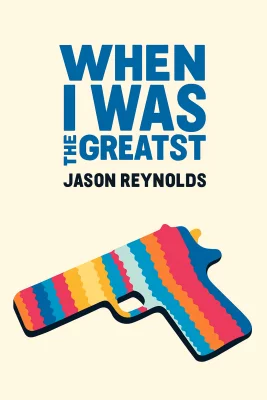
When I Was the Greatest
Categories
Fiction, Audiobook, Young Adult, Family, African American, Contemporary, Coming Of Age, Realistic Fiction, Friendship, Teen
Content Type
Book
Binding
Hardcover
Year
2014
Publisher
Atheneum Books for Young Readers
Language
English
ISBN13
9781442459472
File Download
PDF | EPUB
When I Was the Greatest Plot Summary
Introduction
The Brooklyn summer air hung thick and heavy on Decatur Street, where fifteen-year-old Ali Brooks sat with his best friends on their usual stoop, playing "Would you rather" while the hydrant sprayed cooling water across screaming children. Beside him, Noodles sketched comic book heroes in a crumpled notepad, while his brother Needles sat two steps higher, wrestling with knitting needles and black yarn—an unlikely therapy for his Tourette's syndrome that Ali's mother had taught him months before. The three boys had been inseparable since they met, bound by the unspoken rules of their neighborhood: family is family, loyalty runs deeper than blood, and sometimes you have to fight for what matters most. But tonight would test every one of those rules. An exclusive invitation to one of MoMo's legendary basement parties—the kind of gathering where Brooklyn's elite gathered behind soundproofed walls—would pull these boys into a world they weren't ready for. What started as a chance to prove they belonged somewhere bigger would end with fists flying, friendships shattered, and Ali discovering that protecting the people you love sometimes means risking everything you are.
Chapter 1: The Stoop Chronicles: Three Boys in Brooklyn
Ali had never imagined his life without Noodles until the moment he realized he might have to. They'd been tight for four years, ever since the day a scrawny kid with torn comic book pages appeared on Ali's stoop, too ashamed to sit on his own. The building next door had been a notorious crack house then, and Noodles would rather pretend he belonged somewhere else than admit where he actually lived. Jazz, Ali's eleven-year-old sister, had been the one to give them their nicknames. She'd caught Noodles kissing some girl on the stoop, his lips puckered so tight it looked like he was slurping spaghetti noodles. The name stuck. His real brother became Needles after their mother introduced him to knitting as a way to manage his outbursts—sudden explosions of cursing and twitching that came with his syndrome. The three of them formed an unlikely crew. Ali trained with old man Malloy, learning to box but never quite finding the courage to step into a real ring. Noodles acted tough but preferred drawing superheroes to being one. And Needles, the gentlest of them all, would sit on that second step from the top, knitting his heart out while freestyle rapping about whatever caught his eye. When his arms jerked from the syndrome, his stitches would come undone, and he'd start all over again without complaint. Their neighborhood knew them as the Three Stooges, as Doris Brooks liked to call them. Every evening they'd gather on those concrete steps, watching the block's rhythm unfold—kids in the hydrant, old ladies with their church hats, hustlers on corners, and the everyday drama of people trying to survive. Ali's mother worked two jobs to keep them afloat, leaving at dawn and returning after dark, but she always made sure there was food for Needles when he showed up hungry. It was a simple life, predictable in its chaos, until the day Tasha Williams made them an offer that would change everything.
Chapter 2: Needles and Yarn: Finding Peace Amid Chaos
The purple yarn looked ridiculous in Needles' hands as he sat on the stoop that scorching Sunday, his latest meltdown finally subsiding. Ali watched from his window as his mother worked her magic, showing the traumatized boy how to cast on, how to make each stitch count. Doris Brooks had seen enough broken kids in her social work to know that sometimes healing came from the most unexpected places. "This part is tricky, but you can handle it," she said, demonstrating the intricate dance between needles and thread. Needles leaned in close, his eyes—always more expressive than his stammered words—drinking in every movement. When she handed him the needles, something shifted in his posture. The angry twitching that usually preceded his outbursts seemed to redirect itself into purposeful motion. The yarn became his anchor. Every morning he'd emerge from that broken-down building carrying his needles and whatever color thread he'd managed to find, settling into his spot on the second step from the top. The neighborhood watched with curiosity as this kid who'd been written off as damaged goods found something approaching peace in an old woman's hobby. Noodles hated it. He'd smack his brother upside the head whenever the stitches came loose from a particularly violent tic, as if punishment could cure what medicine couldn't touch. But Ali saw something different in those moments—the way Needles would simply begin again, no frustration, no complaints, just the quiet determination to create something beautiful from tangled threads. The knitting worked like Doris had promised. As long as Needles held those needles, the worst of his outbursts stayed locked inside. His body would still jerk and spasm, unraveling hours of work in seconds, but the stream of involuntary curses dried up. Instead of screaming at the world, he found rhythm in repetition, turning his syndrome into something that looked almost like art.
Chapter 3: MoMo's Party: An Invitation to Trouble
Tasha Williams had been dodging Noodles' advances for months, but when she stood there in her Sunday best, fresh from church, she looked like she was planning something that would shut him up permanently. She worked the door at her brother Maurice's legendary parties—the kind of underground gatherings that made older kids whisper and younger ones dream. "Y'all can come," she said, her voice carrying that familiar edge of attitude that made Noodles crazy. "Under one condition. You gotta bring Needles." The challenge hung in the summer air like a dare. Everyone knew MoMo's parties were for the grown and the connected, not three teenagers from the wrong side of Decatur Street. But Tasha was banking on their pride, figuring they'd never show up with Needles in tow. That would be too embarrassing, too risky, too real. Ali called her bluff without hesitation. "Cool. We'll be there." The party was set for Wednesday night at eight—an odd time that made sense once you understood the setup. MoMo had soundproofed his parents' brownstone basement, turning it into a private club that could rage without disturbing the peace of their respectable neighborhood. No complaints from neighbors meant no police, and no police meant the kind of freedom that came with serious money and connections. Ali's father came through with clothes that transformed them from street kids into something approaching legitimate. The outfits hung perfectly on their frames—designer jeans, silk shirts, shoes that cost more than most families spent on groceries. For one night, they could pass for the kind of young men who belonged in exclusive spaces. But as they walked down Lewis Avenue toward the party, past the tree-lined blocks where real money lived, Ali felt the weight of the deception. They were playing dress-up in a world that would chew them alive if it discovered the truth. Still, when that basement door opened and the music hit them like a physical force, all three boys stepped inside like they owned the place.
Chapter 4: When Courage Fails: The Fight That Changed Everything
The basement pulsed with Christmas lights and heavy bass, filled with the kind of women who looked like they'd stepped out of music videos and men who wore their wealth like armor. Ali lost himself in the crowd, dancing with a girl named Candace whose touch made him forget he was only fifteen. Across the room, Noodles worked his charm on Tasha while Needles sat in a corner, knitting his black yarn in the dim light. Everything changed when someone stepped on Noodles' foot. His shoes were too small, bought with pooled allowances and pride, and the pain shot through him like electricity. His reflexes kicked in before his brain could catch up—a push, an argument, voices raised over pounding music. When Needles saw the confrontation brewing, he moved to help his brother, just as his syndrome triggered the worst possible moment. The knitting needle jabbed into flesh. Someone screamed about being stabbed. The crowd turned ugly in seconds, four grown men surrounding one terrified teenager who'd never hurt anyone on purpose. Needles went down under a storm of fists and feet, his yarn flying across the floor like spilled blood. Noodles froze. In the moment when loyalty mattered most, when brotherhood demanded action, he became a statue carved from fear and shame. He watched his brother take a beating that should have been his, paralyzed by the same cowardice that had haunted their family for years. Ali moved without thinking, launching himself into the melee with all the training Malloy had drilled into him. His jabs found their targets—nose, jaw, solar plexus—dropping bodies with precision his sparring partners had never seen. The techniques that had seemed academic in the gym became weapons of survival under those Christmas lights. When the police sirens finally scattered the crowd, Ali dragged Needles' broken body out of that basement, across Lewis Avenue, back to the safety of their familiar stoop. Behind them, Noodles followed like a ghost, carrying the weight of his own failure into the night.
Chapter 5: The Price of Protection: A Father's Sacrifice
Word traveled fast on Brooklyn streets, especially when it involved blood and reputation. Black found Ali at Brother's barbershop the next day, bringing news that chilled him to his core—the men from the party were asking questions, hunting for the kid who'd embarrassed them in front of everyone who mattered. In their world, respect was currency, and Ali had bankrupted them all. John Brooks hadn't been much of a father for years, drifting in and out of his children's lives like smoke from his own bad decisions. But when Ali needed him most, when dangerous men were circling like sharks, something old and fierce awakened in the man who'd once robbed corner stores to feed his family. The plan was simple and terrible. John would drive to Brownsville, find the hunters, and settle the debt with whatever violence was necessary. The gun Ali had glimpsed in his father's car—his mobile home, really—would write the final chapter of this story in blood and bullets. But when John returned home the next evening, his nose bloodied and his pride intact, he'd chosen a different kind of sacrifice. Every piece of stolen merchandise in those three suitcases, every designer shirt and expensive shoe that represented his livelihood, now belonged to the men who'd wanted his son's life. The car that had been his shelter, his freedom, his connection to the hustler's world—gone, traded for Ali's safety and a promise that the hunting would stop. "I negotiated everything, son," John said, his voice breaking under the weight of what he'd given up. But in losing everything material, he'd found something more valuable—the respect of his children and a second chance at the family he'd nearly destroyed years before. The price of protection had been paid in full, and for the first time in years, John Brooks was truly home.
Chapter 6: Broken Bonds: The Silence Between Brothers
Needles' face looked like a jigsaw puzzle with pieces scattered across a basement floor. His wrist hung in a makeshift sling, his ribs ached with every breath, and worst of all, he couldn't look at his brother without seeing the moment when love should have conquered fear and didn't. Noodles tried everything—apologies, explanations, desperate attempts to bridge the chasm that had opened between them. But Needles had retreated to a place deeper than physical pain, where words couldn't reach and shame lived like a cancer. He'd roll over in bed whenever his brother entered the room, choosing agony over acknowledgment. The weight of abandonment pressed down on both boys differently. Noodles carried the crushing guilt of knowing he'd failed the person who needed him most, while Needles bore the devastating realization that blood didn't guarantee protection. Their father had already proven that lesson years before when he'd fled at the first sign of his younger son's syndrome, unable to accept a child who didn't fit his definition of normal. Ali found himself caught between them, understanding both perspectives but unable to fix either. He'd done what Noodles couldn't, but that victory felt hollow when it came at the cost of their brotherhood. The Three Stooges had become a pair and a spare, their easy friendship complicated by new knowledge about courage and cowardice. Kim, Black's girlfriend who was studying to become an EMT, checked Needles' injuries and found nothing broken that time couldn't heal. But the emotional damage ran deeper than bruised ribs and swollen eyes. Some fractures mend crooked, leaving permanent reminders of the moment when everything went wrong. The pink yarn Doris brought on that terrible evening when Needles finally broke down in front of everyone would become the thread that pulled them back together—but first, it would witness the complete unraveling of everything they'd thought they knew about each other.
Chapter 7: Healing Wounds: The Power of 'I'm Sorry'
The scream that tore from Needles' throat carried four years of accumulated pain—every slap from his brother, every moment of being treated like a burden, every time his syndrome had been used as an excuse for cruelty. The whole block stopped to watch as the gentlest soul among them finally shattered under the weight of his own breaking heart. Noodles climbed those steps carrying pink yarn and knitting needles like offerings to a god he'd spent years denying. His tears fell without shame now, mixing with words that had taken too long to find their way out of his mouth. "I'm sorry," he said, and then said it again, matching every curse word his brother screamed with another plea for forgiveness. The confession poured out of him—how their father had abandoned them when Needles' syndrome first appeared, how that rejection had poisoned everything that came after, how he'd blamed his brother for taking away the family they'd once been. The truth was uglier than anyone had imagined, but it was finally honest. Doris stood at the bottom of those steps with tears in her eyes, watching two broken boys try to put their brotherhood back together one apology at a time. She'd seen enough damaged families to know that healing required more than words—it demanded the kind of vulnerability that most people spent their whole lives avoiding. When Needles finally reached for the yarn, the gesture was smaller than a whisper but louder than any apology. His fingers closed around the pink thread, and something fundamental shifted in the space between the brothers. Not forgiveness exactly, but the possibility of it, which was more than either of them had dared hope for in weeks. The knitting resumed that night, stitches forming slowly in the lamplight while two brothers sat side by side, learning how to be family again. Some things, once broken, never fully mend—but sometimes the cracks let in light that wasn't there before.
Summary
Ali Brooks learned that summer that growing up happens in moments when you're not paying attention—in basement parties where boys pretend to be men, in hospital rooms where brothers fail each other, in parking lots where fathers trade everything for their children's safety. The streets of Bed-Stuy had taught him to throw a punch, but it took a real fight to show him when violence was necessary and when it wasn't enough. The three friends found their way back to each other eventually, scarred but stronger for having tested the limits of loyalty. Noodles never fully forgave himself for that moment of cowardice, but he channeled his guilt into protection, becoming the brother Needles had always needed. Needles kept knitting, his syndrome still jerking his arms at unexpected moments, still unraveling hours of work in seconds—but he'd learned to start over without anger, finding peace in the process rather than perfection in the product. Sometimes the greatest victories look like defeats to everyone watching. Ali's father lost his car, his merchandise, his independence—but gained something more valuable in return. The family that had been scattered by pride and poor choices slowly reassembled around their kitchen table, imperfect but intact, learning that home isn't a place you find but something you build together, stitch by careful stitch, until the pattern finally makes sense.
Best Quote
“I felt good. I felt like, somehow, we were all winning.” ― Jason Reynolds, When I Was the Greatest
Review Summary
Strengths: The book is praised for its character-driven narrative, particularly the portrayal of familial bonds and friendships. The handling of Ali's family dynamics and the community's response to Needles' Tourette's is highlighted as a strong point. The cover, once understood in context, is considered fitting and meaningful. Jason Reynolds' ability to evoke emotional responses and impart lessons is also commended. Weaknesses: Some reviewers felt the book was unrealistic in its depiction of teen vernacular and found the story straightforward and anticlimactic. There is a sentiment that the book may be overhyped, leading to unmet expectations. Overall: The book receives mixed reviews, with appreciation for its character development and emotional depth but criticism for its perceived lack of realism and narrative excitement. It is recommended for young adults, though expectations should be managed.
About Author

Jason Reynolds
Reynolds delves into the complexities of youth and identity through his evocative narratives, aiming to illuminate the often-overlooked experiences of young people of color. By intertwining themes of violence, friendship, and masculinity, he creates stories that resonate deeply with his audience. His use of contemporary language and emotionally rich characters allows him to tackle complex social issues, making his work both accessible and impactful. This approach is exemplified in his acclaimed book "Long Way Down", where the narrative structure mirrors the emotional intensity of the plot.\n\nThrough his transition from poetry to prose, Reynolds has crafted a literary style that bridges the gap between rhythmic verse and engaging storytelling. His works often reflect the influence of his early inspiration from rap music, which is evident in his ability to capture the cadence of everyday speech. This method not only enhances the authenticity of his characters but also draws readers into the narrative, fostering a deeper connection. By doing so, Reynolds provides young readers with stories that reflect their realities, offering both validation and hope.\n\nAs an author who has achieved significant recognition, including awards like the Newbery Honor and the Printz Honor for "Long Way Down", Reynolds continues to inspire and advocate for young readers. His works, such as "When I Was the Greatest" and "The Collectors: Stories", highlight his commitment to storytelling that is both entertaining and enlightening. This bio captures the essence of an author whose contributions extend beyond literature, impacting the broader discourse on race, identity, and youth. His narratives serve as a catalyst for discussion and understanding, making them a vital resource for educators, parents, and young adults alike.
Read moreDownload PDF & EPUB
To save this Black List summary for later, download the free PDF and EPUB. You can print it out, or read offline at your convenience.

When I Was the Greatest
by Jason Reynolds
