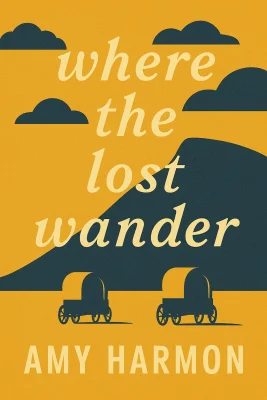
Where the Lost Wander
Categories
Fiction, Audiobook, Historical Fiction, Romance, Historical Romance, Adult, Westerns, Book Club, Historical, Adventure
Content Type
Book
Binding
Kindle Edition
Year
2020
Publisher
Lake Union Publishing
Language
English
ASIN
B07VQR8SG7
ISBN13
9781542017978
File Download
PDF | EPUB
Where the Lost Wander Plot Summary
Introduction
# Where Two Hearts Wander: A Trail of Love Through Divided Worlds The wheel lies shattered on alkali-white ground, splintered wood and twisted iron marking where dreams nearly died. Naomi May crouches in the dust of St. Joseph, Missouri, her paint-stained fingers capturing faces on paper while chaos swirls around her—forty families loading wagons with hopes heavier than their possessions, all bound for California's golden promise. When a tall, dark-haired man stops to watch her work, something electric passes between them. John Lowry, half-Pawnee mule trader, has spent his life belonging nowhere completely, but this copper-haired woman with fearless green eyes makes him consider that maybe home isn't about blood or birthplace. Their meeting sets in motion a love story that will span two thousand miles of merciless trail, where painted warriors emerge from rocks like nightmares, where disease stalks wagon trains like a patient predator, and where survival demands prices no civilized person should pay. In a land where cultures collide and dreams die alongside the dreamers, two souls from different worlds must learn that love isn't just about what you're willing to give up—it's about what you're willing to fight for when everything else turns to ash.
Chapter 1: Convergence at the Gateway: When Strangers' Eyes First Meet
St. Joseph thrums with westward fever in the spring of 1853. Emigrants swarm the muddy streets like ants preparing for exodus, their wagons groaning under the weight of ambition and necessity. Naomi May perches on a barrel in the chaos, her artist's eye capturing faces that might vanish forever beyond the Missouri River. At twenty, she's already buried one husband—Daniel Caldwell died three months after their wedding, leaving her caught between grief and unexpected freedom. Her sister-in-law Abigail died in childbirth days before departure, leaving behind newborn Wolfe and a family stretched thin by sorrow. Now Naomi trades portraits for supplies, her fierce determination catching the attention of John Lowry as he delivers mules to the army. Half-Pawnee, half-white, John makes his living breeding animals with expertise that earns respect even from those who eye his mixed heritage with suspicion. When her family joins Grant Abbott's wagon train—the same company John has agreed to guide—fate draws them together. Young Webb immediately attaches himself to John, fascinated by his mules and quiet competence. The boy's chatter about "Mr. Lowry this" and "Mr. Lowry that" becomes constant refrain as families prepare for departure. The night before they leave, John finds himself thinking not of Missouri and home, but of the long trail ahead and the woman who looked at him without fear or judgment. Her copper hair catches lamplight as she tends baby Wolfe, her movements graceful despite exhaustion. For the first time in his life, he considers that belonging isn't about blood—it's about choosing where your heart wants to rest.
Chapter 2: Wheels Rolling West: Love Blooming on the Endless Trail
The trail proves merciless from the start. At the Big Blue River, swollen by spring rains, emigrants face their first real test. While others argue about crossing points, John simply leads his mules into churning water, showing them what courage looks like. When Lawrence Caldwell balks at accepting help from "a half-breed," Naomi steps forward with quiet authority, defending John's expertise. The crossing becomes a dance of trust and necessity. John guides wagon after wagon through treacherous current, his knowledge keeping families from disaster. When Naomi wades in to help struggling oxen, John pulls her onto his horse, his arms around her as they reach the far shore. The moment burns between them—unspoken but undeniable. Death stalks them like a patient predator. Cholera strikes with devastating swiftness—Warren's wife Abigail falls first, then others, until the very air seems poisoned with grief. When John himself succumbs, burning with fever, Naomi refuses to leave his side. She tends him through the worst of it, spooning medicine between cracked lips, holding him when delirium takes hold. For three days she battles for his life, ignoring propriety and whispered concerns. Lawrence Caldwell uses John's illness for sabotage, scattering his prized mules in the night. When John recovers to find his animals missing, he faces ruin—without his breeding stock, he has no future. Young Wyatt volunteers to help search, and together they track the mules to a Pawnee village where warriors demand payment for their "rescue." The negotiation tests everything John is—white enough to be trusted by emigrants, Indian enough to speak the warriors' language. He trades his beloved mare Dame, pregnant with what might be his finest mule, to secure his animals' return. The loss cuts deep, but Naomi's fierce loyalty during his illness shows him something worth more than any horse.
Chapter 3: Sacred Vows at the Mountain's Edge: A Wedding in the Wilderness
At South Pass, where the Continental Divide splits waters toward different oceans, John and Naomi reach their own moment of division. The vast landscape stretches endlessly, making human concerns seem both insignificant and desperately important. When Naomi rides alone to a distant bluff, John follows, finally ready to confront what has been building between them for months. Their conversation becomes a reckoning with everything that separates them—his mixed heritage, her widowhood, the uncertain future awaiting in California. John speaks of his fears, his conviction that she deserves better than a man caught between two worlds. But Naomi's response cuts through his doubts with characteristic directness. She doesn't want better—she wants him, with all the complications that choice entails. Fort Bridger proves disappointing—a handful of rough cabins surrounded by log walls, nothing like the bustling trade center John envisioned. His plans for proper wedding outfit and private quarters crumble as he surveys meager supplies. Desperation drives him to make a devastating deal with Louis Vasquez, trading away half his mules—his entire future—for a serviceable wagon, basic supplies, and use of a small cabin for their wedding night. The wedding itself blooms like a flower in wilderness, conducted by a traveling preacher in the shadow of the Uinta Mountains. Naomi wears her green dress, the one John bought her at Fort Laramie, and carries wildflowers picked from mountain meadows. The small congregation of emigrants and fort residents bears witness as two people from different worlds promise to build something new together. Their wedding night in the borrowed cabin is tender and passionate, a private celebration after months of careful distance. But even in their joy, they know the hardest part lies ahead. California waits beyond mountain passes that have claimed countless lives, across deserts that test human endurance. As they lie together listening to wind whisper through pines, they hold each other close and prepare for whatever comes next.
Chapter 4: Blood and Ashes: When Paradise Burns to Hell
The separation comes too soon. John rides ahead to secure supplies and scout the trail, leaving Naomi with promises to reunite in days. But the trail has other plans. When Pa's wagon breaks down and another family faces emergency, their small group falls behind the main train, vulnerable and alone in the vast emptiness of high desert. The attack comes without warning. Shoshoni warriors led by war chief Pocatello emerge from the rocks like painted nightmares, seeking revenge for a boy's arrow that accidentally killed one of their own. The massacre is swift and brutal. William May dies with his scalp torn away, Warren falls beside his father, and Homer Bingham never gets a chance to defend his laboring wife. Naomi clutches baby Wolfe to her chest as warriors burn the wagons and take their grisly trophies. She watches her mother Winifred disappear into flames, sees her father's blood seep into thirsty earth, and feels her world collapse into ash and screaming. When rough hands seize her and drag her from the carnage, she looks back to see young Will and Webb hidden among rocks, their faces white with terror. The warriors take her north into a landscape of sage and stone, leaving behind only smoke and silence and two small boys who must find their own way to survival. As they ride deeper into wilderness, Naomi holds Wolfe close and tries to memorize the faces of her dead, knowing that memory might be all that remains of the life she's leaving behind. The trail that promised golden dreams has delivered only blood and ashes, and the woman who began this journey as a hopeful bride now rides toward an uncertain fate as a captive in a world she doesn't understand.
Chapter 5: Captive Among Strangers: Survival in a Foreign World
In Pocatello's camp, Naomi becomes a ghost of herself, existing in twilight between life and death. They call her Face Woman for her skill with paint and brush, and old woman Beeya claims her as daughter, dressing her in doeskin and beads while her son Magwich claims darker privileges. Baby Wolfe is given to Weda, whose own infant died, and Naomi watches helplessly as her brother learns to call another woman mother. She paints portraits on hide and skin, trading art for protection and the chance to glimpse Wolfe from afar. The child thrives in his new life, growing fat on Weda's milk while Naomi grows thin on grief and rage. At night she stares through smoke holes at impossibly distant stars, wondering if John is alive, if he's searching, if he even knows what happened to his bride of three days. The language barrier traps her in silence, unable to express anguish or plead for mercy, reduced to gestures and tears that no one seems to understand. When Magwich finally claims her body as well as her labor, Naomi endures with grim determination that carried her across a thousand miles of wilderness. She tells herself it's the price of staying close to Wolfe, the cost of keeping them both alive until rescue comes—if rescue ever comes. She floats above the violation, her spirit retreating where hands can't reach and pain can't follow, while her body pays the toll survival demands. In the darkness of the wickiup, she whispers prayers to a God who seems to have forgotten her name. Days blur together in haze of submission and endurance, each sunrise bringing fresh proof that her old life has been burned away as thoroughly as the wagons on the desert floor. Winter approaches, and with it the knowledge that John may never find her in this vast wilderness. The Shoshoni prepare for the cold months ahead, and Naomi realizes she must learn to survive not just as a captive, but as someone who might never escape this life she never chose.
Chapter 6: The Great Gathering: Love's Power to Cross All Boundaries
John's arrival at the Great Gathering feels like resurrection and damnation rolled into one impossible moment. He stands in the council circle beside Chief Washakie, his face gaunt with weeks of desperate searching, his dark eyes blazing with love and fury as he demands the return of his wife and her brother. The assembled chiefs listen with grave attention of men weighing life and death, while Naomi stands in firelight like a woman caught between worlds. The council's decision splits her soul in half. She can go free, return to the husband who crossed mountains and valleys to find her, but Wolfe must remain with Biagwi and Weda as payment for their own lost son. The justice is undeniable by Shoshoni law—a brother for a brother, a life for a life—but it tears Naomi apart like a physical wound. She runs to John's arms even as her heart shatters, feeling Wolfe slip away like water through desperate fingers. That night they hold each other in darkness beyond the camp, weeping for all they've lost and found, while stars wheel overhead in ancient patterns. John speaks of the months he spent searching, following cold trails and false leads, never giving up hope even when reason demanded it. Naomi tells him of her captivity, the prices she paid for survival, the way she learned to exist in a world that had no place for who she used to be. Winter comes early to the valley where Washakie's band makes their home, and John and Naomi build a wickiup among the lodges, learning to live as Shoshoni while their hearts remain divided. They're close enough to Pocatello's winter camp to occasionally glimpse Wolfe, now called Wolf Boy, thriving in his adopted family's care. The proximity is both blessing and curse, keeping hope alive while making departure impossible. In the hot springs that bubble up from earth, they find moments of peace, their bodies joining in desperate affirmation of life while death stalks the edges of their world. Naomi paints Chief Washakie's vision on elk hide, her fingers translating his prophetic dreams into swirling images of a world transformed, where red blood and white blood flow together into something entirely new.
Chapter 7: New Beginnings from Ancient Sorrows: Building Life from Loss
When baby Wolfe sickens and dies in winter's depths, his small body burning with fever no medicine can break, Naomi holds him as he slips away, his blue eyes fixing on her face one last time before the light fades. Weda's grief matches her own, two mothers united in loss, and when the Shoshoni woman lays the child's body at Naomi's feet and walks away into snow, it feels like absolution and agony combined. They bury him in frozen ground with ceremonies blending Christian prayer and Shoshoni ritual, while Lost Woman speaks of spirit tracks in snow and mothers who come to guide their children home. The death breaks something in both John and Naomi, but it also frees them from the invisible chains that kept them bound to this place. With Wolfe gone, they can finally turn their faces toward the future they'd put on hold. Spring brings freedom and fresh sorrow as they finally head toward California, leaving behind people who became family and the grave that holds the last piece of Naomi's old life. They ride west with a string of horses and mules, following the emigrant road that brought them so much joy and pain, until they reach the gold fields where Abbott kept the May boys together through the long winter. The reunion is everything Naomi dreamed—Wyatt's tears, Will's shy smile, Webb's whoop of joy as he launches himself into her arms—but it's also a reckoning with all they've endured and lost. The boys have grown hard in her absence, aged beyond their years by grief and necessity. They listen to her story with the solemn attention of men who understand that survival sometimes requires terrible compromises. In the years that follow, they build a life from the ashes of their dreams. John's mule business prospers, the boys grow into men, and Naomi's paintings find eager buyers among miners and settlers pouring into California. They never forget the people they left behind—Washakie and his prophecies, Lost Woman and her wisdom, the graves scattered along the trail like punctuation marks in a story too large for any one person to hold. When their own children come, they tell them stories of the journey west, of the price of freedom and the weight of love, of tracks that spirits leave in snow and faces that live forever in memory. They speak of a time when the world was larger and more dangerous, when love had to be strong enough to survive separation and loss, when two people from different worlds learned that home isn't a place you find—it's something you build together, one day at a time.
Summary
Where Two Hearts Wander stands as testament to the resilience of human love and the terrible cost of survival in an unforgiving world. Naomi and John's story unfolds against the backdrop of westward expansion, where cultures collided and dreams died alongside the dreamers who dared chase them. Their journey from strangers to soulmates to survivors illustrates how love can bloom even in the harshest soil, how people can find home in each other when everything else is stripped away. The novel's power lies not in its destination but in its unflinching examination of the journey itself—the moral compromises, the impossible choices, the way trauma reshapes the soul without destroying it entirely. Amy Harmon has crafted a story that honors both the courage of emigrants who risked everything for better lives and the indigenous peoples whose world was forever changed by their passage. In the end, Naomi and John's tracks in the snow become part of a larger pattern, proof that love endures even when everything else turns to dust. Their tale reminds us that sometimes the only way forward is to carry the dead with you into whatever comes next, that the greatest journeys aren't measured in miles but in the distance between who we were and who we choose to become.
Best Quote
“That’s what marriage is. It’s shelter. It’s sustenance. It’s warmth. It’s finding rest in each other. It’s telling someone, You matter most.” ― Amy Harmon, Where the Lost Wander
Review Summary
Strengths: The review highlights the book's emotional depth, memorable characters, and gripping narrative. The pacing and historical accuracy are praised, with the story's ability to evoke strong emotions and convey poignant themes being emphasized. The reviewer appreciates the author's unflinching portrayal of historical realities and the character development of Naomi and John. Overall: The reader expresses a highly positive sentiment, recommending the book as a compelling and emotional journey. Despite not typically favoring historical fiction, the reviewer finds this book transformative and engaging, suggesting it as a must-read for its emotional impact and storytelling prowess.
About Author

Amy Harmon
Harmon synthesizes personal experience with narrative depth, crafting stories that delve into themes of love, identity, and resilience. Raised in a rural setting in Utah, Harmon found early inspiration in the solitude and stories that surrounded her, which have significantly shaped her work. Her novels often explore historical settings, as seen in "From Sand and Ash," which intertwines personal and global narratives. Her method of weaving emotional and spiritual depth into her storytelling allows readers to experience both the richness of language and the complexity of human relationships.\n\nThe author’s approach is particularly beneficial to readers who appreciate multifaceted narratives that do not shy away from deep emotional currents. Harmon has captivated a broad audience by blending genres like historical fiction and fantasy, as demonstrated in works such as "The Bird and the Sword" and "A Girl Called Samson." Her unique ability to integrate diverse elements into standalone stories makes her books accessible to a wide range of readers seeking both entertainment and introspection. \n\nInternationally recognized and published in more than twenty-five languages, Harmon has made significant contributions to contemporary literature. Her appearances on the Wall Street Journal, USA Today, and New York Times bestseller lists underscore her widespread acclaim. This short bio of Amy Harmon highlights the indelible impact her work has had on readers, driven by her dedication to exploring complex emotional landscapes and delivering stories that resonate across cultures.
Read moreDownload PDF & EPUB
To save this Black List summary for later, download the free PDF and EPUB. You can print it out, or read offline at your convenience.
Where the Lost Wander
by Amy Harmon
