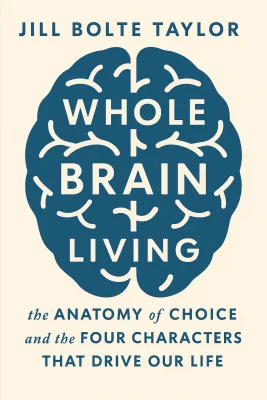
Whole Brain Living
The Anatomy of Choice and the Four Characters That Drive Our Life
Categories
Nonfiction, Self Help, Psychology, Philosophy, Health, Science, Mental Health, Personal Development, Neuroscience, Brain
Content Type
Book
Binding
Hardcover
Year
2021
Publisher
Hay House Inc.
Language
English
ISBN13
9781401961985
File Download
PDF | EPUB
Whole Brain Living Plot Summary
Introduction
# Four Characters Within: A Neuroscientist's Journey from Stroke to Wholeness Sarah collapsed into her office chair after yet another explosive meeting with her team. The harsh words that had erupted from her mouth still echoed in her mind, completely at odds with the collaborative leader she aspired to be. She felt like a stranger to herself, wondering why her best intentions seemed to evaporate under pressure. What Sarah didn't realize was that different parts of her brain were literally competing for control, each with its own voice and agenda, creating the internal chaos she experienced daily. This battle within our minds isn't unique to high-stress professionals like Sarah. Millions of people wake up each day feeling hijacked by their own thoughts and emotions, frustrated by their inability to consistently show up as their best selves. The solution lies not in willpower or positive thinking alone, but in understanding the remarkable architecture of our brains. Through groundbreaking neuroscience research and deeply personal transformation stories, we discover that we house four distinct characters within our minds, each offering unique gifts and perspectives. When we learn to recognize, appreciate, and consciously coordinate these internal voices, we transform from victims of our reactions into skilled conductors of our own consciousness.
Chapter 1: The Morning That Changed Everything: When Half a Brain Went Silent
Dr. Jill Bolte Taylor woke on December 10, 1996, to a piercing pain behind her left eye. As a Harvard-trained neuroanatomist, she was fascinated rather than frightened when she realized she was experiencing a massive stroke. Over the next four hours, she watched with scientific curiosity as her left brain functions shut down one by one. The constant mental chatter that had dominated her thoughts for thirty-seven years gradually faded into profound silence. Without her left hemisphere's analytical voice, something extraordinary happened. The rigid boundaries that normally defined her sense of self began dissolving. She could no longer distinguish where her body ended and the bathroom tiles began. Everything shimmered with energy and interconnectedness. The stress, anxiety, and self-criticism that had characterized much of her adult life simply vanished, replaced by an overwhelming sense of peace and oneness with the universe. She felt like an enormous whale swimming in a sea of silent euphoria. As her language centers went offline, she struggled to call for help, but part of her didn't want to be rescued from this blissful state. She was experiencing pure right-brain consciousness, unfiltered by the left brain's tendency to categorize, judge, and separate. This wasn't just a medical emergency; it was an unprecedented window into the nature of human consciousness itself. The stroke that could have ended her career instead became the foundation for understanding that we all have access to profoundly different states of being, depending on which parts of our brain are active. Her recovery would take eight years, but those hours of neurological crisis revealed a truth that would revolutionize how we understand the mind: peace isn't something we need to achieve through years of practice, but rather a natural state that exists within us, accessible when we learn to quiet the mental noise and connect with our deeper consciousness.
Chapter 2: Mapping the Mind: Discovering Our Four Internal Characters
During her painstaking recovery, Dr. Taylor made a remarkable discovery. As different regions of her brain came back online, she noticed that distinct personalities were returning with them. It wasn't simply that she was regaining cognitive abilities; she was literally welcoming back different characters, each with their own preferences, fears, and ways of engaging with the world. This led her to map four distinct characters that exist within every human brain. Character One emerged from her left brain's thinking tissue as the disciplined achiever. This character loved creating order from chaos, making lists, solving problems systematically, and taking pride in competence and accomplishment. When Character One was in charge, she felt focused, productive, and in control of her environment. However, this character could also become rigid, judgmental, and overly critical when stressed or threatened. Character Two arose from her left brain's emotional center, carrying the weight of every hurt, disappointment, and trauma she had ever experienced. This character's primary job was protection, constantly scanning for potential threats based on past painful experiences. While Character Two served an important function in keeping her safe, it could also trap her in cycles of anxiety, resentment, and self-limiting beliefs rooted in old wounds. Character Three bubbled up from her right brain's emotional center as pure joy and spontaneity. This character was curious, creative, playful, and deeply empathetic, approaching life as an adventure playground filled with possibilities for connection and discovery. Character Four emerged from her right brain's thinking center as the wise sage, embodying peace, compassion, and connection to something greater than individual concerns. Understanding these four distinct characters transformed her relationship with her own mind from one of confusion and frustration to one of curiosity and empowerment. Instead of feeling victimized by conflicting thoughts and emotions, she could step into the role of conscious director, choosing which character was best suited for each situation she encountered.
Chapter 3: The Brain Huddle: From Reactive Living to Conscious Choice
The breakthrough in Dr. Taylor's recovery came when she realized she didn't have to be at the mercy of whichever character happened to be loudest at any given moment. Instead, she developed a technique called the Brain Huddle, where she could consciously invite all four characters to share their perspectives before choosing how to respond to any situation. This simple but revolutionary approach transformed reactive living into conscious choice. She demonstrated this process during a recent conflict with a colleague who had criticized her presentation style. Her Character Two immediately flared with defensive anger, interpreting the feedback as a personal attack and wanting to either fight back or withdraw completely. Her Character One began analyzing what had gone wrong and preparing logical counterarguments to prove her competence. Her Character Three felt hurt and rejected, craving comfort and validation from others. But when she called a Brain Huddle, inviting her Character Four to join the conversation, an entirely different perspective emerged. This wise character could see that her colleague was likely struggling with their own insecurities and that the criticism, while poorly delivered, might contain valuable information. Character Four suggested responding with curiosity rather than defensiveness, asking questions to understand the feedback better rather than immediately rejecting it. The Brain Huddle follows five simple steps that spell out the acronym BRAIN. First, Breathe deeply to create a pause between stimulus and response, interrupting automatic reaction patterns. Second, Recognize which character or characters have been activated by the current situation. Third, Appreciate each character's perspective and the valuable information they're providing. Fourth, Inquire within by inviting all four characters to share their wisdom about the situation. Finally, Navigate forward with the integrated wisdom of the whole team. This technique works for everything from major life decisions to everyday moments of stress or confusion. By accessing all four perspectives, we create more nuanced, effective responses than any single character could generate alone, moving from unconscious reaction to conscious creation of our experience.
Chapter 4: Healing Through Integration: Addiction, Recovery and Character Balance
The four characters framework revealed profound insights into the nature of addiction and recovery that Dr. Taylor observed in both her own healing journey and in working with others. She discovered that addiction often occurs when one or two characters become dominant while others are suppressed or ignored, creating an internal imbalance that seeks correction through external substances or behaviors. She shared the story of Michael, whose Character Two carried deep shame from childhood trauma and emotional neglect. This wounded character had learned that alcohol could temporarily silence the harsh inner critic and numb the pain of old wounds. As his drinking progressed, it created a vicious cycle where the substance use generated more shame and problems, which required more numbing, which created more chaos to feel ashamed about. Meanwhile, his other characters became increasingly isolated and unavailable. Michael's Character One, the organized achiever, was completely overwhelmed by the chaos that addiction had created in his life. His Character Three, the joyful explorer, had been buried under years of depression and self-medication. His Character Four, the wise sage, felt completely disconnected from any sense of meaning or spiritual connection. The addiction had essentially hijacked his entire internal system, leaving him feeling hopeless and out of control. Recovery required bringing all four characters back into relationship with each other through conscious integration. Michael's Character One needed to take responsibility for practical changes like new routines, healthy boundaries, and structured support systems. His Character Two needed to process old wounds with compassion rather than numbing, learning to feel difficult emotions without being overwhelmed by them. His Character Three needed to rediscover natural sources of joy, creativity, and connection with others. His Character Four needed to rebuild a spiritual foundation that gave meaning and purpose to the recovery journey. The most sustainable recoveries occurred when people learned to call regular Brain Huddles throughout each day, checking in with all four characters and ensuring that none became so overwhelmed that they sought escape through addictive behaviors. This approach transformed recovery from a battle against addiction into an integration of all parts of the self into a more complete and balanced way of living.
Chapter 5: Digital Natives vs. Analog Wisdom: How Technology Reshapes Our Characters
Dr. Taylor's research into generational differences revealed how rapidly changing technology has profoundly impacted the development and expression of our four characters across different age groups. Each generation has grown up with distinct technological influences, creating unique patterns in how their characters operate and relate to the world around them. She studied how the Silent Generation and Baby Boomers, raised primarily with books, radio, and face-to-face interaction, developed strong Character One and Character Four capabilities. Their brains learned to focus deeply for extended periods, think sequentially and logically, and form lasting emotional bonds through sustained personal contact. These generations often show remarkable ability to access the peaceful wisdom of Character Four through practices like gardening, long conversations, and contemplative activities. Generation X, the first to grow up with computers and video games, developed more integrated brain function by using right-brain tools to learn left-brain skills. They became natural problem-solvers and independent thinkers, comfortable with technology but still valuing deep human connection. However, as latchkey kids, many developed strong Character One capabilities out of necessity while their other characters sometimes remained underdeveloped due to limited emotional support during crucial developmental years. Millennials and Generation Z represent a dramatic neurological shift. Raised with constant technological stimulation from smartphones, social media, and instant access to information, their brains developed differently from the start. Many show highly developed Character Three capabilities, being creative, collaborative, and experientially focused, but struggle with the sustained attention and emotional regulation that characterize mature Character One and Character Four development. Dr. Taylor observed that while technology offers incredible tools for learning, creativity, and global connection, it can also fragment our attention and weaken the neural pathways between our four characters. The constant stream of notifications and stimulation makes it increasingly difficult to access the deep peace of Character Four or maintain the sustained focus that Character One requires for complex problem-solving. Understanding these generational differences helps us bridge divides, appreciate each generation's neurological strengths, and consciously address the challenges that rapid technological change has created for human development.
Chapter 6: Relationships as Character Dances: Eight Personalities in Every Conversation
The four characters framework revolutionized Dr. Taylor's understanding of relationships by revealing that every interaction involves eight distinct personalities, four from each person, creating complex dances that can either harmonize beautifully or clash dramatically. Understanding this dynamic provides a roadmap for more conscious, compassionate connections with others while explaining why some relationships feel effortless while others require constant work. She shared the story of Maria and James, a couple who had been struggling with recurring arguments about household responsibilities for years. Maria's Character One valued order and efficiency, feeling genuinely distressed when James left dishes in the sink or clothes on the floor. Her Character Two interpreted this messiness as disrespect and lack of caring, triggering old wounds about feeling unappreciated and taken for granted in previous relationships. Meanwhile, James's Character Three was naturally focused on enjoying present-moment experiences and simply didn't notice the mess that bothered Maria so much. His Character Two felt criticized and defensive when Maria brought up household issues, interpreting her requests as attacks on his character rather than simple preferences for organization. Without understanding these different character perspectives, they were stuck in a cycle of mutual frustration and misunderstanding. Everything shifted when they learned to recognize and appreciate each other's characters rather than taking behaviors personally. Maria could see that James's messiness wasn't intentional disrespect but simply his Character Three's natural way of being present-focused rather than detail-oriented. James could understand that Maria's need for order wasn't controlling behavior but her Character One's genuine way of creating a peaceful, functional environment for both of them. They developed new strategies that honored all their characters. James's Character One began setting phone reminders for household tasks, while Maria's Character Four practiced accepting that perfect order wasn't necessary for love and connection. Their Character Threes found ways to play and have fun together, while their Character Twos learned to communicate needs and concerns without triggering defensive reactions. By understanding the eight-character dance in their relationship, they transformed conflict into collaboration and frustration into deeper intimacy and understanding.
Summary
Dr. Taylor's extraordinary journey from stroke to recovery revealed a profound truth about human consciousness: we are not victims of our thoughts and emotions, but rather the conscious directors of multiple internal resources. Each of our four characters brings essential gifts to our human experience, from Character One's organizational wisdom to Character Two's protective insights, Character Three's joyful engagement, and Character Four's peaceful perspective. The key to whole-brain living lies not in eliminating any character, but in learning to recognize, appreciate, and consciously coordinate them all through practices like the Brain Huddle. This understanding transforms every aspect of our lives, from how we handle stress and make decisions to how we connect with others and navigate challenges like addiction or generational misunderstandings. When we stop fighting against parts of ourselves and instead embrace the full spectrum of our neurological inheritance, we discover that peace, joy, and wisdom are not distant goals to achieve but natural states accessible through conscious choice. In a world that often feels chaotic and overwhelming, the four characters framework offers hope and empowerment, reminding us that we have far more control over our inner experience than we ever imagined possible, and that transformation is always just one Brain Huddle away.
Best Quote
“Functionally, intelligence is not simply a product of the size of a brain or the number of neurons in a brain. In order for intelligence to occur, the neurons must share their information with one another via connections.” ― Jill Bolte Taylor, Whole Brain Living: The Anatomy of Choice and the Four Characters That Drive Our Life
Review Summary
Strengths: The book is praised for its engaging beginning and the author's ability to simplify complex neuroanatomy concepts for lay readers. The premise that understanding the brain at a cellular level can empower emotional control is intriguing. Weaknesses: The narrative becomes repetitive and relies heavily on left-brain/right-brain stereotypes. The explanation of the four brain characters lacks clarity, and the section on addiction and technology is confusing and unsupported by research. The book's organization and extraneous details detract from its core message. Overall: The reader finds the book's content interesting but muddled by unnecessary complexity and lack of clarity. A more concise and focused presentation would enhance understanding. The recommendation is lukewarm, suggesting potential value with significant editing.
About Author

Jill Bolte Taylor
Taylor probes the profound resilience and adaptability of the human brain through the lens of personal experience and scientific inquiry. Her work is rooted in the belief that understanding brain function can lead to greater personal empowerment and mental health awareness. Her pivotal book, "My Stroke of Insight: A Brain Scientist's Personal Journey," not only narrates her own recovery from a severe stroke but also delves into themes of neuroplasticity, mindfulness, and the dichotomy between the brain's hemispheres. By blending scientific exploration with her firsthand account, she provides readers a unique perspective on the potential for brain recovery and the power of self-awareness.\n\nHer approach involves dissecting complex neurological concepts and presenting them in an accessible manner, thus bridging the gap between scientific knowledge and everyday understanding. For instance, Taylor emphasizes the interplay between the brain’s left and right hemispheres, demonstrating how this duality shapes our perception of reality and influences our capacity for healing. Meanwhile, her advocacy extends beyond mere education; it challenges conventional views on mental health, inspiring a more profound appreciation for the interconnectedness of mind and body.\n\nReaders, particularly those interested in neuroscience or those navigating their own health challenges, benefit from Taylor’s insights by gaining a deeper understanding of their brain's capabilities. Her work empowers individuals to harness the power of their minds for personal growth and recovery, making her contributions invaluable in both scientific and personal contexts. Recognition of her influence, such as being named one of Time Magazine's 100 most influential people, underscores the significant impact she has had on both the scientific community and the broader public. This brief bio highlights Taylor as an influential figure whose integration of personal experience with scientific exploration offers a transformative perspective on brain health and recovery.
Read moreDownload PDF & EPUB
To save this Black List summary for later, download the free PDF and EPUB. You can print it out, or read offline at your convenience.
Whole Brain Living
by Jill Bolte Taylor
