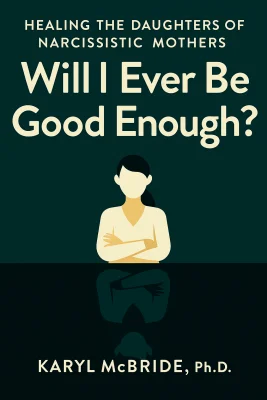
Will I Ever Be Good Enough? Healing the Daughters of Narcissistic Mothers
Categories
Nonfiction, Self Help, Psychology, Health, Parenting, Relationships, Mental Health, Audiobook, Personal Development, Family
Content Type
Book
Binding
Hardcover
Year
2008
Publisher
Free Press
Language
English
ISBN13
9781416551324
File Download
PDF | EPUB
Will I Ever Be Good Enough? Healing the Daughters of Narcissistic Mothers Plot Summary
Introduction
Sarah stares at her reflection in the bathroom mirror, preparing for another important presentation at work. Despite her impressive credentials and years of success, that familiar voice echoes in her mind: "You're not good enough. You'll never measure up." At thirty-five, she still hears her mother's critical words from decades past, still feels the sting of conditional love that was never quite within reach. Sarah's story isn't unique. Millions of women carry invisible wounds from mothers who were incapable of providing the unconditional love and emotional nurturing every daughter deserves. This journey into understanding maternal narcissism reveals a hidden epidemic affecting countless daughters who grew up feeling perpetually inadequate despite their best efforts. Through clinical insights, real-life stories, and practical guidance, we explore how narcissistic mothers shape their daughters' self-perception, relationships, and life choices. Most importantly, this book offers a path toward healing, helping you separate your worth from your mother's limitations and discover the authentic, deserving woman you were always meant to be. The mirror can finally reflect your true self, not your mother's distorted projections.
Chapter 1: Recognizing the Signs: When Mother's Mirror Shows Only Her
Jennifer remembers standing on a department store corner as a child, skipping lunch for weeks to save money for a beautiful coin purse she'd seen her mother admire. At eight years old, she carefully wrapped her gift in shiny red paper, eagerly anticipating Christmas morning and her mother's joy. Instead, her mother accused her of stealing and threw the purse across the room, screaming that she didn't want gifts from a thief. Years later, Jennifer would describe feeling like she needed to hold a sign reading "Will Work for Love," constantly trying to earn something that should have been freely given. Constance's experience echoes this pattern of impossible standards. Despite never being overweight, her mother put her on diet pills at twelve and controlled every aspect of her appearance. "Men leave women who let themselves go," her mother warned, creating a daughter who still starves herself before family visits, desperately maintaining her "mother look" to avoid criticism. These stories illuminate a painful truth: narcissistic mothers view their daughters not as separate individuals worthy of love, but as extensions of themselves, valuable only for how they reflect on the mother's image. The signs become clearer when we understand that narcissistic mothers consistently fail to empathize with their daughters' emotional needs. They remain focused on their own feelings, their own image, and their own validation. Recognition of these patterns marks the first crucial step toward healing, helping daughters understand that their lifelong struggle for worthiness wasn't caused by their inadequacy, but by their mother's inability to provide authentic love.
Chapter 2: The Emotional Burden: Living with Feelings of Never Being Good Enough
Mattie's greatest fear wasn't childbirth itself, but the terrifying possibility that she might become the same kind of mother who had emotionally orphaned her. "Getting pregnant was the scariest thing ever," she recalls. "I wasn't even sure I wanted kids because I was worried I would be horrible like mine was, emotionally and physically abusive." This fear haunted her dreams and waking hours, as she questioned whether she carried the same capacity for cruelty that had marked her childhood. Her anxiety wasn't uncommon among daughters of narcissistic mothers, who often live with deep uncertainty about their ability to love and nurture others. The internal critics that plague these daughters speak in voices learned from childhood. Rosa describes working constantly to justify her existence, while others report hearing harsh judgments about every aspect of their lives, from housekeeping to parenting to career choices. These internalized messages create a relentless soundtrack of inadequacy that follows daughters into adulthood, making them question their worth regardless of their accomplishments or the love they receive from others. Living with this emotional burden means carrying invisible luggage everywhere you go. The weight of never feeling good enough colors every relationship, every achievement, every moment of potential joy. Understanding that these feelings stem from maternal failure, not personal inadequacy, begins to lift the burden and opens the possibility for authentic self-acceptance and healing.
Chapter 3: The Overachiever and the Self-Saboteur: Two Sides of the Same Wound
Rosa works tirelessly, earning advanced degrees and professional accolades, yet still feels like a fraud waiting to be discovered. Despite her impressive résumé, she can't shake the feeling that she's somehow deceived everyone about her true capabilities. Her counterpart, Sandra, took the opposite path, describing herself as someone who never strived to be competitive because "I was never good enough anyway, so why bother trying?" Both women absorbed the same message from their narcissistic mothers: your worth depends on what you do, not who you are. The high achiever becomes what the author terms "Mary Marvel," constantly seeking external validation through accomplishments. She might be highly educated, professionally successful, or a perfectionist homemaker, but the internal soundtrack remains the same: "It's not enough." The self-saboteur, meanwhile, gives up entirely, engaging in destructive behaviors that confirm her belief in her own unworthiness. She might struggle with addiction, remain in abusive relationships, or consistently underachieve, proving to herself and her mother that she truly isn't good enough. These seemingly opposite responses reveal the same internal landscape of pain and self-doubt. Whether achieving or sabotaging, both daughters remain trapped in patterns that prevent authentic self-acceptance. Understanding this paradox helps explain why external success often fails to heal internal wounds, and why recovery must address the core belief system rather than just surface behaviors.
Chapter 4: Breaking Free: Acceptance, Grief, and Building Your Internal Mother
The path to healing begins with a painful but necessary truth: accepting that your mother was incapable of providing the love you needed and deserved. This acceptance doesn't excuse her behavior or minimize your pain, but it stops the futile cycle of hoping she'll change. Like trying to teach a three-year-old to read at college level, expecting a narcissistic mother to provide empathy and unconditional love sets both daughter and mother up for continued disappointment and pain. Grief follows acceptance, and this grieving process is essential for healing. Daughters must mourn not only the mother they never had but also the childhood they never got to live. One powerful exercise involves holding an imaginary conversation with your younger self, asking what she needed and providing the comfort that was missing then. This grief isn't self-pity; it's the necessary work of processing trauma so it no longer controls your present life. Building your internal mother means developing a loving, nurturing voice within yourself that can provide comfort and guidance when external sources fail. This internal mother never abandons you, never criticizes you for being human, and always sees your inherent worth. She becomes the reliable source of validation that transforms your relationship with yourself and, consequently, with others. Through this process, daughters learn to provide for themselves what they never received, breaking the cycle of seeking external approval to feel worthy.
Chapter 5: Reclaiming Your Authentic Self: Healing Relationships and Setting Boundaries
Learning to set boundaries with a narcissistic mother requires courage and consistency. When one daughter told her mother she needed space for personal healing work, her mother responded with manipulative phone calls and unexpected visits. The key to effective boundaries lies not in controlling the mother's response, but in maintaining your own limits regardless of her reaction. This means saying no to demands that drain you, refusing to accept inappropriate criticism, and protecting your emotional space even when faced with guilt trips or threats of abandonment. Romantic relationships often become another arena where daughters replay their childhood patterns. Some become codependent, constantly giving to partners who can't reciprocate, while others remain distant, afraid of vulnerability. Healing these patterns requires understanding that your "relationship picker" was damaged by early experiences and needs conscious recalibration. Healthy relationships are based on mutual respect, empathy, and authentic connection rather than what someone can do for you or what you can do for them. The ultimate goal is developing interdependence, where you can maintain your sense of self both within relationships and apart from them. This means being able to be "a part of and apart from" simultaneously, connected but not merged, loving but not lost. As you strengthen your internal foundation, you naturally attract healthier relationships and can engage with others from a place of wholeness rather than neediness.
Chapter 6: From Legacy to Liberation: Ending the Narcissistic Cycle
The fear of becoming like your narcissistic mother is both understandable and manageable. Most daughters of narcissistic mothers do carry some narcissistic traits, but recognizing them is the first step toward healing rather than a sign of failure. True narcissists rarely engage in such self-reflection or feel genuine concern about their impact on others. Your awareness and commitment to change already distinguish you from the pattern you're trying to break. Teaching empathy to your own children becomes one of the most important ways to break the cycle. This means acknowledging their feelings even when you disagree with their behavior, showing genuine interest in their inner world rather than just their accomplishments, and modeling emotional authenticity. When your five-year-old says "I hate you" because she can't have a cookie before dinner, responding with empathy rather than punishment teaches her that feelings are valid and safe to express. Breaking the narcissistic legacy isn't about becoming a perfect parent or person, but about creating an environment where authentic love can flourish. It means valuing your children for who they are rather than what they achieve, teaching them accountability without shame, and modeling healthy self-care so they learn that their needs matter too. Through conscious parenting and continued personal growth, you can ensure that the pattern of conditional love ends with you, giving your children the gift of genuine acceptance that you may have never received.
Summary
The journey from narcissistic wounding to authentic wholeness reveals that healing is possible when we stop seeking external validation and begin nurturing ourselves from within. Through acceptance of our mothers' limitations, grief for what we never received, and the development of an internal source of love and guidance, we can break free from patterns that have kept us feeling inadequate despite our best efforts. The mirror that once reflected only criticism and conditional love can finally show us our true worth. Most importantly, this transformation extends beyond personal healing to break generational cycles of emotional damage. When we learn to love ourselves authentically, we naturally become capable of loving others, including our children, in ways that nurture rather than wound. The legacy changes from one of criticism and conditional acceptance to one of empathy, genuine connection, and unconditional love. Your healing journey becomes a gift not only to yourself but to every person whose life you touch, creating ripples of authentic love that can last for generations.
Best Quote
“Narcissists commonly cut people off and out of their lives due to their shallow emotional style of seeing others as either good or bad.” ― Karyl McBride, Will I Ever Be Good Enough? Healing the Daughters of Narcissistic Mothers
Review Summary
Strengths: The reviewer highlights the book's well-written nature and its ability to resonate personally, providing validation and understanding of living with a narcissistic parent. It offers tools for healing and grieving, and the author is praised for aiding the reader's journey towards personal growth. Overall: The reader expresses a strong positive sentiment towards the book, finding it invaluable for personal use and professional consultation. It is recommended for those dealing with similar familial issues, as it offers insights into narcissistic behavior and its impact on relationships. The book is deemed a significant resource for understanding and healing from the effects of a narcissistic parent.
About Author

Karyl McBride
McBride delves into the intricate dynamics of narcissistic relationships, providing a deep understanding and effective strategies for healing those affected. Her work delves into the emotional complexities faced by individuals, particularly those entangled in familial narcissistic dynamics. By drawing on over 40 years of experience, she provides a unique synthesis of therapeutic techniques, including Eye Movement Desensitization and Reprocessing (EMDR), to address trauma in a holistic manner. Her focus is on empowering individuals to navigate the challenges posed by narcissistic personalities, which she effectively encapsulates in her seminal book, "Will I Ever Be Good Enough? Healing the Daughters of Narcissistic Mothers".\n\nIn her extensive bio, McBride outlines her commitment to providing both practical guidance and emotional support to those dealing with the aftermath of high-conflict relationships. Her literary contributions extend beyond traditional therapy methods, offering a comprehensive framework for understanding and overcoming the impacts of narcissism. Books like "Will I Ever Be Free of You?" serve as practical guides for those facing the challenges of high-conflict divorces involving narcissistic partners. Meanwhile, "Will the Drama Ever End?" focuses on helping adult children of narcissistic parents untangle and heal from their upbringing. Her work benefits readers by not only offering insight but also actionable steps toward recovery, thereby serving as a crucial resource for those seeking to rebuild their lives and relationships.
Read moreDownload PDF & EPUB
To save this Black List summary for later, download the free PDF and EPUB. You can print it out, or read offline at your convenience.
Will I Ever Be Good Enough? Healing the Daughters of Narcissistic Mothers
by Karyl McBride
