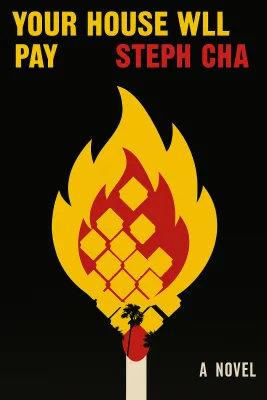
Your House Will Pay
Categories
Fiction, Audiobook, Mystery, Historical Fiction, Thriller, Book Club, Contemporary, Race, Crime, Mystery Thriller
Content Type
Book
Binding
Hardcover
Year
2019
Publisher
Ecco
Language
English
ASIN
0062868853
ISBN
0062868853
ISBN13
9780062868855
File Download
PDF | EPUB
Your House Will Pay Plot Summary
Introduction
The security camera footage is grainy, fifteen seconds of black and white that would change everything. A teenage girl reaches for a bottle of orange juice. A Korean store owner grabs her, accusations flying. Punches are thrown. Then the girl turns to leave, and the gun appears. One shot to the back of the head. Ava Matthews, sixteen years old, dies clutching two dollars in her hand. This is where our story begins—in 1991 Los Angeles, in a corner store that becomes ground zero for a tragedy that will ripple through decades. Jung-Ja Han pulls that trigger and destroys not just one life, but countless others. The verdict that follows—probation, community service, a slap on the wrist—ignites the city. But some wounds run deeper than riots. Some debts get passed down through generations, waiting in the dark for their moment to come due.
Chapter 1: Buried Histories: Two Families Connected by Violence
Twenty-eight years later, Grace Park thinks she knows her mother. Yvonne runs a quiet pharmacy in a Korean strip mall, makes kimchi on weekends, worries about Grace finding a husband. Grace has no idea her mother was once Jung-Ja Han, the woman whose face was plastered across every newspaper in America after she killed Ava Matthews. The secret sits heavy in the Park household like a tumor no one will name. Paul, Grace's father, carries it in his hunched shoulders and careful silences. Miriam, Grace's older sister, discovered the truth two years ago and cut their mother out of her life completely. Only Grace remains innocent, working beside her mother in the pharmacy, thinking their biggest family drama is Miriam's stubborn refusal to come home for dinner. Meanwhile, in Palmdale, the Matthews-Holloway clan struggles with their own inherited pain. Shawn Matthews was thirteen when he watched his sister die on that liquor store floor. The boy who once played piano and dreamed of college became a Crip, then a prisoner, then a man trying desperately to break cycles that seem unbreakable. His cousin Ray just got out of federal prison after ten years, trying to reconnect with children who barely remember him. Ray's son Darryl, sixteen and angry, listens to stories about his murdered aunt and wonders why no one ever got real justice. The two families live thirty miles apart, orbiting the same trauma like binary stars locked in a death spiral they can't escape.
Chapter 2: The Shooting: Past Sins Resurface
Grace's world shatters on an ordinary Friday evening. She's walking to the car with her mother after closing the pharmacy when a masked man approaches. The gunshot cracks the night apart. Yvonne crumples to the asphalt, blood pooling beneath her, and Grace finds herself holding her dying mother in a Northridge parking lot, screaming for help that comes too late. Detective Maxwell arrives with his notebook and suspicious eyes. He knows exactly who Yvonne Park used to be, and he's not surprised someone finally came for her. The Korean community closes ranks around the shooting victim, but Maxwell sees through their protective silence. This isn't random violence—this is a bill twenty-eight years overdue. As Yvonne fights for her life in intensive care, Maxwell starts connecting dots. The Baring Cross Crips have been quiet for years, their original members dead or imprisoned or moved away. But family is family, and some debts echo across generations. He sets his sights on Shawn Matthews and his cousin Ray Holloway, two men with every reason to want Jung-Ja Han dead. Grace sits in hospital waiting rooms, watching her mother hover between life and death, while reporters circle like vultures. The story breaks wide—Ava Matthews' killer found and shot. Social media explodes with hashtags and think pieces. Grace discovers her family's secret not through gentle revelation but through trending Twitter topics and cable news chyrons.
Chapter 3: Unmasking Identities: Secrets Revealed
The truth hits Grace like a physical blow. Her kind, hardworking mother is the same woman from that grainy security footage, the one who shot an unarmed teenager and walked away with a suspended sentence. Everything Grace believed about her family, her history, herself—it's all built on a lie. Miriam arrives at the hospital wearing her righteousness like armor. She's known for two years, she tells Grace, discovered it while researching the LA riots for some essay. The knowledge turned their mother into a stranger, someone whose love felt poisoned by her unrepented sin. How do you kiss goodnight the woman who murdered a child? Paul reveals the architecture of their deception—the name change, the move to the Valley, the careful construction of a new identity. They built Grace's entire life on the foundation of Yvonne's crime, and now that foundation is crumbling beneath her feet. But Yvonne survives the surgery. She wakes up weak but alive, and Grace finds herself caring for the woman who raised her, the same woman who killed Ava Matthews. The daughter who changed her bandages, who helped her bathe, who held her hand through fevered nights—Grace discovers that love doesn't die just because truth arrives. It just becomes infinitely more complicated.
Chapter 4: False Confessions: A Father's Sacrifice
Detective Maxwell thought he had his man when he arrested Ray Holloway. Ex-con with motive, violent past, access to weapons—it seemed like a slam dunk case. But Ray's confession comes too easily, wrapped in details that don't quite fit. When Duncan Green posts alibi photos on Twitter showing Ray with another woman at the time of the shooting, the case starts falling apart. Ray sits in Men's Central Jail, a forty-four-year-old man who'd tasted freedom for barely two months before losing it again. His wife Nisha visits, begging him to fight the charges, but Ray seems almost peaceful about his fate. He knows something the lawyers don't, something that makes him willing to trade his freedom for a greater protection. Shawn visits his cousin in that hellhole jail, seeing through the windows and phones that separate them. Ray's confession isn't about guilt—it's about love. Somewhere out there is the real shooter, someone Ray cares about more than his own life. The gun they found was Ray's, bought illegally in a moment of paranoid self-protection. Now it's become the anchor that will drown them all. The legal machinery grinds forward. Fred MacManus, Ray's expensive lawyer, works every angle, but false confessions are hard to overturn when the confessor won't cooperate. Ray's family rallies around him—his mother Sheila organizing protests, his daughter Dasha tweeting support, his son Darryl carrying guilt like a stone in his chest.
Chapter 5: The Young Avenger: Darryl's Terrible Choice
Sixteen-year-old Darryl Holloway carries secrets that would destroy his family if they came to light. Over a year ago, he intercepted a letter meant for his uncle Shawn—a message from Jung-Ja Han's daughter offering reconciliation and revealing her mother's new identity. Instead of passing it along, Darryl tore it up, trying to protect the uncle who'd become more father to him than his real dad ever was. But the information festered in Darryl's mind. He knew exactly where to find the woman who'd killed his aunt, the woman who'd walked free while his father rotted in prison. The injustice ate at him, especially as he fell under the influence of Quantavius Fox, an older gangster who filled his head with stories about honor and revenge. The night Darryl finally acted, he took his father's hidden gun and drove to Northridge. He'd studied Yvonne's routine, knew when she closed the pharmacy. The shooting was supposed to be justice, a balancing of scales that had been tilted wrong for decades. But when the gun fired and Yvonne fell, Darryl discovered that vengeance tastes like ashes and regret. Now his father sits in jail taking the blame, and Darryl hides his guilt behind a teenage mask that fools no one who knows him well. He disappears for two days, driving aimlessly through the desert, unable to face what he's done. When he finally calls his uncle from a playground at 2 AM, his voice breaks like a child's. The weight of killing someone—even someone he thought deserved it—is crushing him alive.
Chapter 6: Confrontation: Grace Meets Her Mother's Killer
Grace finds the security footage on her father's computer—weeks of recordings showing people passing by their pharmacy. Among them is a teenage boy who stops to stare through their window, studying her mother with an intensity that makes Grace's blood run cold. She recognizes him from her visit to the Matthews-Holloway home, Ray's son watching from the living room with calculating eyes. Armed with this evidence, Grace drives to a massive rally protesting Ray's indictment. Downtown Los Angeles seethes with anger—protesters demanding Ray's freedom while counter-protesters wave Blue Lives Matter flags. The air smells like smoke and tear gas as Grace pushes through the crowd, hunting for the boy who killed her mother. She finds him standing beside his uncle Shawn, guilt written across his young face like a confession. When Grace approaches, Shawn drops to one knee, begging for mercy in front of the crowd. The gesture shocks Grace—this proud man reduced to pleading, protecting his nephew even as the city burns around them. But Darryl steps forward himself. At sixteen, he's still young enough to cry, old enough to understand what he's destroyed. He tells Grace his name, admits he knows exactly who she is. In that moment, surrounded by chaos and hatred, killer and victim's daughter face each other across an impossible divide. Grace takes his hands in hers, feeling the life pulsing through his palms, and tries to understand how someone so young could carry so much death.
Chapter 7: The City Burns Again: No Justice, No Peace
The protest explodes into violence as palm trees catch fire and riot police move in with tear gas. Grace and Miriam find themselves trapped in the chaos, protected by Shawn Matthews as angry crowds recognize Grace as the racist daughter from the viral video. The same city that burned in 1992 burns again, different faces carrying the same rage across generations. But this time Grace sees it differently. She's no longer the sheltered daughter of immigrants pursuing the American dream. She's the child of a killer and the daughter of a victim, someone who understands that justice is messier and more personal than she ever imagined. As sirens wail and fires spread, she holds the hand of her mother's murderer and tries to find meaning in the ashes. Yvonne dies that night, not from her wounds but from infection—sepsis claiming her just as her daughter begins to understand who she really was. The woman who killed Ava Matthews is finally dead, but her death brings no peace. Ray faces murder charges now, protecting a son who's learning that vengeance is a poison that kills from within. Grace, Miriam, and Paul bury Yvonne in a Burbank cemetery while Los Angeles smolders. The secret that shaped their family for decades is finally exposed, but exposure doesn't bring healing. It just means they have to learn how to live with truth instead of comfortable lies.
Summary
In the end, the dead bury the dead, and the living must find ways to carry their ghosts. Ray Holloway sits in prison, sacrificing his freedom to protect his son from the consequences of a sixteen-year-old's understanding of justice. Grace Park inherits a pharmacy and a legacy she never wanted, learning that mothers and monsters sometimes wear the same face. Shawn Matthews continues his long walk toward redemption, shepherding children through dangers he couldn't avoid himself. The cycle of violence that began with Ava Matthews' death finds no clean resolution because such cycles never do. They simply transfer their energy from one generation to the next, like genetic diseases or family businesses. Grace holds security footage that could free an innocent man, but using it would destroy the guilty boy who's suffered enough. Sometimes mercy looks like silence, even when silence feels like complicity. In Los Angeles, city of dreams and broken promises, the price of justice remains negotiable, payable in installments across decades. The only certainty is that someone always pays, and it's rarely the person who should.
Best Quote
“Every day there had been rotten cops in the news and still she had been bamboozled. ‘I mean, they’re supposed to protect people, right? How can they be so bad at their jobs?’‘They protect people from other people. Question is, who are people, and who are other people?” ― Steph Cha, Your House Will Pay
Review Summary
Strengths: The review highlights the novel's deep exploration of racial tensions between Black and Korean communities in Los Angeles, drawing from historical events like the Latasha Harlins case and the 1992 riots. The book is praised for its complex narrative that intertwines familial and societal conflicts, offering an eye-opening perspective on Korean-American experiences during the riots. Overall: The reviewer expresses a strong positive sentiment towards the novel, appreciating its literary depth and social commentary. The book is recommended for its insightful portrayal of historical and contemporary racial dynamics, suggesting it is a compelling read for those interested in social crime narratives.
About Author

Steph Cha
Cha reframes the detective genre by embedding Korean American perspectives within the gritty streets of Los Angeles. Her literary endeavors primarily focus on themes of identity, community, and social justice, offering a unique narrative lens as a Korean American woman detective protagonist investigates complex societal issues. In her most acclaimed book, "Your House Will Pay", she tackles the turbulent history of the 1992 Los Angeles riots and the murder of Latasha Harlins, intertwining these historical events with contemporary issues of police violence against communities of color. This approach not only revitalizes the noir tradition but also addresses critical cultural conversations.\n\nBeyond storytelling, Cha's method involves drawing from classic detective fiction while situating her narratives within culturally rich, multifaceted communities. Her earlier works, such as the Juniper Song crime trilogy, laid the groundwork for this innovative style. She wrote these novels after transitioning from law, leveraging her legal background to infuse her writing with authenticity and depth. Her recognition includes awards like the Los Angeles Times Book Prize for Mystery, affirming her impact in both literary and social spheres.\n\nReaders interested in exploring narratives that challenge traditional genre boundaries will find Cha's work particularly engaging. Her books serve as a bridge between the past and present, offering insightful commentary on racial and social dynamics. Through her writing, Cha contributes significantly to the literary landscape, with her work extending beyond fiction as she participates in editorial roles and contributes critical essays to renowned publications. This bio captures the essence of Cha's contributions, showcasing her as a pivotal figure in modern crime literature.
Read moreDownload PDF & EPUB
To save this Black List summary for later, download the free PDF and EPUB. You can print it out, or read offline at your convenience.
Your House Will Pay
by Steph Cha
