
Kim Stanley Robinson
Robinson interrogates the potential of science fiction as a powerful literary form by embedding ecological, cultural, and political themes into his work. His narrative style often features scientists as protagonists, offering a humanist perspective on speculative futures. Unlike many of his contemporaries, Robinson eschews dystopian tropes, preferring instead to explore utopian scenarios, as exemplified in his acclaimed book "The Ministry for the Future". This work represents a "best case scenario that you could still believe in," carefully balancing optimism and realism. His Orange County trilogy, for instance, delves into alternative futures for Southern California, reflecting his interest in environmentalism and human resilience.\n\nRobinson’s contributions have significantly impacted readers and the broader literary community. His approach to "literary science fiction" challenges traditional genre boundaries, making his work appealing to both science fiction enthusiasts and literary fiction readers. The bio of this author is enriched by his prolific career, having published 22 novels, including the internationally bestselling "Mars" trilogy. Recognition for his contributions includes numerous prestigious awards such as the Hugo, Nebula, and World Fantasy Awards. In 2016, he received the Heinlein Award for lifetime achievement, solidifying his status as one of the foremost figures in science fiction. For those seeking thought-provoking narratives that connect scientific inquiry with humanistic values, Robinson’s books offer a compelling exploration of possible futures.
Books by Kim Stanley Robinson
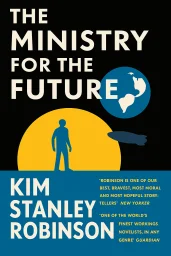
The Ministry for the Future
Popular Authors

Robin Sharma
5 books

James Clear
2 books

Sarah Knight
4 books

Daniel Goleman
9 books

Stanley D. Rosenberg
1 books

Anthony Scaramucci
1 books

Niall Kishtainy
1 books

J. Richard Gott
1 books

Trevor Moawad
2 books

Mark McNeilly
1 books

Lara Love Hardin
4 books
