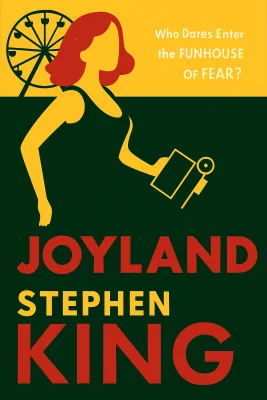
Joyland
Categories
Fiction, Audiobook, Horror, Mystery, Thriller, Coming Of Age, Suspense, Paranormal, Crime, Mystery Thriller
Content Type
Book
Binding
Paperback
Year
2013
Publisher
Titan Publishing Group
Language
English
ISBN13
9781781162644
File Download
PDF | EPUB
Joyland Plot Summary
Introduction
The summer of 1973 was supposed to heal a broken heart. Twenty-one-year-old Devin Jones took a job at Joyland, a ramshackle amusement park on the North Carolina coast, hoping to forget Wendy Keegan—the girl who'd shattered his world with a Dear John letter. Instead, he found himself wearing a dog costume in hundred-degree heat, learning the secret language of carnies, and discovering that some heartbreaks run deeper than romantic disappointment. Beneath Joyland's cheerful facade lurked something darker. Four years earlier, Linda Gray had entered the park's Horror House funhouse with her mysterious date and never emerged alive. Her throat had been cut in the darkness, her killer vanishing like smoke. Now, as autumn storms gathered off the Atlantic, Devin would learn that some ghosts refuse to rest—and some killers never truly leave the scene of their crimes.
Chapter 1: Heartbreak and Happy Hounds: Arrival at Joyland
The conveyor belt in the university cafeteria delivered more than dirty dishes that February day—it brought Devin Jones a magazine with a circled job advertisement. "WORK CLOSE TO HEAVEN!" the ad proclaimed, offering summer employment at Joyland amusement park in North Carolina. With Wendy planning to spend the summer in Boston instead of with him, the timing felt like fate. Wendy barely looked up when he told her about the interview opportunity. "Go for it," she said with disturbing enthusiasm. "It'll be an adventure." She stood on tiptoe to kiss him—always on tiptoe—but her eyes seemed focused somewhere beyond his shoulder, already planning a future that didn't include him. The train south carried him through a landscape of possibility. At Joyland, he met Fred Dean, the park's employment officer, who sized him up with sharp eyes before handing him a day pass. "Tell me then if you want the job," Dean said. "I've got five spots left as Happy Helpers." The pass bore the grinning image of Howie the Happy Hound, Joyland's canine mascot, whose blue eyes seemed to wink with secret knowledge. Lane Hardy ran the Carolina Spin, Joyland's towering Ferris wheel that dominated the skyline like a red neon prayer wheel. He wore his derby hat cocked at a jaunty angle and moved with the easy confidence of someone who belonged in this world of grease and sawdust. "Welcome aboard, kid," he said after sending Devin up into the rare air where the whole world spread out below—the park's cheerful chaos, the dark ocean, the green mystery of the Carolina lowlands. From that height, Devin's broken heart seemed small and far away. By the time he came back down, he knew he wanted the job. There was something about Joyland that called to him—not just escape from his pain, but a sense of belonging he'd never felt anywhere else. When Dean offered him the position, Devin didn't hesitate. He was ready to learn the Talk, wear the fur, and discover what it meant to sell fun in a world that desperately needed it.
Chapter 2: Learning the Talk: Becoming Part of the Show
Summer arrived with its parade of tourists and the park's awakening roar. Devin found himself part of Team Beagle, led by Pop Allen, a grizzled carnival veteran who ran the shooting gallery with the efficiency of a drill sergeant. "The conies have to leave happy," Pop explained, using the carny term for customers, "or this place dries up and blows away." His yellowed fangs flashed in what passed for a smile. "Pet the rubes and give their ears only the gentlest of tugs." The real education came from wearing the fur. Inside Howie the Happy Hound costume, Devin discovered a peculiar alchemy—the transformation from college student to something magical. Children who'd been crying moments before erupted in joy at Howie's approach. During one scorching afternoon performance, he led a crowd of kids in the Hokey Pokey, their laughter drowning out his own exhaustion. Bradley Easterbrook, Joyland's ancient owner, materialized like a benevolent scarecrow in his black suit. At ninety-three, he moved carefully but spoke with surprising vigor. "You gave this show twenty thousand dollars' worth of good publicity," he told Devin after witnessing the impromptu dance party. "What I can do is owe you a favor. If you need one, ask." His horse teeth gleamed in a genuine smile. "We sell fun here, young man. Never forget that." The park's secret language—the Talk—wrapped around Devin like a second skin. Rides became "joints," customers became "conies," and breaking down was "going larry." He learned to "flash" the game booths with prizes each morning, to untangle bumper cars when conies got them stuck against the rubber barriers, and to spot the difference between a legitimate complaint and a "mooch-hammer" trying to get his money back unfairly. As the summer deepened, Wendy's letters dwindled to postcards, then silence. The ache remained, but it had competition now—the satisfaction of mastering a new world, the pride of belonging to something larger than his own broken heart. In the costume shop, he'd strip down to his underwear and climb into Howie's blue-eyed embrace, emerging into sunlight as something children loved unconditionally. It wasn't the future he'd planned, but it was becoming the future he wanted.
Chapter 3: Heroes and Ghosts: The First Save and Linda's Mystery
The choking happened fast. Little Hallie Stansfield was running toward Howie with a hotdog in one hand and joy on her face when the bite of Pup-A-Licious lodged in her throat like a cork. Her expression shifted from delight to terror in a heartbeat, small hands clawing at her neck as her face turned purple in the summer heat. Devin's hands found the zipper behind Howie's head without conscious thought. The costume's top half tumbled away as he grabbed the girl in a fierce embrace, one hand positioned at the arch of her ribs. One hard squeeze—don't worry about breaking ribs if you're watching someone die—and a yellow chunk of hotdog flew four feet through the air. Hallie sucked in breath and began to cry, the most beautiful sound in the world. The photograph in the newspaper showed a surreal image: half-costumed Howie cradling a small girl while her mother collapsed in grateful tears. The headline read "DOG SAVES GIRL AT AMUSEMENT PARK," and suddenly Devin was famous in a way that made his chest tight with unexpected pride. His father called, voice thick with emotion: "God put you in the right place at the right time, Dev." But Joyland harbored darker stories than heroic rescues. Mrs. Shoplaw, his elderly landlady, knew them all. Linda Gray had arrived at the park four years earlier with a mysterious older man—goateed, wearing sunglasses and a baseball cap pulled low. They'd ridden the rides, eaten lunch, posed for pictures. Then they'd entered Horror House together, and only one of them had come out alive. The killer had been prepared. He wore two shirts and rubber gloves, cutting Linda's throat in the dark tunnel between the Dungeon and the Torture Chamber. When the ride ended, he simply walked away, leaving her body beside the track like discarded trash. The bloody outer shirt and gloves were found further along the route, methodically discarded. The photographs showed him clearly—except they didn't. The sunglasses, goatee, and cap made him anonymous, just another face in the crowd. "Half a dozen folks who work here claim to have seen her," Mrs. Shoplaw said, her voice dropping to a whisper. "Standing beside the track in her blue skirt and blouse, wearing that Alice band in her hair. But here's what wasn't in the papers—she holds out her hands like this." She demonstrated, palms up in supplication. "Like she's asking for help." The ghost of Linda Gray, they said, only appeared to park employees working the graveyard shift. The customers never saw her at all.
Chapter 4: The Ross Family: Love, Loss, and Second Chances
The woman tried to launch the kite alone, her beautiful face tight with frustration as it crashed repeatedly into the sand. Her son sat watching from his wheelchair at the end of the green Victorian's boardwalk, ten years old but carrying himself with the patience of someone far older. The Jack Russell terrier named Milo paced between them, sensing the tension. "You're going the wrong way with that thing," Devin called out during one of his morning walks to work. Annie Ross looked up with suspicious eyes—wealthy Beach Row residents didn't usually welcome advice from amusement park workers. But when the Jesus-faced kite finally soared into the morning sky, Mike Ross's laughter was so pure it made even his guarded mother smile. Mike had Duchenne muscular dystrophy, the cruel kind that steals everything slowly. His legs were matchsticks beneath his shorts, his breathing labored from the pneumonia that had nearly killed him the previous winter. But his eyes burned with intelligence and something else—a strange knowing that made adults uncomfortable. "You've been sad," he told Devin matter-of-factly, "but you're better now." Annie wore wariness like armor, the beautiful daughter of televangelist Buddy Ross who'd scandalized the Christian world with her rebellion. Miniskirts and atheism, parties and pot—all documented in tabloid headlines that still haunted her. When Mike was born disabled, her father had declared it God's punishment for her sins, severing their relationship with surgical precision. Now she raised her dying son alone in her father's beach house, watching him grow weaker while she grew harder. The invitation to bring Mike to Joyland was meant as kindness, but Annie recoiled as if struck. "Absolutely not," she snapped. "If you think that, he didn't tell you as much about his condition as I thought he did." Her face closed like a fist. Mike couldn't be exposed to crowds, couldn't risk excitement that might trigger breathing problems, couldn't be treated like a normal child because he was dying. But Mike had other ideas. During a chance encounter at the hospital, he erupted in frustration, his voice echoing through the lobby: "I want you to take me to Joyland before I die!" The words hung in the air like an indictment, and Annie's careful control shattered. She knew, as Devin was beginning to understand, that some battles couldn't be won by protecting someone from living. Sometimes love meant letting go—even when letting go might mean losing everything.
Chapter 5: Unveiling Shadows: The Carny Killer's Trail
Erin Cook returned to Joyland carrying a briefcase and troubling questions. Her red hair was pulled back severely, her college-girl green dress replaced by businesslike attire that matched her grim purpose. All summer she'd been researching Linda Gray's murder, following threads through interlibrary loans and long-distance calls that revealed a pattern nobody else had seen. "Four girls," she said, laying out photographs and Xeroxed newspaper clippings. "Five if you count Linda." DeeDee Mowbray in 1961, found beside a Georgia swamp trail. Claudine Sharp in 1963, throat cut during a movie in Rocky Mount. Darlene Stamnacher in 1967, discovered in a North Carolina roadside shelter. All young, all beautiful, all dating mysterious older men who vanished like smoke. The connection was carnival work. Manly Wellman's traveling show had been near the first two murder sites. Southern Star Amusements had set up rides for the county fair when the third girl disappeared. The killer moved with the shows, picking up work here and there, using the carnival world's natural transience to stay ahead of investigation. "There's a big turnover in their line of work," Erin explained. "A couple of roughies here, a couple of jocks there." But the photographs held darker secrets. The tattoo on the killer's hand—a bird, an eagle or hawk—showed signs of running in Linda Gray's crime scene photos. The ink was bleeding in the summer heat, streaking down his skin. "It's fake," Erin said with quiet satisfaction. "Just like the Coptic cross tattoo that witness saw in the Rocky Mount theater. He uses them because they draw attention—people notice the tattoo and everything else about him just fades into the background." The implications hit like a physical blow. If the tattoos were temporary, applied and washed off as needed, then the killer was still out there. Still moving with the traveling shows, still hunting. The photographs showed a master of disguise hiding in plain sight, anonymous behind sunglasses and facial hair and deliberately memorable fake tattoos. Somewhere in America's vast carnival circuit, he was planning his next performance. Devin studied the photos until his eyes ached, certain he was missing something crucial. The answer was there, staring back at him from those black and white images, but it danced just beyond recognition. The killer had been bold enough to return to Joyland after Linda's murder, bold enough to walk the same midway where she'd died. Some ghosts, it seemed, preferred to haunt the living.
Chapter 6: Storm and Steel: Confrontation on the Carolina Spin
The phone call came at one in the morning, cutting through wind that rattled Mrs. Shoplaw's Victorian like a skeleton's fingers. Hurricane Gilda was churning up the coast, and Devin had been lying awake listening to shutters bang and timbers groan. The voice on the other end was cheerful, familiar, terrifying. "It's you," Lane Hardy said with pleasant surprise. "I was expecting your landlady. I had a story about a family emergency all ready." His voice carried the same easy charm that had made him popular with coworkers and customers alike. Now it sounded like death wearing a friendly mask. The realization had crystallized hours earlier when Devin finally understood what he'd been seeing in those photographs. The baseball cap tilted left in one picture, right in another—the same unconscious habit that made Lane adjust his derby a dozen times a day. The fake tattoo had drawn attention away from everything else, just as Erin had theorized. But Lane Hardy's nervous tic with hats was as distinctive as a fingerprint. "I'm at the shopping center on Beach Row," Lane continued conversationally. "I can see your girlfriend's house from where I'm standing. I could hang up this phone and be there in sixty seconds." The threat was delivered with the casual tone of someone discussing the weather. "I'll make her watch me do it to the little cripple first." The ultimatum was simple: come to Joyland alone, or Annie and Mike would die. Devin's hands shook as he scrawled Lane's name on a notepad—insurance in case he didn't survive the night. His Ford's engine turned over reluctantly in the storm, and he drove through empty streets toward the park's spinning neon lights. Lane waited beside a maintenance truck, raising his hand in greeting as if they were meeting for drinks instead of murder. His derby was pulled down tight against the wind, but his smile was unchanged—that same charming grin that had fooled everyone. "You said you weren't going to kill me," Devin protested weakly. Lane's laugh was lost in the howling wind. "Well, we'll see which way the flow's gonna go. Won't we?" The Carolina Spin stood against the storm like a red neon cross, its struts screaming as hurricane winds tore through them. Lane forced Devin up the ramp at gunpoint, his modified garage door opener glinting in the storm light. "Today everyone wins a prize," he said mockingly, echoing his own words from Mike's visit. But the only prize waiting at the top of the wheel was death, and Lane Hardy had been collecting such prizes for over a decade.
Chapter 7: Final Farewells: When the Last Ride Ends
The Ferris wheel climbed into the storm's fury while Lane held court with his pistol and his madness. Rain slashed across the car as they reached the apex, one hundred seventy feet above the churning earth. Lane's hair dye ran in black streams down his face, revealing gray roots beneath the disguise he'd worn for years. The derby that had been his trademark flew into the night like a dying bird. "You want to try for the gun, don't you?" Lane shouted over the wind. "You have to ask yourself if you feel lucky." But luck had nothing to do with what happened next. From far below came a sound that cut through the storm's roar—the crack of a rifle fired by expert hands. Lane's face exploded in red ruin as Annie's bullet found its mark. The man who had killed Linda Gray and God knew how many others pitched forward, then slumped back with his shattered features streaming blood and rain. His confession died with him, taking secrets to whatever hell receives those who prey on the innocent. The gun tumbled from nerveless fingers into the storm. Annie Ross stood on the Ferris wheel's ramp with her father's rifle smoking in her hands, her hair whipping around a face carved from moonlight and determination. She had followed her son's ghostly warning through the hurricane night, arriving just in time to become the hero the newspapers would later crown. Mike waited in their van, his ten-year-old eyes holding knowledge no child should possess. The aftermath brought reporters and questions, fame Annie neither wanted nor welcomed. She had been the holy man's wild daughter once before, splashed across tabloid covers for her rebellion. Now she was Hero Mom, the preacher's daughter who'd saved a life with a single perfect shot. But the real story—of ghosts and dying boys and the psychic threads that bind us all—remained untold. Within days, they were gone. Mike's health was failing faster now, time running out like sand through desperate fingers. He had wanted to fly once before he died, wanted to feel weightless and free. On the Carolina Spin, in those precious moments before the storm, he had touched heaven. That memory would have to last for whatever time remained—which wouldn't be long enough, but might just be enough.
Summary
Autumn found Devin alone again, but the solitude felt different now. The park closed for the season as Hurricane Gilda's remnants scattered the last tourists. He stayed on to help with winterizing, painting rides and securing equipment for the cold months ahead. The job he'd taken to forget one broken heart had given him something more valuable—the knowledge that some pain has purpose, and some ghosts need our help to find their rest. Mike Ross died that winter in a Chicago hospital, his last breaths drawn far from the ocean winds he'd loved. Before the end, he asked his mother for one final gift—cremation rather than burial, his ashes scattered from a kite launched into Carolina sky. It was a strange request for a ten-year-old, but then Mike had always been strange, touched by visions that let him see what others missed. Even in death, he wanted to fly. Years later, Devin would return to that beach one last time. He and Annie would stand at the end of the boardwalk where their unlikely friendship had begun, releasing a Jesus-kite into April wind. Mike's ashes would stream away into blue infinity, finally free from the broken body that had held his bright spirit captive. It was a pagan ceremony, as Buddy Ross angrily called it, but it was also something else—an act of love that honored both the boy who'd died and the ghost who'd helped save lives. In the end, that's what mattered: not the darkness we carry, but the light we choose to kindle against it. Some prizes, as old man Easterbrook had said, are precious indeed.
Best Quote
“When it comes to the past, everyone writes fiction.” ― Stephen King, Joyland
Review Summary
Strengths: The review highlights Stephen King's exceptional storytelling ability, particularly his unique perspective on the world and his skill in evoking nostalgia. King's talent for creating vivid, lifelike characters and settings is also praised, as well as his ability to capture the essence of youth and the passage of time. Overall: The review conveys a highly positive sentiment towards Stephen King's work, specifically "Joyland." The reviewer appreciates King's narrative style and his capacity to evoke emotions related to youth and nostalgia. The recommendation level is high, suggesting that readers will find the book engaging and emotionally resonant.
About Author

Stephen King
King interrogates the boundaries between the supernatural and the ordinary, using his writing to delve into the dark recesses of human nature. His early life experiences in Maine, marked by familial challenges and economic instability, deeply influenced his narrative style and thematic focus. These experiences led him to explore themes of isolation and fear in works like "Carrie" and "The Shining". His storytelling often revolves around small-town settings infused with supernatural elements, where the horror of the unknown mirrors the inner turmoil of his characters.\n\nStephen King's career, notably marked by his ability to blend horror with elements of suspense and psychological depth, has made a profound impact on literature and popular culture. While his breakthrough book, "Carrie", allowed him to transition from teaching to full-time writing, his subsequent works, such as "Salem's Lot" and "The Dead Zone", further cemented his status as a master of modern horror. Beyond his books, King’s contribution to literature has been recognized through numerous awards, highlighting his influence in transforming horror into a respected literary genre. \n\nFor readers and aspiring writers, King's bio serves as a testament to the power of perseverance and the importance of grounding fantastical narratives in relatable human experiences. His work not only entertains but also offers a lens through which to examine societal fears and personal anxieties. The author’s profound impact on horror and beyond demonstrates the enduring relevance of his storytelling methods, which continue to inspire and captivate audiences worldwide.
Read moreDownload PDF & EPUB
To save this Black List summary for later, download the free PDF and EPUB. You can print it out, or read offline at your convenience.
Joyland
by Stephen King
