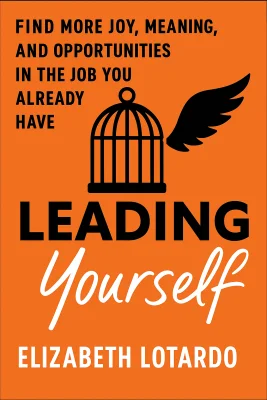
Leading Yourself
Find Joy and Meaning in Your Job Despite Challenges and Setbacks
Categories
Leadership
Content Type
Book
Binding
Hardcover
Year
2024
Publisher
Wiley
Language
English
ISBN13
9781394238705
File Download
PDF | EPUB
Leading Yourself Plot Summary
Introduction
I was never more optimistic and excited about the working world than I was before I entered it. As a fresh graduate, I shared my enthusiasm about landing an account manager position at an advertising agency with my friends over drinks. We were all buzzing with anticipation about our futures. Fast forward ten months: same bar, same friends, but dramatically different energy. Most of us felt jaded and defeated, the initial excitement had evaporated into thin air. Our dream jobs had somehow morphed into Monday morning dread. This experience isn't unique. We've all been there—starting something new with boundless enthusiasm only to find ourselves disillusioned months later. But here's what's fascinating: at that same table of disappointed twenty-somethings, three people still maintained their initial excitement. The rest of us assumed they were lucky—better offices, better bosses, more opportunities. But that wasn't it. One particularly enthusiastic friend had the exact same job at the same company as someone who was miserable. The difference? These three weren't waiting for meaning and joy to find them; they were creating it themselves. They had shifted from reactive to proactive, from powerless to powerful, all within the constraints of a normal corporate job. That's what leading yourself is about—not waiting for perfect conditions, but creating the work experience you want in the job you already have.
Chapter 1: The Mindset Revolution: Managing Your Inner Dialogue
Have you ever noticed how suddenly Honda Accords seem to be everywhere after you decide to buy one? This isn't a cosmic coincidence—it's the Baader-Meinhof phenomenon, where something appears more frequently once you become aware of it. Your brain is hardwired to look for things that match your mental map. If you're looking for evidence that your boss is unfair, you'll find it. If you're searching for proof that your job is meaningless, that's exactly what you'll see. One of the most common and widespread mental ruts is the belief that "nobody wants to work anymore." From CEOs to Facebook trolls, this became the 2020 cranky-person rallying cry. But the numbers tell a different story. The U.S. civilian labor force in 2019 was about 163 million. In 2020, it dropped to 161 million (just 1.5%). By 2022, it had actually grown to 164 million, surpassing pre-pandemic levels. The narrative wasn't just exaggerated—it wasn't even original. Paul Fairie, a researcher at the University of Calgary, traced this complaint as far back as 1894, with nearly identical language: "It is becoming apparent that nobody wants to work these hard times." Like pushing a wheelbarrow along a deeply worn path, our brains naturally fall into these mental ruts. Leading yourself requires identifying these patterns and consciously creating new ones. When negative thoughts arise, having prepared counter thoughts ready can change your entire experience. For instance, when you catch yourself thinking, "My ideas are never valued here," you might counter with, "Some of my ideas have been implemented, and I'm learning to communicate them more effectively." The key is balance. This isn't about blind optimism or toxic positivity that ignores real challenges. Jim Collins calls this the Stockdale Paradox, named after Admiral James Stockdale, who survived seven years as a prisoner of war. Stockdale said the optimists who thought they'd be rescued by specific holidays actually died of broken hearts when those dates passed. His approach? "I never lost faith in the end of the story... but I also never confuse faith with facing the brutal facts of my current reality." That duality—maintaining hope while acknowledging challenges—is essential for leading yourself through any workplace.
Chapter 2: Finding Purpose in Ordinary Roles
A multinational bank was struggling with employee retention in their call center. The work was challenging—full of rejection, complaints, and endless phone calls with frustrated customers. Turnover was high, morale was low, and engagement was practically non-existent. The leadership team had tried everything: better pay, improved office conditions, even casual Fridays. Nothing seemed to move the needle on performance or satisfaction. Then a manager tried something different. Instead of focusing on metrics or incentives, she arranged for call center employees to spend five minutes with scholarship students who had benefited from the bank's education foundation. These weren't lengthy meetings—just brief conversations where employees could ask students about their studies and hear how the scholarships had changed their lives. The impact was astonishing. A month later, the call center employees who had met with scholarship recipients spent more than twice as many minutes on the phone and brought in nearly three times more donations—weekly averages jumped from $185.94 to $503.22. By connecting with the actual human impact of their work, these employees found meaning that transformed their performance. This story, drawn from research by organizational psychologist Adam Grant, illustrates a powerful truth: purpose doesn't have to come from saving lives or changing the world. It can be found in everyday roles when we connect the dots between what we do and how it affects others. The Japanese concept of ikigai—finding the intersection between what you love, what you're good at, what the world needs, and what you can be paid for—offers a framework for discovering this purpose. But unlike what perfect diagrams suggest, finding purpose is messy and ongoing. It requires us to actively look for the ripple effects of our work rather than waiting for someone to hand us a neat purpose statement.
Chapter 3: Mastering Energy and Focus
Meryl Streep was once asked where she begins when learning a new character—with the accent, the physical mannerisms, or the lines? Her answer revealed a philosophy she adopted from her husband, a sculptor: start where it feels fun and easy. This simple approach offers profound wisdom for managing energy at work. Instead of always forcing yourself to tackle the hardest task first, sometimes starting with what energizes you can create momentum that carries you through everything else. A sales team in a fast-growing startup faced constant changes—evolving products, new markets, and leadership shifts. While most team members struggled to meet quotas amid the uncertainty, a handful of top performers continued to thrive. In interviews, a key distinction emerged: most of the team was waiting for certainty that would never come, while the high performers accepted uncertainty as constant. One star performer explained his mindset: "I don't know what my job is going to look like three months from now. But I know what it looks like today." Learning something new creates a dopamine rush that fuels your body with energy. According to LinkedIn data, 94% of employees would stay at a company longer if it invested in their career, yet the #1 reason employees feel held back from learning is because they don't have time. High achievers don't wait for perfect conditions to learn—they squeeze it in, knowing an imperfect attempt is better than none at all. When faced with energy drains you can't eliminate, change the peripheries. Play music in the background, schedule something enjoyable immediately after a dreaded task, or modify your environment with better lighting. If you're up against a particularly draining day or project, hydrate well beforehand, take walking meetings instead of sitting ones, or wear an outfit that makes you feel confident. These small adjustments won't eliminate all workplace challenges, but they create pockets of energy that help you show up more fully for what matters most.
Chapter 4: Navigating Difficult Bosses and Colleagues
In a revealing scene from the movie The American President, the chief of staff passionately advises the president on a political strategy. The president snaps back, "Is the view pretty good from the cheap seat, AJ?" It was a stark reminder that giving advice is easy when you don't have to implement it or face the consequences. This "cheap seat quagmire" plays out every day in workplaces—we all have opinions about what our bosses should do without fully understanding the pressures they face. One leader I worked with, David Cohen, formerly of LinkedIn, addressed this dynamic with his team through a practice called "disagree and commit." After a restructuring, his new senior team was coming together to reach ambitious goals. He explained that he wanted them to "confront an issue and beat it up"—to voice their concerns and opinions openly. But once a decision was made, everyone would fully commit to the direction, even if they initially disagreed. When implemented over months, this approach produced remarkable results. Decision-making became faster, people felt more comfortable disagreeing, and importantly, no one sat in the background sulking and waiting to be proven right. As David reflected, "It had great results... It made people feel more comfortable objecting to whatever the consensus seemed to be. It's allowed everyone to have a voice. It also helps people not take it personally when things don't go their way." This approach illustrates a fundamental truth about working with others: the ability to move forward with a plan you don't entirely agree with is essential for both career success and mental wellbeing. Lingering in disagreement keeps you emotionally on guard and reluctant to engage fully. Whether you're dealing with difficult bosses, frustrating colleagues, or organizational decisions you disagree with, focusing on controlling your response rather than changing others is the path to both influence and inner peace.
Chapter 5: Setting Goals That Actually Matter
Olympic gold medalist Apolo Ohno kept his medals in a brown paper bag in his sock drawer. When researcher Dr. Ruth Gotian asked why the medals weren't displayed prominently, Ohno and other Olympians shared the same insight: it was never about the medal. As soon as their Olympic careers ended, they moved on to something else. The medal wasn't the endpoint, just part of a journey. Most ambitious people share a common challenge when setting goals: overpromising. This shows up as the "plate spinner" who takes on too many commitments at once, the "hockey stick projection" who sets unrealistically steep improvement targets, or the person who makes promises dependent on others' actions that they can't control. These patterns lead to broken self-promises, eroding confidence over time. A multinational bank's IT team faced this challenge when their boss set a goal of achieving 100% first-call-resolution rate for technical issues. The IT manager, Caitlin, knew this wasn't realistic—some issues require outside vendors and complex solutions. Rather than simply nodding along, she shared that the industry standard was 70-80%, and their team was currently at 65%. She explained that their rate appeared low because they had created self-service guides for simple issues, meaning only complex problems came through the helpdesk. Impressed by her understanding of the metrics, her boss agreed to a more realistic 75% target. This story highlights how self-starters approach goals differently. They shift from output metrics they can't fully control to input behaviors they can manage. They leverage their strengths rather than focusing exclusively on weaknesses. And crucially, they recognize that success isn't a destination but a continuous pursuit. As author Rainesford Stauffer writes in All the Gold Stars, "With ambition, there is never a tidy 'after' or endpoint; it's generative because aspirations build on each other. There is never a single fulfilled moment because as we aspire, we expand."
Chapter 6: Creating Opportunity Amid Uncertainty
"If you want something you've never had, you must be willing to do something you've never done." This quote captures the essence of creating opportunity amid uncertainty. Changes happen constantly in our work lives—whether it's new technology like AI, market shifts, restructuring, or evolving customer needs. While many people get paralyzed by these changes, self-starters view them as openings for growth. Cassandra Worthy, who went through a billion-dollar merger early in her career, recalls being so frustrated that she considered quitting a company she had once loved. When she vented to a senior mentor, he offered simple yet powerful advice: "Cassandra, you can either get bitter or you can get better. It's your choice." She chose the latter, developing what she now calls "Change Enthusiasm"—a mindset that sees change as an opportunity for growth rather than a threat to stability. This approach becomes practical through what some call the "this is my chance" practice. When interruptions or changes occur, mentally reframe them as opportunities: "This is my chance to demonstrate flexibility," or "This is my chance to learn a new skill." For example, when your colleague leaves and you're asked to cover their work, instead of thinking "This is unfair extra work," try "This is my chance to expand my skillset and visibility." When a project pivots midway, rather than lamenting wasted effort, think "This is my chance to practice adaptability and show I can roll with changes." The difference between those who thrive amid uncertainty and those who merely survive it often comes down to this mental shift. As one technology instructor put it, "What I tell my students—who are scared to death that AI will make their skillset obsolete—is that in the near term, you won't lose your job to AI, but you will lose your job to someone who knows how to use AI." Embracing change doesn't mean pretending everything is perfect or that challenges don't exist. It means recognizing that waiting for change to be "over" before fully engaging means you'll always be waiting.
Chapter 7: The Power of Thoughtful Disengagement
Did you have an early career job you took too seriously? I worked at a restaurant we called "Crapplebee's," serving $1 Long Islands with what felt like the emotional weight of a neurosurgeon. I'd wake up in night panics that I forgot someone's ranch dressing. Looking back, I can't believe I cared that much about something so insignificant. High achievers often resist the idea of "phoning it in"—doing something with minimal effort—because it contradicts their identity as hard workers. Yet consciously choosing when to give less than your best is essential for sustainable success. As Lee Iacocca, the leader who turned around Chrysler, noted: "I'm constantly amazed by the number of people who can't seem to control their own schedules. Over the years I've had many executives come to me and say with pride: 'Boy, last year I worked so hard that I didn't take any vacation.' It's actually nothing to be proud of." A product manager at a tech company observed that many of his colleagues were burning out trying to be available 24/7. He decided to implement what he called "thoughtful disengagement"—he turned off notifications after 6pm, took his full vacation time, and delegated certain meetings to team members. Instead of diminishing his career, this approach enhanced it. His team respected his boundaries, his thinking became clearer, and he had energy for the truly important challenges. The key is to be strategic about where you invest your energy. Tasks with high long-term value and high personal joy deserve your full attention. Those with high value but low joy require pushing through discomfort. Activities with low value but high joy can sustain your motivation. But low-value, low-joy tasks? That's where you phone it in, preserving your energy for what truly matters. As an HR leader once reminded her team during a crisis, "Nobody is going to bleed out on the table!" Most workplace urgencies aren't truly life-or-death, even when they feel that way.
Summary
Throughout the journey of leading yourself, one truth becomes clear: you are never powerless. Even when circumstances, bosses, or rapidly changing technologies make you feel adrift, you retain control over the most important elements—your mindset, your energy, and your response. The stories shared in these chapters reveal that the difference between people who thrive and those who merely survive isn't luck or perfect conditions; it's their ability to take ownership of their experience. Leading yourself isn't about achieving perfection or never having bad days. It's about creating a flywheel of positive momentum through intentional choices. When you connect your daily tasks to their deeper purpose, challenge limiting mental narratives, embrace change as an opportunity, set meaningful goals, manage your energy wisely, and thoughtfully navigate relationships, you transform your work experience from the inside out. You shift from waiting for joy, meaning, and opportunities to creating them yourself. The power has always been yours—you just needed to claim it. As you move forward, remember that your career is a marathon, not a sprint. By consciously applying these principles each day, you'll not only create more fulfillment now but build resilience and possibility for whatever comes next.
Best Quote
Review Summary
Strengths: The review highlights the book's practical application of essential tools for overcoming personal and professional obstacles, particularly in the workplace. It also notes the book's versatility, suggesting its concepts can be applied to everyday life. The reviewer highly recommends it for individuals feeling stuck in their careers or anxious about change.\nOverall Sentiment: Enthusiastic\nKey Takeaway: The book is highly recommended for those seeking guidance in navigating career challenges and life changes, offering valuable insights that could potentially accelerate personal growth and decision-making.
About Author

Elizabeth Lotardo
Elizabeth Lotardo is a consultant, keynote speaker, and Vice President at McLeod & More. She specializes in sales, leadership, and organizational purpose. Lotardo is a popular instructor on LinkedIn Learning, where her courses on emotional intelligence and resilience have reached thousands of professionals. She works with organizations to help them drive revenue by focusing on customer impact.\n\nShe is the author of Selling with Noble Purpose (co-authored with Lisa Earle McLeod) and Leading with Noble Purpose. Lotardo’s research shows that salespeople who focus on improving the customer's life actually outsell those who focus on quotas. She helps leaders reframe their narratives to ignite passion in their teams. Her work combines hard data with human-centric strategies to create high-performing, purpose-driven cultures.
Read moreDownload PDF & EPUB
To save this Black List summary for later, download the free PDF and EPUB. You can print it out, or read offline at your convenience.
Leading Yourself
by Elizabeth Lotardo
