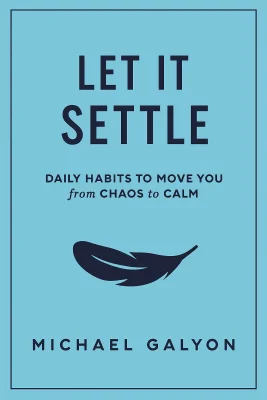
Let It Settle
Daily Habits to Move You From Chaos to Calm
Categories
Nonfiction
Content Type
Book
Binding
Hardcover
Year
2024
Publisher
Wiley
Language
English
ISBN13
9781394196142
File Download
PDF | EPUB
Let It Settle Plot Summary
Introduction
Life often feels like a whirlwind of endless demands, constant notifications, and mounting responsibilities. In the midst of this daily chaos, you might find yourself caught in a cycle of reactivity, feeling overwhelmed by anxiety and disconnected from your true self. The pressure to be everything for everyone while maintaining a facade of perfection can leave you exhausted and yearning for something more - a sense of peace that seems increasingly elusive in our fast-paced world. This journey toward finding calm isn't about escaping reality or achieving some perfect state of zen. Rather, it's about developing practical tools to navigate life's storms with greater presence and self-compassion. Through mindful awareness practices, self-discovery exercises, and relationship-strengthening techniques, you can learn to transform your relationship with stress and cultivate a deeper connection to yourself and others. The path may not always be easy, but the inner peace and authentic living that await make every step worthwhile.
Chapter 1: Recognize and Release Your Inner Tensions
Inner tension manifests in many ways - a racing mind, tightening muscles, shallow breathing, and an overall sense of unease. These physical and mental states of tension often become so familiar that we stop noticing them, yet they silently drain our energy and cloud our perception. Recognizing these tensions is the first step toward releasing them and finding your way back to a more centered state of being. Consider Jack, a three-year-old starting preschool who experienced intense fear and anxiety when his mother left the classroom. When traditional distraction techniques failed to calm him, his teacher tried a different approach. Rather than trying to divert Jack's attention from his feelings, the teacher acknowledged his emotions, giving him space to experience them fully. Then, they used a grounding technique called the 5-4-3-2-1 Calming Technique for Anxiety. Together, they identified five things Jack could see (a blue rug, a red firetruck outside, the white clock, the teacher's brown hair, and Jack's red race car shirt), four things he could touch (the soft purple carpet, the smooth art table, bumpy race car wheels, and slimy Play-Doh), three sounds he could hear (the clock ticking, a garbage truck outside, and music playing), two things he could smell (cupcakes and, playfully, "Mr. Michael's stinky feet"), and one thing he could taste (his favorite Goldfish crackers). As Jack engaged with his senses through this exercise, a remarkable transformation occurred. His body began to relax, tears stopped flowing, and the fear that had consumed him moments before started to melt away. The simple act of connecting with his immediate surroundings brought him back to the present moment, where he could feel safe again. This same technique proved equally effective years later with an adult corporate client who broke down during a coaching session, overwhelmed by the pressures of her seemingly perfect life. To implement this practice of letting tensions settle in your own life, start by creating a space of presence for yourself. When experiencing stress or anxiety, resist judging yourself for having an intense reaction. Instead, acknowledge and validate your emotional experience by asking, "Why does my reaction make perfect sense given everything I'm experiencing?" Next, ground yourself in the present moment using the 5-4-3-2-1 technique, engaging with your immediate sensory environment to anchor yourself in the now rather than spiraling into past regrets or future worries. As you practice this regularly, you'll notice a physical release occurring naturally - muscles relaxing, thoughts slowing down, breathing becoming deeper, and your heart rate returning to a normal pace. This settling isn't forced but emerges organically as you create the conditions for it to happen through mindful awareness of your present experience. The beauty of this approach is its simplicity and accessibility - it requires no special equipment or environment, just your willingness to pause and connect with your immediate experience through your senses. By making this a regular practice, you create a pathway back to calm that becomes more easily accessible each time you use it.
Chapter 2: Practice Present Moment Awareness Daily
Present moment awareness is the cornerstone of finding calm amidst chaos. It involves bringing your attention to what's happening right now—your bodily sensations, thoughts, emotions, and immediate environment—without judgment or the need to change anything. This practice cuts through the mental noise of past regrets and future anxieties, allowing you to experience life directly rather than through the filter of your racing mind. The story of a New York subway experience illustrates the transformative power of present moment awareness. During a crowded morning commute, a passenger found themselves trapped in a stalled train underground. As minutes turned to half an hour with no movement, the heat from bodies packed in winter clothes began to rise, causing physical discomfort. Soon, the passenger started hyperventilating, feeling numbness in their extremities, and experiencing the beginnings of a panic attack. Their mind raced with catastrophic thoughts about running out of air and having no escape. In this moment of crisis, they remembered a meditation technique they had learned. Instead of continuing to spiral into panic, they began focusing on their breath—simply noting "I'm aware of my inhale, I'm aware of my exhale." Though initially difficult, this redirection of attention slowly lengthened and deepened their breathing. Next, they conducted a body scan, methodically bringing awareness to each part of their body from head to toe, simply noting sensations without trying to change them. As they continued this practice, the physical manifestations of anxiety began to subside, tension released, and their mind cleared enough to recognize that while uncomfortable, they weren't in actual danger. The remarkable aspect of this transformation was that the external situation hadn't changed at all—the train remained stalled, crowded, and hot. What shifted was their relationship to the experience through mindful awareness, allowing them to find calm amid unchanged circumstances. To practice present moment awareness in your daily life, begin by connecting to your breath whenever you notice stress or anxiety arising. Simply observe the natural flow of your breath without trying to control it. Next, draw awareness to your thoughts, recognizing them as mental events rather than absolute truths. Practice observing them like clouds passing through the sky of your mind, without attaching to them or pushing them away. Continue by performing a body scan, bringing gentle attention to each part of your body from the crown of your head to your toes. Notice areas of tension or ease without judgment, simply acknowledging what's present. Finally, connect with your emotional experience, exploring what feelings might be underneath your initial reactions. Remember that developing present moment awareness is a skill that improves with consistent practice. The goal isn't to eliminate stress or difficult emotions but to create a spacious awareness that allows you to respond to life's challenges with greater clarity and wisdom rather than reacting automatically from patterns of fear or avoidance.
Chapter 3: Cultivate Self-Compassion and Acceptance
Self-compassion and acceptance form the foundation of our journey home to ourselves. Unlike the pursuit of self-improvement—which often implies we're somehow inadequate as we are—self-compassion invites us to recognize our inherent worthiness while still acknowledging our humanity. It's about treating ourselves with the same kindness and understanding we would offer a dear friend facing struggles. Andrea's story powerfully illustrates the transformative potential of self-compassion. Despite living with a debilitating disability that caused constant pain, Andrea had built her life around proving her capabilities to others. With sharp wit and humor, she deflected attention from her struggles, telling people, "Don't worry, I'm completely sober. I just sound drunk and tend to fall over a lot." Behind her ability to light up a room with laughter was a lifetime of pushing through excruciating pain that few witnessed—the days confined to bed after pushing herself too hard, throwing up between college classes, or struggling to care for her young child after falling repeatedly. For decades, Andrea had equated her worth with her ability to overcome her limitations and appear "normal." She believed that to be accepted and loved, she needed to hide her suffering and prove herself extraordinary. This belief had been reinforced when her achievements garnered praise and admiration from others. However, beneath this facade of strength was a deep self-hatred for what she perceived as her imperfections. During a particularly emotional coaching session, Andrea was guided through a simple mindfulness exercise to help her connect with her present experience. Instead of distracting from or minimizing her pain as she typically did, she was encouraged to acknowledge it without judgment. As she allowed herself to feel the discomfort she'd been avoiding, tears began to flow. Through this vulnerable moment, Andrea realized she'd been seeking external validation as a substitute for the self-love she couldn't access. The breakthrough came through a powerful visualization exercise where Andrea was asked to imagine her late husband Tom, who had always loved her unconditionally. In the visualization, she saw Tom sitting before her, holding her hands, looking into her eyes, and saying: "You are good. There is nothing wrong with you, nothing that needs to be fixed. You are loved and you're going to be OK." After feeling the impact of these words from someone she deeply trusted, Andrea was guided to place her hand on her heart and repeat those same affirming words to herself. To cultivate self-compassion in your own life, begin by identifying someone who has shown you unconditional love and support. Create a daily practice of connecting with this person in your thoughts, expressing gratitude for their presence in your life. Use their voice as a guide toward self-love by imagining what they would say to you in moments of self-criticism. When your inner critic appears, consciously replace those negative thoughts with the loving perspective this special person would offer. With consistent practice, you'll begin to internalize this compassionate voice until it becomes your own. Remember that self-compassion isn't about ignoring areas where you want to grow—rather, it creates the emotional safety needed for authentic growth to occur from a place of wholeness rather than shame. This process takes time, so be patient with yourself. The journey toward self-acceptance isn't linear, but each step brings you closer to experiencing the freedom of being fully yourself, imperfections and all.
Chapter 4: Build Deeper Connections Through Empathy
Empathy is the cornerstone of meaningful human connection. It goes beyond merely acknowledging someone else's emotions to actively engaging with their experience. While sympathy offers recognition from a distance, empathy extends a hand and walks alongside another through both joys and sorrows, creating a bridge of understanding that transcends differences. Barbara, a woman in her late seventies, had been working on finding peace nine years after her husband's passing. She had made significant progress in settling into her new life when she unexpectedly agreed to a coffee date with Phil, another widow introduced by a friend from church. Their connection blossomed quickly as they shared their experiences of loss and other aspects of their lives. However, after six months of dating, Barbara noticed Phil becoming increasingly distant—forgetting to call, seeming distracted during their time together, and even canceling dates at the last minute without apology. Barbara came to her coaching session hurt and confused by Phil's behavior, which felt rude and cruel. Her initial impulse was either to confront him with accusations or end the relationship immediately. After a grounding meditation to calm her nervous system, she was guided through a process called Empathetic Inquiry to help her see the situation through Phil's perspective. The first question explored what values and beliefs might be guiding Phil's actions. Barbara recalled his deep commitment to faith, loyalty, respect, and how important it was for him to honor his late wife's memory. The second question examined what life experiences might have influenced his perspective, particularly his relatively recent loss compared to Barbara's longer adjustment period. The third question—perhaps the most challenging—asked how Phil's actions, though hurtful to her, might be benefiting him in some way. Barbara realized that emotional distance might be providing him comfort in his grief process. The breakthrough came with the question: "Why would his actions make perfect sense for him?" Suddenly, Barbara remembered that the anniversary of Phil's wife's passing had coincided with when he began pulling away. This realization helped her see his behavior through a lens of empathy rather than personal rejection. Instead of assuming his distance was about her, she could now recognize he was likely struggling with grief that felt fresh and raw. When Barbara approached Phil with this new understanding, sharing what she had discovered through the Empathetic Inquiry process, it opened a meaningful dialogue. Phil admitted he had been confused by his own emotions and had pulled away because he didn't want to burden her. Together, they used the same questions to help him better understand and articulate his experience, leading to deeper mutual understanding and support. To practice empathy in your relationships, begin by setting aside your own perspective temporarily. Recognize that each person's worldview is shaped by their unique upbringing, culture, education, and personal experiences. When someone's behavior confuses or hurts you, ask yourself what values and beliefs might be guiding their actions, how their life experiences have influenced their perspective, and how their behavior might make sense from their point of view. Creating a nonjudgmental environment is essential for empathetic understanding. Approach others with openness and compassion, asking thoughtful questions and listening intently without imposing your own worldview. Remember that understanding someone's perspective doesn't mean you must agree with or excuse hurtful behavior—it simply allows you to respond with greater awareness and compassion. This practice of empathy not only transforms your relationships but also expands your capacity to embrace the complexity and diversity of human experience.
Chapter 5: Transform Anger into Constructive Action
Anger is an emotion that often gets labeled as negative or destructive, but in reality, it's simply a natural response to perceived threats or injustices. The problem isn't the anger itself but how we express and channel it. When unharnessed, anger can damage relationships and lead to regrettable actions. However, when approached mindfully, anger can become a powerful catalyst for positive change and deeper understanding. Ethan was a corporate client referred for coaching after a disastrous 360 review revealed a significant disconnect between how he saw himself and how others experienced him. While Ethan viewed himself as decisive, supportive, and passionate, his colleagues described him as abrasive and even abusive. During coaching sessions, it became apparent that Ethan was completely unaware of how his anger manifested. When reading emails that frustrated him, his face would flush red, his shoulders would tense, and he would tear paper in his hands—all while believing he was having a normal conversation. The first step in helping Ethan navigate his anger was developing awareness of its physical manifestations. Through mindfulness exercises, he learned to recognize the telltale signs: sinus pressure, sweating, chest tightness, and heat in his stomach. These physical cues became important indicators that he was experiencing an intense emotion requiring attention. Next, through journaling exercises, he began tracking the thoughts that arose during anger, discovering that many were exaggerated reactions disproportionate to the actual situation. A crucial breakthrough came when Ethan was guided to allow anger to be present without immediately venting it. During one session, he received an email from a disappointed client threatening to end their contract. As his anger rose, he was asked to narrate his experience rather than act on it. After describing the physical sensations and racing thoughts, he was invited to simply sit with the feelings without taking action. Within moments of allowing himself to be with his anger, Ethan unexpectedly burst into tears. This moment revealed that beneath his anger lay deeper emotions of shame, embarrassment, and sadness about being portrayed in a way that conflicted with his self-image. By investigating beneath the surface of his anger, Ethan could connect with these underlying feelings and make more conscious choices about how to respond. Rather than firing off an angry email or berating his team, he chose to schedule a collaborative meeting to address the issue constructively—an approach aligned with the leader he truly wanted to be. To transform your own anger into constructive action, begin by recognizing that all emotions, including anger, serve as messengers about your needs and values. When anger arises, practice the RAID method: Recognize the physical sensations of anger in your body; Allow the anger to be present without judgment or immediate reaction; Investigate what might be beneath the anger (often sadness, fear, or hurt); and Determine your next steps from a place of clarity rather than reactivity. Develop awareness of your specific anger triggers and practice pausing before responding when they arise. Use techniques like deep breathing or the Butterfly Hug (crossing your arms over your chest and alternately tapping your shoulders) to help regulate your nervous system. When you're calmer, clarify what values you want to embody in your response and choose actions that align with those values. Remember that navigating anger skillfully takes practice and patience. The goal isn't to eliminate anger but to transform it from an automatic reaction into a mindful response that honors both your feelings and your highest intentions.
Chapter 6: Create Daily Habits for Lasting Calm
Daily habits form the foundation for lasting transformation in our lives. While powerful moments of insight can initiate change, it's the consistent, small practices we incorporate into our everyday routines that ultimately reshape our relationship with stress and cultivate a sustainable sense of calm. The journey toward lasting calm begins with integrating mindfulness into ordinary moments. One meditation instructor shared how his own practice evolved from an attempt to escape discomfort to a genuine exploration of present-moment awareness. Initially attracted to meditation as another form of distraction from anxiety, he eventually discovered that consistency in simple practices yielded profound results. As he told his students, "Consistency and patience" were the key elements that allowed mindfulness to become a natural part of his life rather than another item on his to-do list. This approach proved transformative for Claire, a skeptical first-time participant in a Loving-Kindness Meditation class. After her initial session, Claire confided that she had found it difficult to focus and had nearly decided not to return. The instructor shared his own story of resistance to the practice, revealing how his first experience had been so disappointing that he had "vowed never to do a Loving-Kindness Meditation again." Yet over time, it had become integral to his practice and a major reason he pursued certification as an instructor. Encouraged by this honesty, Claire committed to seven weeks of consistent practice. Over the following weeks, Claire experienced the full spectrum of responses—boredom, anger, frustration—alongside moments when she could feel her heart softening and opening. Most significantly, she found her relationship with her ex-boyfriend transforming. While she had no intention of rekindling the relationship, the practice helped her release the anger that had held her captive and move toward forgiveness for her own well-being. To create daily habits for lasting calm in your own life, consider implementing three core practices. First, establish a daily practice of mindful awareness where you intentionally bring attention to the present moment without judgment. This might involve formal meditation or informal practices like mindful walking or eating, where you fully engage with common activities that are often performed on autopilot. Second, incorporate mindfulness breaks throughout your day—brief pauses to breathe, reconnect with your body, and return to the present moment. Consider setting calendar reminders for these "Mindful Moments" to ensure you don't get swept away in the busyness of life. Even just 30 seconds of conscious breathing can reset your nervous system and bring you back to center. Third, integrate specific stress reduction techniques into your routine. These might include the Body Scan Meditation to release physical tension, the Four-Point Breathing Meditation to regulate your nervous system, or the Safe Space Visualization to create a mental sanctuary you can access anytime. Experiment with different practices to discover which resonates most deeply with you. Remember that consistency matters more than duration or perfection. A five-minute daily practice will yield greater benefits than an occasional hour-long session. Start small, be patient with yourself, and allow your practice to evolve naturally as you discover what works best for your unique needs and circumstances.
Chapter 7: Embrace Forgiveness as a Path to Freedom
Forgiveness represents one of the most challenging yet liberating journeys we can undertake. Often misunderstood as condoning harmful actions or reconciling with those who hurt us, true forgiveness is actually about releasing ourselves from the burden of resentment and finding freedom regardless of others' actions or responses. Daniel's story illustrates the transformative power of forgiveness. A successful professional who appeared composed and accomplished on the surface, Daniel struggled with anxiety, panic attacks, and persistent feelings of guilt and shame. Behind his calm exterior, he was "treading furiously beneath the surface" to stay afloat emotionally. Though initially reluctant to share details of his past, Daniel eventually revealed a childhood marked by verbal and emotional abuse from his father, who had criticized and belittled him despite Daniel's efforts to be the perfect son. The journey toward forgiveness began when Daniel was guided through the Gremlin Discovery Technique to identify his inner critic. He personified this voice as "Draco," a dragon that "scorched the earth" and constantly reminded him he was unacceptable. Through this exercise, Daniel realized how deeply he had internalized his father's criticisms and how this had shaped his entire life, including his decision to move across the country and rarely return home. As Daniel began exploring his feelings about his father, anger emerged—an emotion he had long suppressed. Through the Anger RAID Meditation, he learned to recognize his anger, allow it to be present, investigate its underlying causes, and determine constructive responses. This process revealed layers of hurt, betrayal, and sadness beneath his anger, emotions he had never fully acknowledged. Given Daniel's background in economics and analytical thinking, he approached forgiveness through a decision-making model that calculated the costs of not forgiving his father. He detailed how holding onto resentment impacted his career, relationships, and mental health—even including "the cost of wine for those nights when it all felt too much." This exercise helped him recognize how he was allowing past costs to determine his future, something he would never do in business decisions. The forgiveness process continued with Daniel developing empathy for his father through the Empathetic Inquiry process. While never excusing the abusive behavior, Daniel began to understand the fear and pain that might have driven his father's actions. He also worked on releasing the idealized vision of the father-son relationship he had longed for and accepted his father for who he was capable of being. The culmination came when Daniel flew home and had an honest conversation with his father. He approached the discussion with openness and empathy, expressing both his understanding and his desire for reconciliation. While this was just the beginning of healing their relationship, Daniel felt "a huge weight had been lifted from his shoulders." Most importantly, he realized that the value of forgiveness wasn't dependent on his father's response—it was about his own freedom. To embrace forgiveness in your own life, begin by acknowledging the story you've been carrying and giving it voice, either through journaling or sharing with a trusted person. Allow yourself to fully feel and express the anger associated with your hurt before calculating what holding onto resentment is costing you emotionally, physically, and spiritually. Consider what you stand to gain by releasing this burden. Create space for empathy and understanding by considering the other person's perspective without excusing harmful behavior. Recognize your inherent worth separate from what happened to you, and consciously release your attachment to how you wished things had been. Finally, envision a future defined by your values and aspirations rather than past wounds. Remember that forgiveness is a process, not an event. You may need to forgive the same hurt multiple times as new layers of emotion surface. The goal isn't perfect resolution but progressive liberation from the constraints of the past, allowing you to move forward with greater peace and wholeness.
Summary
Throughout this transformative journey from chaos to calm, we've explored practical pathways to greater peace, self-connection, and meaningful relationships. Each chapter has offered tools to help you navigate life's challenges with more awareness and compassion. From recognizing and releasing tensions through present moment awareness to cultivating self-compassion, building empathy, transforming anger, establishing daily practices, and embracing forgiveness—these approaches work together to create a foundation for lasting calm in your life. As the author wisely notes, "Your peace is worth fighting for, and you are worth the fight." This simple yet profound truth reminds us that seeking calm isn't selfish but essential for our wellbeing and our ability to show up fully in our relationships and responsibilities. Take one small step today by choosing just one practice from this journey that resonates most deeply with you—perhaps the 5-4-3-2-1 grounding technique, a daily self-compassion practice, or the empathetic inquiry questions. Commit to incorporating it into your life consistently over the next week, remembering that transformation comes not from perfection but from patient, persistent practice in returning to what matters most.
Best Quote
Review Summary
Strengths: The review highlights Michael Galyon's calming and gentle voice, both on Instagram and in his audiobook, as a significant strength. The book is praised for providing valuable tools to manage stress, anxiety, and negative thinking patterns. It includes both introductory and advanced meditation exercises, accompanied by practical anecdotes, making it accessible for beginners and beneficial for more experienced practitioners.\nOverall Sentiment: Enthusiastic\nKey Takeaway: The reviewer highly recommends Michael Galyon's book, emphasizing its effectiveness in offering tools for mental well-being and the added value of the audiobook format, which enhances the calming experience through Galyon's soothing voice.
About Author

Michael Galyon
Michael Galyon is a certified professional coach and mindfulness teacher. He is known for his soothing presence on social media, where he shares guided meditations and "gentle reminders" with a large following. Galyon combines his background in the corporate world with his training in mindfulness to help people manage stress and anxiety.\n\nHe is the author of Let It Settle: Daily Habits to Move You From Chaos to Calm. Galyon’s philosophy centers on the idea that we do not need to "fix" our lives overnight; we just need to let the dust settle. He provides simple, accessible tools for regulating the nervous system and finding moments of peace in a busy day. His work focuses on self-compassion and the power of small, consistent actions.
Read moreDownload PDF & EPUB
To save this Black List summary for later, download the free PDF and EPUB. You can print it out, or read offline at your convenience.
Let It Settle
by Michael Galyon
