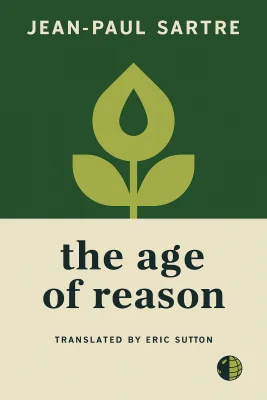
The Age of Reason
Categories
Philosophy, Fiction, Classics, Unfinished, Literature, 20th Century, France, Novels, French Literature, Modern Classics
Content Type
Book
Binding
Paperback
Year
1992
Publisher
Vintage International
Language
English
ASIN
0679738959
ISBN
0679738959
ISBN13
9780679738954
File Download
PDF | EPUB
The Age of Reason Plot Summary
Introduction
# The Burden of Freedom: Choice and Consequence in a Closing World The summer heat pressed down on Paris like a judgment, and in that suffocating air, Mathieu Delarue discovered that freedom could be the cruelest prison of all. At thirty-four, he had spent years cultivating his independence—no marriage, no children, no binding commitments that might define or constrain him. But when Marcelle spoke those three words that would shatter his carefully constructed world, "I am pregnant," Mathieu found himself trapped not by obligation, but by his own inability to choose. What followed was a desperate scramble through the moral landscape of 1930s Paris, where four thousand francs stood between respectability and ruin, where friends became judges and principles crumbled under the weight of consequence. As the city sweltered and Europe edged toward war, Mathieu would learn that the age of reason was not about wisdom, but about discovering what a man was truly made of when everything he believed about himself was stripped away.
Chapter 1: The Weight of Unwanted Consequences
The pink walls of Marcelle's bedroom seemed to pulse in the morning heat as she delivered her verdict. Seven years they had maintained their careful arrangement—love without commitment, intimacy without consequence. Now biology had upset their philosophical equilibrium with brutal efficiency. Mathieu stared at her naked form on the bed, this woman who had been his companion in the elaborate dance of modern freedom. The photograph she clutched showed her younger self from 1928—angular, defiant, untouchable. The contrast was devastating. Time had settled into her flesh, transforming the sharp-edged girl into something softer, more vulnerable, more real. "Two months," she said, her voice flat as stone. The words hit him like physical blows. In the suffocating atmosphere of the pink room, surrounded by the detritus of their long affair, he could only manage the most practical response: "Well, I suppose one gets rid of it." The coldness in Marcelle's eyes told him everything. She had been carrying this knowledge alone, watching him arrive with his usual assumptions, his comfortable certainties. Now she sat before him like a judge, her body transformed into something alien and accusatory. The thing growing inside her was no longer abstract—it was there, real, demanding acknowledgment. Four thousand francs, she said. That was the price Dr. Waldmann would charge for a clean, safe procedure. Four thousand francs that might as well have been four million for a philosophy teacher whose bank account held barely three hundred. The number echoed in Mathieu's mind like a death sentence as he left her apartment, stepping into streets that suddenly felt like the corridors of a closing trap.
Chapter 2: The Desperate Mathematics of Need
The old woman's hands were a revelation of horror—scarred, filthy, with purple warts and black scabs decorating her fingers like obscene jewelry. Mathieu stood in her squalid room, surrounded by boxes and straw, watching those terrible hands gesture in the lamplight. This was where Marcelle would come if he failed, where she would submit to this creature's ministrations in the name of their freedom. The arithmetic was simple and brutal. Without the money for Dr. Waldmann, Marcelle faced the butchers, the back-alley practitioners who left women bleeding on dirty tables. Every hour that passed made the sum more urgent, more impossible. Time itself had become an enemy, counting down toward a choice he was not prepared to make. Mathieu walked the streets of Paris like a man possessed, his mind calculating and recalculating the impossible mathematics of his situation. His teacher's salary barely covered his modest expenses, and the summer vacation meant no income for months. The irony was exquisite—for years, he had prided himself on his freedom from bourgeois entanglements, yet here he was, scrambling for money like any desperate husband. The newspaper headlines spoke of Valencia under bombardment, of fifty dead and three hundred wounded, but the tragedy felt abstract, distant. He could not make himself feel the appropriate outrage, could not summon the passion that should have accompanied such news. This was his curse: to see everything, to understand everything, and to feel nothing deeply enough to act. The Spanish Civil War was a cause worth dying for, but Mathieu remained in Paris, teaching philosophy to bored students and wrestling with his private dilemmas. A drunk stranger had pressed a Madrid stamp into his palm that morning, saying "It's Madrid" with the reverence of someone naming a holy city. The city where men were dying for their beliefs while Mathieu haggled with abortionists in Parisian back alleys. The contrast felt like a slap, a reminder of how small his crisis was in the grand scheme of history, and yet how completely it consumed him.
Chapter 3: Refusals and the Price of Principles
The law office smelled of leather and success, its mahogany surfaces reflecting Jacques Delarue's satisfied smile. Mathieu's older brother listened to the carefully rehearsed request with the patience of a man who had always known this moment would come. Four thousand francs for a friend's garage, Mathieu lied, watching Jacques's eyes narrow with practiced skepticism. Jacques had always possessed the ability to make Mathieu feel simultaneously guilty and ridiculous, and today was no exception. The older brother's solution was characteristically elegant: ten thousand francs if Mathieu would marry Marcelle, make their arrangement respectable, transform their philosophical experiment into bourgeois respectability. Otherwise, nothing. "You have reached the age of reason," Jacques said, his voice heavy with paternal concern. "But you try to dodge that fact. You want to be free, but freedom consists in frankly confronting situations into which one has deliberately entered." The refusal burned in Mathieu's throat, but he spoke it anyway. Marriage meant surrender, the death of possibility, the admission that his carefully maintained freedom had been an illusion all along. He left his brother's office empty-handed, the taste of failure bitter on his tongue, knowing that Jacques would interpret his departure as confirmation of everything he had always believed about his younger brother's character. Daniel Sereno proved equally useless, though for different reasons. Sitting in his impersonal apartment, surrounded by his three cats, Daniel listened to Mathieu's request with the detached interest of a scientist observing a specimen. His refusal was casual, almost careless—a man with money denying help to a friend in need simply because he could. There was something theatrical about Daniel's manner, as if he were performing a role that didn't quite fit, but Mathieu was too desperate to decode the performance.
Chapter 4: Youth's Illusion and Age's Compromise
Ivich Serguine moved through the world like a beautiful wound, her pale Russian features framed by carefully arranged curls that hid her broad cheeks and low forehead. At nineteen, she possessed the kind of fierce independence that Mathieu had once thought he possessed, the absolute refusal to be trapped by conventional expectations. In the smoky depths of the nightclub, she danced with reckless abandon while her brother Boris watched with protective devotion. They existed in a closed circle of two, complete unto themselves, using others as mirrors to reflect their own fascinating complexity. Mathieu found himself drawn to their youth like a moth to flame, desperate to remain in the presence of something he could never possess—the absolute freedom of those who had not yet learned that every choice carried a price. When Ivich cut her hand with Boris's knife in a moment of drunken bravado, Mathieu found himself matching her gesture, driving the blade into his own palm. The pain was sharp and clean, a welcome distraction from the more complex anguish that was eating away at his soul. Blood mingled with blood in a gesture that felt meaningful at the time but would later seem merely pathetic—a middle-aged man trying to recapture something he had never truly possessed. But even as he lost himself in their presence, the weight of his situation pressed down on him like a physical force. Marcelle was waiting, the old woman was waiting, time itself was waiting. Ivich represented everything he thought he wanted—youth, possibility, the intoxicating illusion of unlimited options. Yet she remained as distant and untouchable as a star, a reminder of all the paths he had not taken and could never take. The evening dissolved into a haze of alcohol and desperate conversation, Mathieu trailing behind the siblings like a faithful dog. He told himself he was their friend, their mentor, their guide to adult wisdom. But the truth was simpler and more humiliating: he was their audience, desperate to remain in the presence of something that made him feel less alone with his failures.
Chapter 5: Crossing Moral Boundaries in Darkness
The hotel corridor stretched before Mathieu like a tunnel leading into darkness. His hands trembled as he fitted the key into the lock of Lola's room, the weight of his intended crime pressing down on him with each step. Lola Montero, Boris's older lover, lay unconscious on the bed, her face pale and still in the dim light filtering through the curtains. Boris had fled that morning, believing his lover dead from an overdose. But Lola was merely unconscious, her breathing shallow but steady, her pulse weak but present. She would live, would wake, would discover that her young lover had abandoned her at the moment of greatest vulnerability. The tragedy had become farce, but the money remained real. The suitcase sat beneath the window, exactly where Boris had described it. Inside, beneath a pile of letters tied with yellow ribbon, lay salvation—crisp bills that smelled of perfume and secrets. Four thousand francs, enough to solve his immediate problem, enough to buy his way back to the illusion of freedom he had cherished for so long. For a moment that stretched like eternity, Mathieu hesitated. The sleeping woman on the bed looked vulnerable, almost childlike in her unconsciousness. This was someone else's life he was about to violate, someone else's security he was about to steal. But the image of Marcelle's face, pale and resigned in the pink light of her room, drove him forward. His hand hovered over the money, trembling with possibility and revulsion. It would be theft, but theft from a woman who would never miss such a sum. It would be wrong, but wrong in service of a greater good. The moral calculus seemed simple enough—take the money, save Marcelle, restore the balance of their world. But his hand would not close around the bills. Some deep programming, some bourgeois conditioning stronger than conscious will, paralyzed his fingers. He was a teacher, a respectable man, someone who paid his debts and followed the rules even when the rules served no purpose but to perpetuate suffering.
Chapter 6: Revelations and the Collapse of Certainty
When Lola stirred and spoke his name, Mathieu felt relief flood through him like absolution. Her survival freed him from the choice he had been unable to make, but walking away from the hotel with empty hands, he recognized the true dimensions of his failure. He had not been saved by conscience or principle, but by cowardice—the inability to act decisively when action was required. The afternoon sun beat down mercilessly as he made his way back to the café where Boris and Ivich waited. His empty hands told the story of his limitations, his inability to transcend the careful boundaries of his constructed life. Freedom, he realized, was not the absence of constraints but the courage to break them when breaking was necessary. And that courage, despite all his philosophical posturing, remained beyond his reach. Daniel appeared at his apartment that evening like a messenger from another world, impeccably dressed despite the late hour, carrying himself with the careful precision of a man walking on thin ice. He returned the stolen money with a flourish, as if performing a magic trick, and then delivered news that hit Mathieu like a physical blow: he was going to marry Marcelle. The revelation unfolded slowly, each detail more surreal than the last. Daniel, the sophisticated bachelor who had always seemed to exist outside the conventional world of relationships and responsibilities, was offering to take on Mathieu's burden. He would marry Marcelle, give the child a name, provide the stability that Mathieu had been unable or unwilling to offer. But there was something wrong with the picture, something that made Mathieu's skin crawl with unease. Daniel's manner was too controlled, too theatrical, as if he were playing a role that didn't quite fit. When pressed, he revealed the truth that explained everything and nothing: he was homosexual, had always been, would always be. The marriage was not about love but about something darker and more complex—a form of self-punishment, perhaps, or an elaborate form of revenge against a world that would not accept what he was.
Chapter 7: Marriage, Betrayal, and Hidden Truths
The conversation that followed was like watching a building collapse in slow motion. Daniel's confession hung between them like a poisonous cloud, contaminating everything it touched. Mathieu understood now why his friend had always seemed to exist at a remove from the world, why there had always been something theatrical about his interactions with others. But the revelations were not finished. Marcelle, it seemed, had been meeting secretly with Daniel for months. The betrayal stung, but what hurt more was the realization of how little he had really known the woman he had lived with for seven years. She had wanted things from him—commitment, a future, the simple acknowledgment that their relationship meant something—and he had been too wrapped up in his own conception of freedom to see it. The irony was bitter beyond measure. Mathieu, who had prized his freedom above all else, had lost everything in trying to preserve it. Daniel, trapped in an identity he despised, had found a way to transform his self-hatred into a kind of grotesque nobility. Both men were prisoners, but only one of them was willing to admit it. When Mathieu finally confronted Marcelle, the words that had been building between them for years finally broke free. "I no longer love you," he said, and the admission fell into the silence like stones into deep water. Marcelle's face crumpled, then hardened into something he had never seen before. She threw the money back at him, the bills fluttering through the air like dying birds, and told him to leave. The sound of her laughter followed him down the stairs, high and wild and broken. It was the laughter of a woman who had finally seen through all his pretenses, who understood at last that his carefully maintained freedom was nothing more than an elaborate form of cowardice. The marriage to Daniel would proceed, a union of mutual self-destruction that somehow seemed more honest than anything Mathieu had ever offered her.
Chapter 8: The Hollow Victory of Preserved Freedom
The night air drifted through Mathieu's open window, carrying with it the sounds of a city that continued its ancient rhythms regardless of individual human dramas. He sat alone in his apartment, surrounded by the detritus of his carefully constructed life—books that no longer seemed to contain wisdom, furniture that felt like props in a play he no longer wanted to perform. The crisis had been resolved, but the resolution felt more like defeat than victory. Marcelle was lost to him forever, bound now to Daniel in a marriage that seemed designed to make all three of them miserable. The money had been returned, the immediate problem solved, but at a cost that Mathieu was only beginning to understand. He examined his hands in the lamplight, noting the fresh bandage that covered his self-inflicted wound. The gesture had seemed meaningful at the time, a declaration of something—solidarity, perhaps, or simply the need to feel something real in a world that had become increasingly abstract. Now it just looked foolish, the mark of a man trying too hard to convince himself that his actions mattered. Ivich had gone, returning to her provincial town and the conventional life she claimed to despise. Boris remained trapped in his relationship with Lola, drawn back by guilt and habit and the comfortable familiarity of their destructive arrangement. They were all prisoners, Mathieu realized, trapped by the choices they had made and the choices they had failed to make. The freedom he had fought so hard to preserve stretched out before him like an empty landscape. He could do anything, go anywhere, become anyone—and the very limitlessness of his options felt like a prison. Without the weight of responsibility to give his choices meaning, he was left with nothing but the hollow echo of his own voice in an empty room. The age of reason had arrived, but it brought with it not wisdom but a terrible clarity about the nature of human limitation.
Summary
In the suffocating heat of a Parisian summer, Mathieu Delarue discovered that the freedom he had cherished was nothing more than an elaborate form of paralysis. His refusal to choose had become a choice itself—the choice to remain forever on the outside of life, observing but never fully participating. The pregnancy that should have forced him into action instead revealed the fundamental emptiness at the core of his existence. Even his moment of moral transgression, the theft that should have marked a decisive break with his principles, felt hollow and meaningless when he found himself unable to complete it. The age of reason, when it finally arrived, brought with it not wisdom but a terrible clarity about the nature of human limitation. Mathieu had learned that freedom without purpose is indistinguishable from imprisonment, that the refusal to be bound by others' expectations can become the most binding constraint of all. In trying to preserve his independence, he had lost everything that might have given that independence meaning. The summer ended as it had begun, with Mathieu alone in his apartment, free to do anything and powerless to do anything that mattered. Around him, Europe moved toward war, and history prepared to make the choices that he could not.
Best Quote
“She smiled and said with an ecstatic air: "It shines like a little diamond","What does?""This moment. It is round, it hangs in empty space like a little diamond; I am eternal.” ― Jean-Paul Sartre, The Age of Reason
Review Summary
Strengths: The review highlights the existential and philosophical depth of "The Age of Reason," emphasizing its exploration of freedom and existential themes. The character analysis of Mathieu provides insight into his internal conflict and the broader philosophical questions posed by the novel. The review appreciates the translation work by Hossein Soleimani Nejad, indicating a high-quality rendition of Sartre's ideas. Weaknesses: The review does not provide a detailed critique of the narrative structure or character development beyond Mathieu. It also lacks specific examples of how the themes are woven into the plot, and there is minimal discussion of other characters' roles. Overall: The review conveys a positive sentiment towards Sartre's work, appreciating its philosophical depth and existential exploration. It suggests the book is thought-provoking and well-translated, appealing to readers interested in existential themes.
About Author
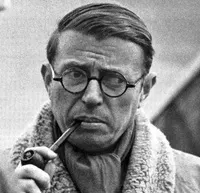
Jean-Paul Sartre
Sartre interrogates the human condition through existentialism, delving into themes of freedom, alienation, and bad faith. By merging narrative artistry with philosophical rigor, Sartre challenges readers to confront the inherent absurdity of existence. His works, such as "Nausea," exemplify this by presenting characters who navigate a world devoid of intrinsic meaning. In this manner, Sartre's books serve as philosophical explorations, compelling audiences to reconsider the ways in which they define their existence and grapple with the absence of divine guidance.\n\nSartre's method involves a meticulous dissection of consciousness and freedom, thereby constructing a framework that highlights personal responsibility amidst a chaotic universe. He adeptly weaves philosophical discourse with storytelling, which enables readers to engage with complex ideas in an accessible format. Whereas many philosophers confine their discussions to abstract theory, Sartre situates his existential inquiries within the lived experiences of his characters. This approach ensures that the reader can readily grasp the implications of existentialist thought, thus fostering a deeper understanding of their own role in shaping meaning.\n\nFor the reader, Sartre's profound insights offer a pathway to greater self-awareness and autonomy. His exploration of existential freedom challenges individuals to confront their own potential for self-deception, inspiring them to live authentically. Consequently, Sartre's works resonate with those seeking to explore philosophical questions about existence and personal agency. Although his rejection of the Nobel Prize underscores his commitment to independence, it is his relentless pursuit of truth through literature that cements his legacy. In summary, Sartre's unique contribution lies in his ability to illuminate existential philosophy through compelling narrative, inviting readers to embark on a journey of introspection and self-definition.
Read moreDownload PDF & EPUB
To save this Black List summary for later, download the free PDF and EPUB. You can print it out, or read offline at your convenience.
The Age of Reason
by Jean-Paul Sartre
