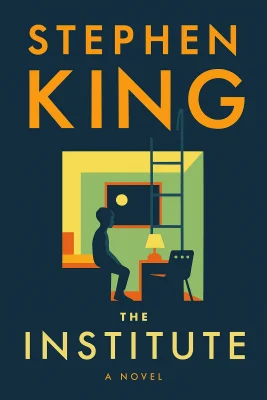
The Institute
Categories
Fiction, Science Fiction, Audiobook, Horror, Mystery, Thriller, Fantasy, Adult, Paranormal, Mystery Thriller
Content Type
Book
Binding
Hardcover
Year
2019
Publisher
Scribner
Language
English
File Download
PDF | EPUB
The Institute Plot Summary
Introduction
# The Institute: Children of Power in Cages of Shadow The nightmare began with a woman's voice in the darkness, soft and reassuring: "Sure, whatever you want." Twelve-year-old Luke Ellis, genius-level intellect and MIT-bound prodigy, would remember those words as the last thing from his normal life before waking up in a room that looked exactly like his bedroom—except for the missing window. The Institute had claimed another child, another mind to harvest and destroy. In the pine forests of rural Maine, behind electrified fences and surveillance cameras, a secret government facility conducts experiments that would make the Nazi doctors proud. Children with psychic abilities—telekinesis, telepathy, the rarest gifts of human consciousness—are kidnapped, tested, and ultimately weaponized. They call it serving your country. The children call it hell. Luke Ellis, with his brilliant mind and growing powers, may be their only hope of escape. But first, he must survive the systematic breaking of his spirit, the murder of his innocence, and the horrifying discovery that some cages are designed not just to hold you—but to transform you into something monstrous.
Chapter 1: The Theft of Innocence: Luke's Abduction and Awakening
The team moved through the Ellis house like shadows given form. Michelle Robertson led the way, her blonde hair catching streetlight as she picked the lock with practiced efficiency. Behind her, Denny Williams and Robin Steinberg carried the tools of their trade: silenced pistols, knockout gas, and the cold professionalism of career killers. They called themselves Ruby Red, and they had come to Minneapolis to collect a very special twelve-year-old boy. Luke's parents never had a chance. Herb Ellis died in his sleep, three bullets through a pillow that muffled the sound to whispers. Eileen Ellis emerged from the bathroom to find death waiting in designer jeans and a government paycheck. The execution was clinical, efficient, and utterly without mercy. In the morning, police would find a crime scene that pointed to one obvious suspect: the missing genius son who had vanished without a trace. Luke woke to Michelle's face hovering over his bed, her smile as false as her reassurances. The aerosol spray hit him like a chemical fist, dropping him into unconsciousness before he could even cry out. When he next opened his eyes, he was in a room that looked exactly like his bedroom—same posters, same furniture, same everything—except for the window that should have shown his best friend Rolf's house next door. Instead, there was only blank wall. The Institute revealed itself slowly, like a photograph developing in chemical baths. Cinderblock corridors painted institutional green. Motivational posters with messages like "Just Another Day in Paradise" that would have been funny if they weren't so obscene. Other children, all around his age, all bearing the same shell-shocked expression of the recently kidnapped. They called it Front Half, this processing center for stolen minds, and they spoke of Back Half in whispers and fearful glances. Kalisha Benson became his guide to this new hell. The tough, smart girl from Georgia had been here longest, her dark skin bearing the pallor of fluorescent lights and her eyes holding knowledge no child should possess. She explained the rules with brutal clarity: do what you're told and earn tokens for the vending machines. Fight back and get hurt. Try to escape and disappear forever. The Institute wasn't interested in rehabilitation or education. It wanted their minds, their gifts, their very souls. Luke's first lesson came from Tony, a handsome sadist who installed the tracking chip in his earlobe with the casual efficiency of a veterinarian tagging livestock. When Luke resisted, Tony's open hand cracked across his face like a gunshot. The message was clear: you are property now, and property doesn't get to object to its treatment. Welcome to your new life, kid. Try to enjoy the stay.
Chapter 2: The Machine of Minds: Inside the Institute's System
The tests began immediately, a parade of needles, machines, and casual cruelty administered by people who had long ago stopped seeing their subjects as human children. Luke endured the rectal thermometer wielded by Zeke, a tech who took obvious pleasure in the humiliation. He survived the MRI scans, the blood draws, the psychological evaluations conducted by doctors who spoke about him as if he weren't in the room. Dr. Hendricks, tall and horse-faced with protruding teeth, administered injections that made Luke's throat close up until he couldn't breathe. The seizure that followed left him unconscious on the floor, nose bleeding, dignity shattered. But the worst part wasn't the physical torture—it was watching other children break under the strain. Harry Cross, the big redheaded bully from Alabama, arrived full of swagger and violence. Within weeks, the Institute had reduced him to a drooling shell who wet himself and spoke in monosyllables. Luke learned to hide his growing abilities. The injections had changed something fundamental in his brain, awakening telepathic powers he'd never possessed. When Dr. Evans tested him with ESP cards, Luke could see the images clearly—a bicycle, a dog with a ball—but he lied, claiming to see nothing. Let them think their experiment had failed. Let them underestimate what they had created. The other children became his family in this nightmare. Nicky Wilholm, the dark-haired rebel who never stopped fighting even when it earned him beatings. George Iles, the class clown whose jokes grew more desperate as the days passed. Little Avery Dixon, barely ten years old but possessed of telepathic abilities that made him a conduit for messages from the children who had already been taken to Back Half. Through Avery, Luke learned the Institute's true purpose. The children in Back Half weren't just being tested—they were being weaponized. In screening rooms, they watched movies of their intended victims: politicians, diplomats, dissidents. After each film, they received more injections, more exposure to the swirling lights that rewired their brains. Then, when the moment was right, they reached across continents with their enhanced minds and killed on command. The Institute was a factory for psychic assassins, churning through gifted children and spitting out broken shells. Maureen Alvorson, the kind housekeeper drowning in her ex-husband's debts, became Luke's unlikely ally. In the dead zones where surveillance couldn't reach, she shared what little she knew about the Institute's operations. Luke used his genius-level intellect to help her understand debt collection law, giving her the tools to fight back against the financial predators destroying her life. It was a small victory in an ocean of defeats, but it reminded him that even in hell, human kindness could survive. More importantly, Maureen's guilt over her role as an informant was growing into something dangerous for the Institute—a conscience that might just provide Luke with the key to escape.
Chapter 3: Breaking Points: Death, Torture, and the Price of Gifts
The horror reached its crescendo during what should have been an ordinary dinner. Harry Cross stumbled into the cafeteria like a broken automaton, his eyes unfocused, drool running down his chin. The big Alabama boy who had once bullied smaller children was now barely functional, his mind shattered by weeks of systematic abuse. When the seizure hit, his massive body convulsed on the linoleum floor while staff members shocked him with their zap-sticks. But Harry wasn't the only casualty. In his death throes, his flailing hand struck Greta Wilcox, one of the identical twins who had adopted him as their protector. The little girl's head hit the wall with a sickening crack, her neck twisting at an impossible angle. As her twin sister Gerda screamed and telekinetically hurled silverware around the cafeteria, Luke realized he was witnessing the Institute's true face—a place where children died not as martyrs or heroes, but as discarded test subjects whose only crime was being born different. The staff's reaction was even more chilling than the deaths themselves. They covered Harry's body and carried away Greta's corpse with the same casual efficiency they used to clean up spilled food. Gladys, the perpetually smiling caretaker, lost her fake cheerfulness just long enough to snarl at the children to get back to their tables. Everything was fine, they insisted. Nothing to see here. Just another day in paradise. Luke's emotional numbness finally cracked. These people had murdered his parents, stolen him from his bed, and now he was watching them kill children with the same indifference they might show to laboratory rats. The grief that had paralyzed him for weeks transformed into something harder and more dangerous—a cold determination to bring the entire Institute crashing down. That night, as Avery curled up beside him for comfort, Luke made his decision. He would escape, but not just to save himself. He would expose the Institute's crimes to the world, ensure that every child who had died here would be remembered, and make certain that the monsters responsible faced justice. Kalisha had called him a canary in a cage, and she was right. But this canary was going to fly straight into the heart of darkness and tear it apart from the inside. The Institute had made a fatal mistake when they chose Luke Ellis. They had expected to break another gifted child, to add another weapon to their arsenal. Instead, they had created their own destruction. The boy genius with the murdered parents and the growing psychic abilities was about to become their worst nightmare. But first, he needed help from the one person in this place who still had a functioning conscience—Maureen Alvorson, whose guilt was about to transform into something far more dangerous: active resistance.
Chapter 4: Flight Through Darkness: Luke's Desperate Escape
Maureen's redemption came at the cost of her life. The dying housekeeper, eaten alive by cancer and guilt, made her choice in the Institute's darkest hour. She slipped Luke a paring knife and a flash drive containing video evidence of the Institute's crimes. Her whispered instructions were precise: cut out the tracking chip, follow the drainage tunnel to the river, find the hidden boat. She knew she would die for helping him, but some sins demanded blood payment. Luke's escape began with an act of brutal self-mutilation. In the bathroom's dead zone, beyond the reach of surveillance cameras, he used Maureen's knife to slice into his own earlobe. The tracking chip came free in a gush of blood that painted the white porcelain sink crimson. Pain shot through his skull like lightning, but he bit down on a washcloth and kept cutting. Freedom had a price, and he was willing to pay it. The drainage tunnel was a nightmare of rust and filth, barely wide enough for a twelve-year-old boy to crawl through. Luke pulled himself forward on his elbows, his wounded ear leaving a trail of blood on the corrugated metal. Behind him, alarms began to wail as the Institute's security system registered his missing chip. Searchlights swept the compound, but Luke was already beyond their reach, following Maureen's route toward the Dennison River. The rowboat waited where she had promised, hidden under a tarp and loaded with supplies. Luke pushed off into the current just as helicopter rotors began chopping the air above the Institute. The river carried him downstream through the darkness, past sleeping towns and under railroad bridges. His ear throbbed with every heartbeat, but he was free—the first child ever to escape the Institute's clutches. Dawn found him at a railroad yard in Dennison River Bend, where freight trains offered passage to the outside world. Luke stowed away in a boxcar loaded with lawn equipment, his body weak from blood loss and hunger. The train became his lifeline, carrying him hundreds of miles south as Institute agents scrambled to track him down. At each stop, he heard the same story from railroad workers: concerned relatives were looking for a runaway boy, offering rewards for information. But Luke knew these weren't relatives—they were Institute operatives spreading a web across the southeastern United States. The journey south was a test of endurance that pushed Luke to his limits. He survived on scraps—doughnut crumbs dropped by railroad workers, a sausage biscuit thrown to him by a sympathetic freight handler named Mattie who spotted him but chose not to report the stowaway. Water became precious as Luke's body dehydrated in the sweltering boxcar. He hallucinated, seeing the Stasi Lights dancing before his eyes even in the darkness, but he held onto consciousness through sheer force of will. Somewhere ahead lay salvation, if he could just survive long enough to reach it.
Chapter 5: Convergence in DuPray: The Meeting of Protector and Protected
Tim Jamieson's life had been a series of wrong turns that somehow led him to the right place. The former Sarasota cop, whose career had ended with a single disastrous moment involving a fake gun and a falling light fixture, had taken a Delta voucher instead of flying to New York. That decision set him hitchhiking north, eventually landing in the sleepy South Carolina town of DuPray as the night knocker—a part-time security guard who walked empty streets and checked doors. DuPray was a place where time moved slowly and the biggest excitement was the weekly drag races down Main Street. Sheriff John Ashworth, a mountain of a man with intelligent eyes buried in folds of fat, had hired Tim despite his checkered past. The job was simple: walk the night beats, check the businesses, knock three times on each door. It was honest work that paid little but asked for less, and Tim found himself settling into the rhythm of small-town life. Luke's desperate flight ended when he jumped from the moving freight train and crashed into a signal post, reopening his wounded ear and leaving him bloody and dazed on the railroad tracks. Tim found him there during his night rounds, a broken child who looked like he'd been through a war. The boy's story seemed impossible—government facilities, murdered parents, psychic experiments—but the flash drive in his pocket contained video evidence that made believers out of skeptics. Deputy Wendy Gullickson joined them at the sheriff's station, and together they began to piece together the truth. Luke's parents were indeed dead, murdered the night he was taken. He was wanted for questioning in their deaths, making him a fugitive in the eyes of the law. But the evidence on Maureen's flash drive painted a different picture entirely—financial records, staff communications, and documentation of the Institute's operations that revealed a conspiracy spanning decades. Tim looked at this broken child and saw something that reminded him why he'd become a cop in the first place. Luke wasn't a criminal or a runaway—he was a victim who had somehow found the courage to fight back against impossible odds. The boy had risked everything to expose the truth about the Institute, and now he needed protection from the forces that would kill to keep their secrets buried. But even as Luke found allies willing to help him, danger was closing in. Norbert Hollister, the town's seedy motel owner, had been watching and reporting Luke's every move to mysterious contacts who paid well for information. The Institute's extraction teams were already en route, armed with military-grade weapons and orders to eliminate any witnesses to their secret war against children. DuPray's peaceful streets were about to become a battleground, and Tim Jamieson would have to decide how far he was willing to go to protect one desperate child.
Chapter 6: The Hunters Arrive: Mrs. Sigsby's Pursuit
Mrs. Sigsby herself led the assault team to DuPray, abandoning the Institute for the first time in years. The cold-eyed director had spent decades believing that her work justified any atrocity, that the children they destroyed were acceptable casualties in a larger war to prevent nuclear holocaust. Now she faced the possibility that one escaped child might bring down everything she'd built, and she was prepared to kill anyone who stood in her way. The extraction team arrived in unmarked vans, posing as tourists exploring small-town America. But their true nature quickly became apparent as they surrounded the sheriff's station where Luke had taken refuge. Mrs. Sigsby brought her most ruthless operatives: hardened killers with military training and unlimited resources. They had orders to retrieve Luke alive if possible, but dead would be acceptable if it meant protecting the Institute's secrets. Sheriff Ashworth and his small-town deputies found themselves outgunned and outmanned, facing professional killers who had eliminated witnesses across the globe. But DuPray had something the Institute hadn't counted on—a community that protected its own. When word spread that armed strangers were threatening a child, the town's residents emerged from their homes with hunting rifles and shotguns, turning Main Street into a potential war zone. The battle was brief but devastating. Mrs. Sigsby's team, trained for surgical strikes against helpless targets, found themselves facing determined resistance from people fighting to protect their community. Tim's police training and the marksmanship skills of DuPray's citizens turned the tide, leaving most of the Institute's operatives dead in the street. The survivors fled into the night, but not before Mrs. Sigsby herself was wounded and captured. With the immediate threat neutralized, Tim and Luke faced a new problem. The Institute wouldn't give up—more teams would come, and eventually they would succeed in silencing Luke permanently. The only way to end the threat was to expose the conspiracy completely, to make Luke's story so public that killing him would be pointless. But that meant returning to the Institute itself, using Mrs. Sigsby as leverage to negotiate the release of the children still trapped there. Luke agreed to the desperate gambit, knowing it was probably suicide but unable to abandon his friends to their fate. As they prepared for the journey north, he could sense something building among the children still trapped in the Institute—a psychic storm centered on little Avery Dixon that threatened to tear the facility apart from within. The canary was returning to its cage, but this time it carried with it the power to bring down the entire structure. The Institute's greatest fear was about to become reality: their victims were about to become their destroyers.
Chapter 7: Revolution of the Gifted: The Children's Final Stand
While Luke fought for his life in South Carolina, his friends in the Institute's Back Half were discovering the true extent of their collective power. Avery Dixon, the small boy whose telepathic abilities had made him a conduit for their shared suffering, had been transformed by his near-death experience in the immersion tank. The trauma had awakened something unprecedented—a psychic catalyst that connected not just the children in their facility, but gifted children in Institute compounds around the world. The rebellion began during a movie screening, as the children were forced to watch propaganda films designed to program them as assassins. But instead of absorbing the conditioning, they turned their collective mental power against their captors. Kalisha led the uprising with cold fury, her mind linking with Nick's telekinetic abilities and George's growing powers. Together, they became something the Institute had never anticipated—a unified consciousness bent on destruction. Doors slammed shut, trapping guards in corridors that became death chambers. Electronic equipment failed as young minds that had been tortured into compliance finally struck back. The Institute's own enhancement drugs, designed to amplify psychic abilities, became the instruments of its destruction as the children channeled their pain and rage into pure destructive force. Avery stood at the center of the storm, his small frame crackling with energy that seemed to bend reality around him. Through his enhanced abilities, he made contact with children at other Institute facilities across the globe—Russia, China, North Korea, dozens of secret compounds where gifted children were being weaponized. The psychic network that the Institute had created to coordinate their assassinations became the means of their own annihilation. The moment of reckoning came when Luke and Tim arrived at the Institute, expecting to find a functioning facility they could negotiate with. Instead, they discovered a compound in chaos, with Front Half of the building literally rising into the air like a massive projectile. The children's combined fury had achieved the impossible—they were using their minds to lift an entire structure, preparing to crash it down onto the administrative complex below. Luke felt the psychic storm building and knew what it meant. His friends weren't just planning to escape—they were preparing to die in an act of revenge that would destroy the Institute completely. The building hung in the air for impossible moments, defying gravity through sheer force of will, before crashing down in an explosion of concrete and steel that wiped out decades of research and the entire command hierarchy that had maintained the Institute's operations. The children's final act was both victory and suicide, a revolution that consumed its own architects in the flames of justice.
Chapter 8: Ashes and Aftermath: The Cost of Freedom
The destruction of the Institute network came at a price measured in young lives. Most of the children died in the psychic conflagration they had unleashed, their minds burned out by the sheer magnitude of the power they had channeled. Avery Dixon, the small boy who had become the focal point of their rebellion, died knowing he had saved his friends but destroyed himself in the process. His last thought was a simple one: he was glad to have had friends at all. Luke and a handful of survivors—Kalisha, Nick, George, and Helen—emerged from the wreckage forever changed. Their psychic abilities were fading, returning to the modest levels they had possessed before the Institute's enhancement program. But the trauma of their experience would mark them for life, invisible scars that would never fully heal. They had won their freedom, but the cost had been almost everything they held dear. Tim Jamieson found himself responsible for these damaged children, helping them create new identities and find homes with relatives who could provide the stability they desperately needed. One by one, they dispersed across the country, each carrying a piece of the truth about what had happened in the Maine woods. The official story would never be told—too many government agencies were complicit in the Institute's crimes—but the survivors would remember. The man with the lisp who came to visit Tim months later represented the remnants of the organization that had run the Institutes. He spoke of precognition and the prevention of nuclear war, trying to justify decades of child murder with statistics and probability theories. The Institute had been part of a global network designed to eliminate threats before they could start World War III, he claimed. Every child who died had saved thousands of lives. But his arguments fell on deaf ears. The children had already rendered their verdict on the Institute's mission, and that verdict had been delivered in fire and destruction. Luke Ellis and his friends had proven that even the most carefully constructed system of oppression could be brought down by those brave enough to say no. Their rebellion had ended not just their own suffering, but the suffering of countless children who would never be taken, never be trained, never be used as instruments of death in service to someone else's vision of the greater good.
Summary
Luke Ellis's journey from kidnapped victim to reluctant destroyer represents more than just one boy's fight for freedom—it embodies the eternal struggle between institutional power and individual conscience. The Institute, with its clinical brutality and systematic destruction of innocence, serves as a dark mirror to every organization that has ever sacrificed the vulnerable for the supposed greater good. Luke's transformation from grief-stricken child to determined rebel shows how even the most overwhelming evil can create its own opposition, how the human spirit can find strength in the very darkness meant to destroy it. The true horror of the Institute lies not in its supernatural elements but in its bureaucratic efficiency, the way ordinary people can become complicit in monstrous acts through compartmentalization and willful blindness. Yet against this machinery of evil stands the simple power of human connection—Luke's friendship with his fellow prisoners, Maureen's small acts of kindness, and Tim Jamieson's decision to help a stranger in need. These bonds of compassion, forged in the darkest circumstances, become the foundation for resistance and hope. In the end, the Institute's greatest mistake was believing that children could be broken without consequence, that genius could be enslaved without rebellion, and that love could be murdered without creating something far more dangerous in its place—the unbreakable determination to see justice done, no matter the cost.
Best Quote
“Great events turn on small hinges.” ― Stephen King, The Institute
Review Summary
Strengths: The review highlights the engaging start of the book with classic King elements, such as the intriguing character of Tim Jamieson and the initial hook of the story. The nods to King's older works, like references to The Shining and Carrie, are appreciated for their nostalgic value. Weaknesses: The review criticizes the lack of deep emotional connections between characters, which are typically a hallmark of King's work. The relationships are described as flat and mechanical. Additionally, the level of cruelty and violence, particularly involving children, is noted as disturbingly harsh and unsettling. Overall: The reader expresses a strong, long-standing admiration for Stephen King's work but feels that "The Institute" falls short in character development and emotional depth. Despite these criticisms, the reader's loyalty to King remains, though they suggest this book may not reach the heights of his previous masterpieces.
About Author

Stephen King
King interrogates the boundaries between the supernatural and the ordinary, using his writing to delve into the dark recesses of human nature. His early life experiences in Maine, marked by familial challenges and economic instability, deeply influenced his narrative style and thematic focus. These experiences led him to explore themes of isolation and fear in works like "Carrie" and "The Shining". His storytelling often revolves around small-town settings infused with supernatural elements, where the horror of the unknown mirrors the inner turmoil of his characters.\n\nStephen King's career, notably marked by his ability to blend horror with elements of suspense and psychological depth, has made a profound impact on literature and popular culture. While his breakthrough book, "Carrie", allowed him to transition from teaching to full-time writing, his subsequent works, such as "Salem's Lot" and "The Dead Zone", further cemented his status as a master of modern horror. Beyond his books, King’s contribution to literature has been recognized through numerous awards, highlighting his influence in transforming horror into a respected literary genre. \n\nFor readers and aspiring writers, King's bio serves as a testament to the power of perseverance and the importance of grounding fantastical narratives in relatable human experiences. His work not only entertains but also offers a lens through which to examine societal fears and personal anxieties. The author’s profound impact on horror and beyond demonstrates the enduring relevance of his storytelling methods, which continue to inspire and captivate audiences worldwide.
Read moreDownload PDF & EPUB
To save this Black List summary for later, download the free PDF and EPUB. You can print it out, or read offline at your convenience.
The Institute
by Stephen King
