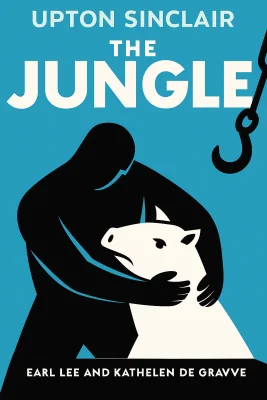
The Jungle
Categories
Fiction, Politics, Classics, Historical Fiction, Literature, School, Historical, Novels, Classic Literature, Banned Books
Content Type
Book
Binding
Paperback
Year
2003
Publisher
See Sharp Press
Language
English
ISBN13
9781884365300
File Download
PDF | EPUB
The Jungle Plot Summary
Introduction
# The Machinery of Dreams: An Industrial Tragedy The wedding feast was supposed to mark their triumph. In the smoky back room of a Chicago saloon, Jurgis Rudkus lifted his bride Ona in arms that could bend steel, while accordion music wheezed through air thick with hope and desperation. They had crossed an ocean from Lithuania, carrying dreams of American prosperity like sacred flames. But even as they danced, the bills were mounting—over a hundred dollars for this single night of celebration, money they didn't possess, debts that would follow them like hunting wolves through the maze of Packingtown. Around them, fellow immigrants slipped away without paying their traditional contributions, leaving the newlyweds drowning in obligation before their new life had even begun. This was Chicago in 1906, where the great meat-packing plants devoured cattle and men with equal appetite. Jurgis believed his strength could conquer anything America threw at him. He had no idea that the machine he was about to feed his life into had been designed specifically to grind up dreams and spit out only bones.
Chapter 1: Wedding Bells and Broken Promises
The morning after the wedding, reality struck like a sledgehammer to the skull. Jurgis stood outside the gates of Durham's packing plant, snow swirling around his massive shoulders, watching hundreds of desperate men fight for the chance to work. When the foreman's finger pointed at him after just thirty minutes, Jurgis felt destiny calling. The other men had waited months for this moment. Inside the killing floors, a vision of industrial hell stretched before him. Cattle moved in endless rivers through the chutes while great smokestacks belched black clouds that darkened the sky for miles. The air pulsed with the rhythm of machinery and death. Blood ran in streams across concrete floors, and the stench of slaughter hung like a physical weight. But Jurgis threw himself into the work with savage enthusiasm, his powerful frame swinging the stunning hammer with mechanical precision. His first day earned him a dollar and fifty-seven cents. He ran home through Packingtown's muddy streets, bursting with pride that in Lithuania would have fed his family for a week. He swept Ona into his arms and declared that within a year they would own their home, send the children to school, live like American citizens. The future stretched golden before them, limited only by how hard a man was willing to work. The family had pooled their life savings to buy a house—a four-room frame building with purple roof and silver walls that the smooth-talking agent promised would be theirs for just twelve dollars monthly. Ona's stepmother Elzbieta counted their precious three hundred dollars with trembling fingers, everything they owned in the world sewn into her dress for the signing. But when they brought the deed home, old Grandmother Majauszkiene cackled with bitter laughter. She had seen this dance before—four different families had already lost this house to the same trap. The contracts were written in legal language none of them could properly read. Interest, taxes, insurance—hidden costs that transformed twelve dollars into nineteen, stretching payments across nine crushing years. The house that was supposed to free them had become their prison, and Jurgis stared at the deed with shaking hands, understanding for the first time that in America, the game was rigged from the start.
Chapter 2: The Killing Floors: First Contact with Industrial Hell
Winter descended on Packingtown like a curse from an angry god. The killing floors became a frozen hell where men worked in temperatures that turned breath to ice and made tools stick to flesh. Jurgis learned the rhythm of the line—the endless procession of carcasses, the precise cuts, the race against time that never slowed. Around him, men fell like broken machines, their blood mixing with that of the cattle they processed. The pace was inhuman, driven by bosses who paid the strongest workers extra to set a killing speed that drove everyone else to the breaking point. Jurgis laughed and ran down the line while other men cursed and complained, his knife flashing as he swept entrails into traps. The blood soaked through his clothes and froze solid, but he never slowed. This was his chance to prove what a Lithuanian could accomplish in America. But the plant revealed corruptions that shocked even Jurgis's hardened sensibilities. Government inspectors turned away while diseased cattle were processed for human consumption. Meat that fell on filthy floors was shoveled back into hoppers. Cattle that had died in transit were butchered in darkness after inspectors departed. The company operated a special elevator for "downers"—sick and injured animals that were supposed to be condemned but instead were scattered throughout the regular meat supply. Old Antanas discovered the worst horrors in the pickle rooms, where he cleaned traps that caught scraps of rotten meat. This putrid waste was mixed with sawdust and dirt, then scooped back into processed beef sold across America. The floors were never cleaned, chemicals ate through boots and into feet, and the stench was so overwhelming that strong men fainted. But Antanas needed the job, so he worked even as acid burned sores into his flesh. The machine was feeding on them all, Jurgis realized with growing horror. It consumed their strength, their health, their hope, giving back just enough to keep them alive for another day's labor. They were not workers building something greater—they were fuel being burned to power someone else's prosperity.
Chapter 3: The House Trap: Debt as a Weapon of Control
The house payments grew heavier each month like stones accumulating in their chests. What had seemed manageable in summer became impossible when winter slowed work and wages dropped. The family discovered new clauses buried in legal documents, fees that materialized like ghosts to haunt their budget. Twelve dollars became fifteen with interest, then eighteen with insurance and taxes that no one had explained during the signing. Ona took work in the canning factory, her delicate hands wrapping hams in suffocating heat while Jurgis fought to support them both on the killing floors. Marija found employment painting cans, the lead paint slowly poisoning her system and turning her skin gray. Even young Stanislovas, barely thirteen, was forced to lie about his age to secure work in the lard rooms, his childhood sacrificed to the family's desperate need for income. The real estate agent's smile had vanished, replaced by cold threats and legal papers that arrived with increasing frequency. They learned that missing even a single payment could trigger foreclosure, wiping out everything they had invested. The house was not a home but a trap, designed to extract maximum wealth from immigrant dreams before discarding the dreamers themselves. Grandmother Majauszkiene explained the system with bitter clarity. The house was fifteen years old, not new as advertised. It had been sold to four different families already, each one failing to make payments and losing everything. The company would foreclose, make cosmetic repairs, then sell the same trap to the next batch of hopeful immigrants. It was a machine for manufacturing despair, as efficient as any device on the killing floors. Winter brought new horrors as the family's resources dwindled. They burned furniture for heat when coal ran out, sold clothes to buy food, watched their children grow thin and hollow-eyed. The American dream was revealing its true face—a nightmare of exploitation dressed in the language of opportunity, a system designed to consume the weak and feed their substance to the strong.
Chapter 4: Bodies Breaking: When the Machine Consumes Its Workers
The accident happened in a heartbeat, as accidents always do in places where safety costs money and money is sacred. A maddened steer broke loose on the killing floor, and in the chaos of men scrambling for safety, Jurgis twisted his ankle. It seemed like nothing at first, just a twinge of pain that he ignored in his usual way. But by morning his foot had swollen to twice its size, and the company doctor pronounced him unfit for work. Durham and Company felt no responsibility for workplace injuries. There was no compensation, no job protection, just the cold reality that damaged workers were useless. Jurgis lay in bed watching his family's savings evaporate while bills kept arriving like clockwork. The rent, the house payments, the insurance—all of it depended on wages that no longer existed. Ona dragged herself to work despite her pregnancy, earning thirty dollars monthly sewing ham covers in damp cellars that reeked of chemicals and decay. Little Stanislovas stood ten hours daily placing lard cans on automatic machines for five cents hourly, his small hands moving with desperate speed to avoid the foreman's wrath. Even with everyone working, they were slowly starving on food adulterated with sawdust and chemicals that provided no real nutrition. For three weeks Jurgis lay helpless, watching his pregnant wife and child sacrifice everything to keep him alive. The proud giant who had conquered the killing floors was reduced to a broken invalid, dependent on the labor of those he had sworn to protect. When he finally returned to work too early, his ankle gave out again, and the doctor warned that he might be crippled for life. The machine had no use for damaged parts. It would grind them up and spit them out, then find fresh bodies to feed into its gears. Jurgis understood with crushing clarity that he was not a person to his employers—he was equipment, valuable only as long as he functioned properly, disposable the moment he broke down.
Chapter 5: The Abyss: Death, Wandering, and Moral Collapse
Old Antanas never recovered from his winter in the chemical-soaked cellars. The cough that had plagued him grew worse until blood flecked his lips and breathing became a constant wheeze. He died quietly one morning, his weathered hands still stained with the acids that had killed him. They buried him in a pauper's grave, another casualty of industrial progress that no one would remember or mourn. When Jurgis finally returned to work, his place had been filled by younger, stronger hands. The foreman looked through him as if he were invisible, and Jurgis understood that he had been blacklisted. No packing plant in Chicago would hire him now. Desperation drove him to the fertilizer works, where men labored in clouds of bone dust and chemical fumes that burned lungs and rotted flesh from within. Ona's pregnancy went wrong from the beginning. She was too small, too weak, too broken by their struggles to carry the child safely. When her time came, there was no money for a proper doctor, only a drunken midwife who took their last dollars and left them with tragedy. The baby was born dead, and Ona followed soon after, her eighteen-year-old life snuffed out by poverty and neglect. Grief drove Jurgis to the saloons, where whiskey promised temporary escape from unbearable loss. He spent their remaining money on drink, stumbling home to find his son Antanas crying with hunger. The sight of the child's hollow cheeks and pleading eyes cut through his alcoholic haze like a knife. He had failed as a husband, but he would not fail as a father. But even this small happiness was fragile. Little Antanas grew despite the poverty, his bright laughter the one source of joy in Jurgis's bleak existence. On Sundays they walked through the city together while Jurgis told stories of Lithuania, of green fields and clean air, of a world beyond Packingtown's smoke and stench. Yet the boy was growing thinner each day, his small body unable to thrive on the scraps they could afford.
Chapter 6: The Underworld: Crime as Survival in a Corrupt System
When little Antanas died of food poisoning from contaminated milk, something fundamental broke in Jurgis's soul. Standing over his son's small body in their freezing room, he felt the last connections to his former life snap like rotten rope. The man who had crossed an ocean with dreams of honest work and family happiness died with his child. What remained was something harder, colder, stripped of illusion and mercy. He walked out of Chicago that same day, leaving behind the stench of stockyards and the weight of memory. For months he wandered the countryside, working when he chose, sleeping under stars, answering to no master but his own will. Summer brought a kind of peace as he worked harvest fields, his powerful frame swinging a scythe with mechanical precision. The work was hard but clean, and for the first time in years he felt human rather than a cog in someone else's machine. But winter drove him back to the city, back to the world of concrete and smoke where men like him went to die. Chicago welcomed him with familiar cruelty—no work, no shelter, no mercy for those who couldn't pay their way. He joined the army of beggars and drifters who haunted the streets, learning their tricks and bitter wisdom about survival in America's industrial hell. In a jail cell, he met Jack Duane, a gentleman criminal with soft hands and hard eyes who spoke of different kinds of work. Duane had rejected the honest labor that killed men slowly in favor of taking what he needed directly from those who had it. The logic was seductive—why should they starve while others lived in luxury built on their suffering? The system had declared war on men like them; it was time to fight back. Their first job was simple: wait in a darkened doorway for a lone pedestrian, then rob him at gunpoint. Jurgis felt his victim's terror as they went through his pockets, taking his watch, wallet, and small collection of personal treasures. The man was just another working stiff like Jurgis had been, struggling to survive in an indifferent city. But sympathy was a luxury Jurgis could no longer afford.
Chapter 7: Revolutionary Awakening: Finding Purpose in Political Truth
The meeting hall was packed with bodies and thick with smoke, but Jurgis barely noticed the discomfort. On the platform, a gaunt man with burning eyes spoke words that cut through the fog of despair that had surrounded him for so long. The speaker talked about wage slavery and class struggle, about the machinery of exploitation that ground up workers and fed their blood to the wealthy. Every word resonated in Jurgis's bones like a struck bell. For the first time since Ona's death, Jurgis felt something stir in his chest that might have been hope. The speaker was describing his life, his suffering, his rage, but giving it meaning and purpose. The system that had destroyed his family was not natural or inevitable—it was man-made, and therefore it could be unmade. The scattered pieces of his experience suddenly formed a pattern, like fragments of a shattered mirror reflecting a single, terrible truth. After the meeting, Jurgis met Ostrinski, a Lithuanian tailor who became his guide into the world of Socialist politics. In Ostrinski's cramped kitchen, surrounded by the tools of his trade, Jurgis learned about the international movement of workers, about the coming revolution that would sweep away the old order and replace it with something just. The words came slowly at first, then in a flood, as years of accumulated anger found their voice. The movement gave Jurgis what he had lost in the stockyards—a sense of purpose, of belonging to something larger than himself. He found work at a hotel owned by a Socialist, where every conversation was a lesson in political economy and every guest was a potential convert. He learned to read, to think, to argue. The broken man who had stumbled into that meeting hall was being rebuilt, piece by piece, into something new and dangerous. He discovered that his personal tragedy was not personal at all, but part of a vast system designed to extract profit from human misery. The stockyards had not simply killed his wife and destroyed his family—they had revealed the true nature of American capitalism, where workers were just another raw material to be processed and consumed. His journey from naive immigrant to revolutionary was not redemption, exactly, but transformation—the metamorphosis of a victim into a weapon.
Summary
In the end, Jurgis Rudkus became exactly what industrial America had made him—first a broken man, then a criminal, finally a revolutionary who understood the true nature of the machine that had devoured his dreams. The gentle Lithuanian immigrant who had crossed an ocean believing in honest work and fair wages was gone, consumed by the same system that had killed his wife, his child, and his father. What remained was harder and more dangerous, but perhaps more honest about the brutal realities of American capitalism. The great packing plants continued their work, grinding up cattle and men with equal indifference while owners counted profits in distant mansions. The politicians and police maintained their elaborate charade of law and order while taking bribes from criminals and corporations alike. But now there were men like Jurgis who had learned to see through the lies, who understood that the system was not broken but working exactly as designed. The machinery of dreams had created its own gravediggers, and the revolution was coming whether the owners were ready or not.
Best Quote
“They use everything about the hog except the squeal.” ― Upton Sinclair, The Jungle
Review Summary
Strengths: The review highlights the book's significant impact on American legislation, specifically the 1906 Pure Food and Drugs Act, and its role in the formation of the FDA. It is praised for its powerful social commentary on the exploitation of immigrants and the working class, as well as its vivid depiction of unsanitary conditions in the meatpacking industry. Weaknesses: The review notes that the book can be a distressing read, with descriptions that are nauseating and depressing. It suggests that the book may not be enjoyable for all readers, particularly those not required to read it for educational purposes. Overall: The review presents "The Jungle" as a classic, influential novel with a strong social message, though it may be challenging and unsettling for some readers. It is recommended for those interested in social justice and historical impact, but not for casual reading.
About Author

Upton Sinclair
Sinclair interrogates the societal injustices of early 20th-century America through his potent blend of investigative journalism and narrative fiction. As an author committed to socialism, Sinclair’s books tackled capitalism's systemic abuses and labor rights issues, thereby educating the public on these pressing matters. His groundbreaking work, "The Jungle," revealed the appalling conditions within Chicago's meatpacking industry, prompting significant legislative reforms like the 1906 Pure Food and Drug Act. Meanwhile, "The Brass Check" critiqued the pitfalls of yellow journalism, contributing to the eventual establishment of a journalism code of ethics.\n\nSinclair’s literary style marries naturalistic fiction with political polemics, aiming to spotlight the struggles of marginalized workers. His bio reflects an unwavering dedication to using literature as a tool for societal change, tackling themes such as health, corruption, and free speech. Readers benefit from his works' historical insights and the vivid dramatization of labor struggles. His "Lanny Budd" series, including the Pulitzer Prize-winning "Dragon’s Teeth," and other works like "Oil!"—which inspired the film "There Will Be Blood"—continue to resonate due to their profound social commentary and narrative strength. Sinclair’s legacy endures, offering valuable lessons on the power of literature to confront and challenge entrenched social inequities.
Read moreDownload PDF & EPUB
To save this Black List summary for later, download the free PDF and EPUB. You can print it out, or read offline at your convenience.

The Jungle
by Upton Sinclair
